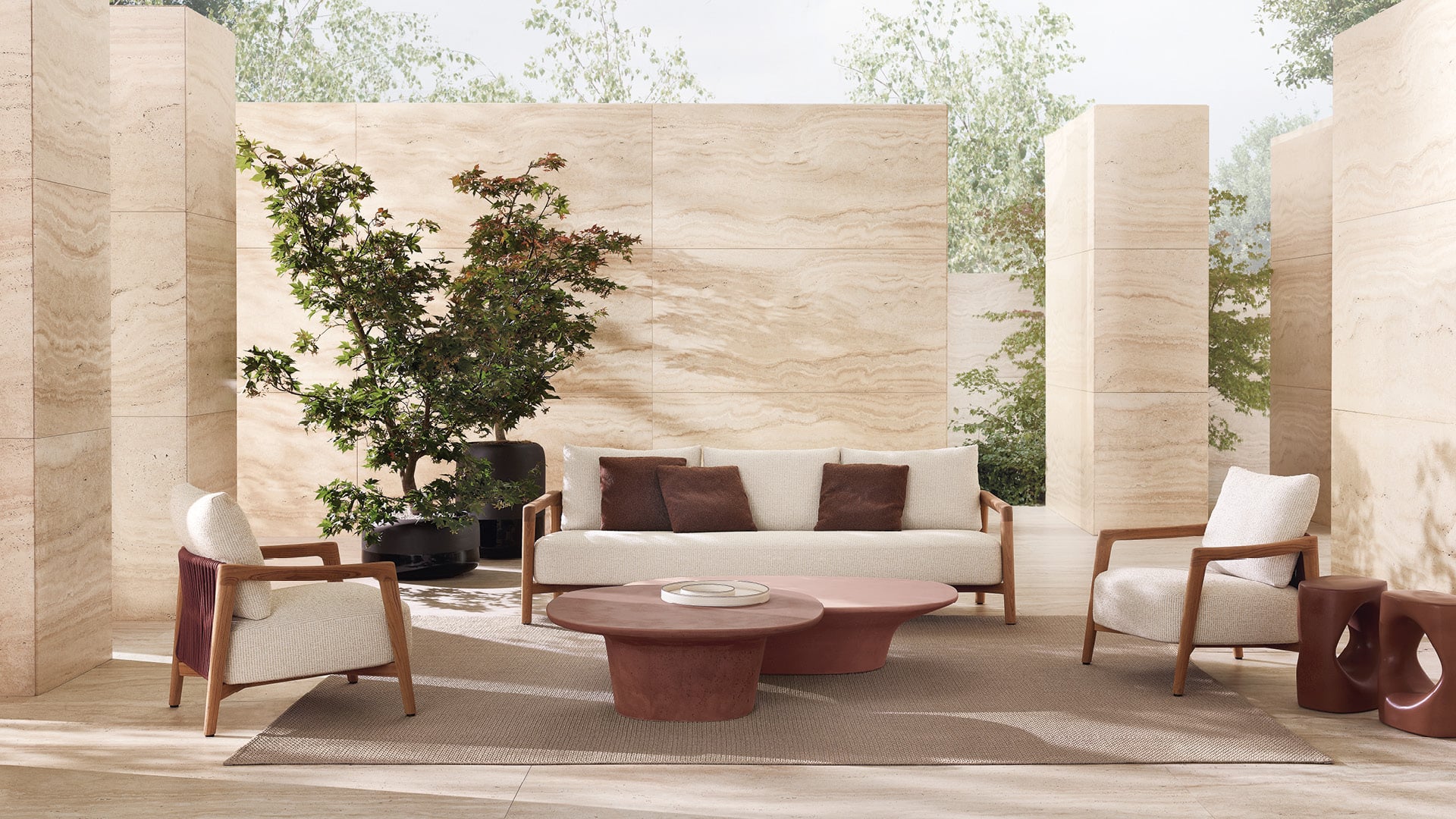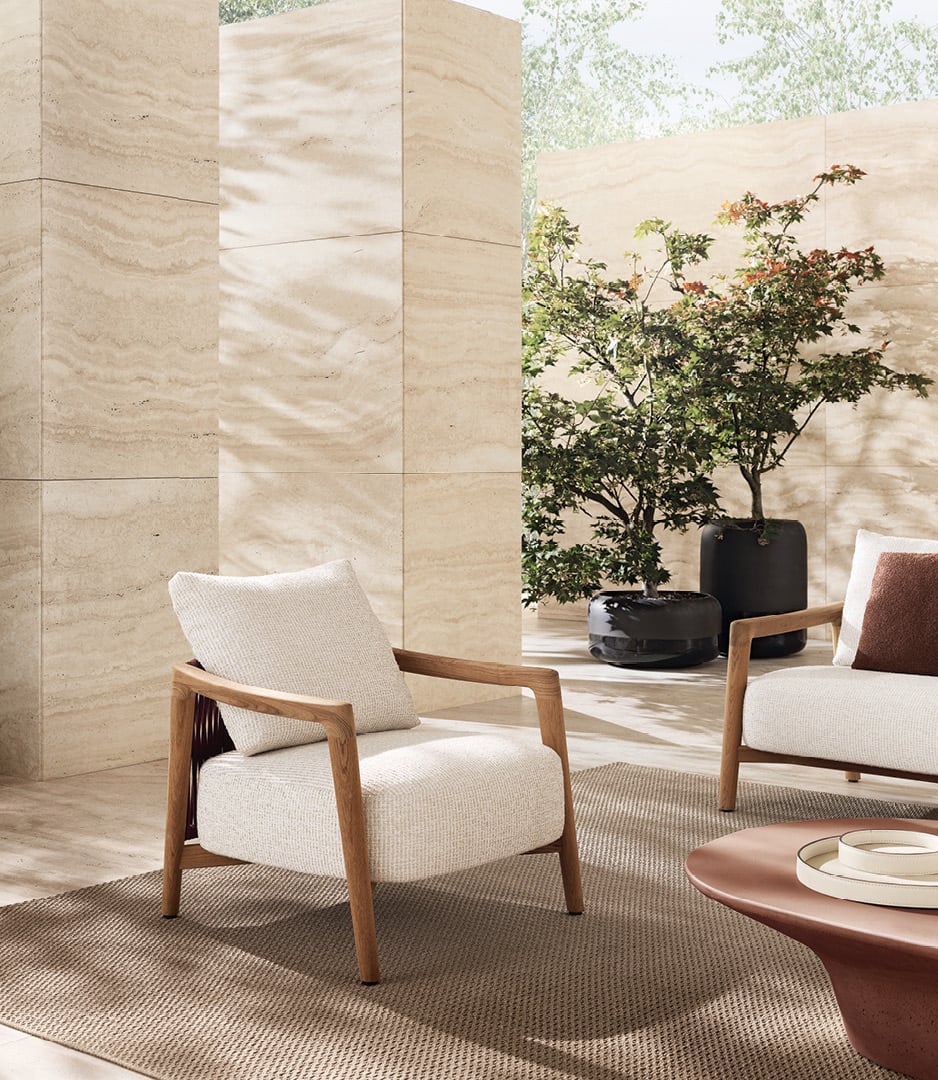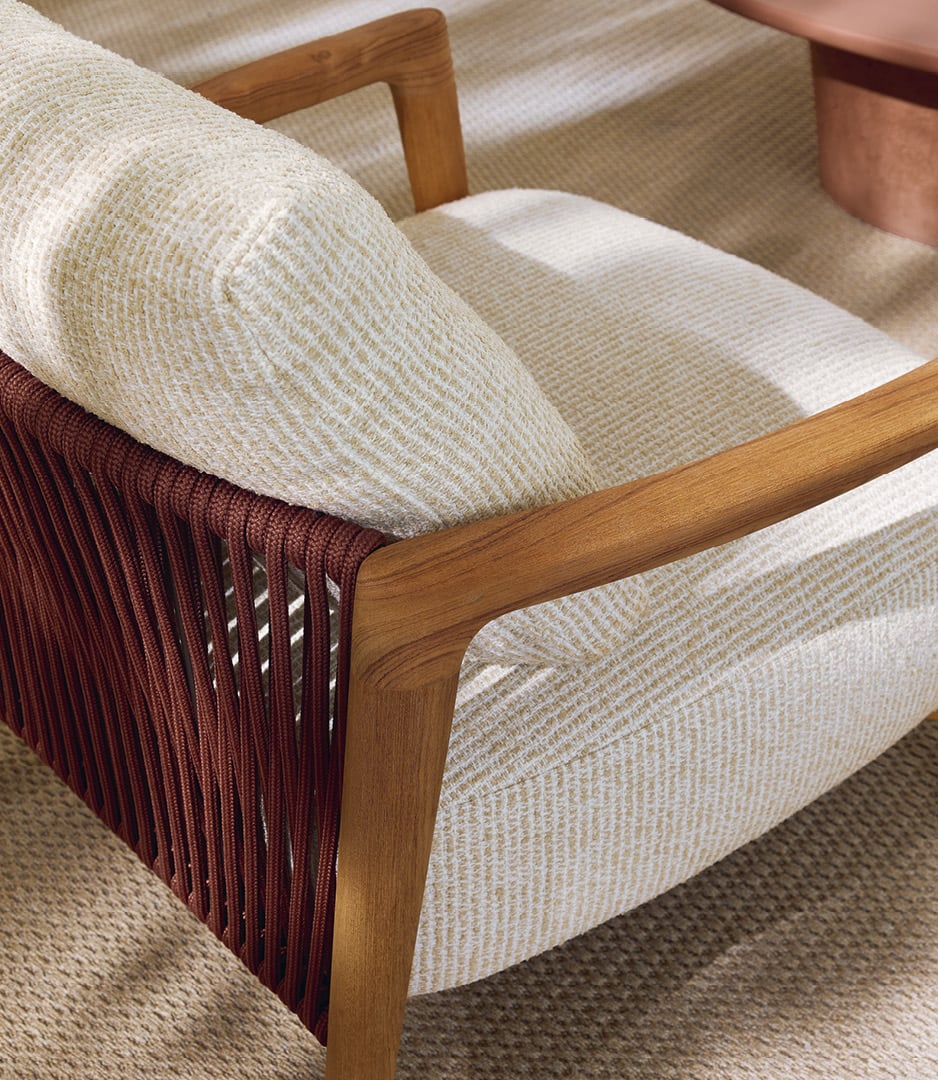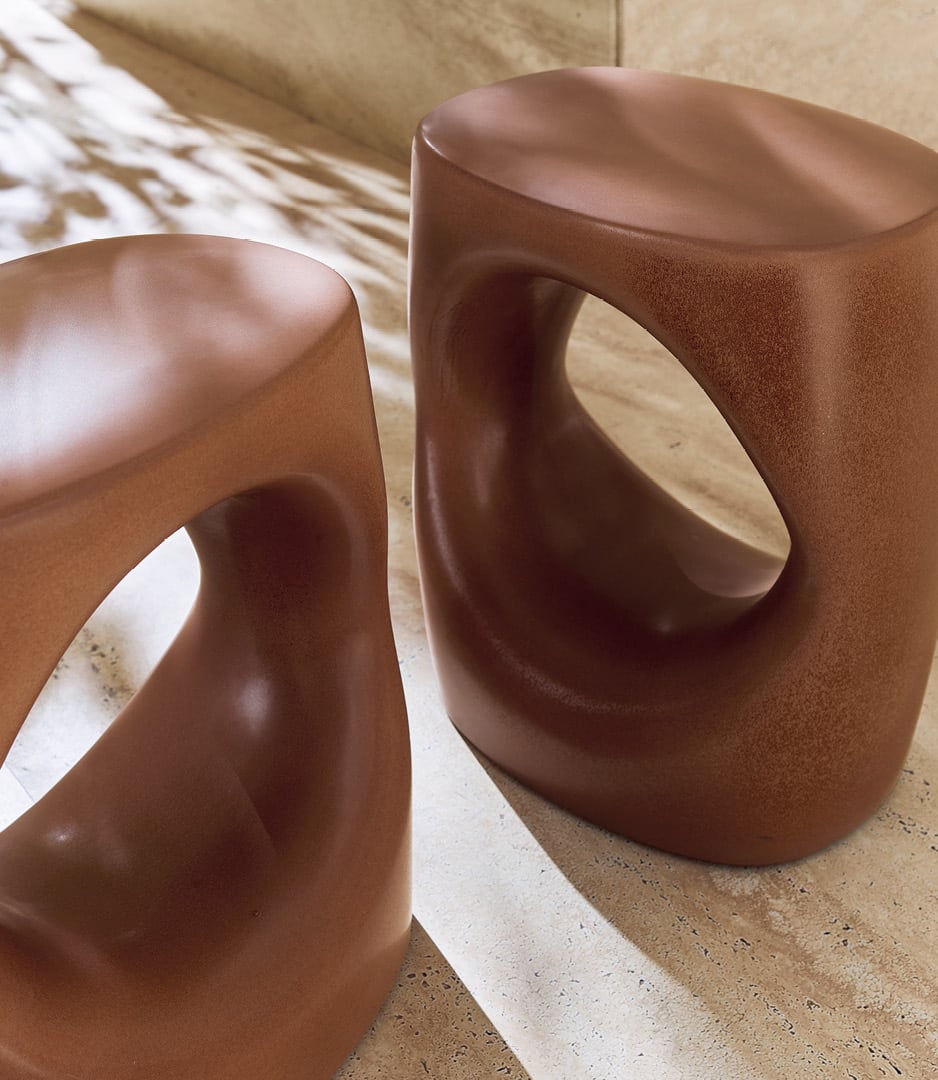
A contemporary villa where truth lies entirely in the materials, in the pure forms of space, and in the light that creates movement and poetry. The monumental architectural shell houses intimate interiors, conceived as spaces for introspection protected from the outside world, yet at the same time immersed in the urban reality.
The minimalism of the architecture also defines the interiors, softened and warmed by Poliform furnishings and enhanced by works of art.
Starting from the formal entrance, the spaces unfold in sequence, with a dynamism that leads to an ever-increasing sense of intimacy.

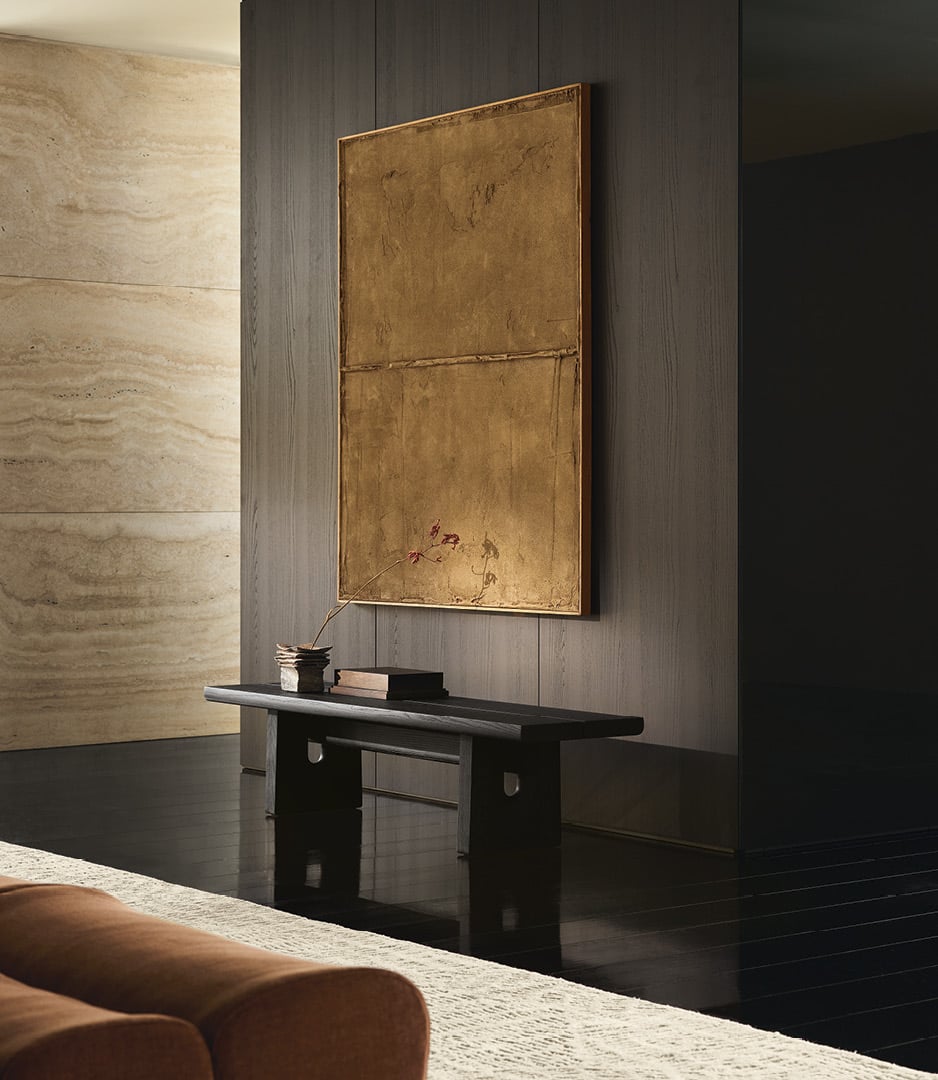
The simplicity and rhythm of the architectural elements are sober and reassuring. Travertine marble coexists with dark wood, transforming the space dedicated to welcoming guests into a majestic and scenographic setting.

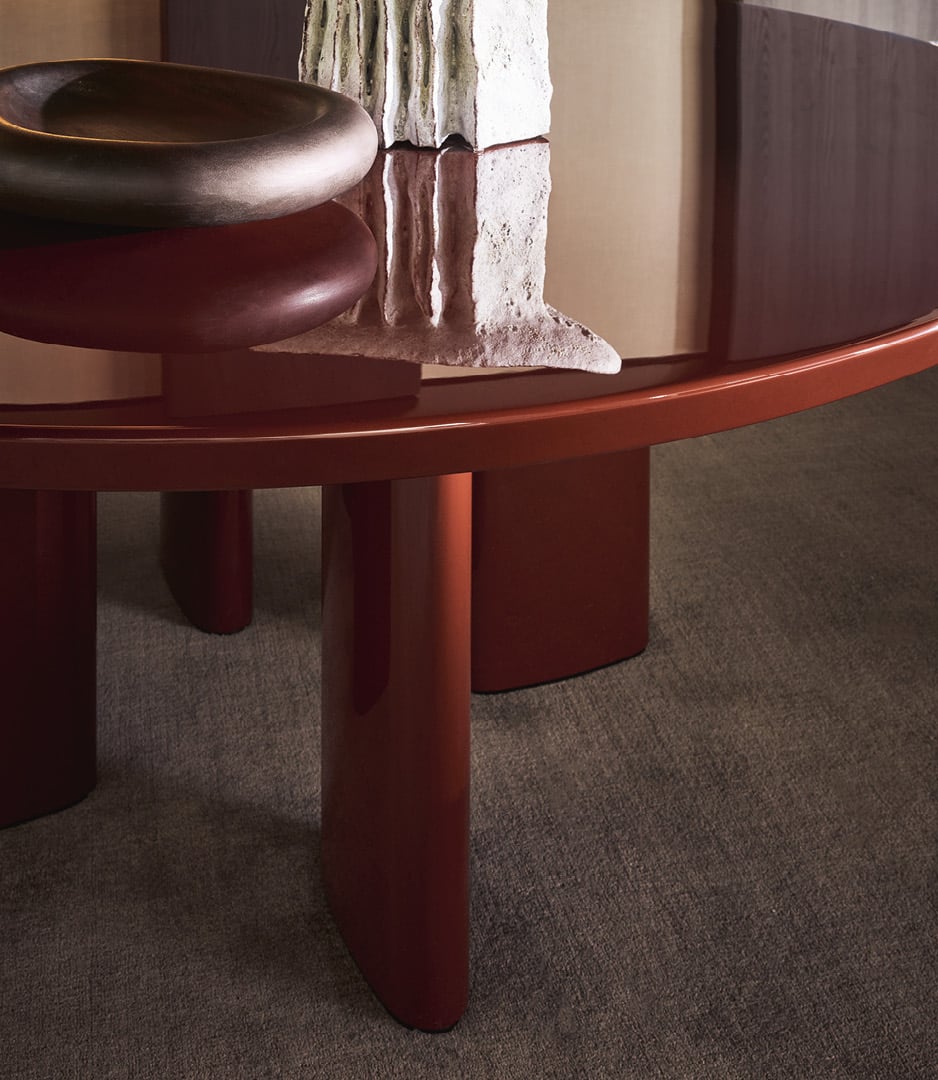
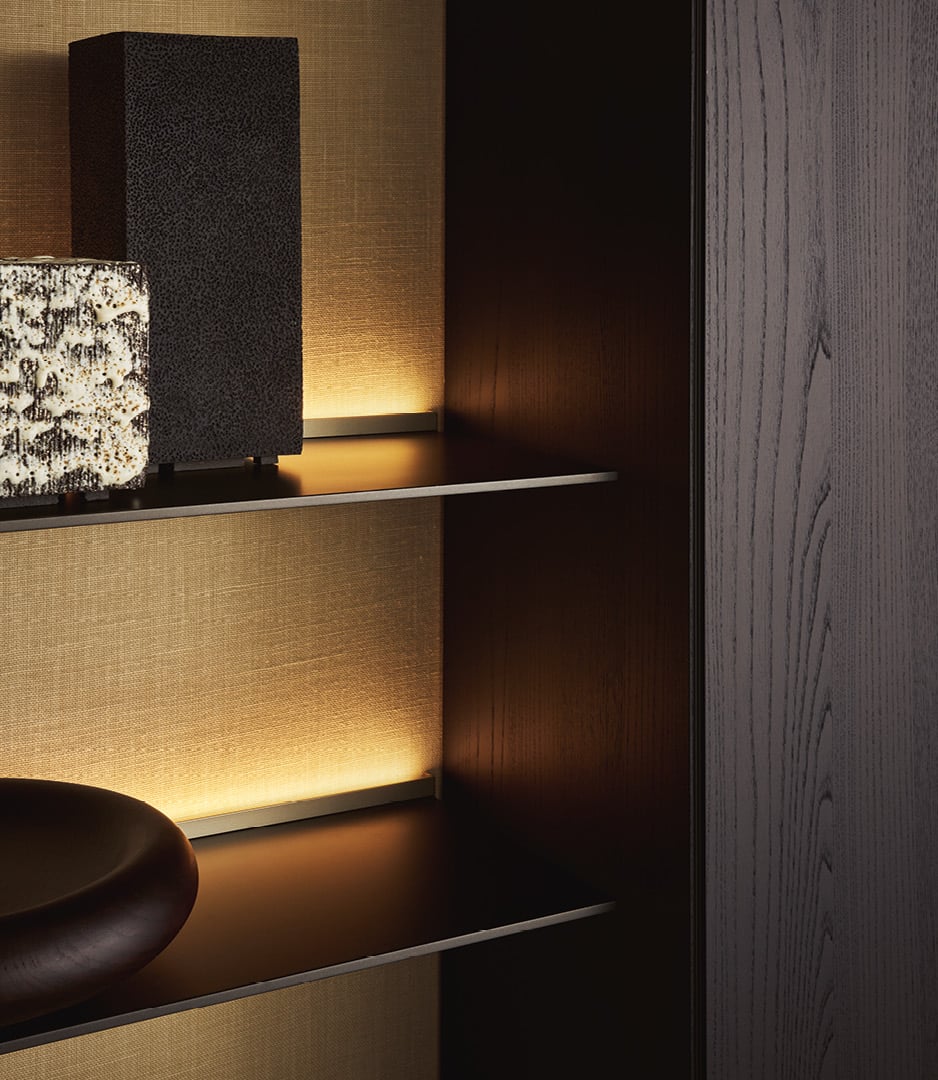
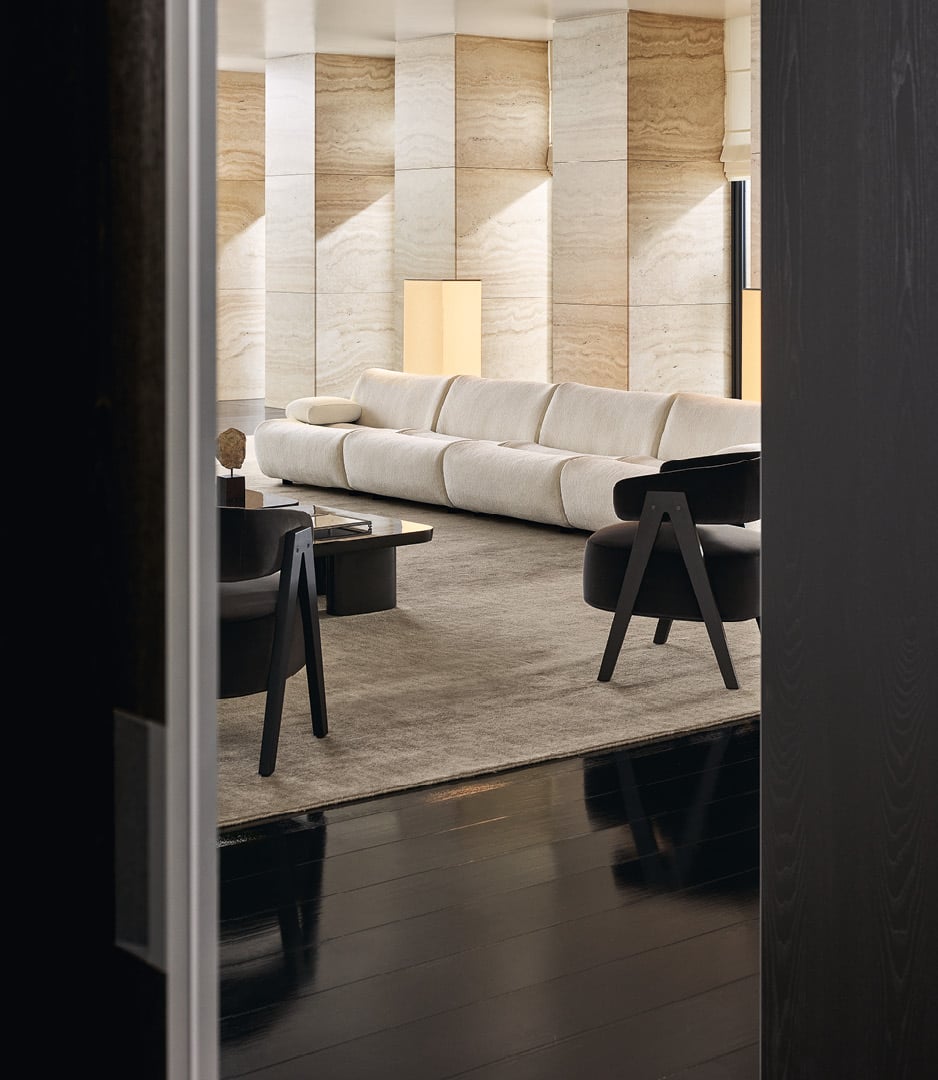
In the living area, organic forms and tactile finishes stand out in contrast with the sharp geometries of the travertine marble pillars, in a play of recomposing opposites that also appears in the linear surface of the ceiling set against the black lacquered wood floor—a rigorous scenography that makes the Poliform piece the absolute protagonist.
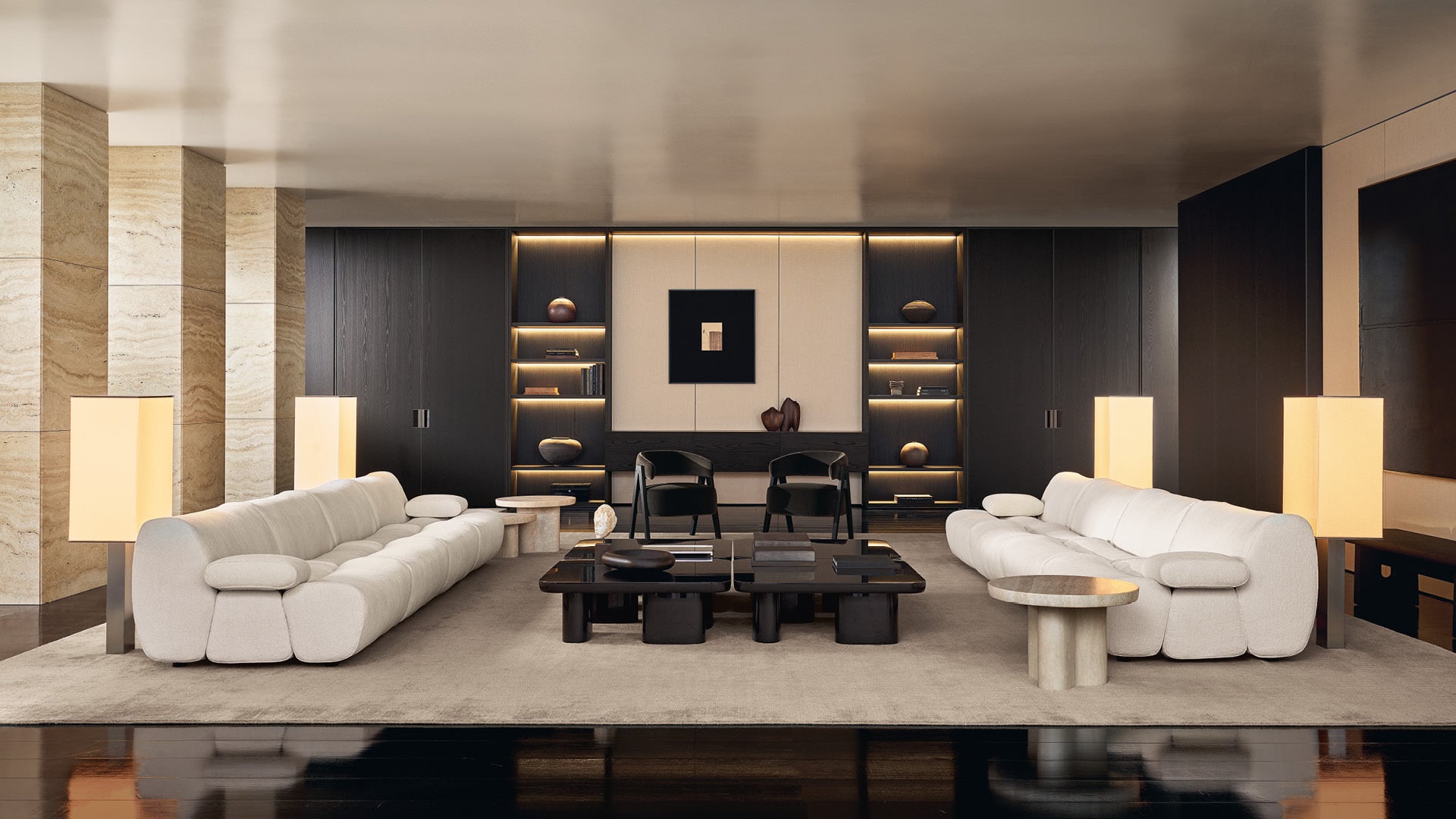
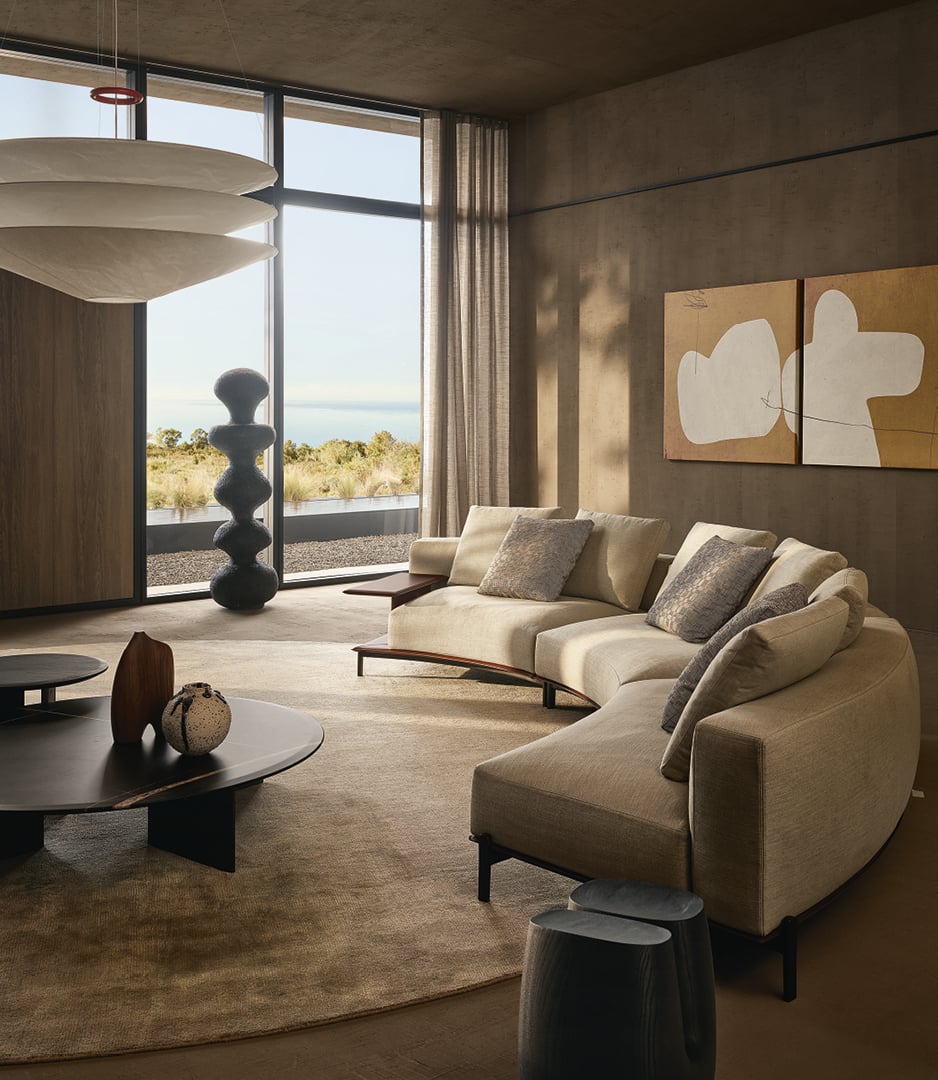
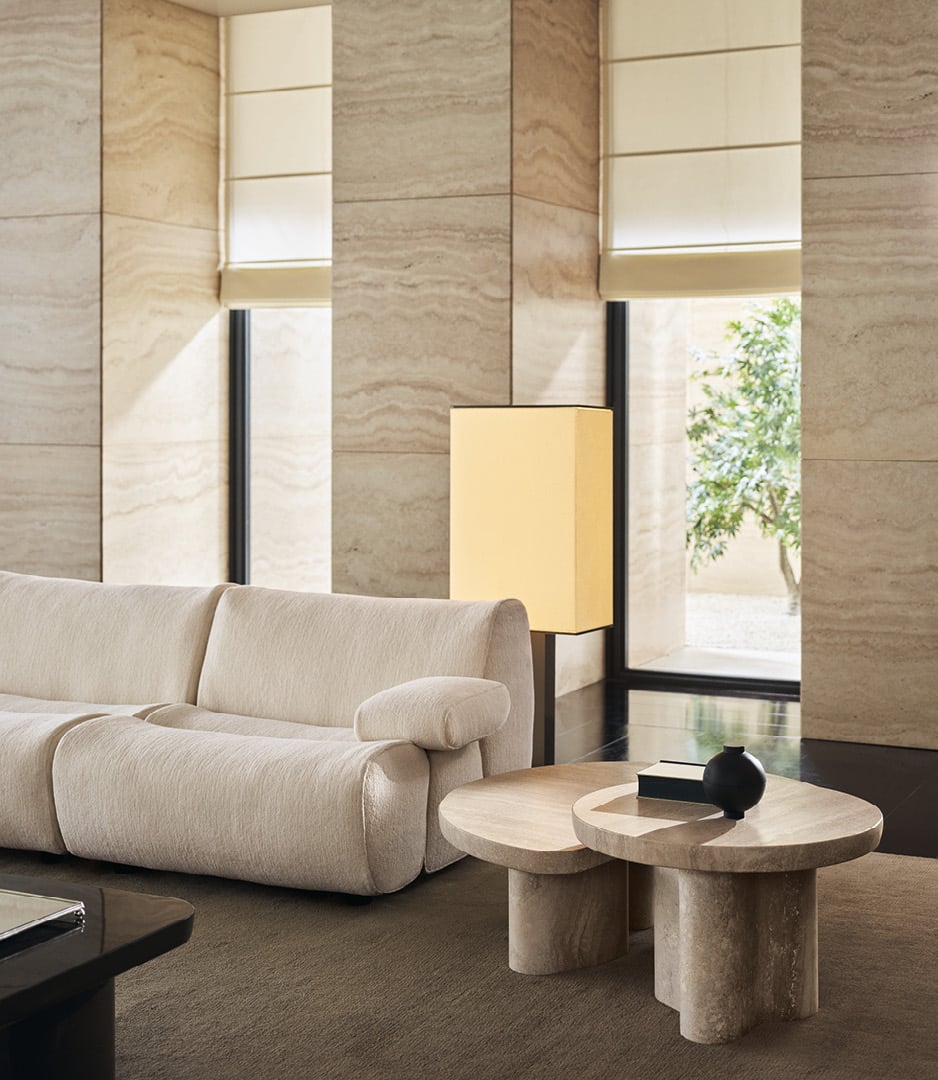
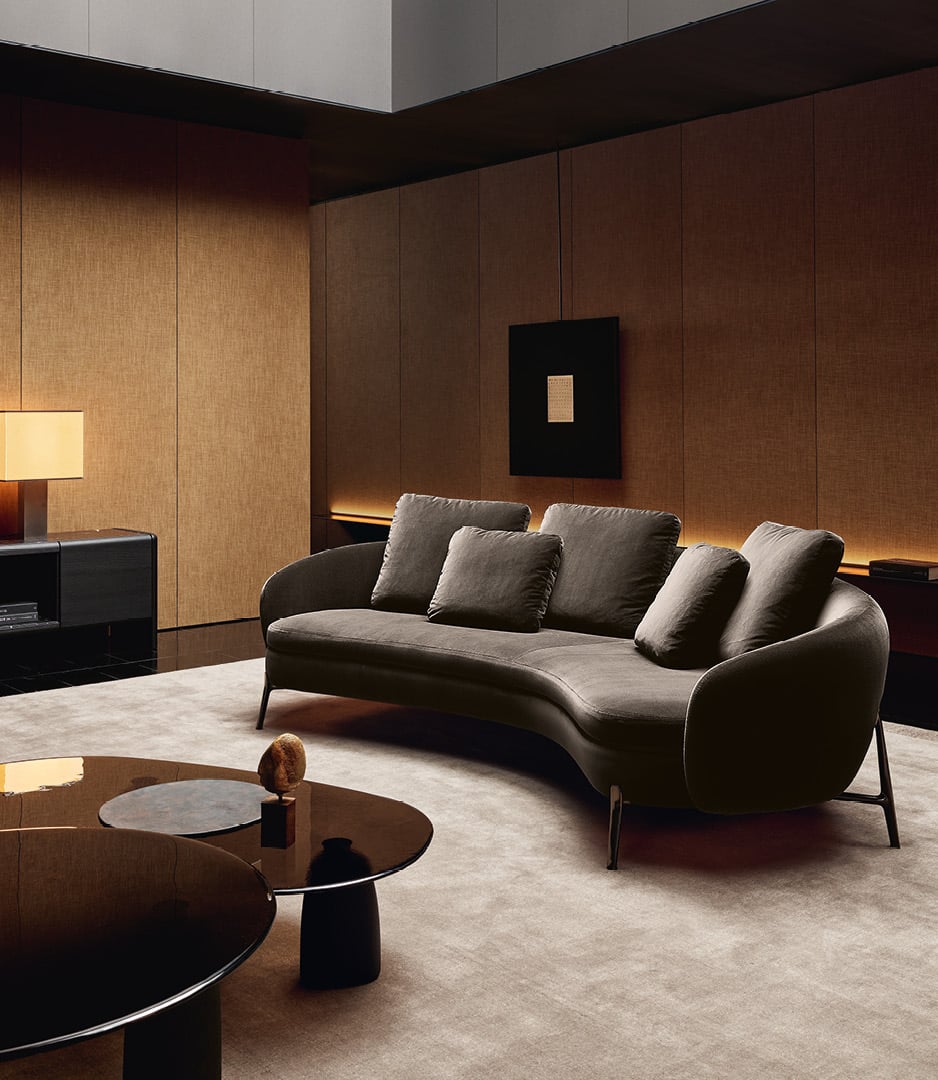
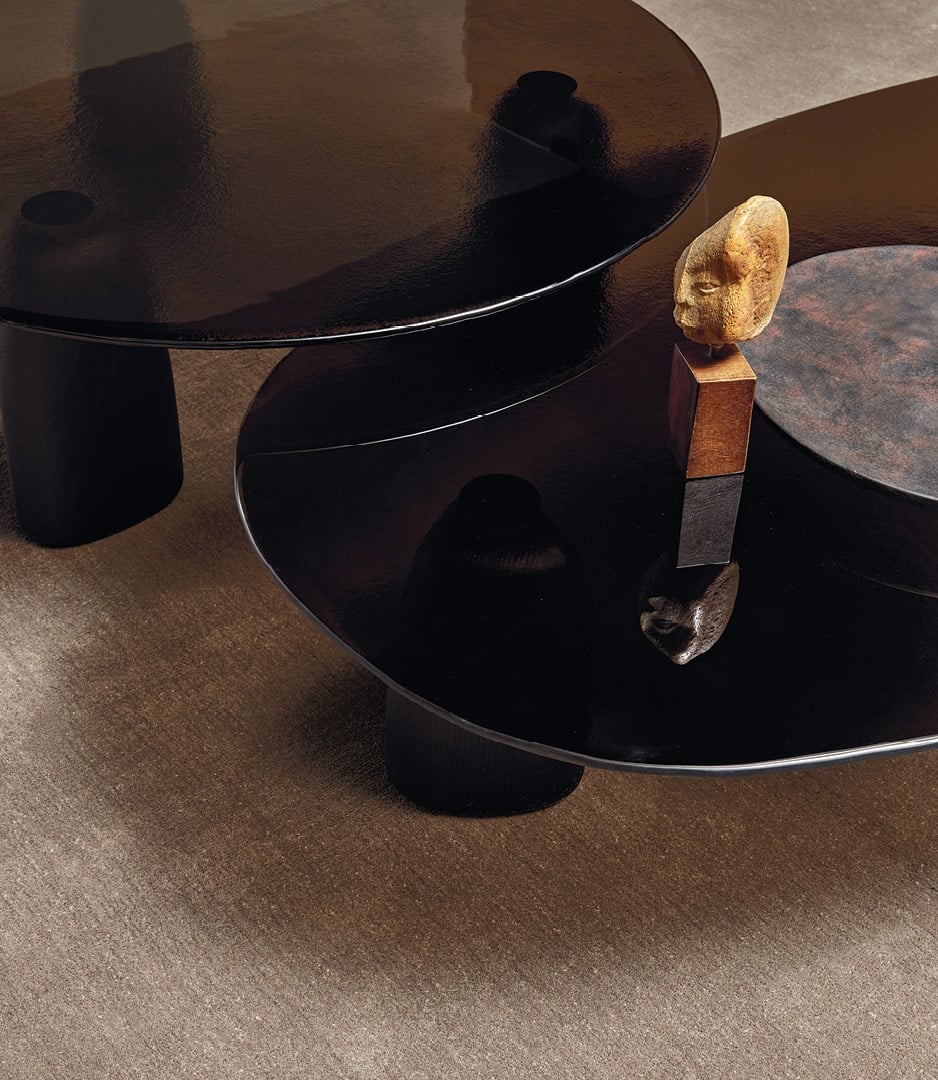
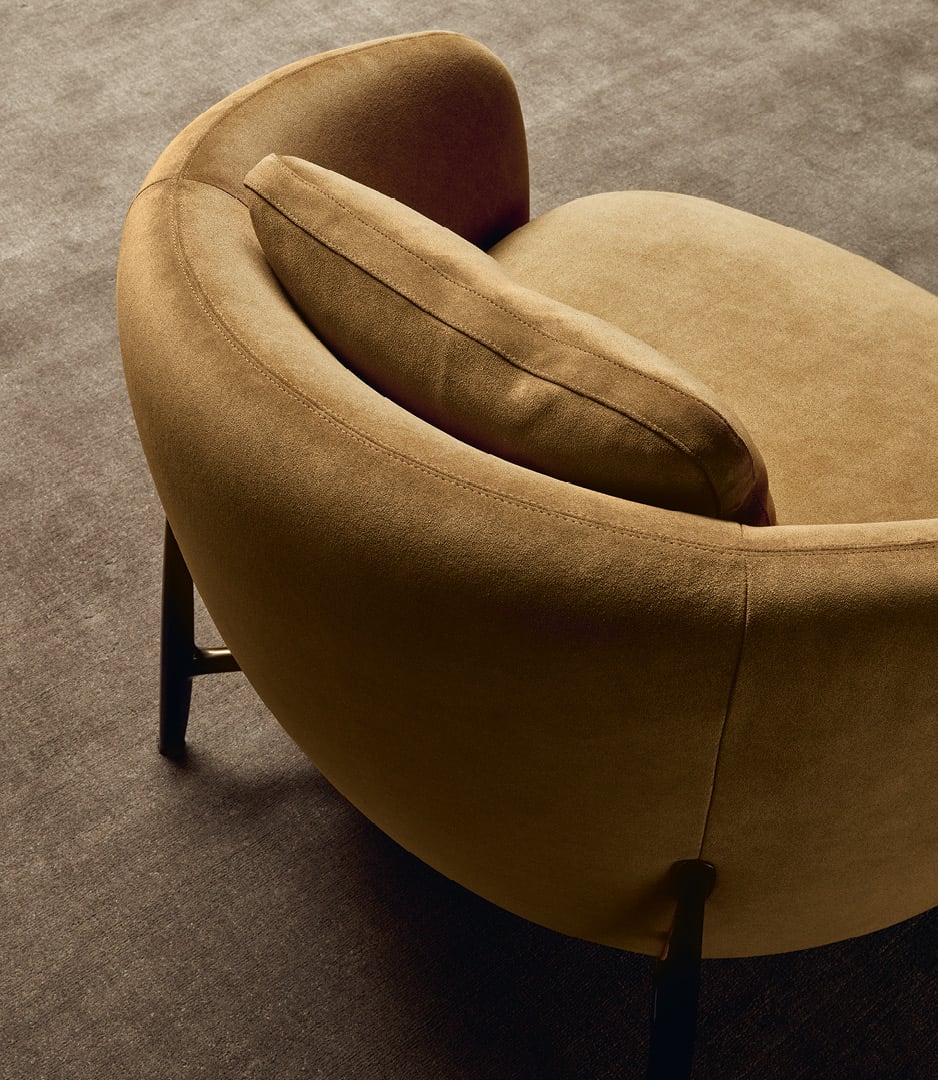
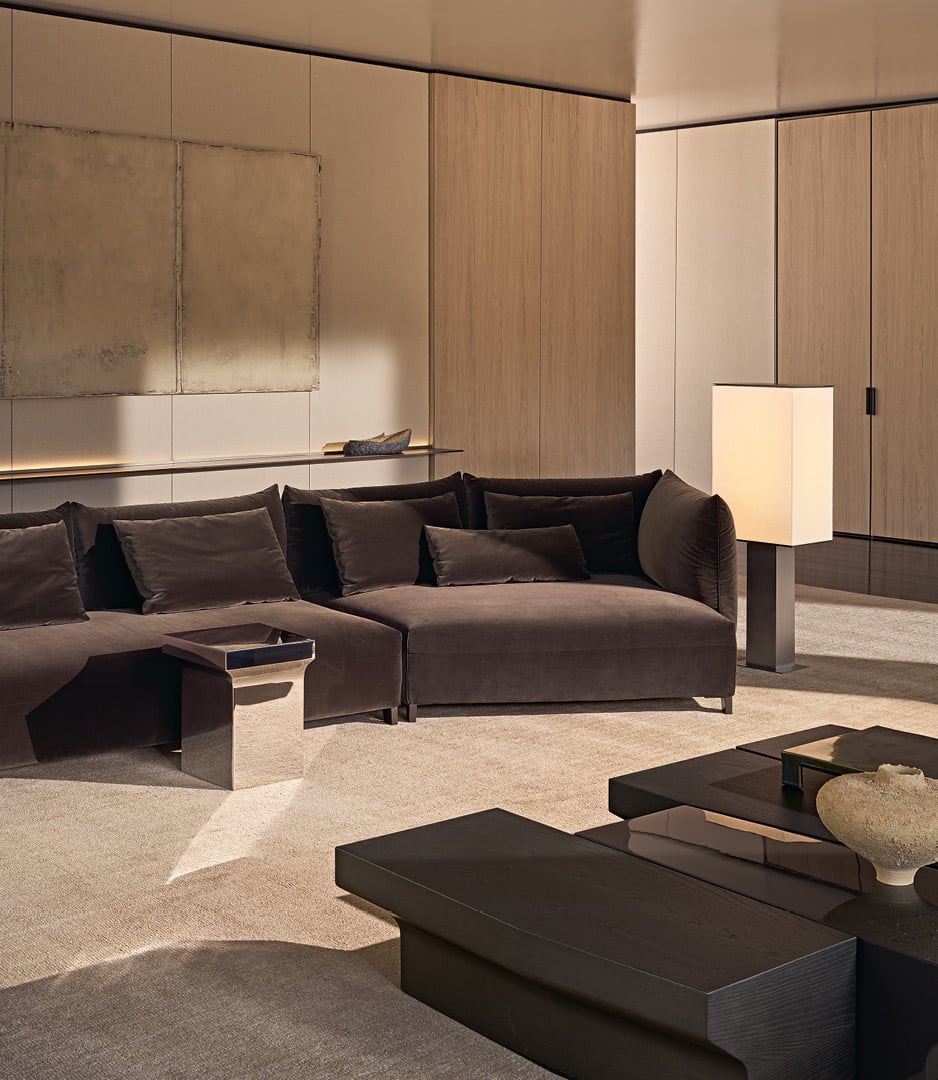
For the formal living area, Ernest by Jean-Marie Massaud was chosen—a sofa with soft, deconstructed volumes inspired by a feather cushion, endowed with great expressive strength. Completing the area dedicated to conviviality are the Loai armchairs and coffee tables that echo the finishes of the architecture.
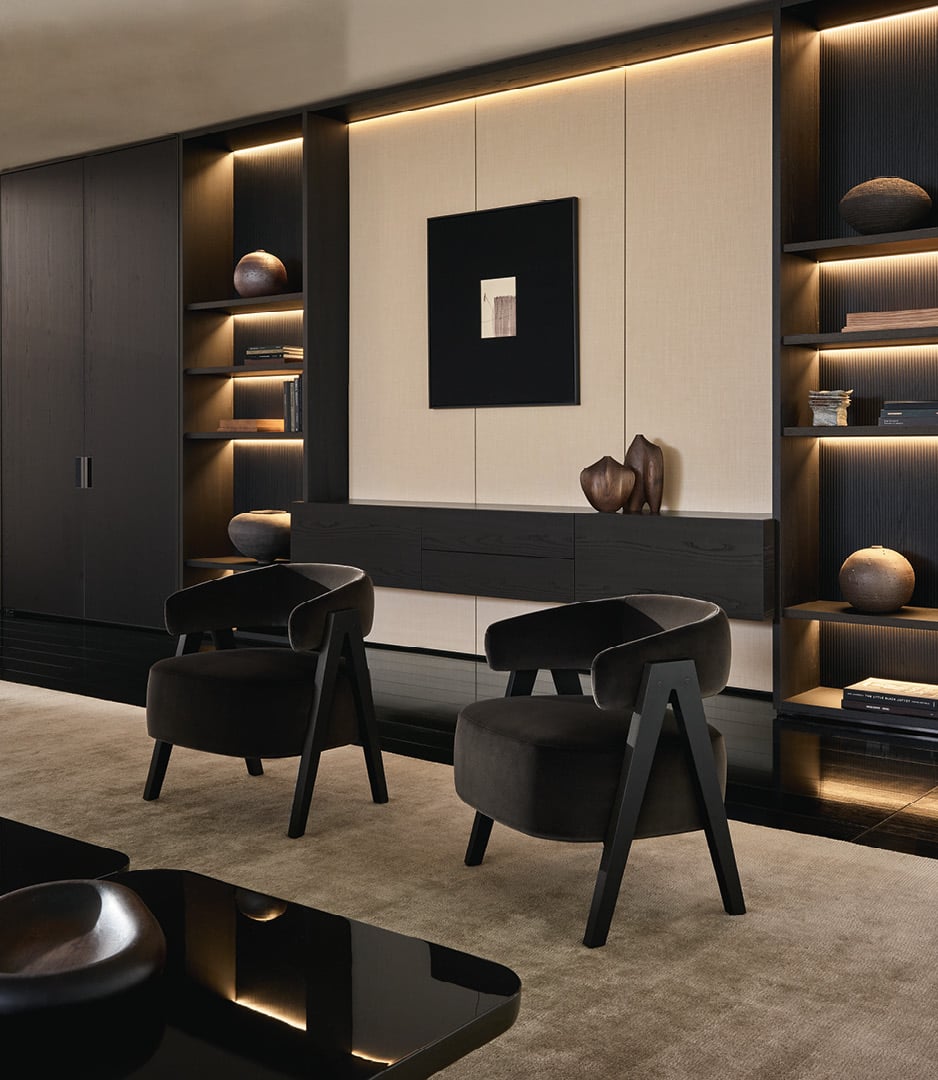
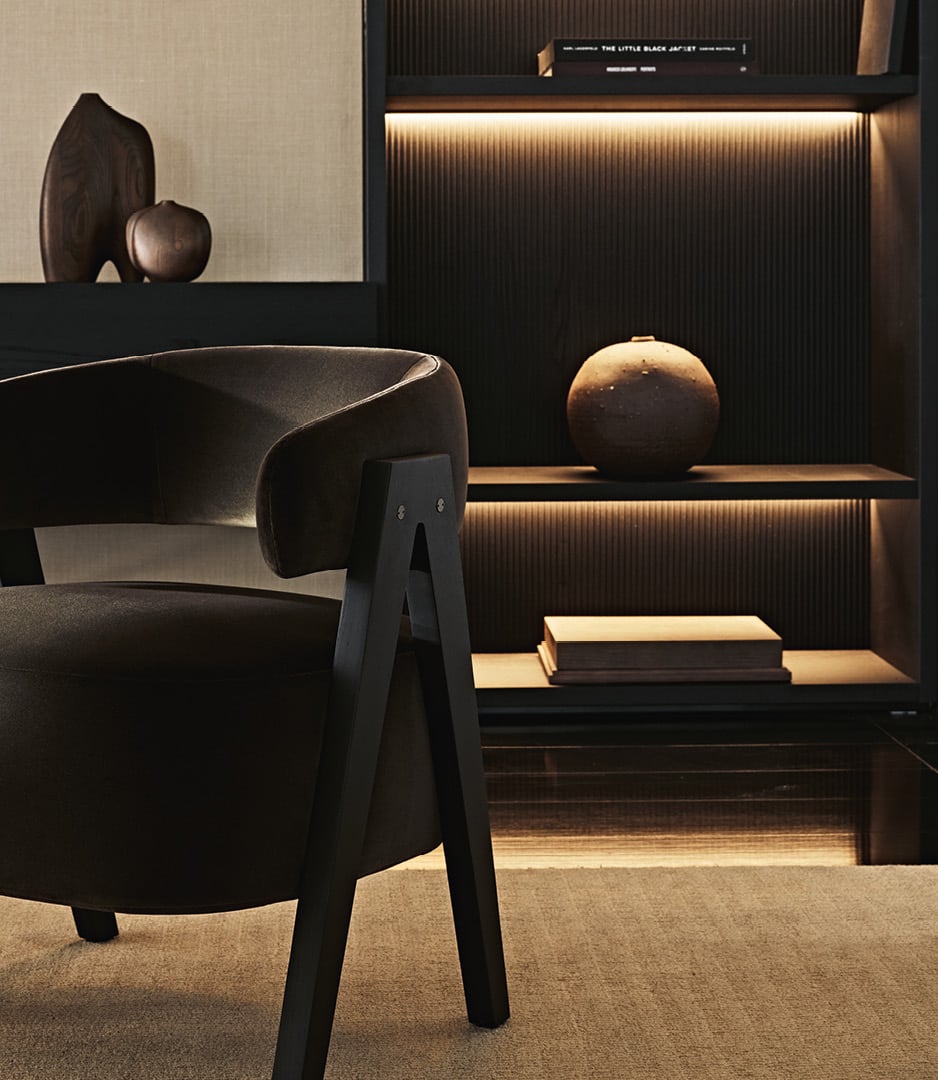
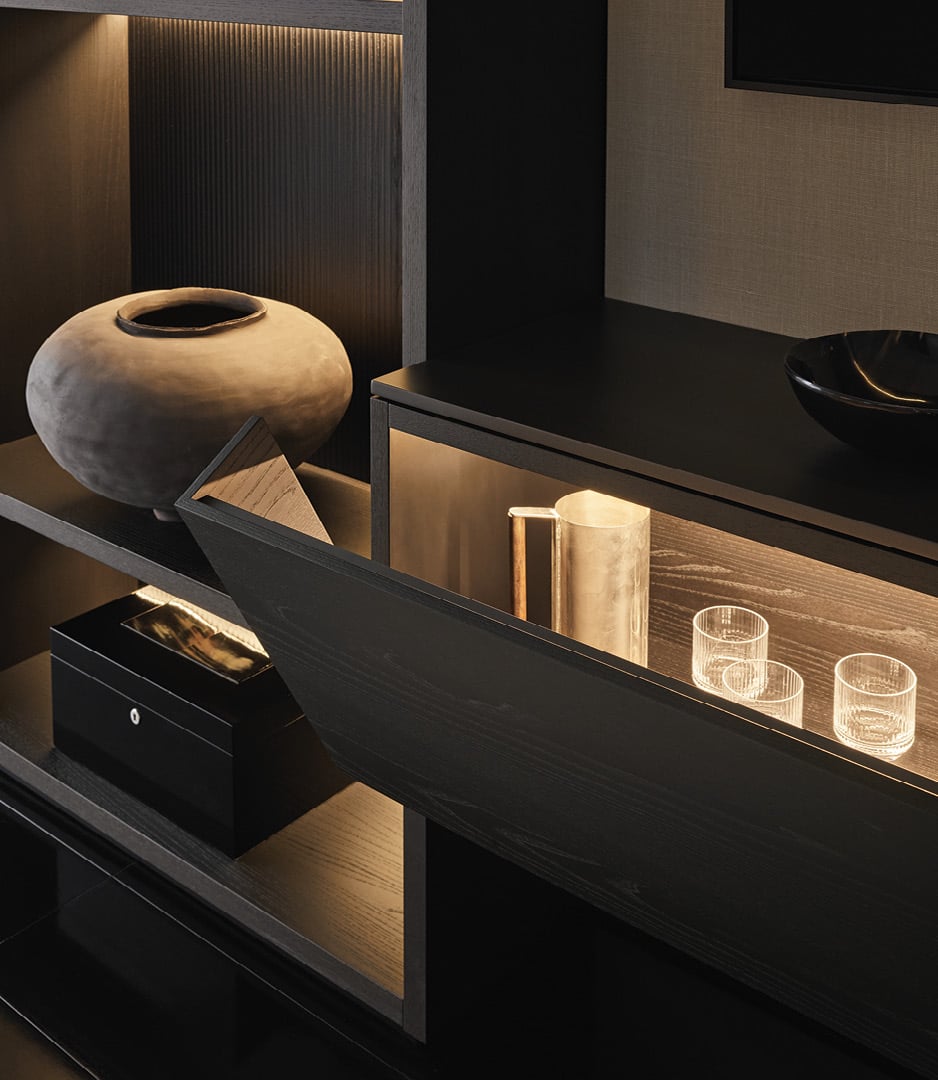
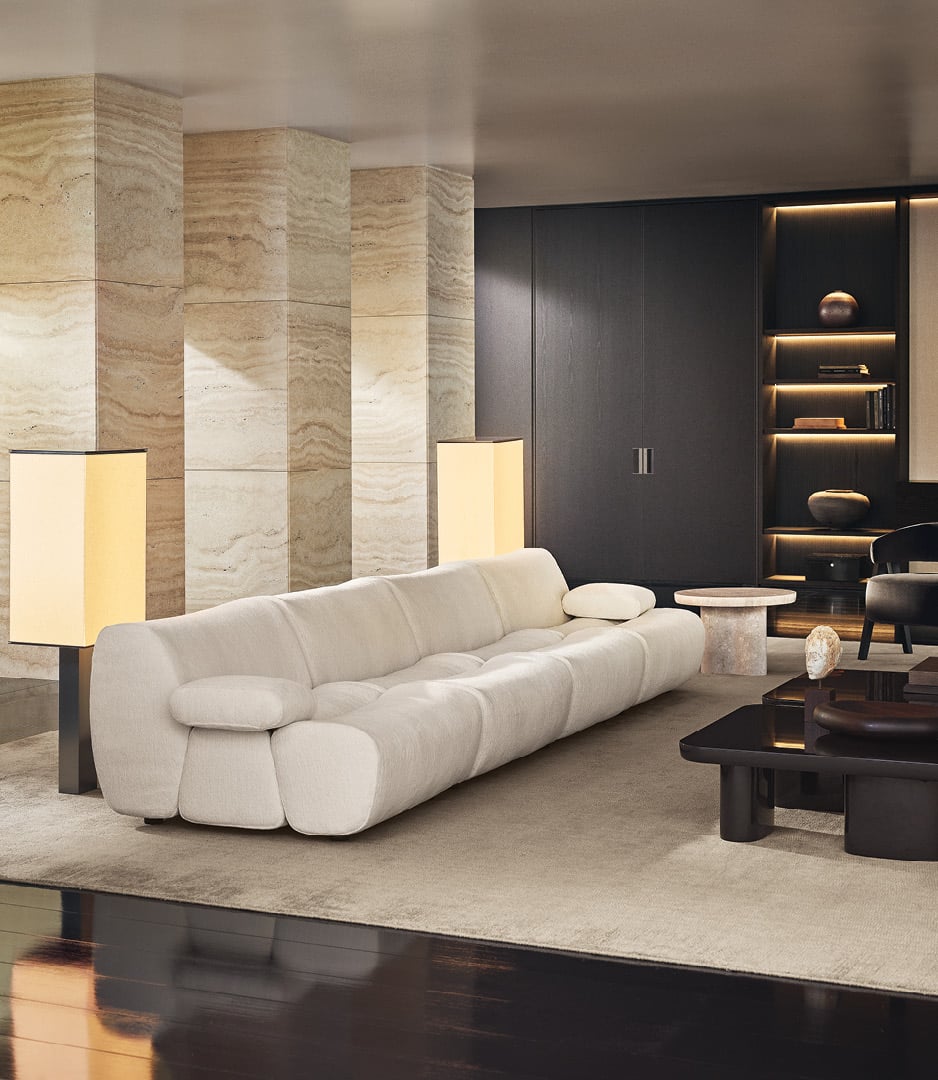
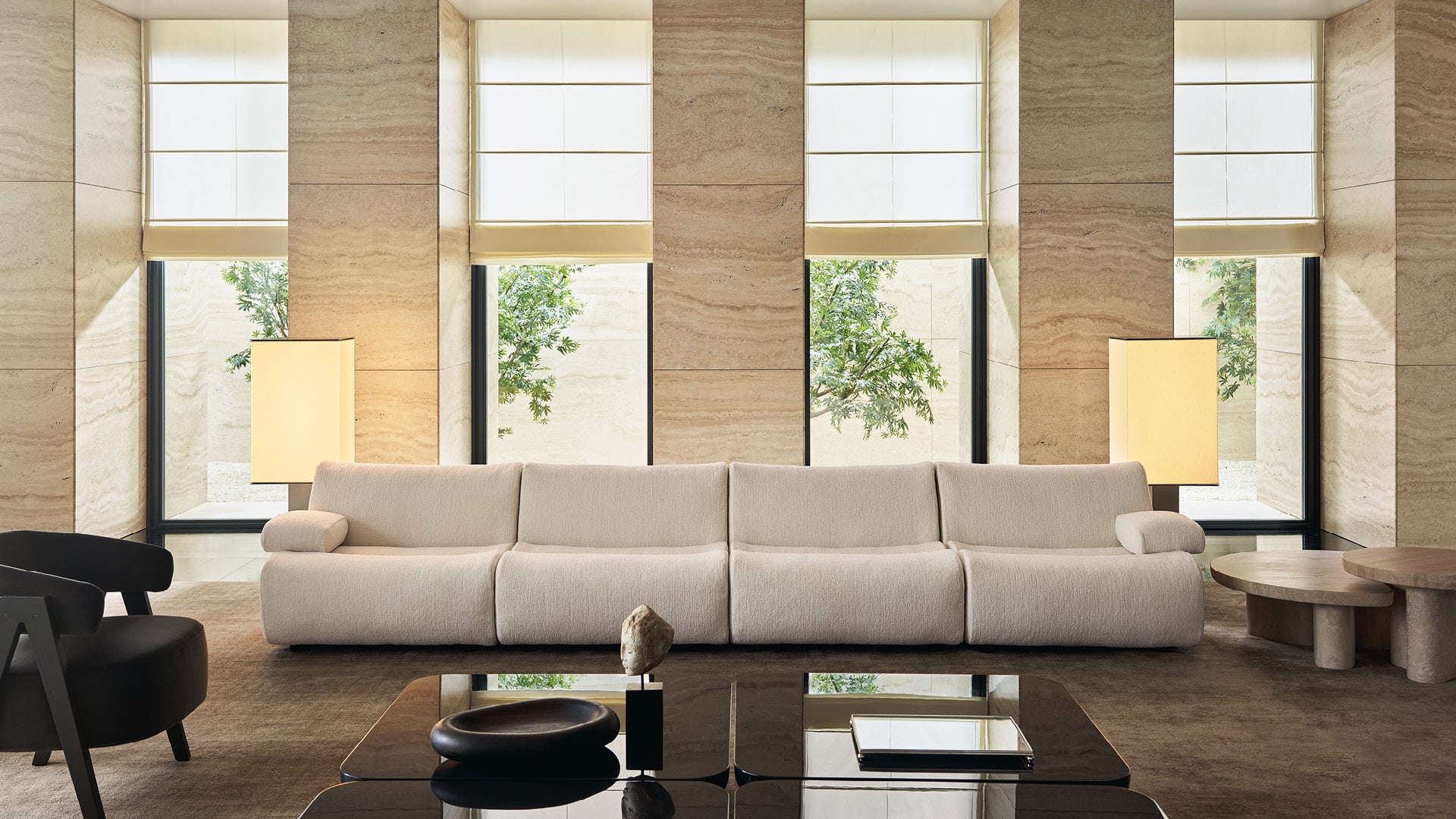

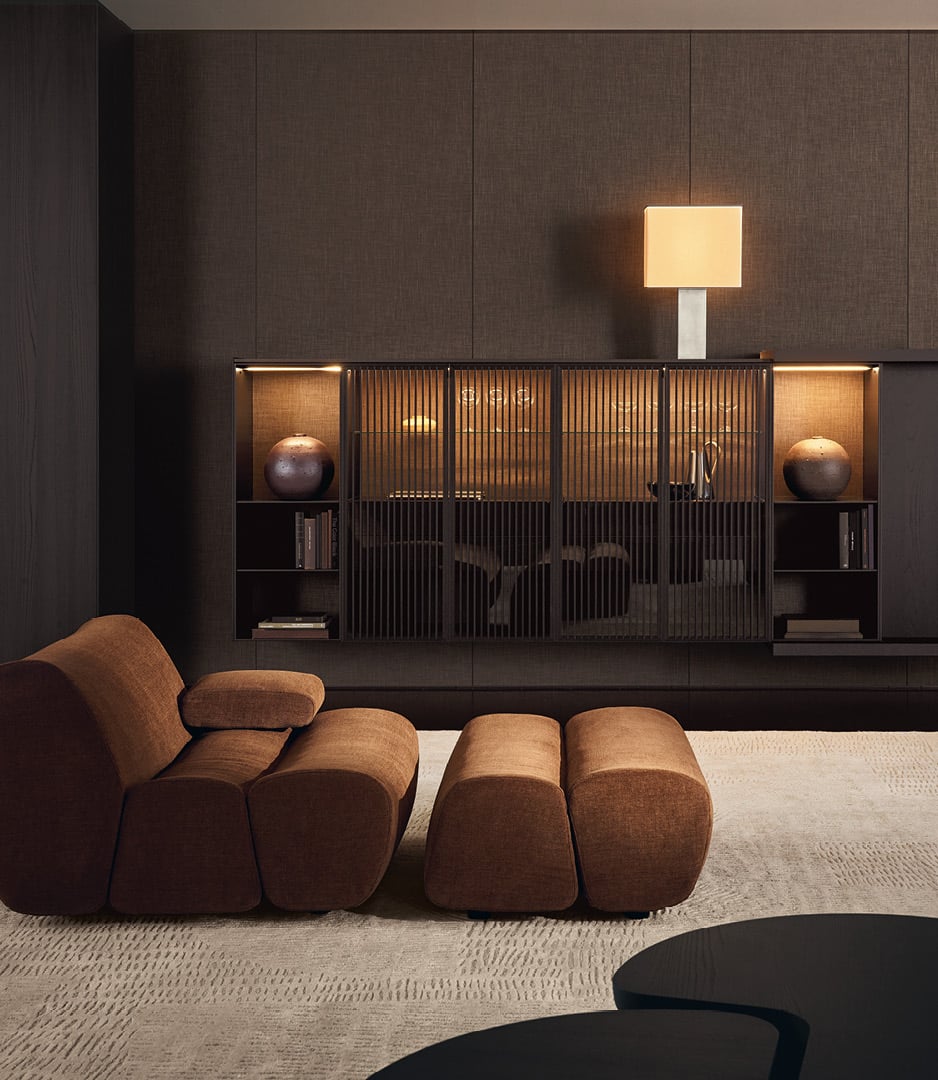
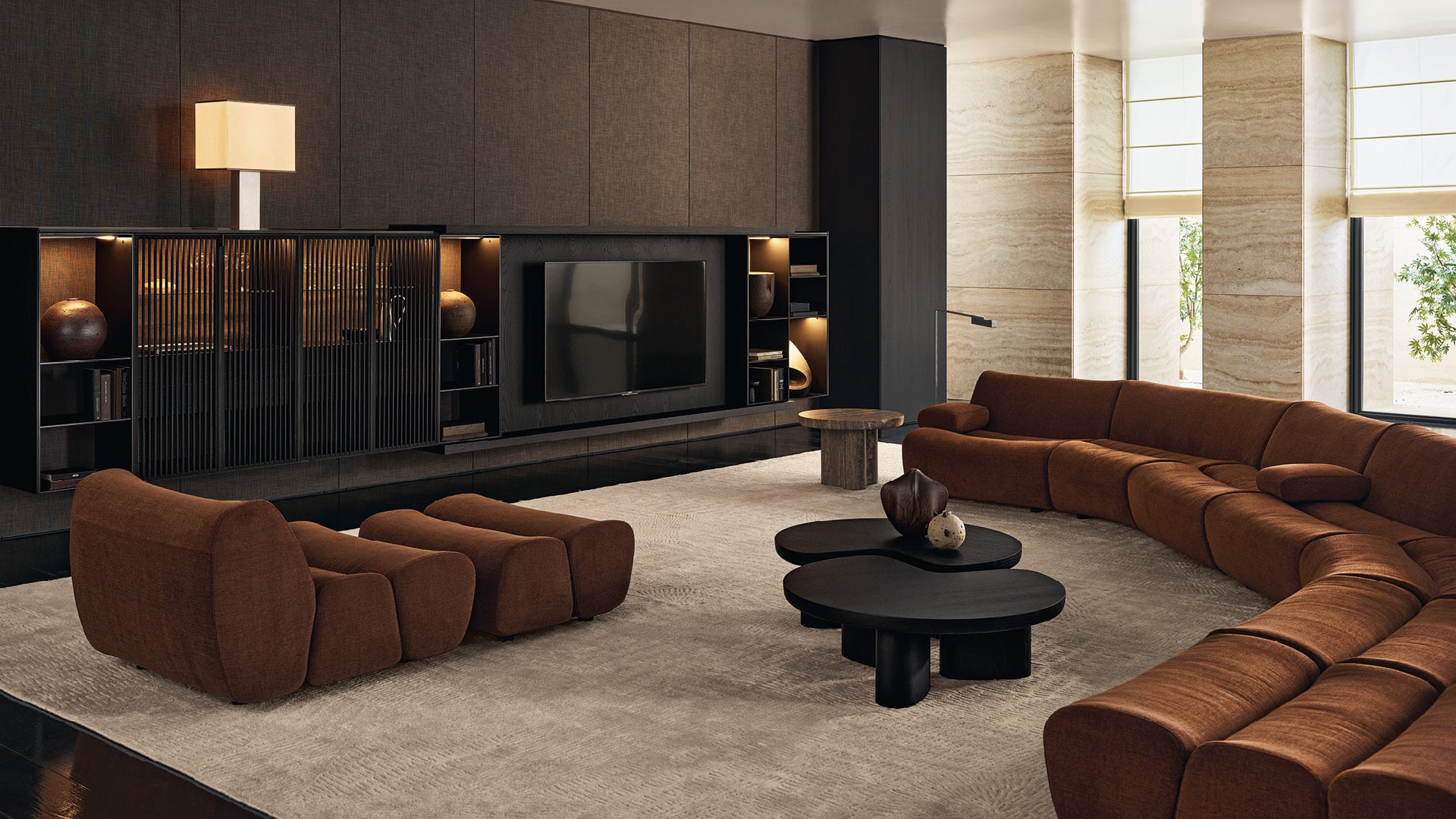
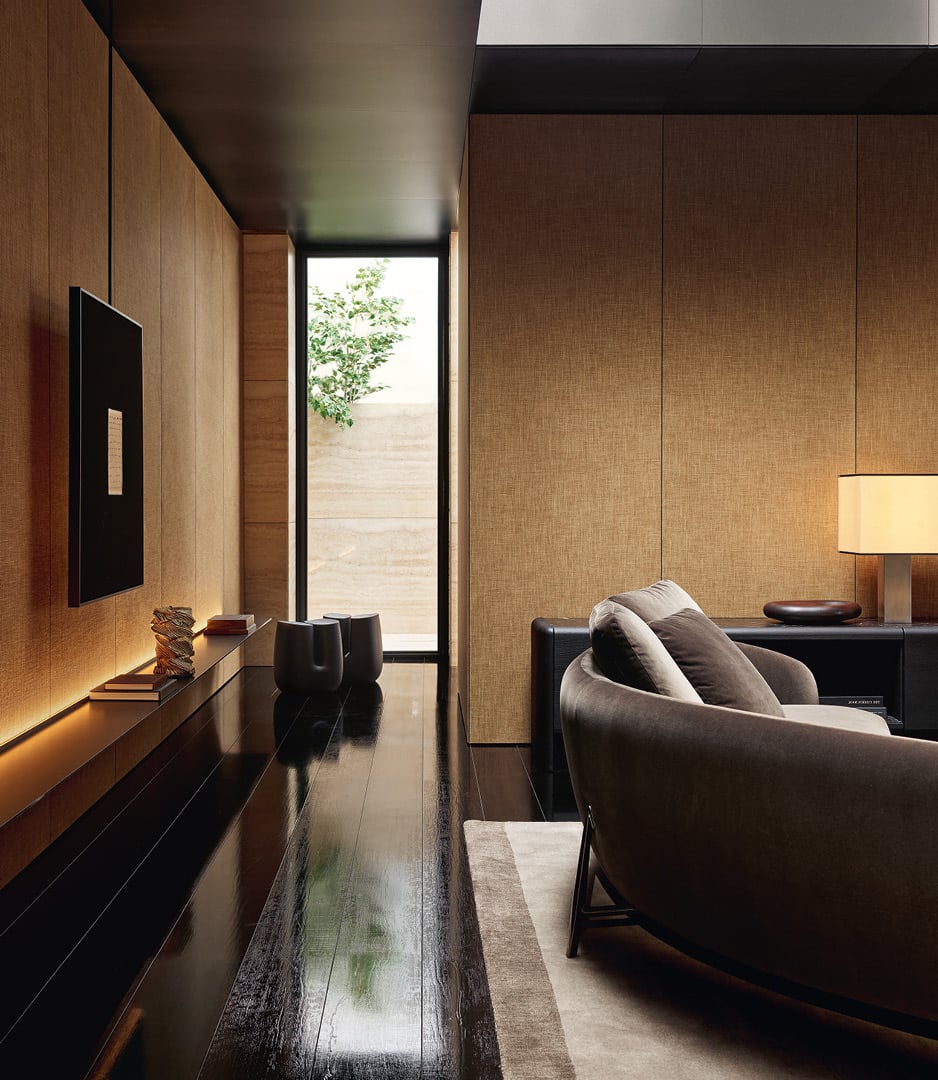
The living area dedicated to the family is characterized by textured boiserie in dark tones. The Ernest sofa by Jean-Marie Massaud is presented in a curved configuration that enhances its organic inspiration. The finish increases warmth and intimacy.
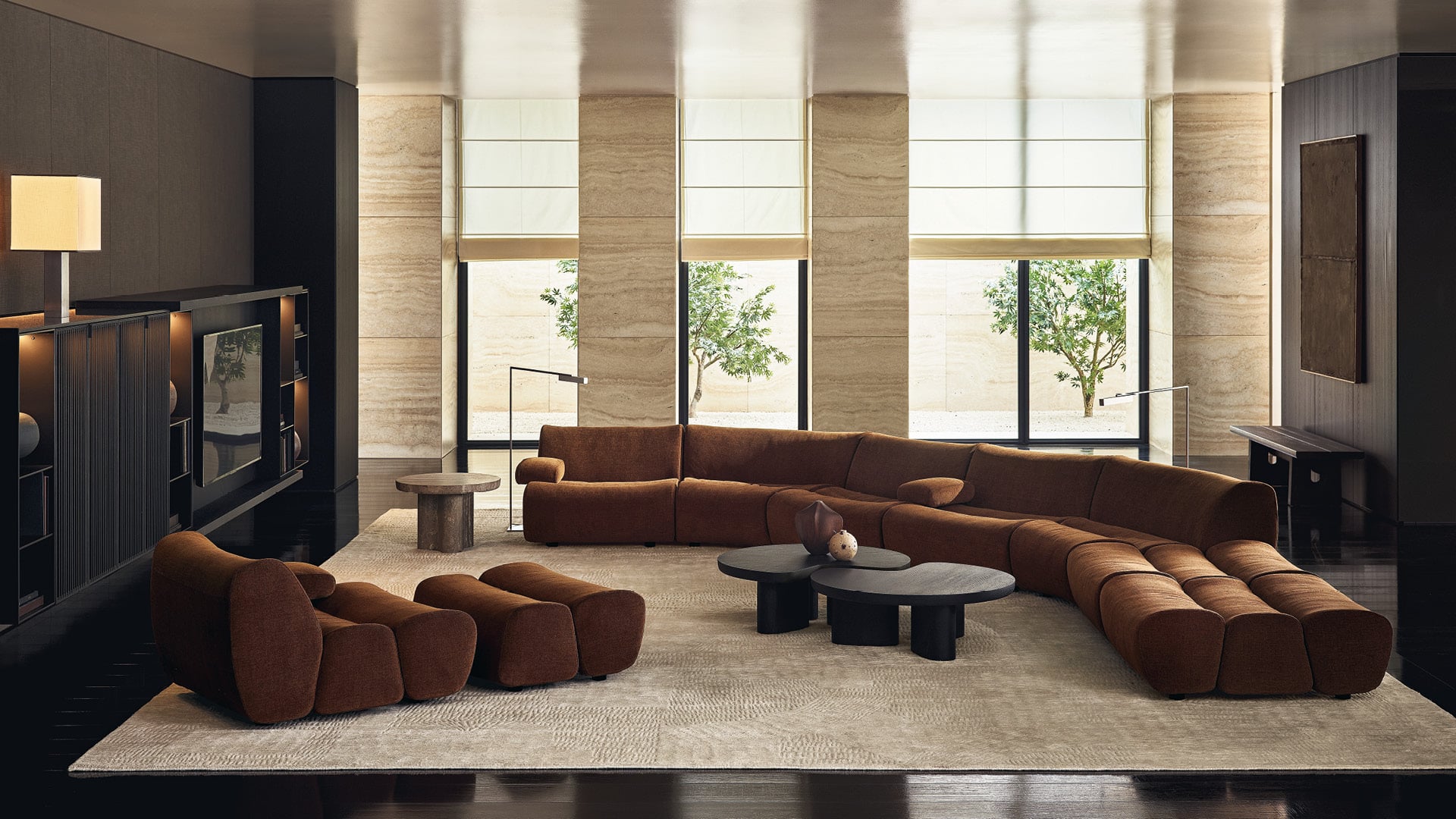
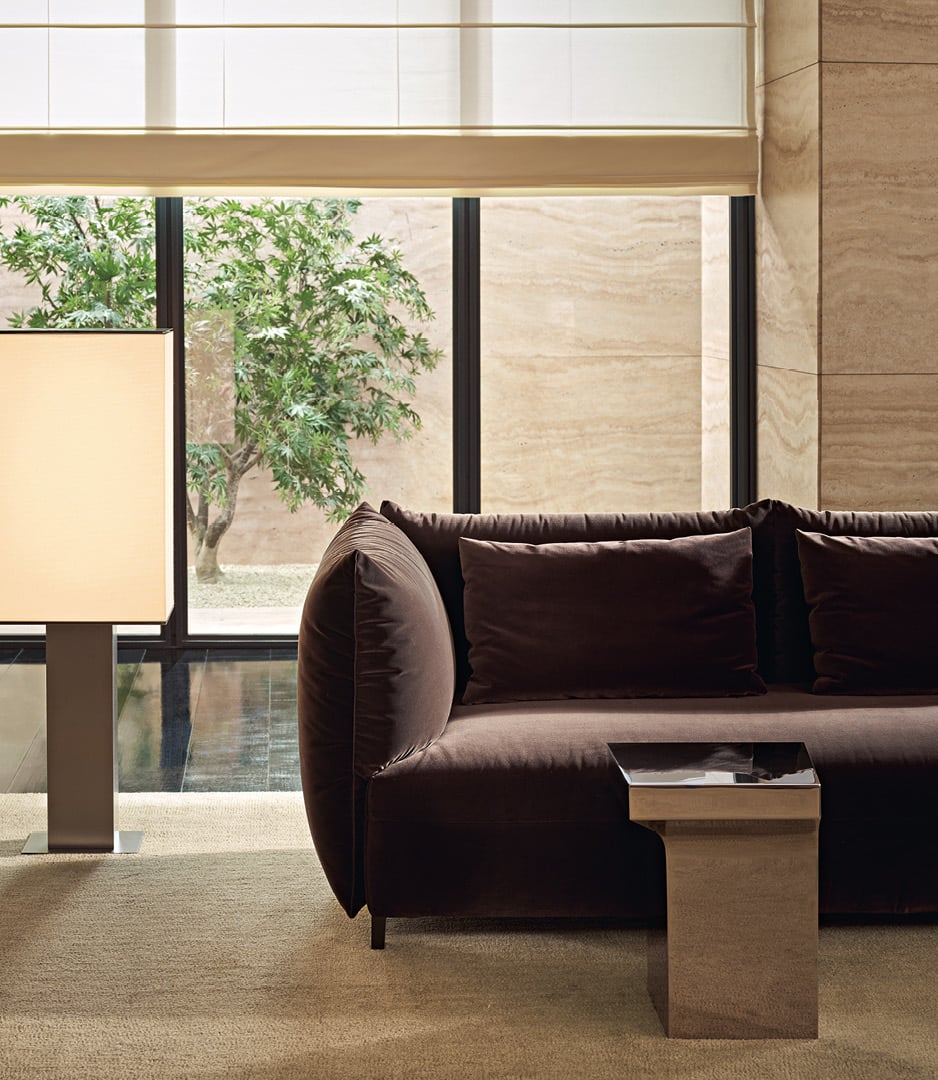
The space is characterized by dark tones or hues inspired by the colors of the earth. The interplay between interior and exterior is emphasized by tall openings, delicately screened by poplin curtains inspired by Japanese aesthetics.
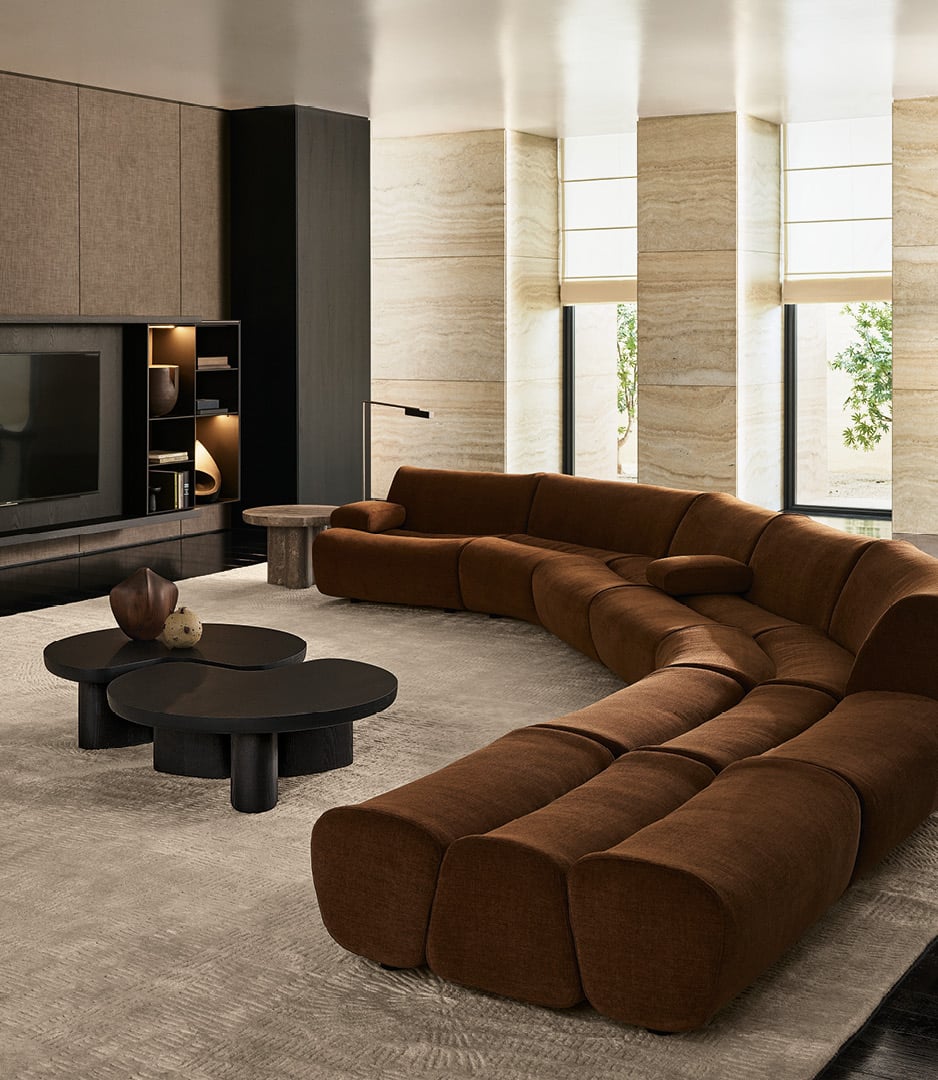
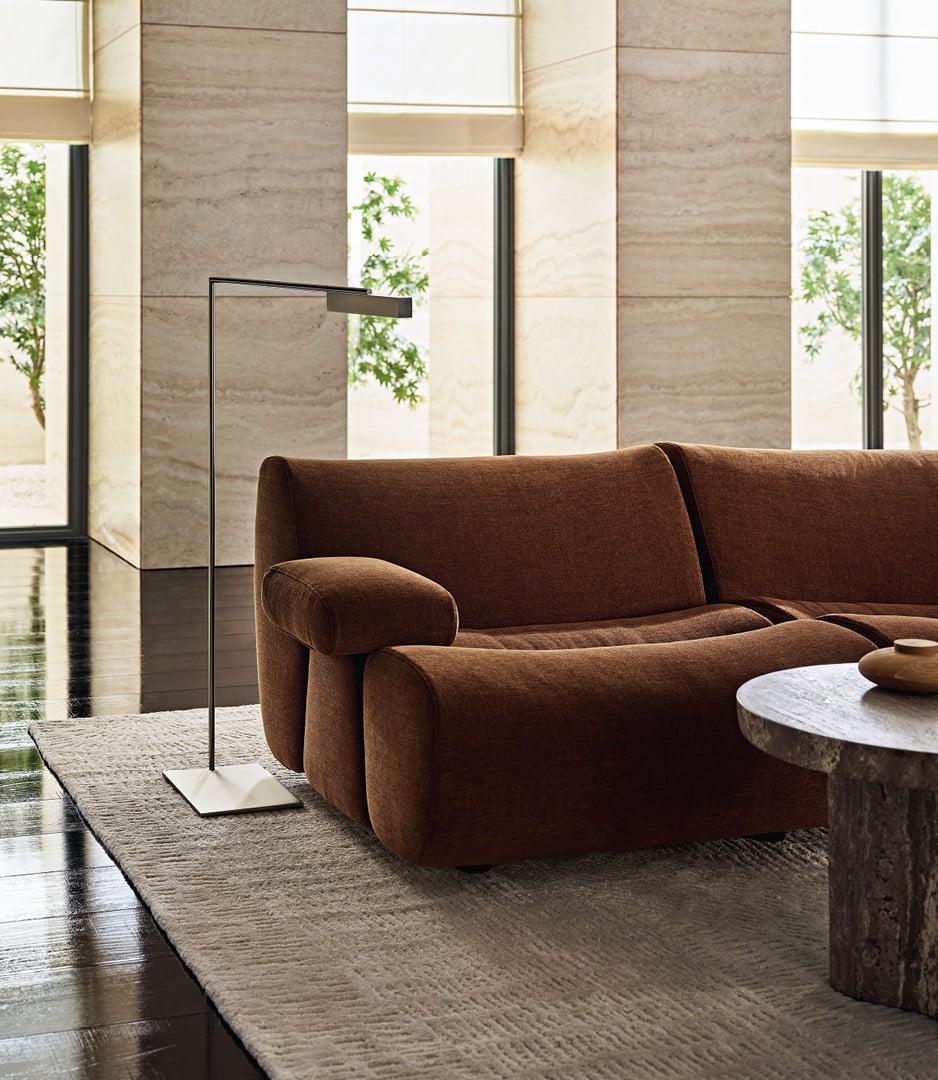
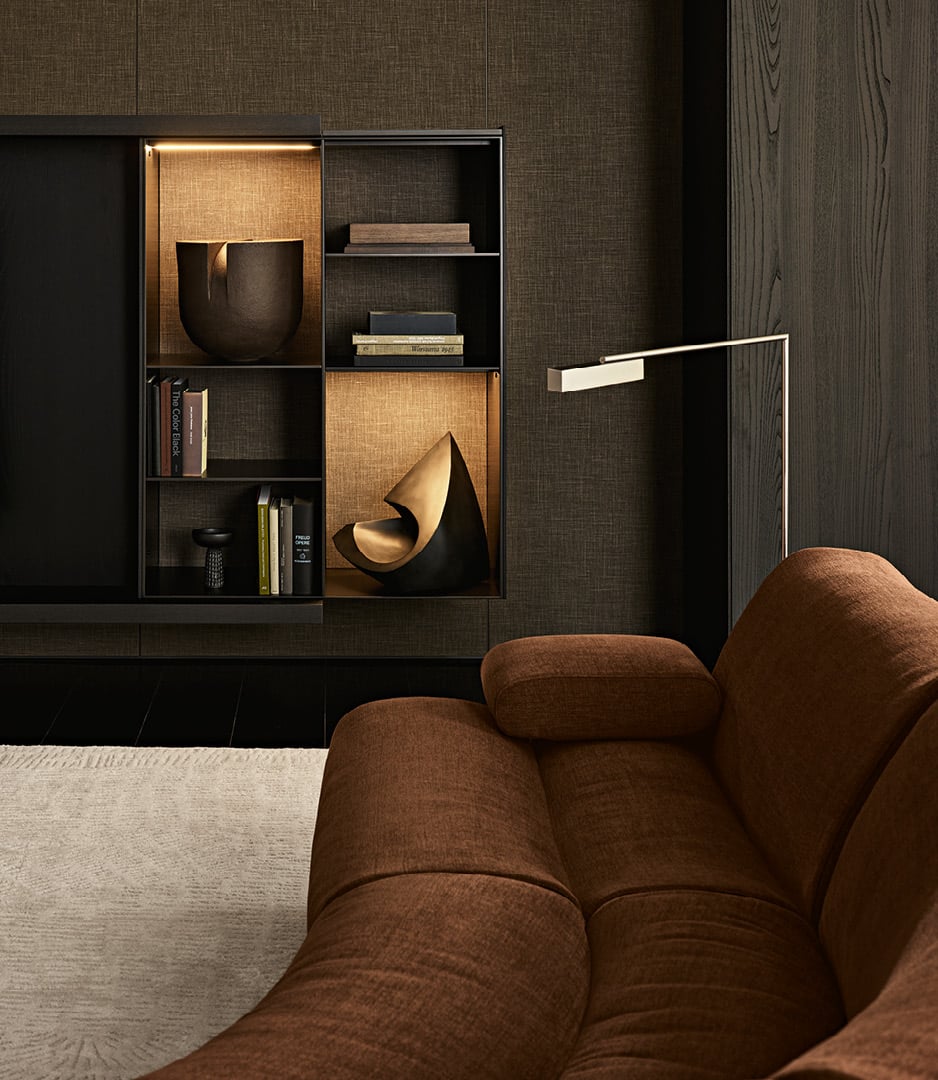
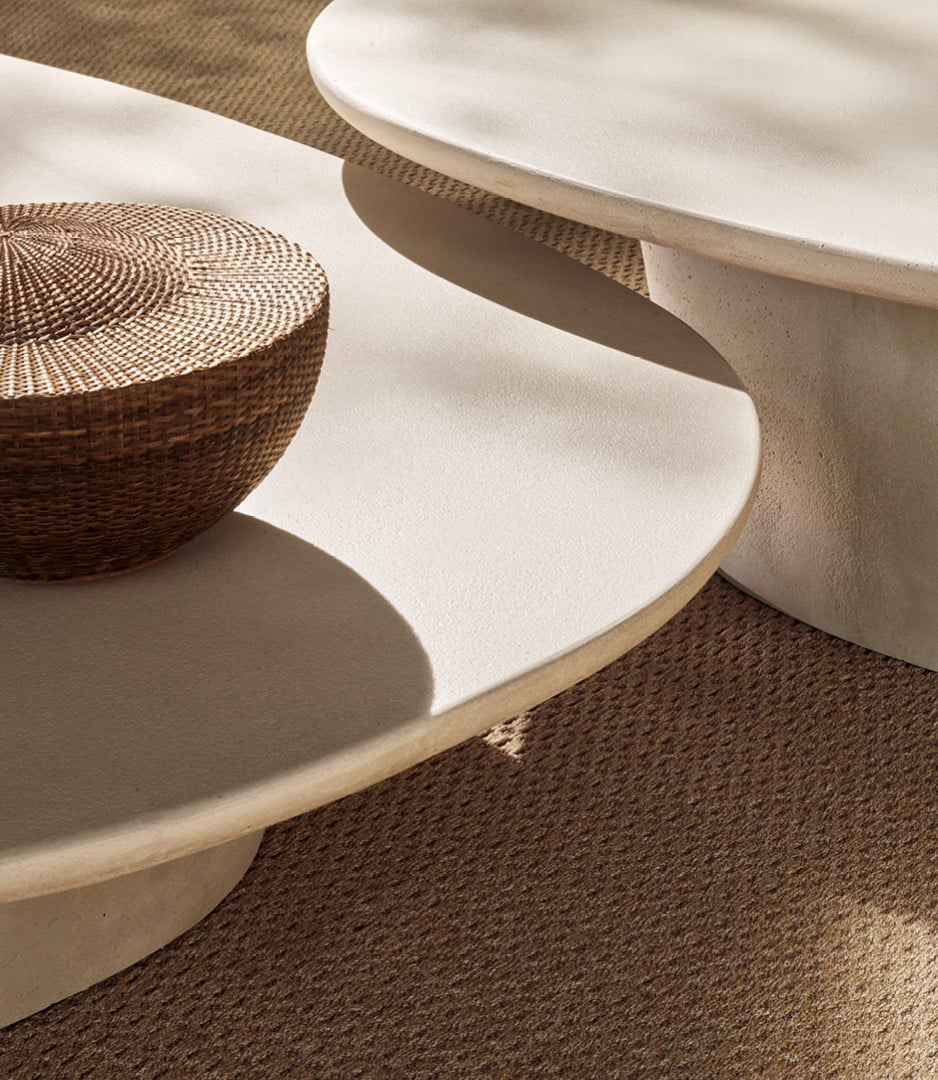
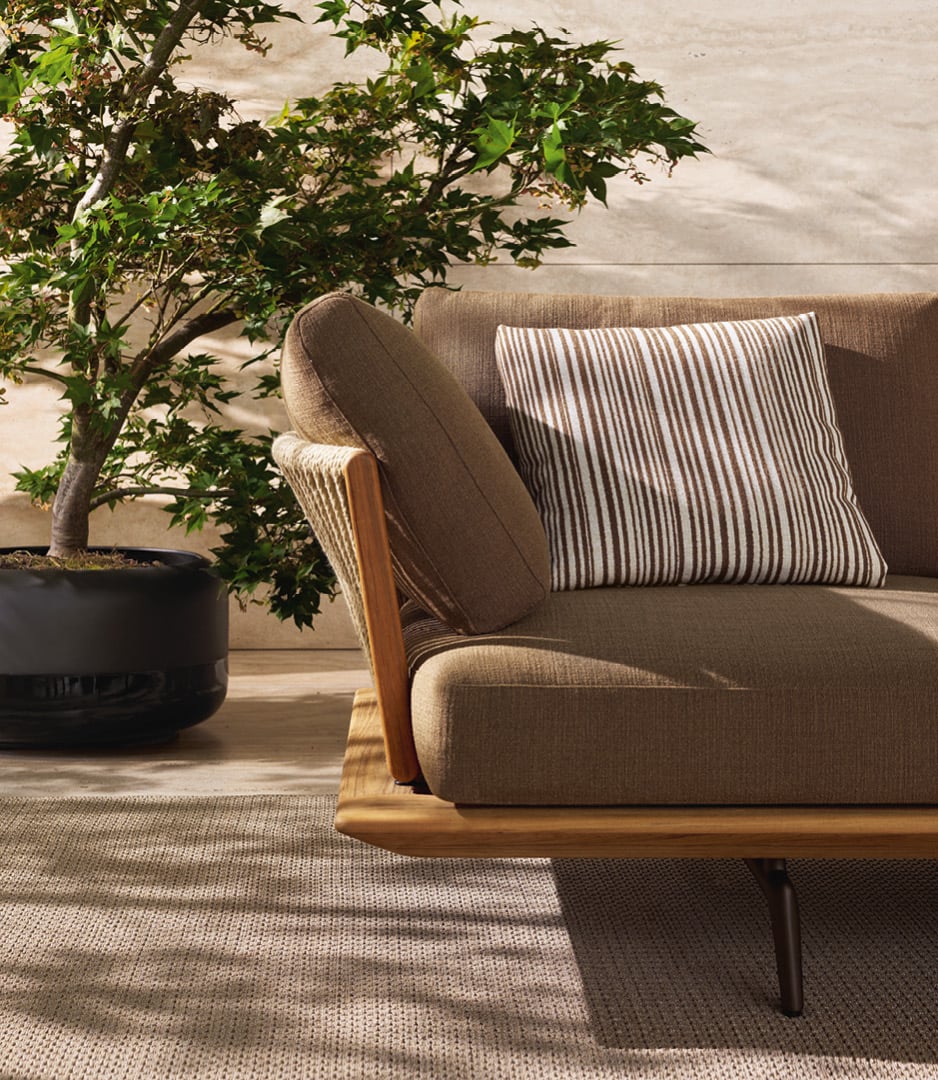
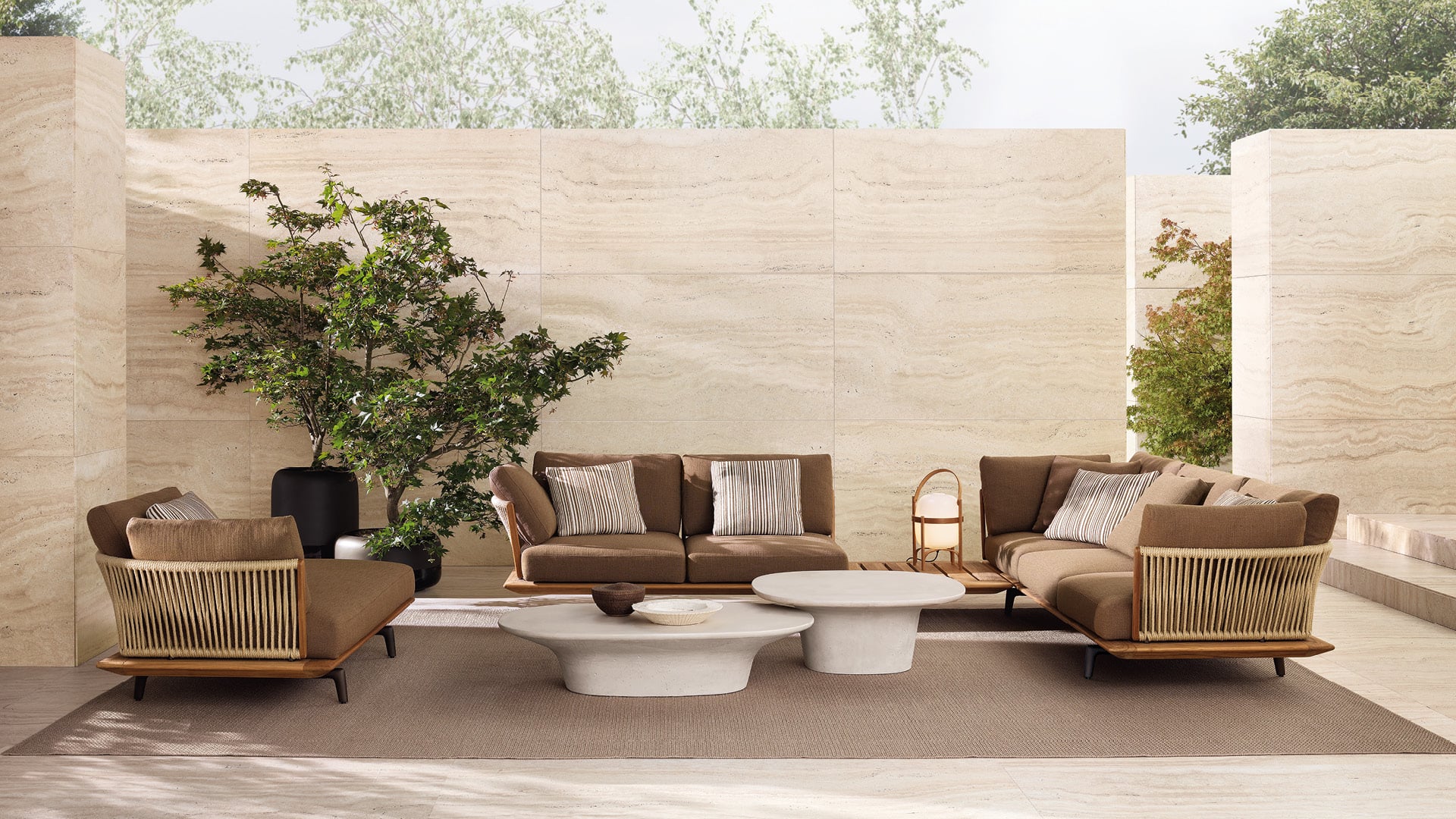
In the patio, a living yet discreet nature enhances the embrace of a cocoon-like architecture that seamlessly integrates the outdoor spaces, almost like a medieval hortus conclusus reinterpreted for contemporary times.
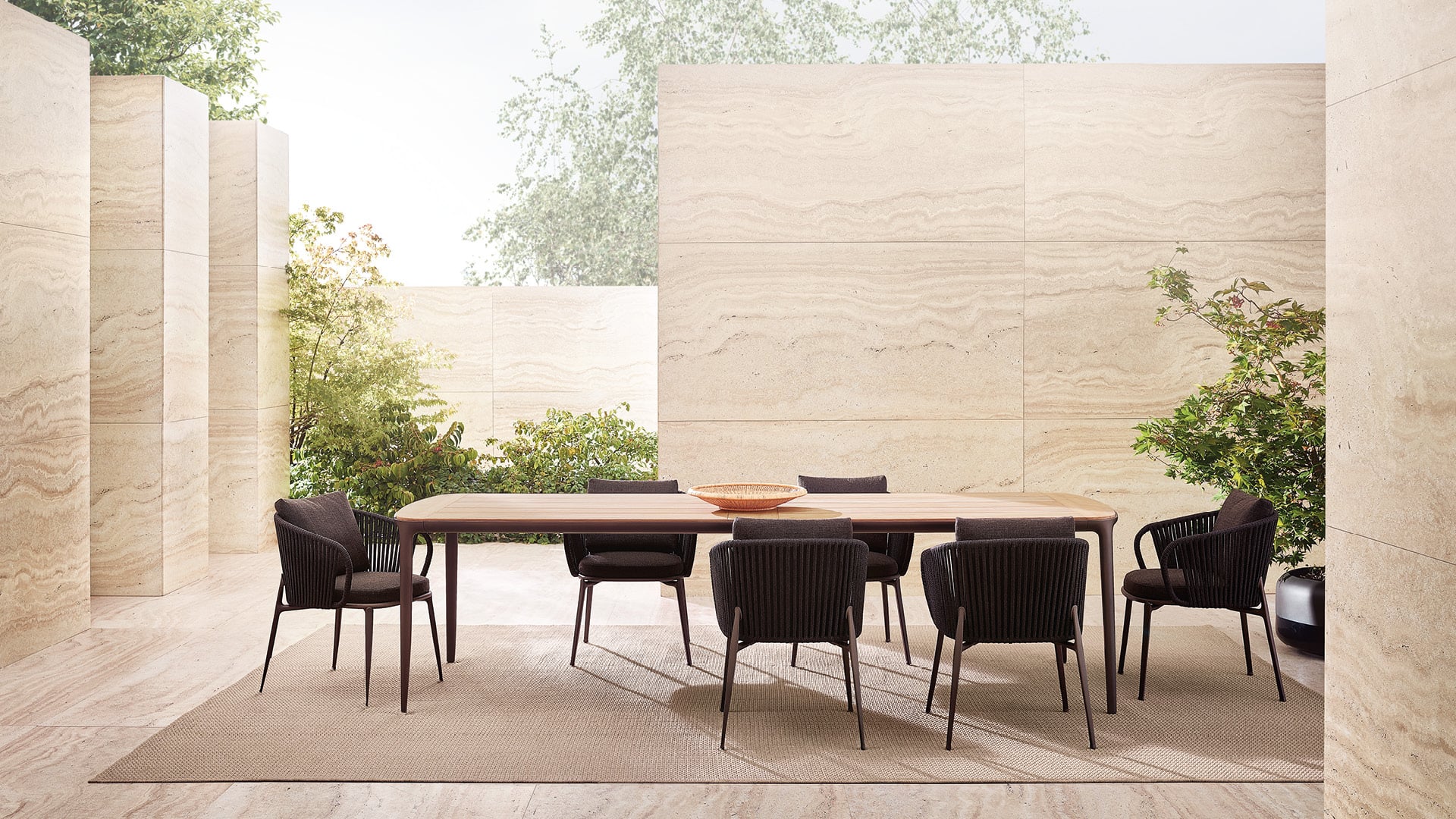
The dining area, with the Henry table and Marina chairs, is discreetly separated from the living area. Light teak, natural rope, and fabrics in earthy tones harmonize with the travertine marble and evoke calm and relaxation.
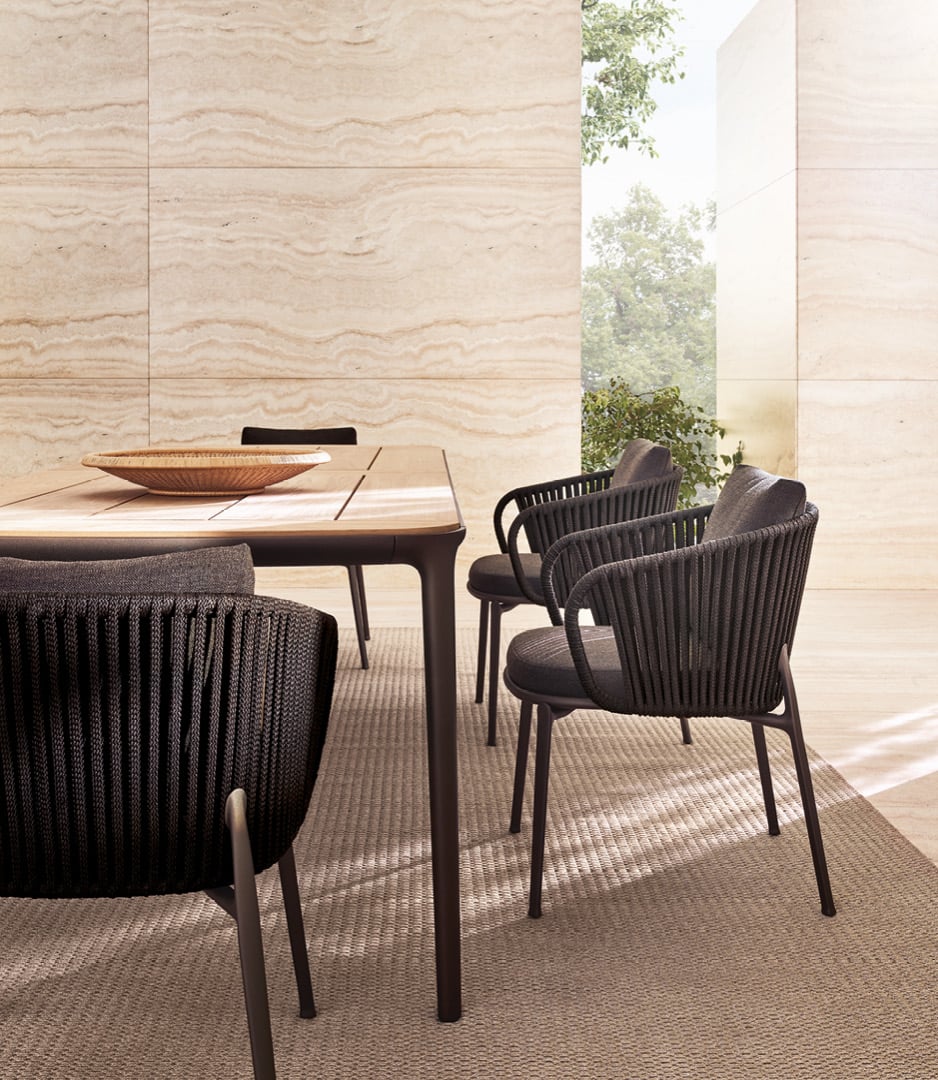
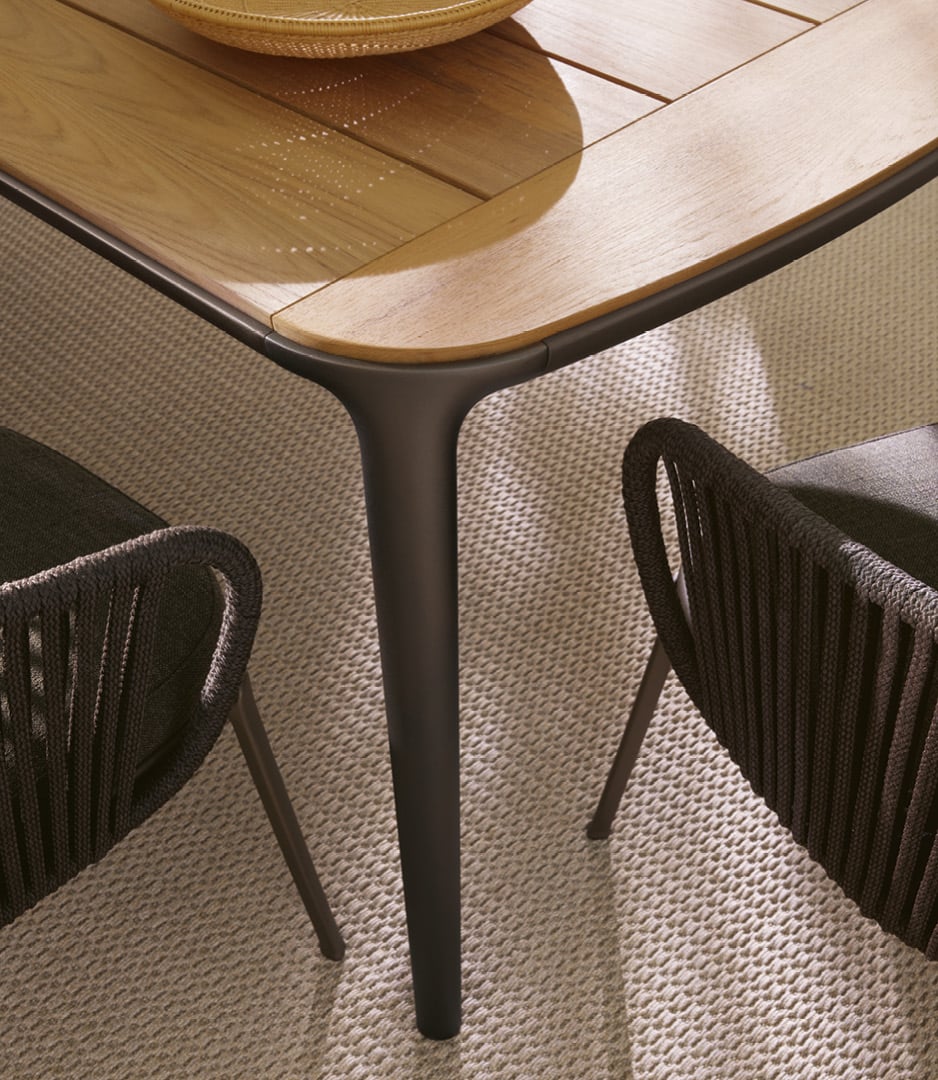
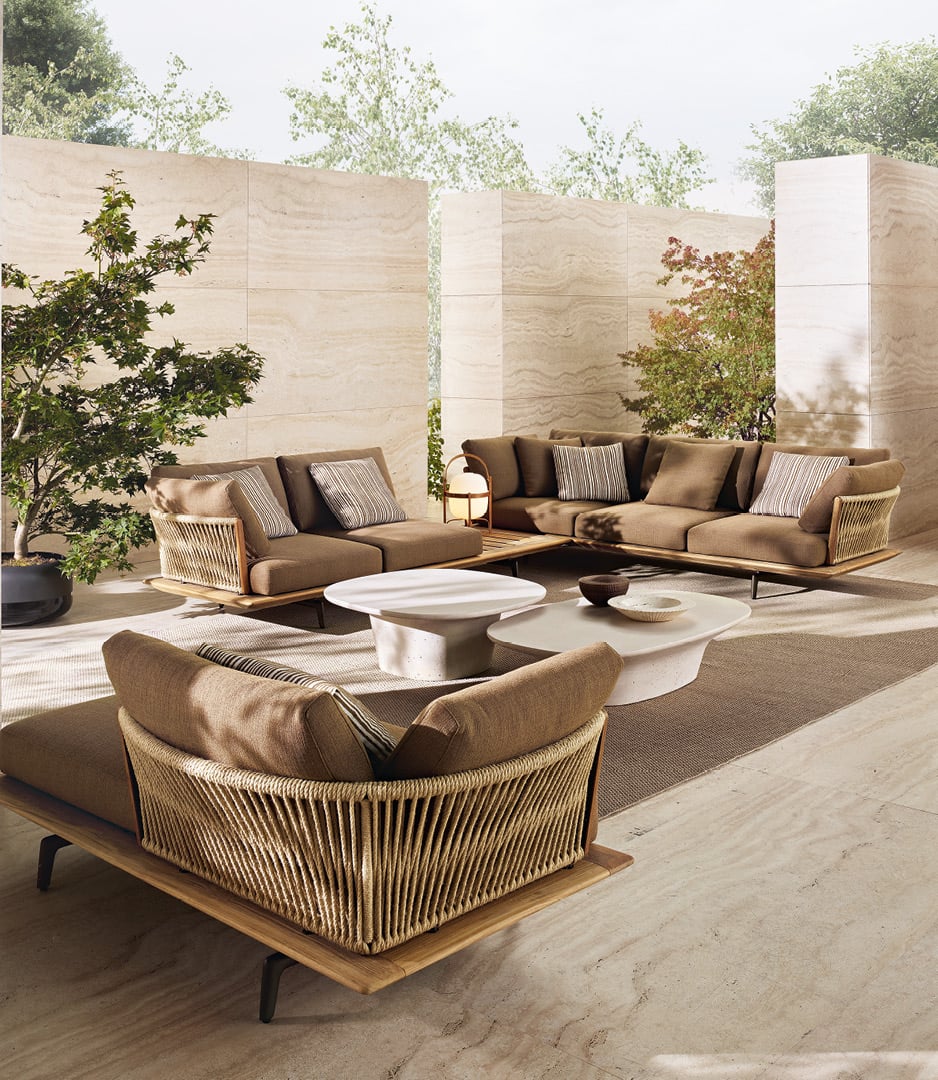
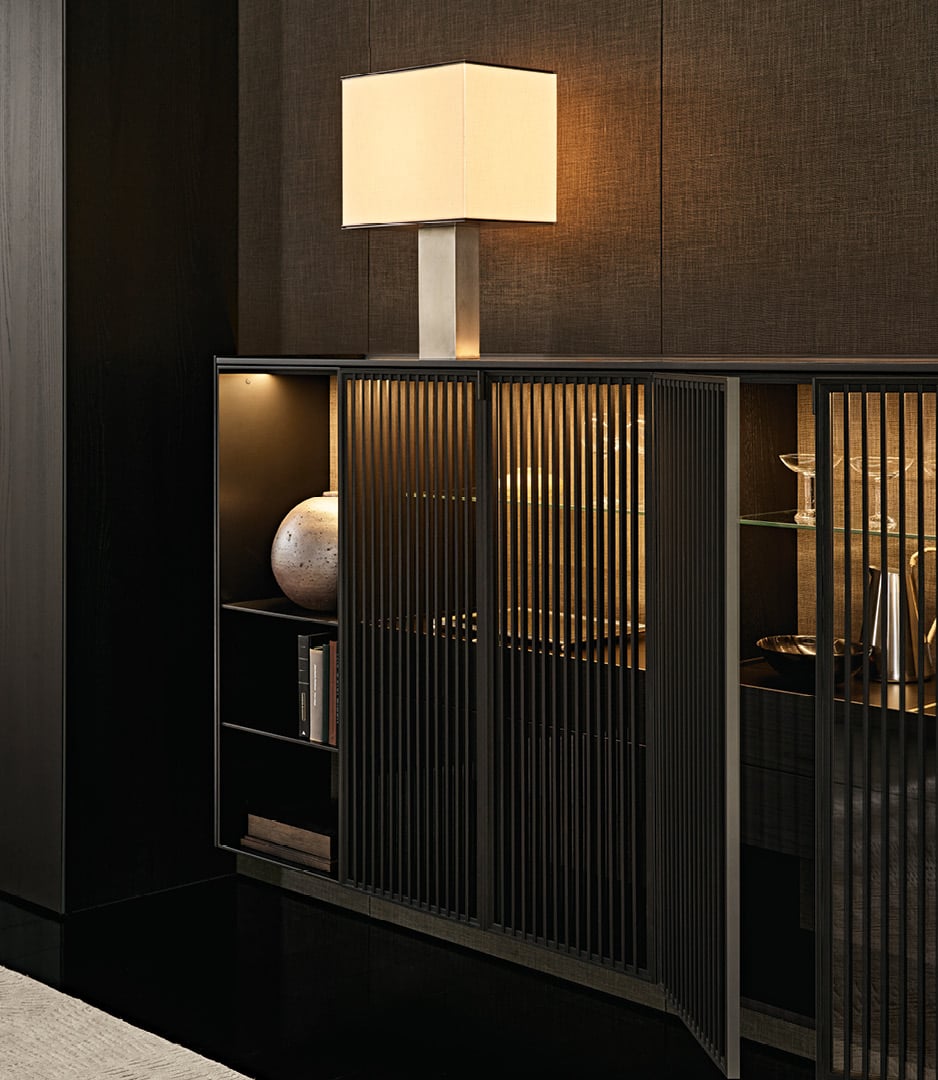
The most secluded heart of the villa is the private living room, inspired by an exclusive club. During the day, the large opening in the ceiling lets the light filter in. In the evening, the linen boiserie, elegant lamps with fabric shades, and the light-colored rug create a feeling of soft welcome.
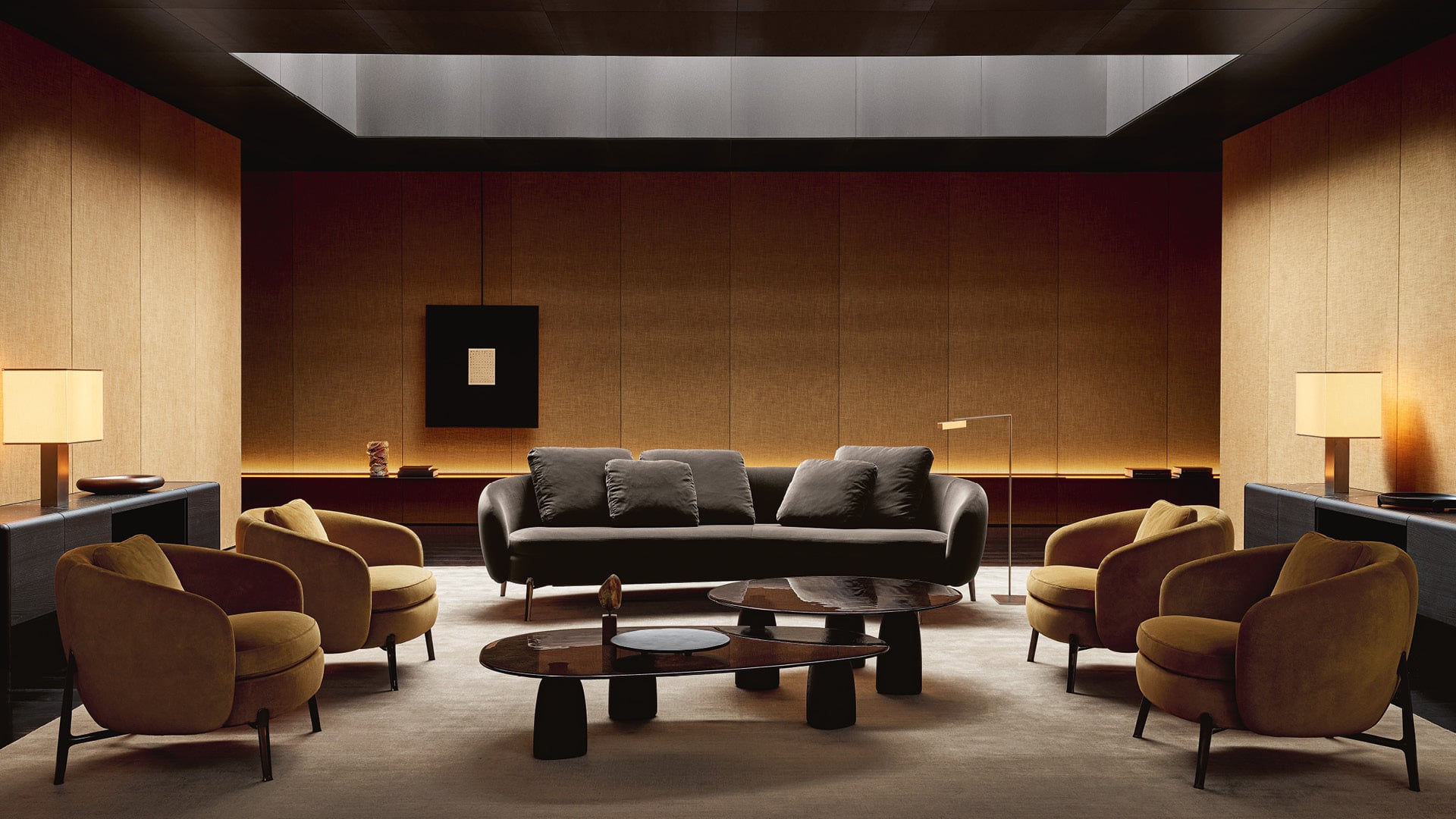
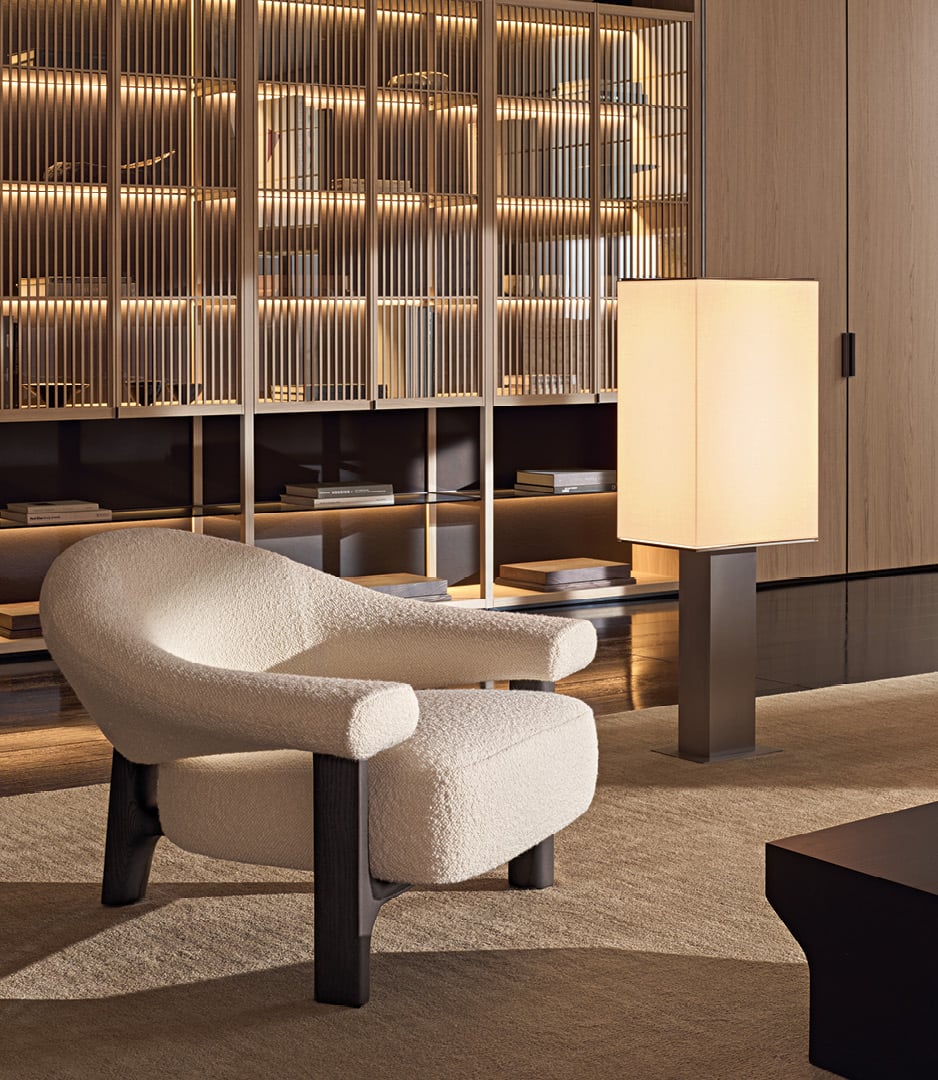
The shapes of the furnishings as well—from the upholstered pieces to the coffee tables, up to the day system that frames the room—are curved and welcoming. The Orbis sofas and armchairs, with their enveloping backrests, create within the living area an intimate space that invites conversation.
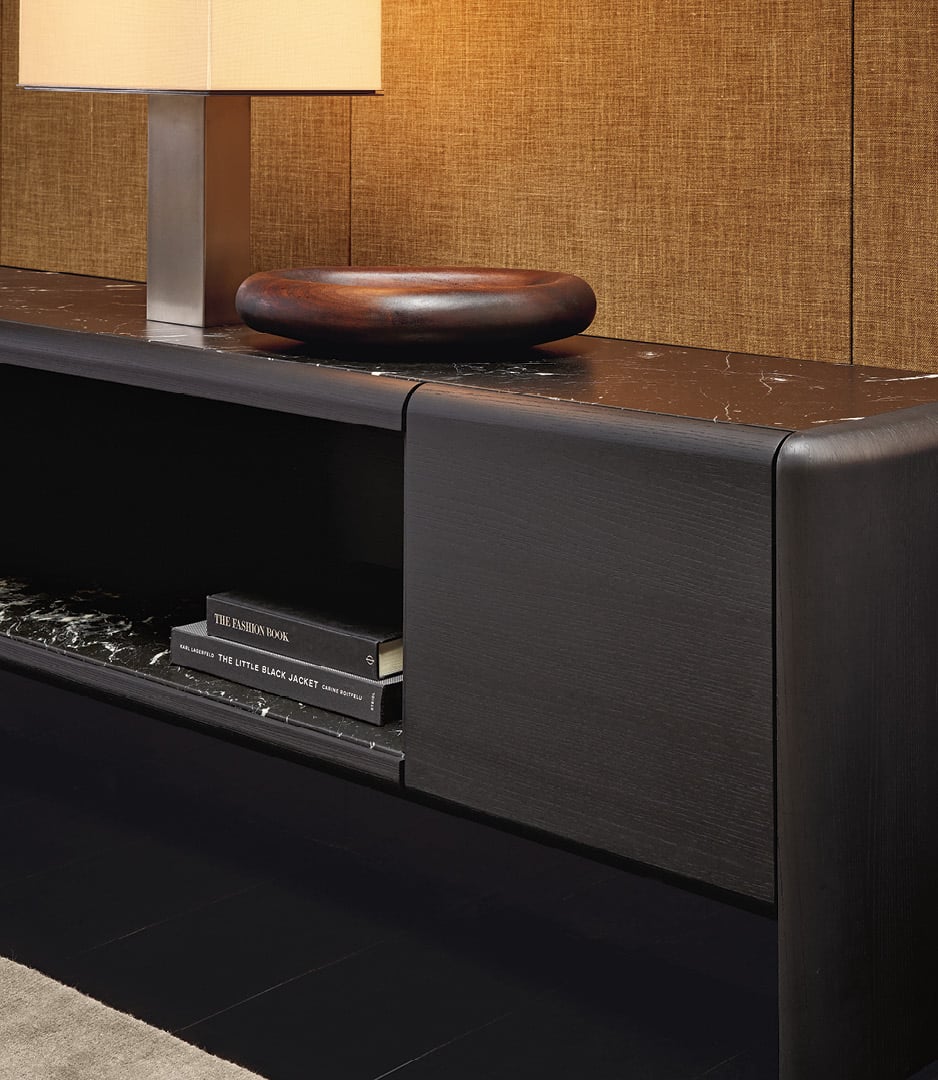
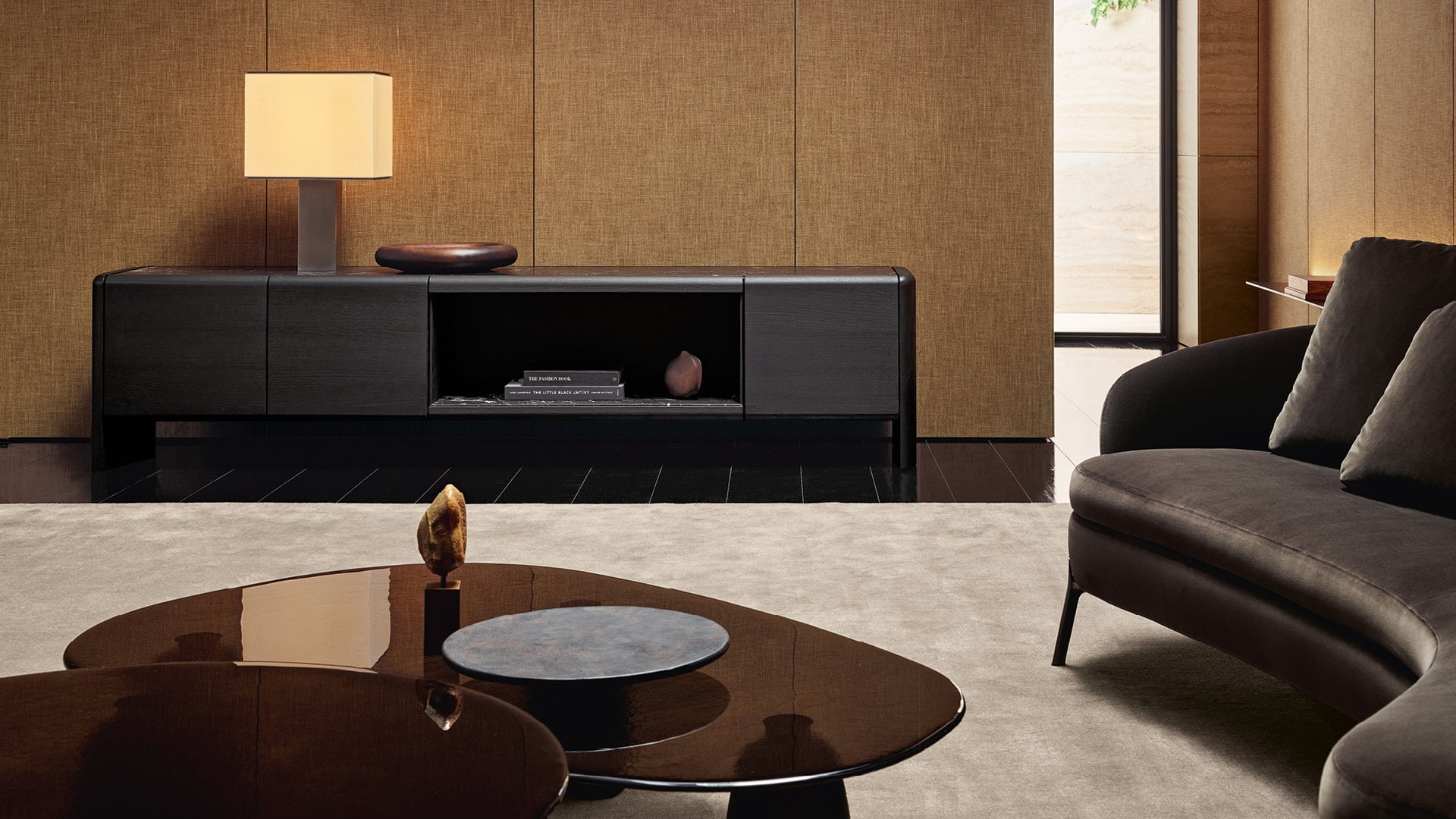
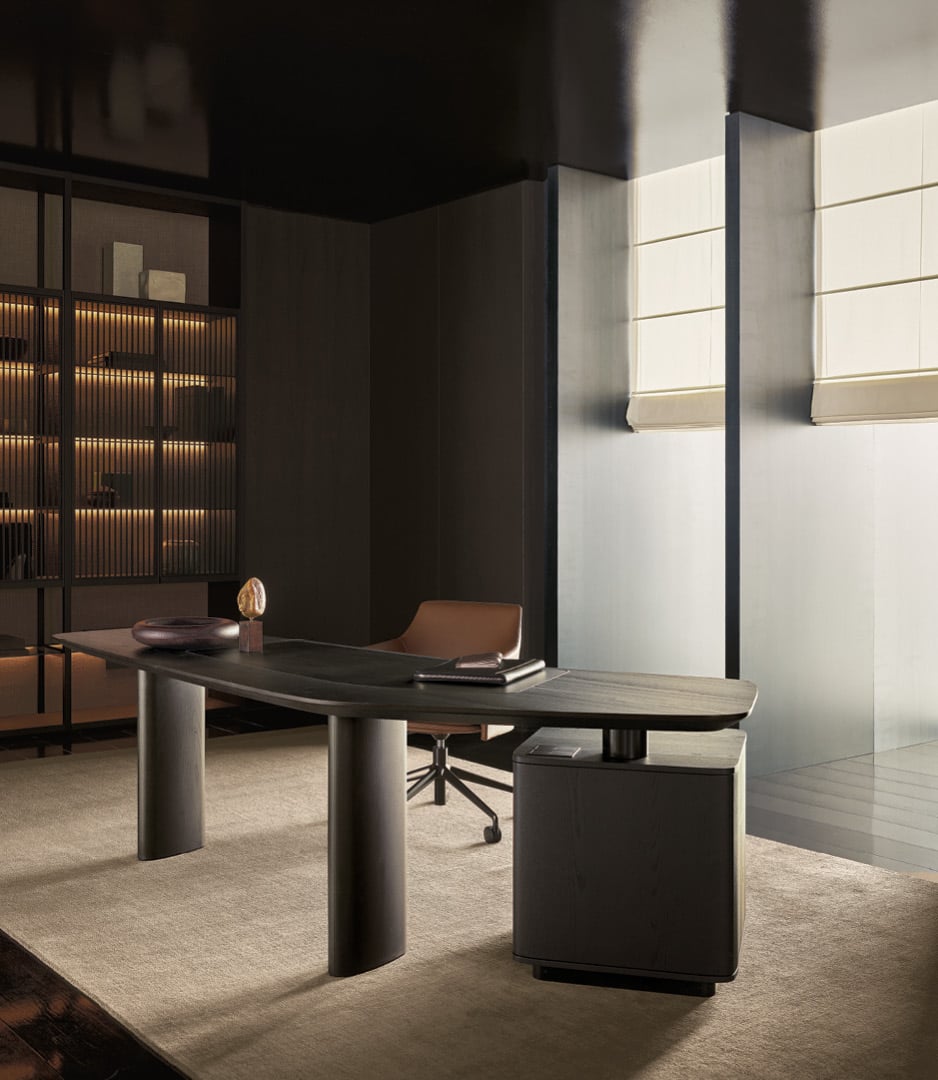
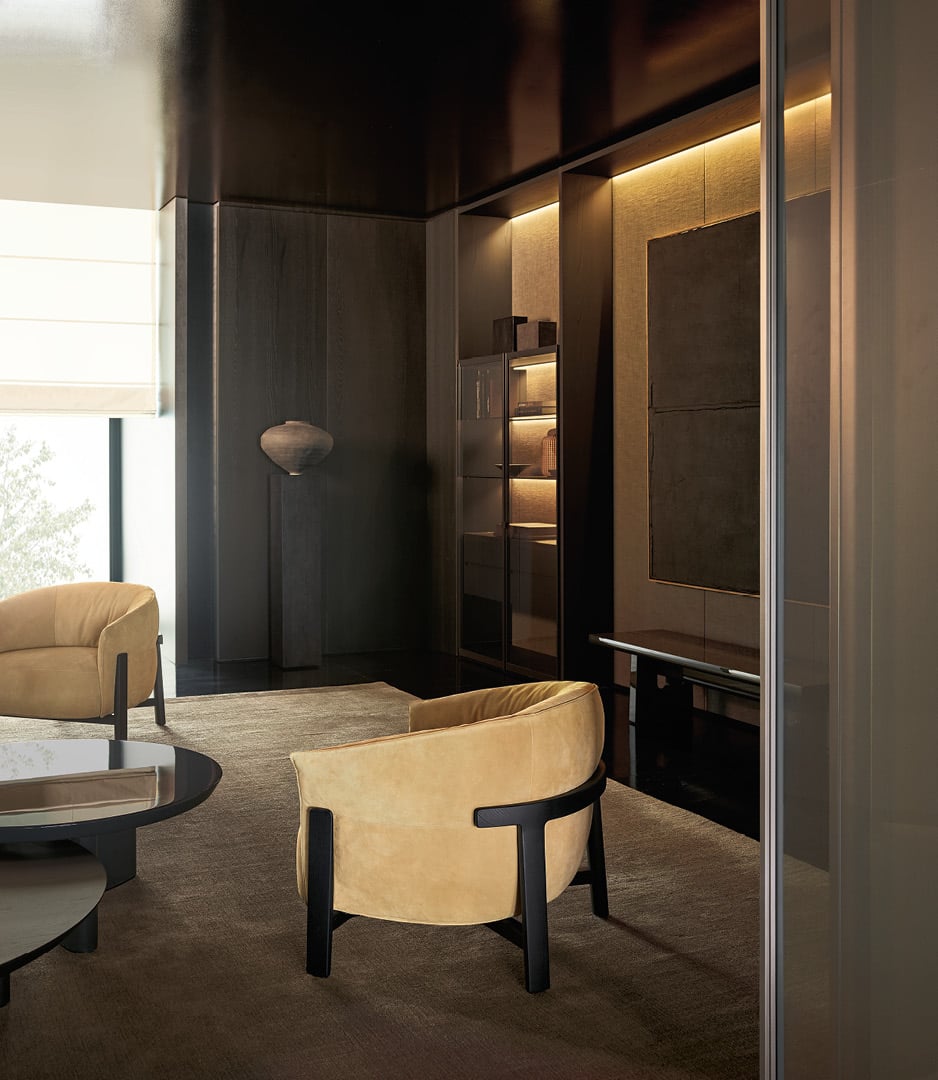
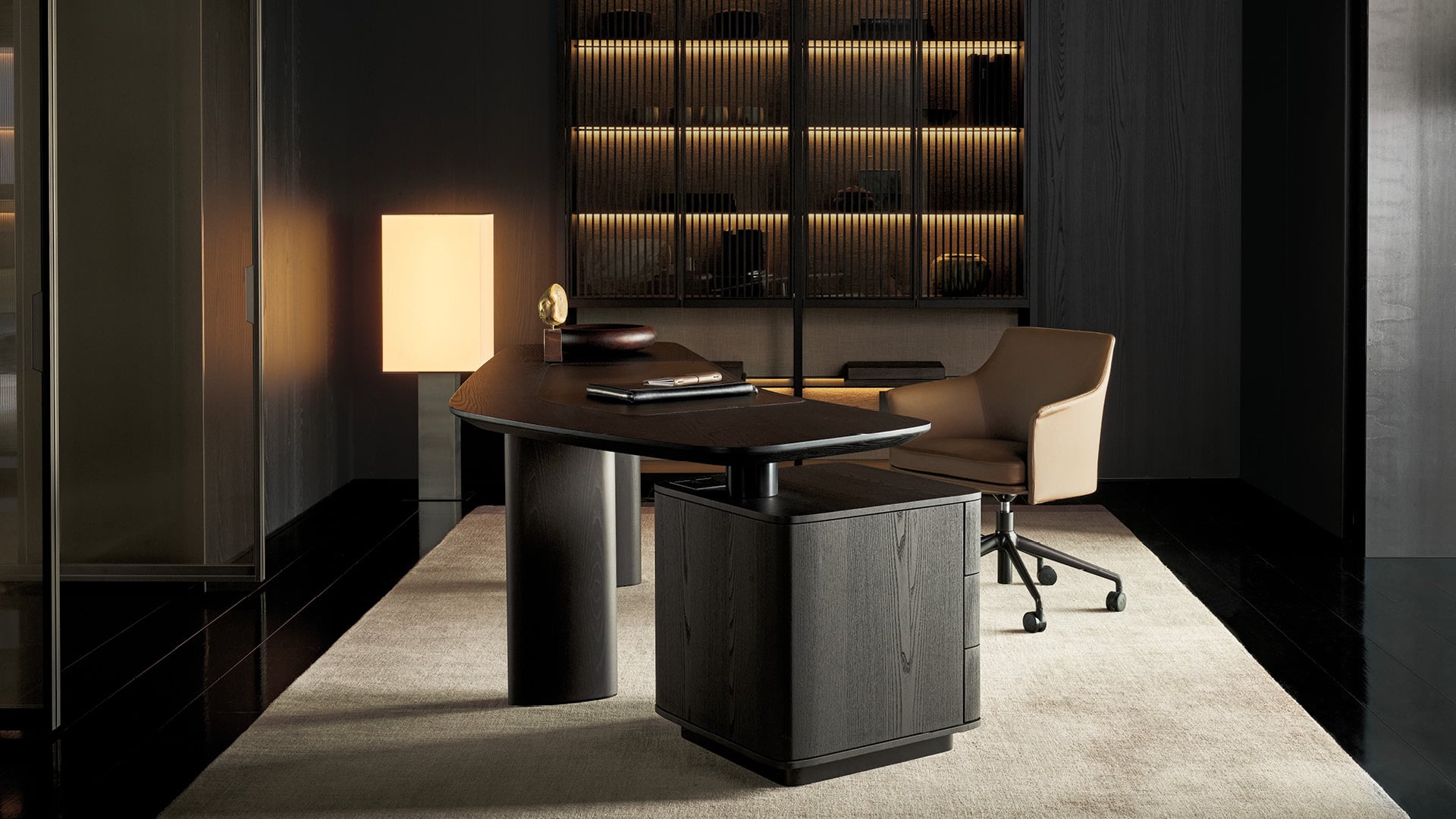
The home study, conceived as an architecture within architecture, is inspired by Renaissance studioli—an allusion to Italian art and to culture as a universal value, especially in a cosmopolitan world like the one we live in today.
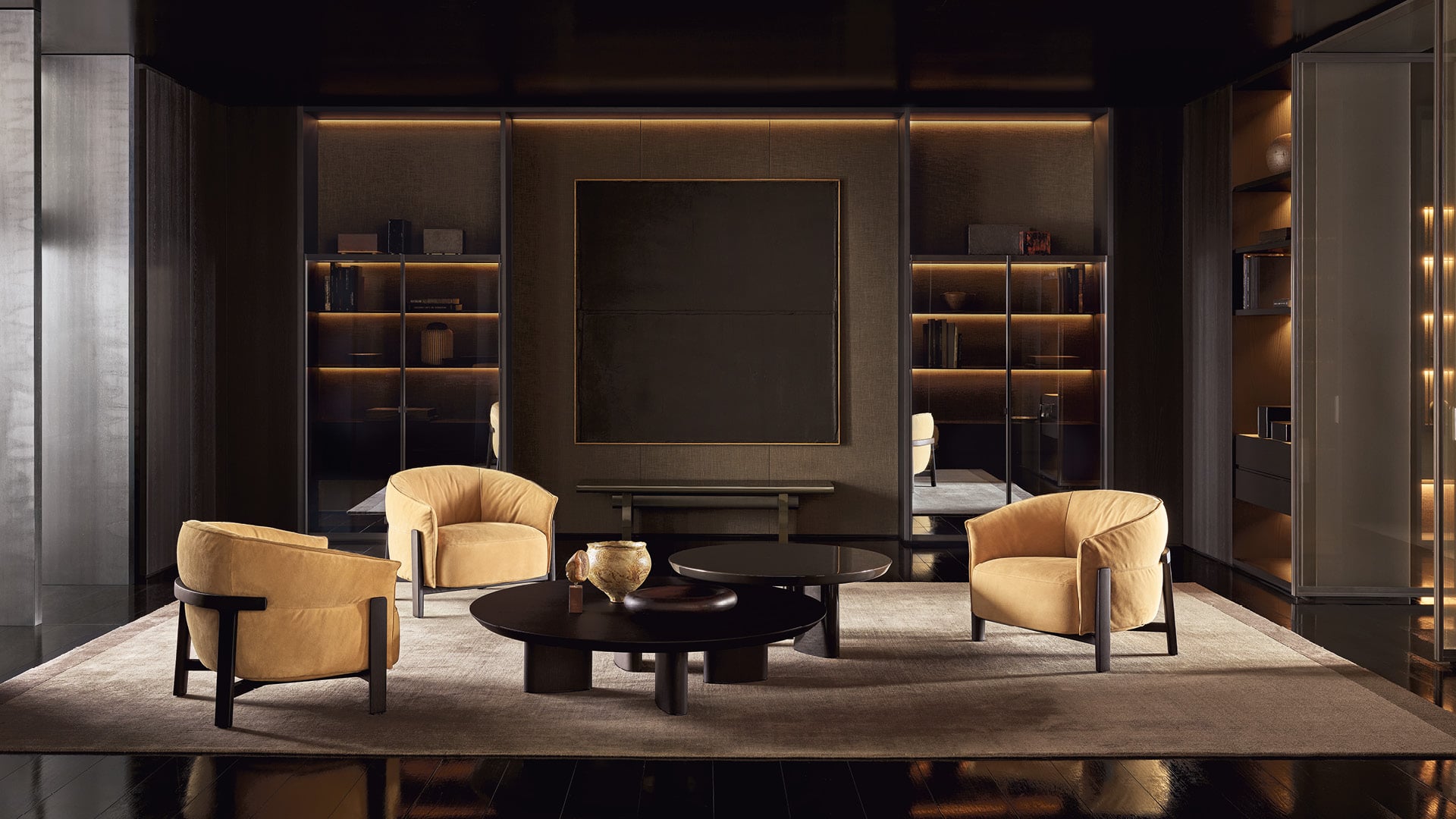
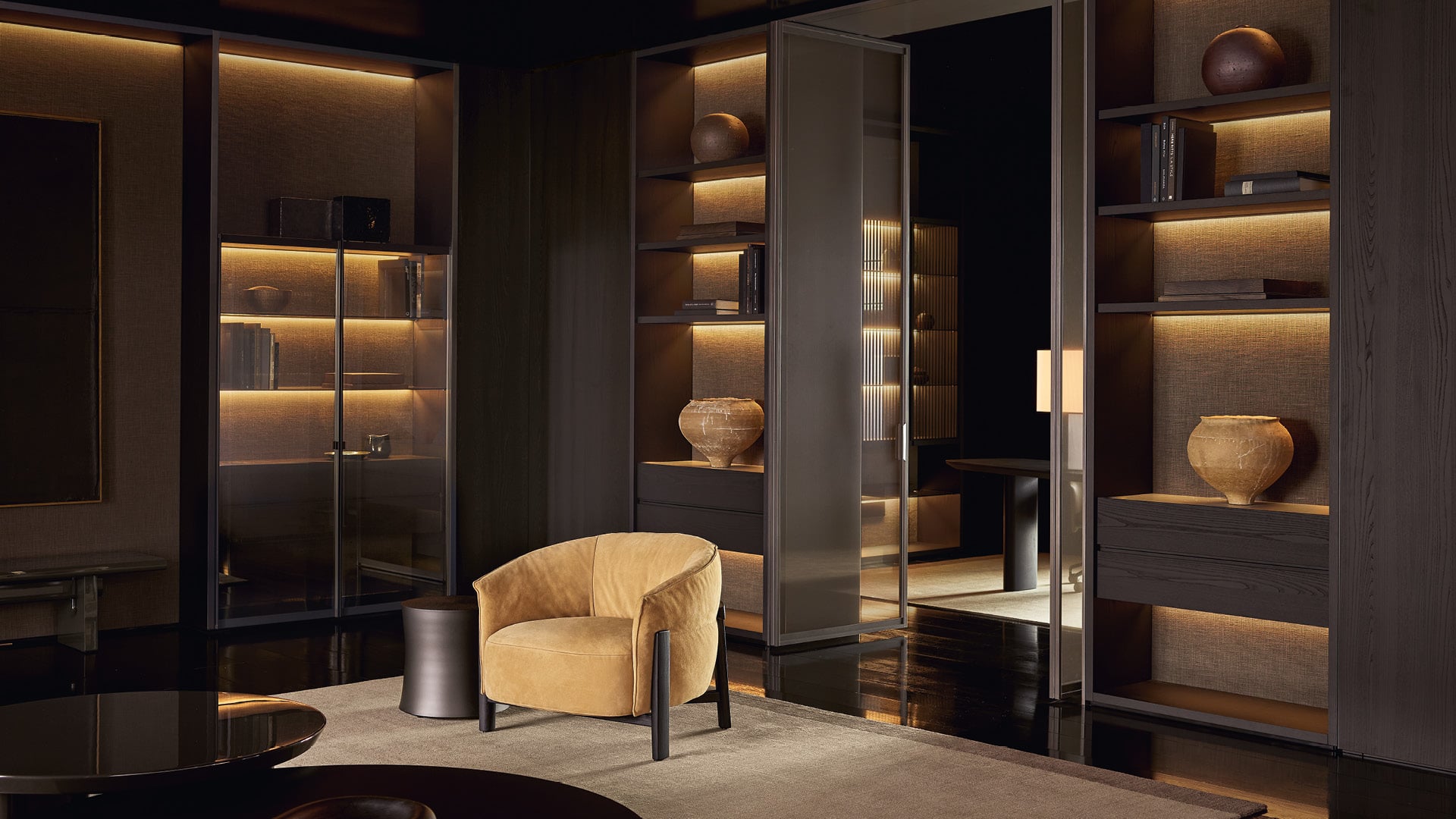
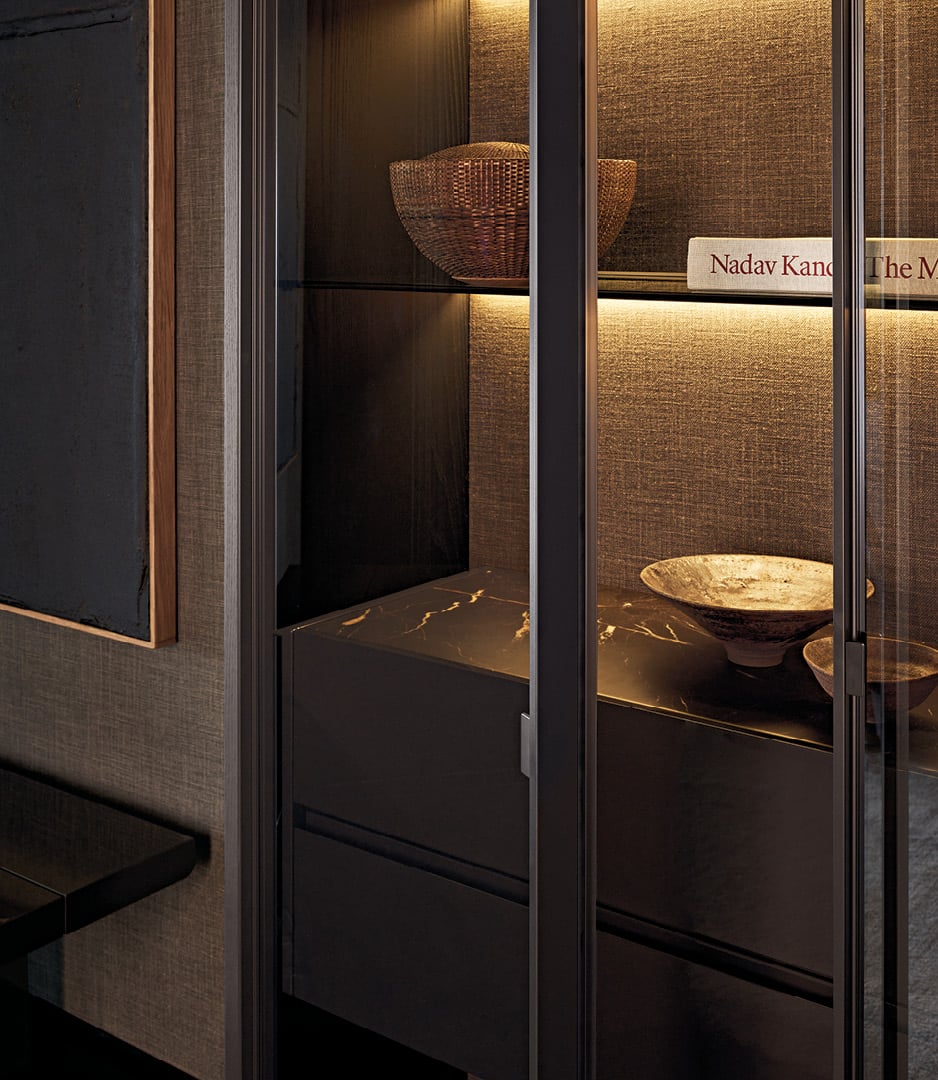
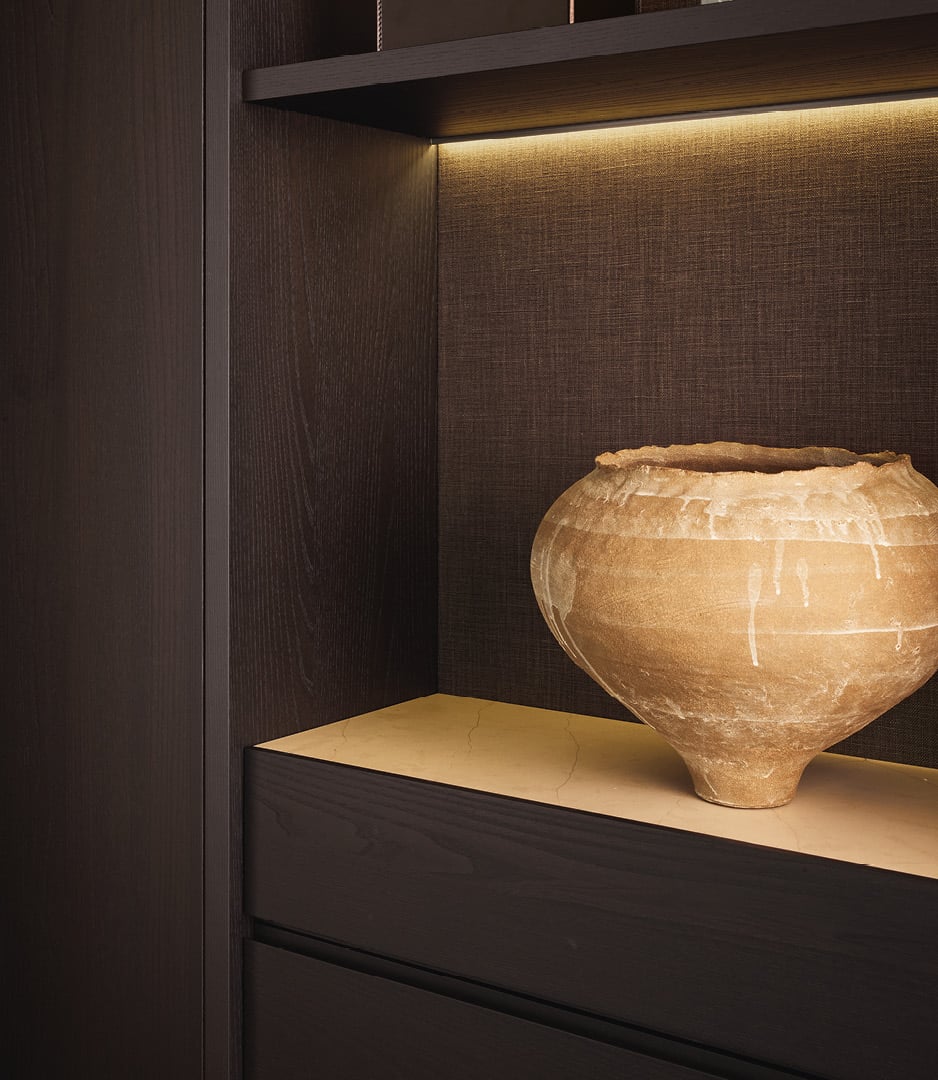
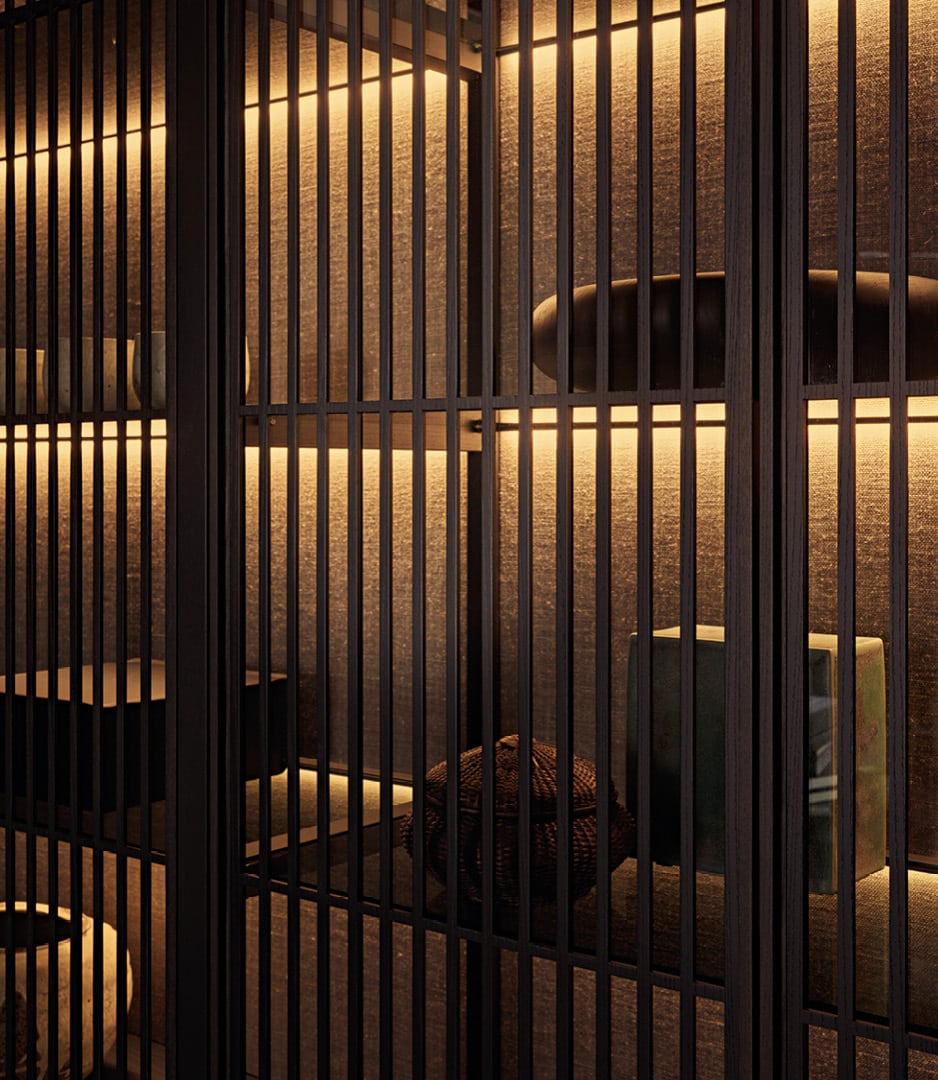
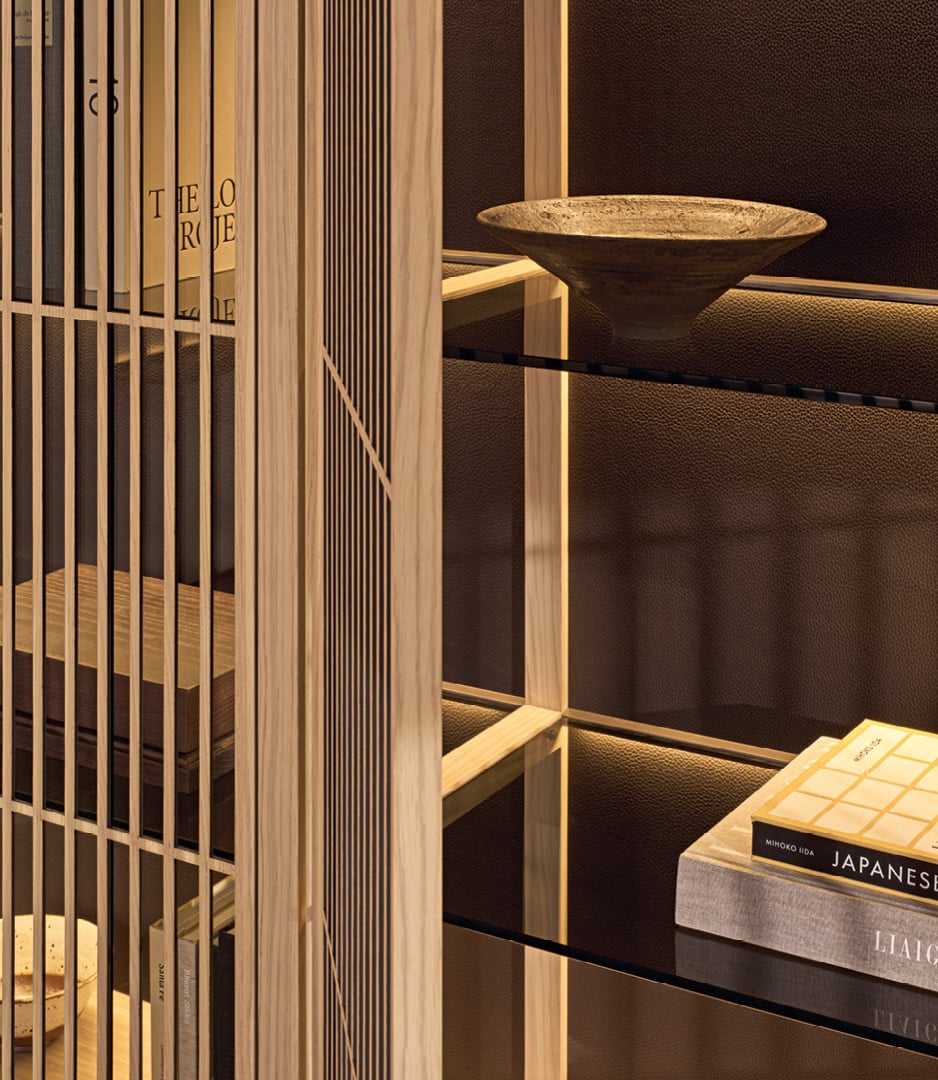
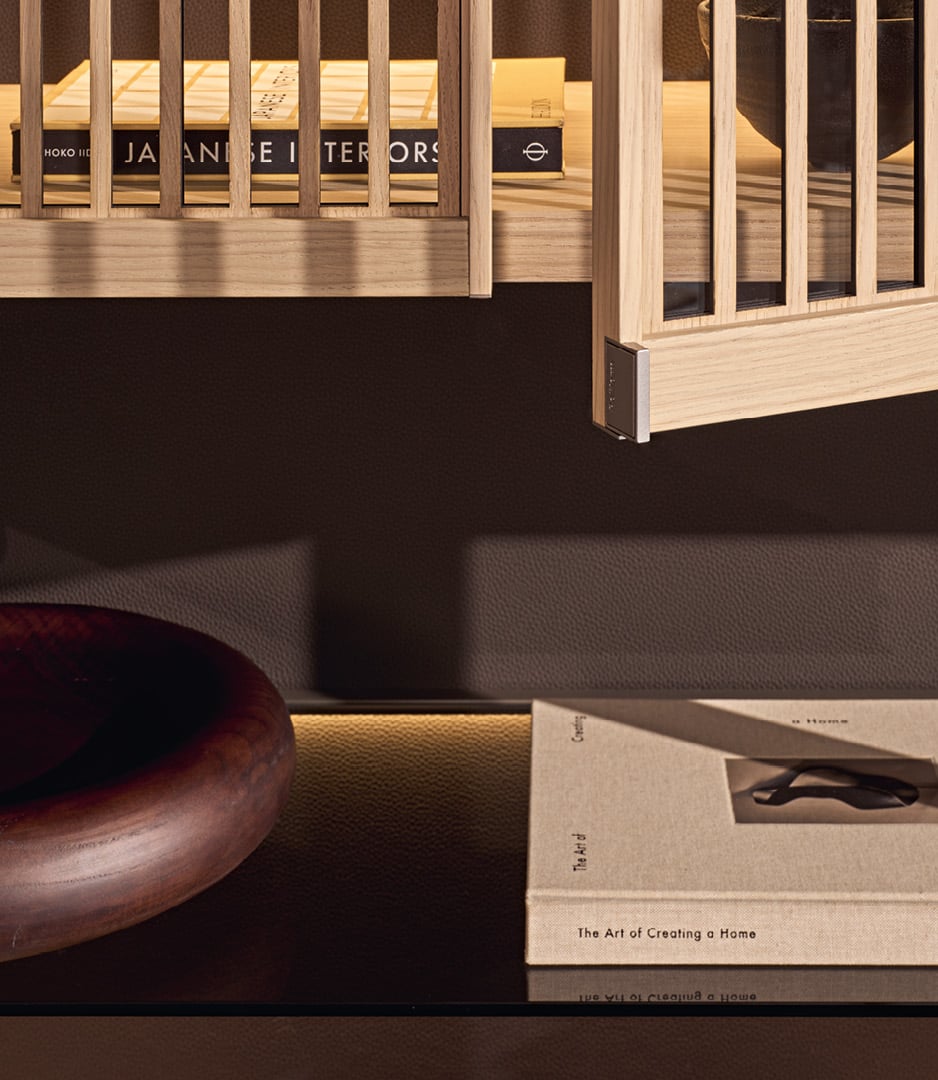
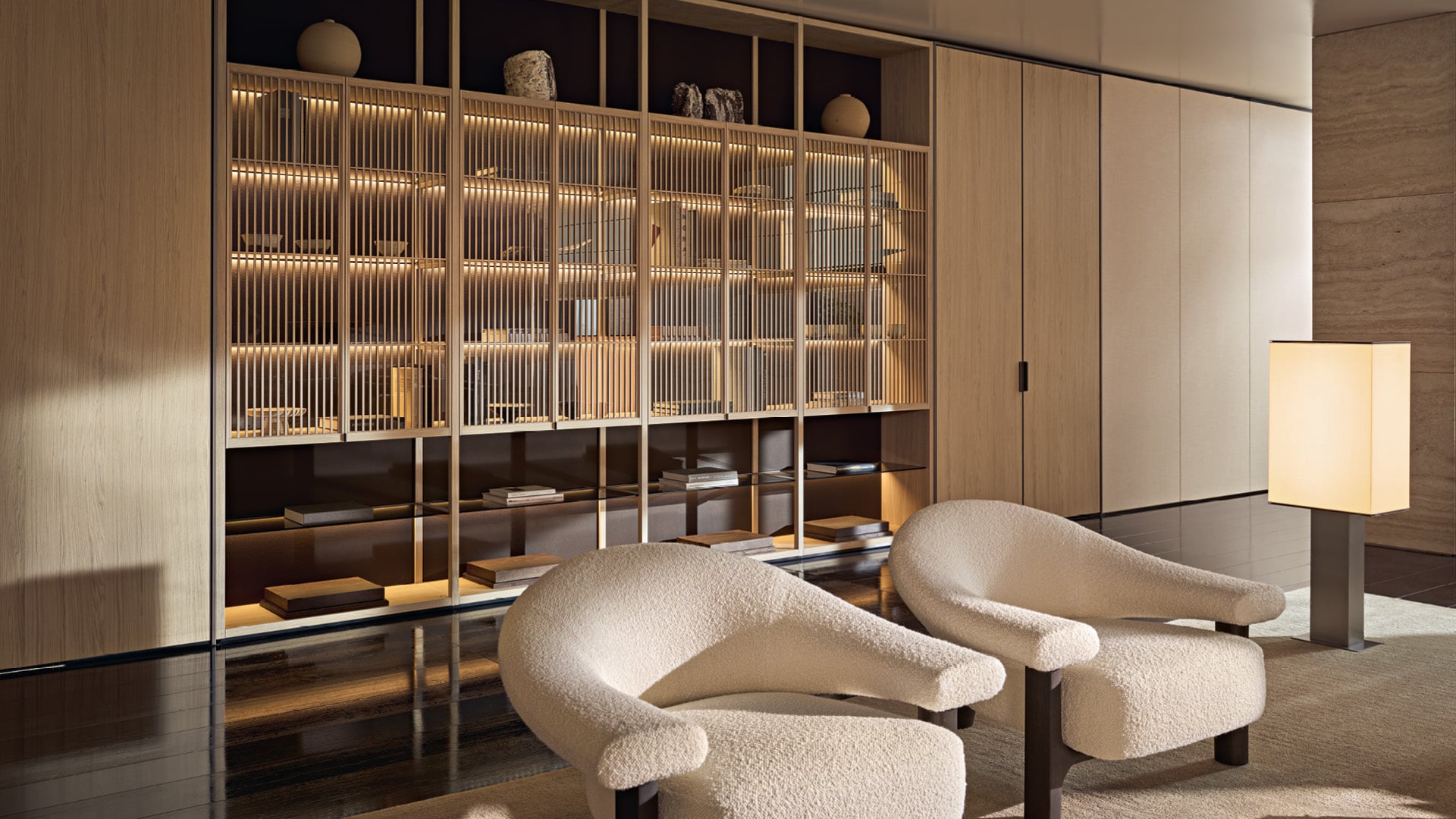
The protagonist of the study is the Adrien desk, which, with its strong character and scenographic presence, provides a counterpoint to the area dedicated to reading and relaxation, surrounded by the Wall System bookcase.

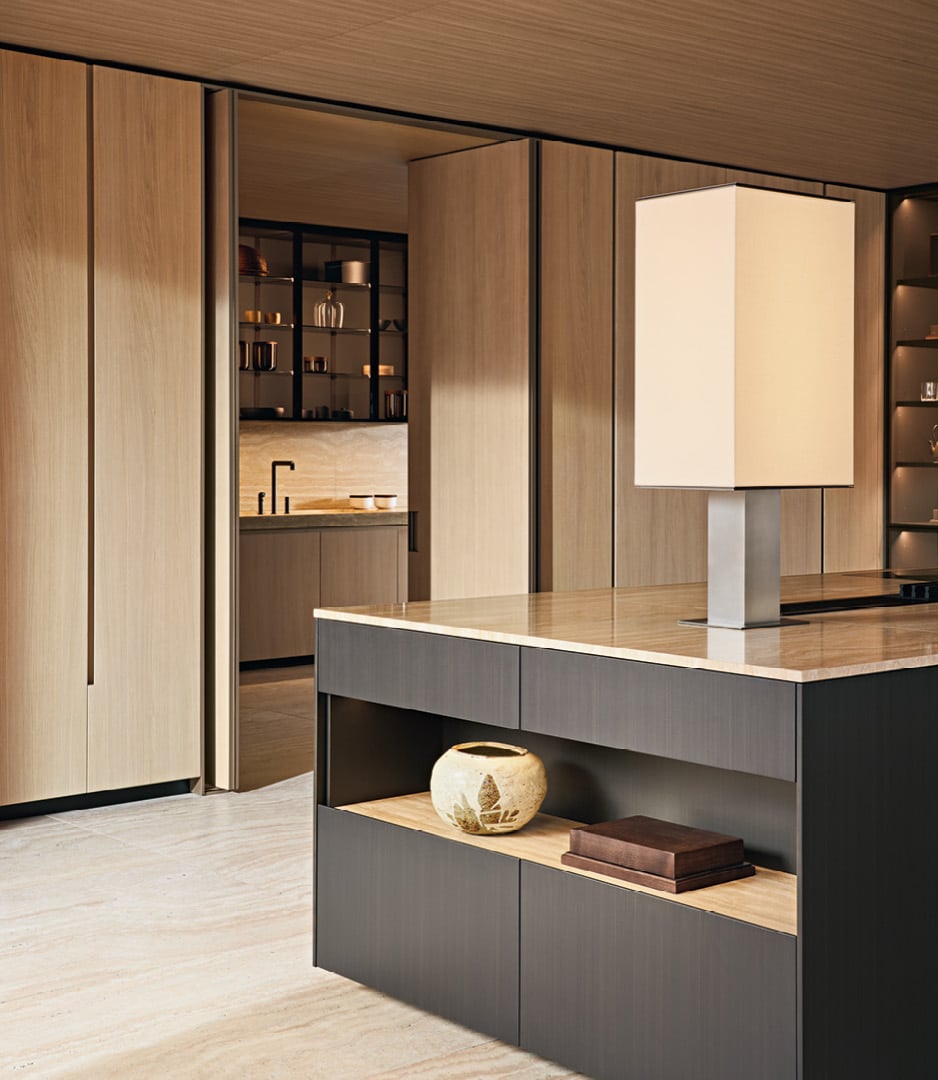
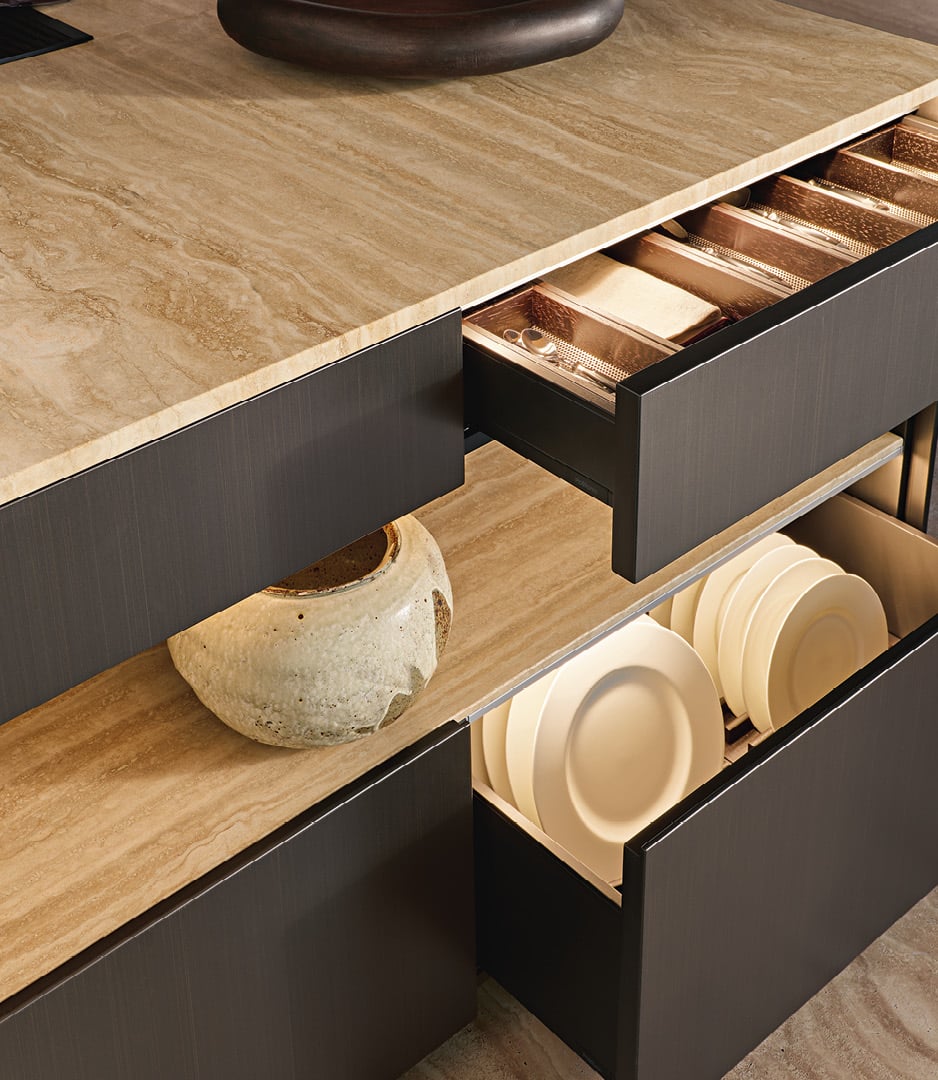
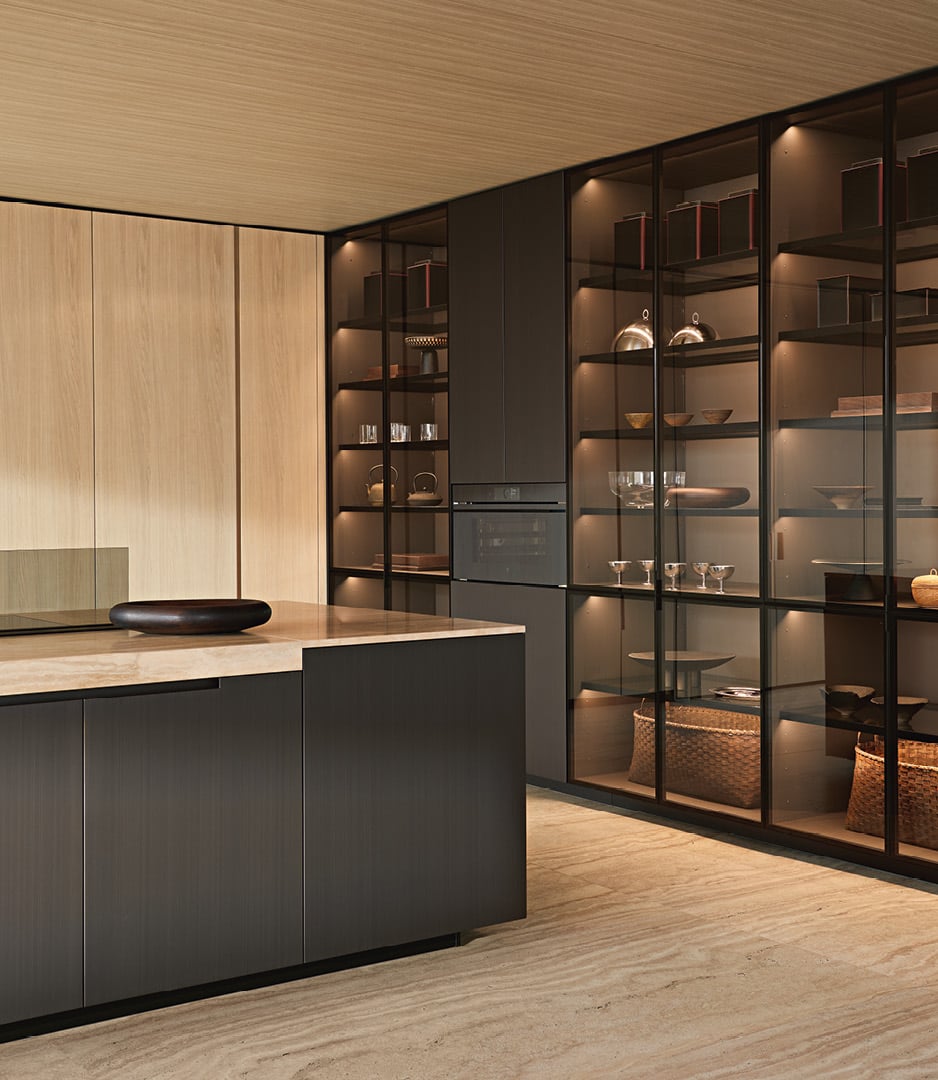
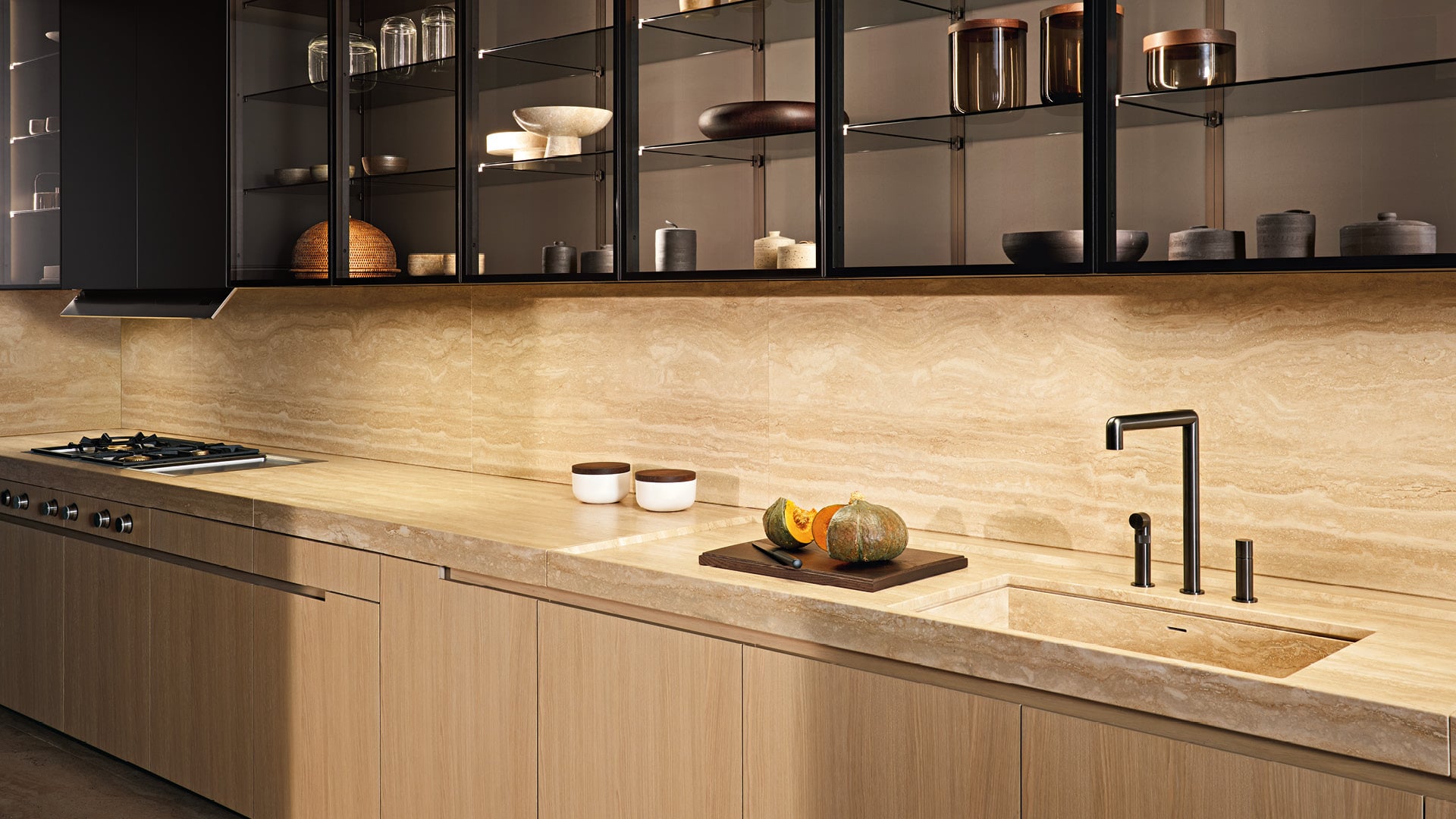
The kitchen area is organized into two distinct spaces: the first, designed for everyday use, is defined by the large central island, elegant display cabinets, and the dining area. The second, dedicated exclusively to operations, is ideal for events and formal dinners.
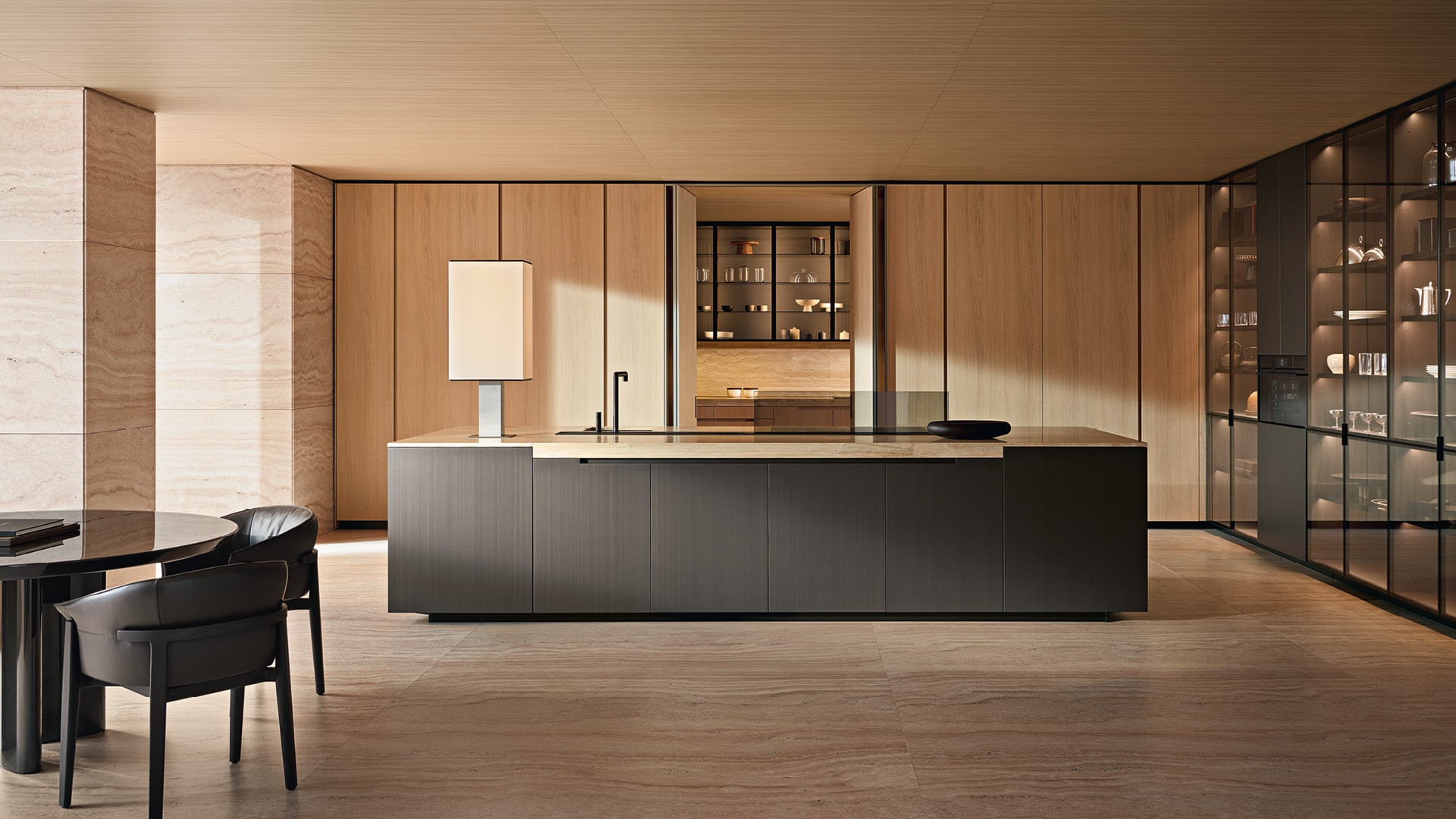
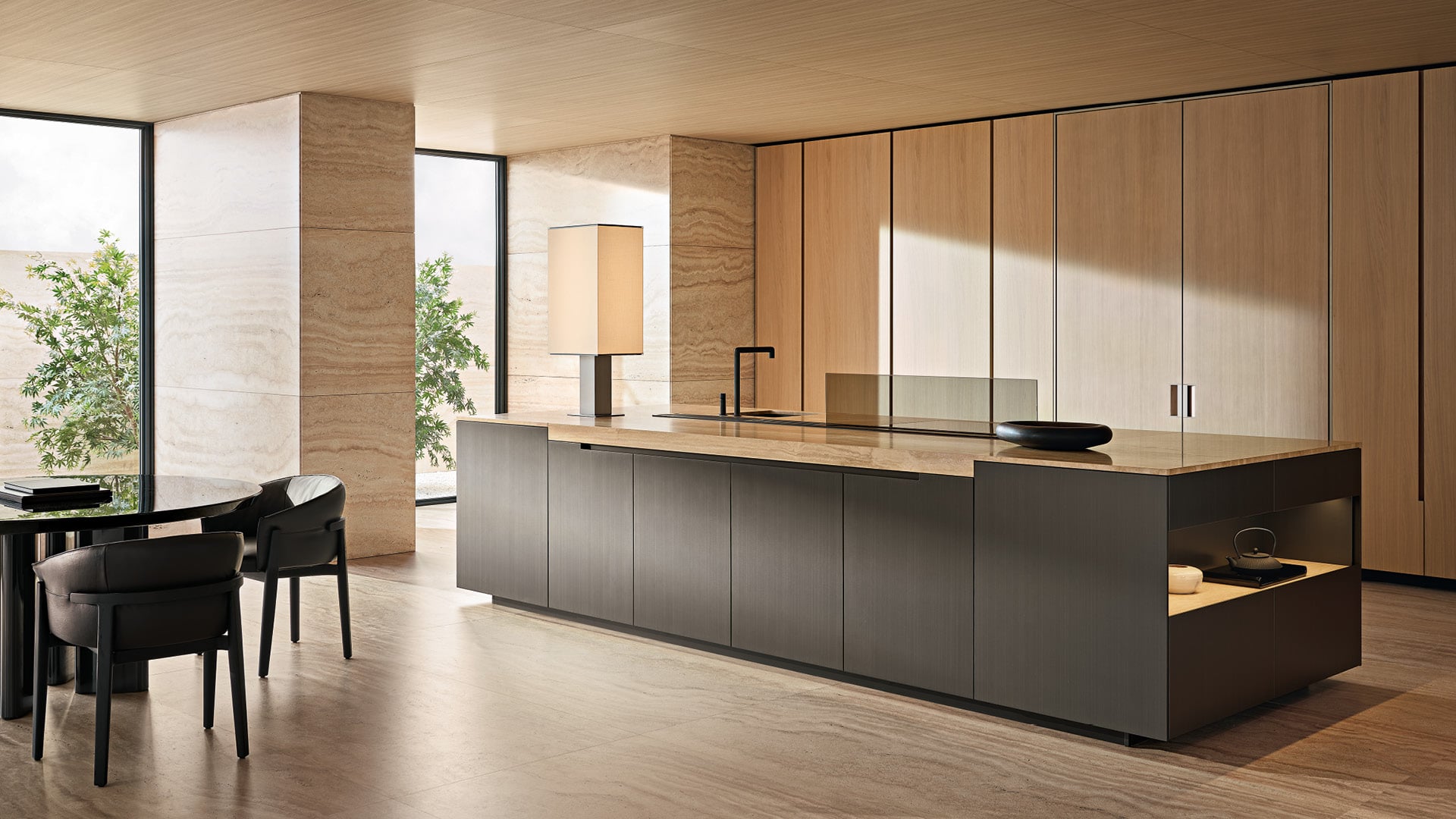
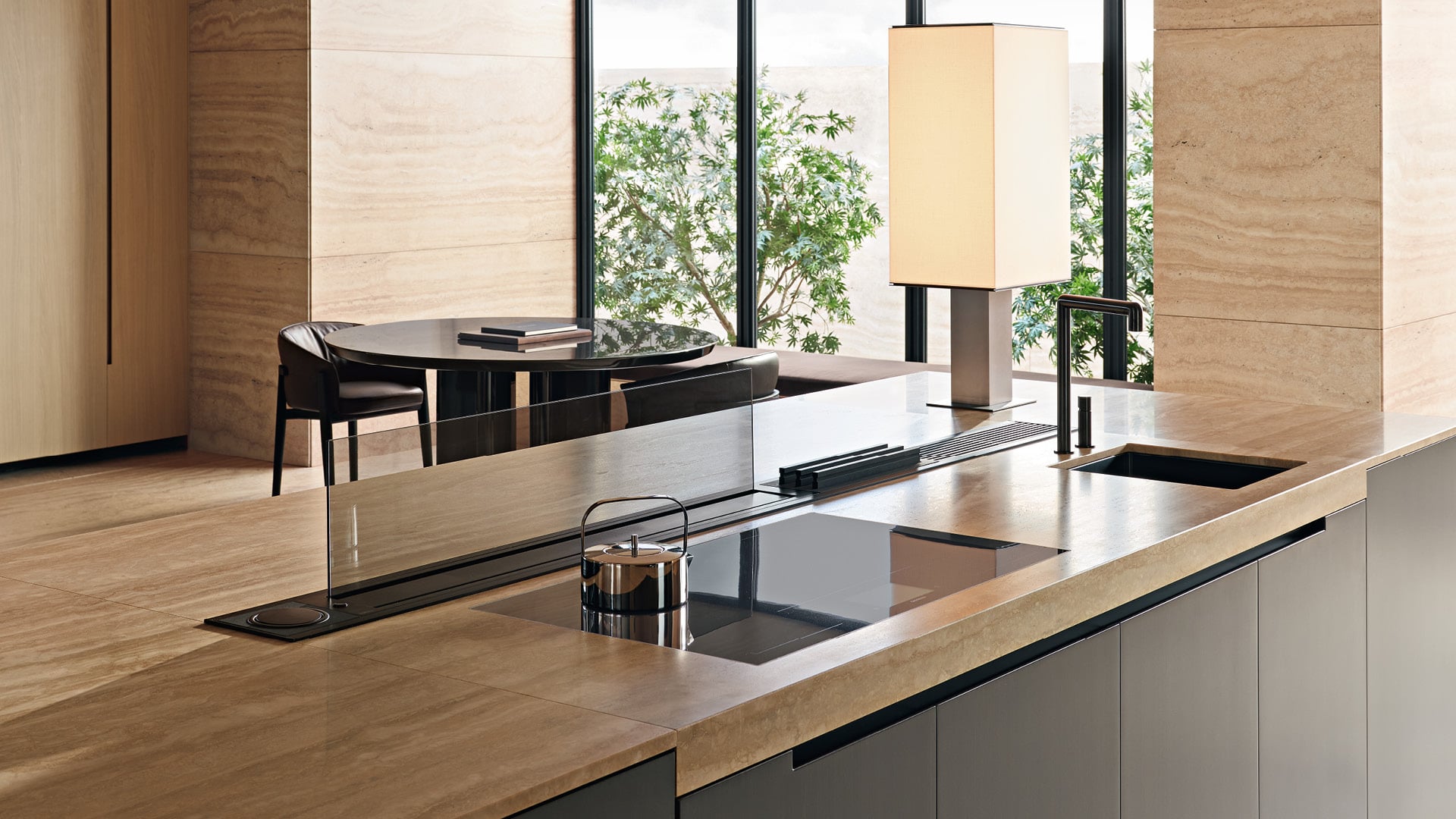
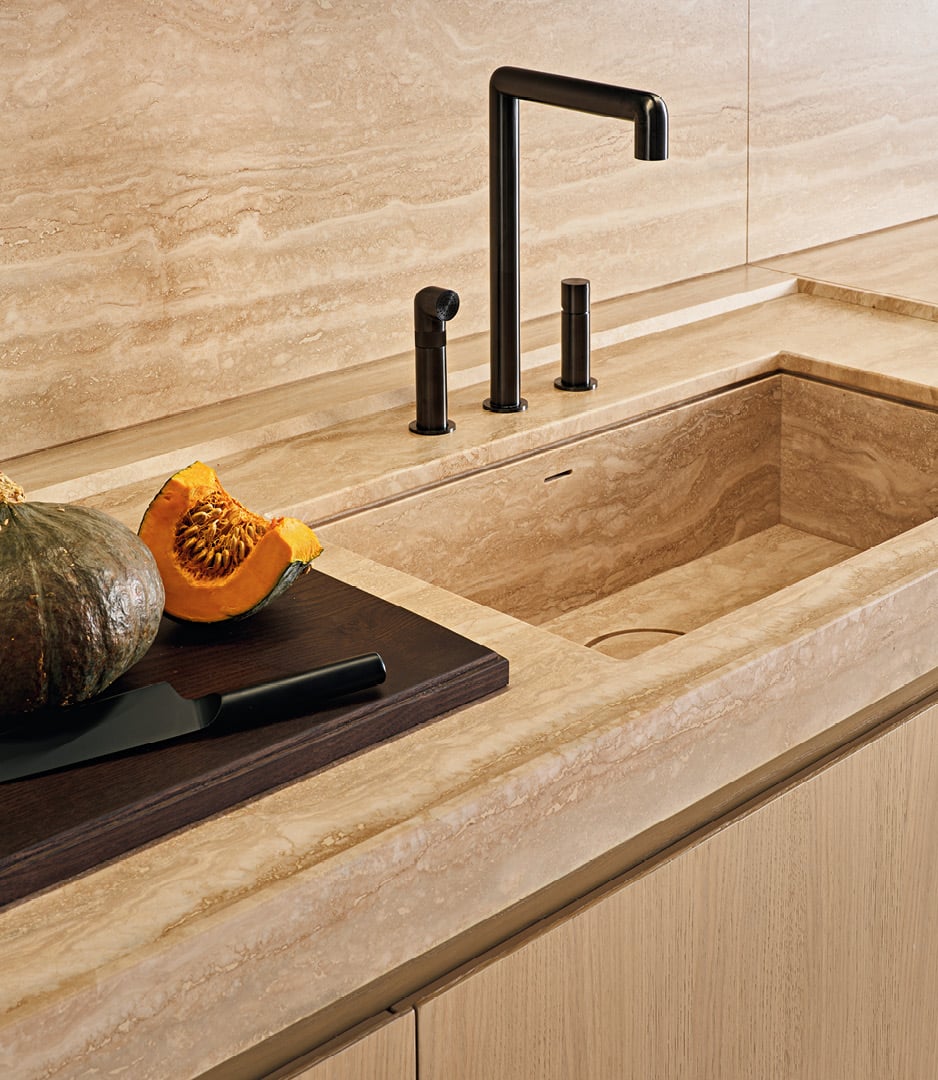
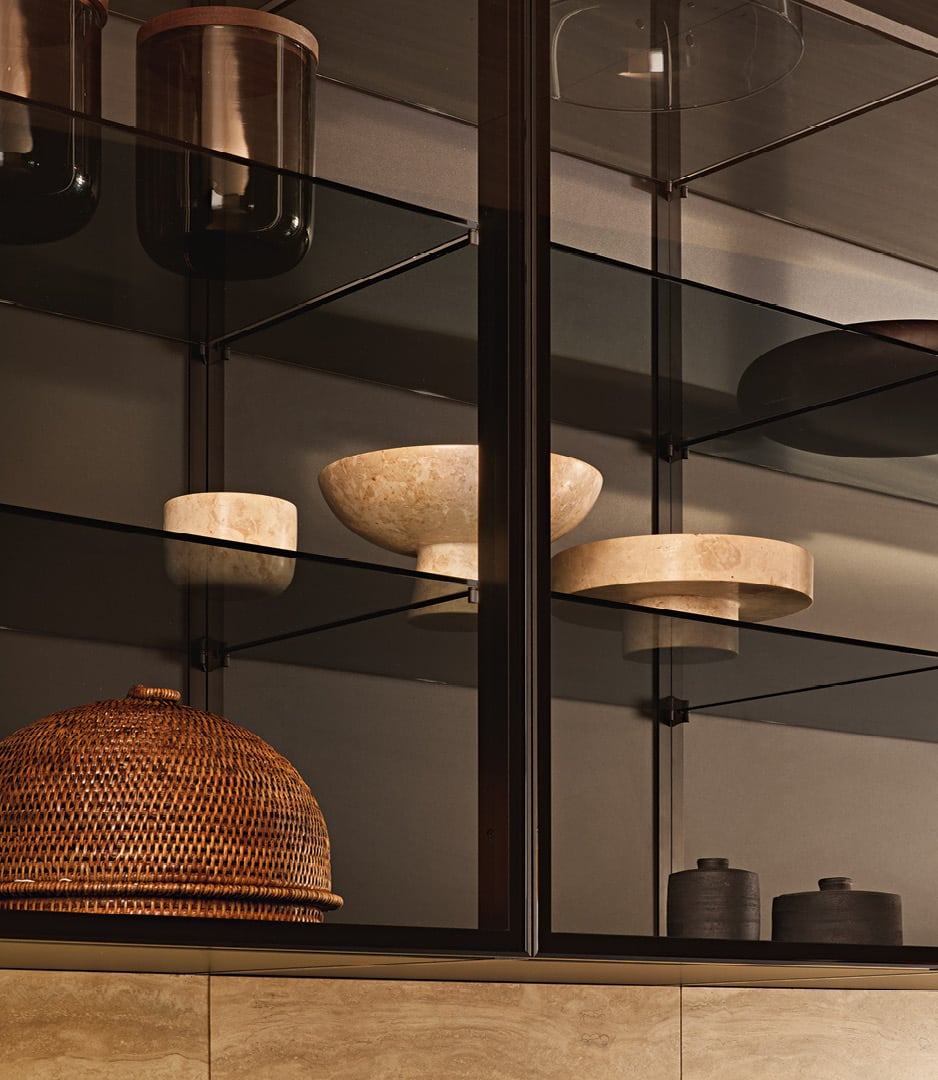
Finishes such as travertine marble and details like the glass doors and the open compartments of the island transform a functional space such as the kitchen into an elegant environment, where it is pleasant to spend the moments of everyday life.
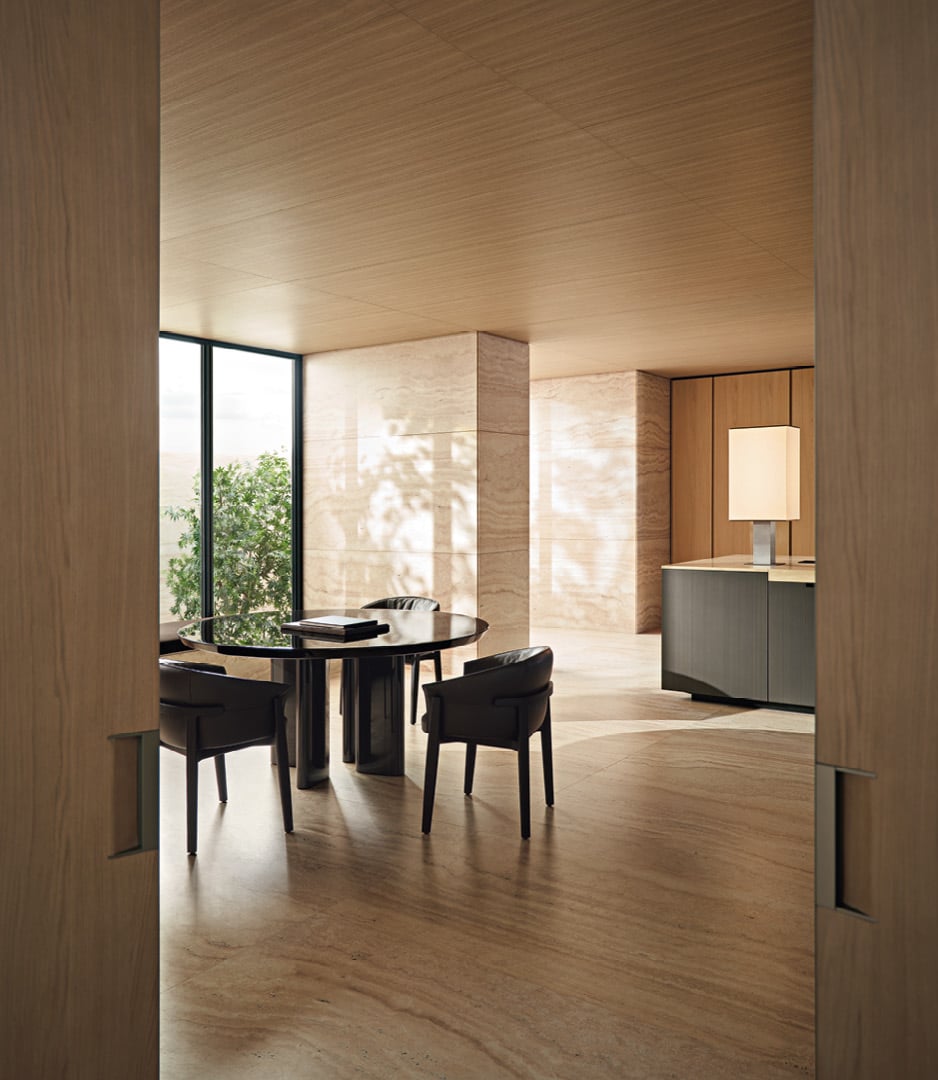
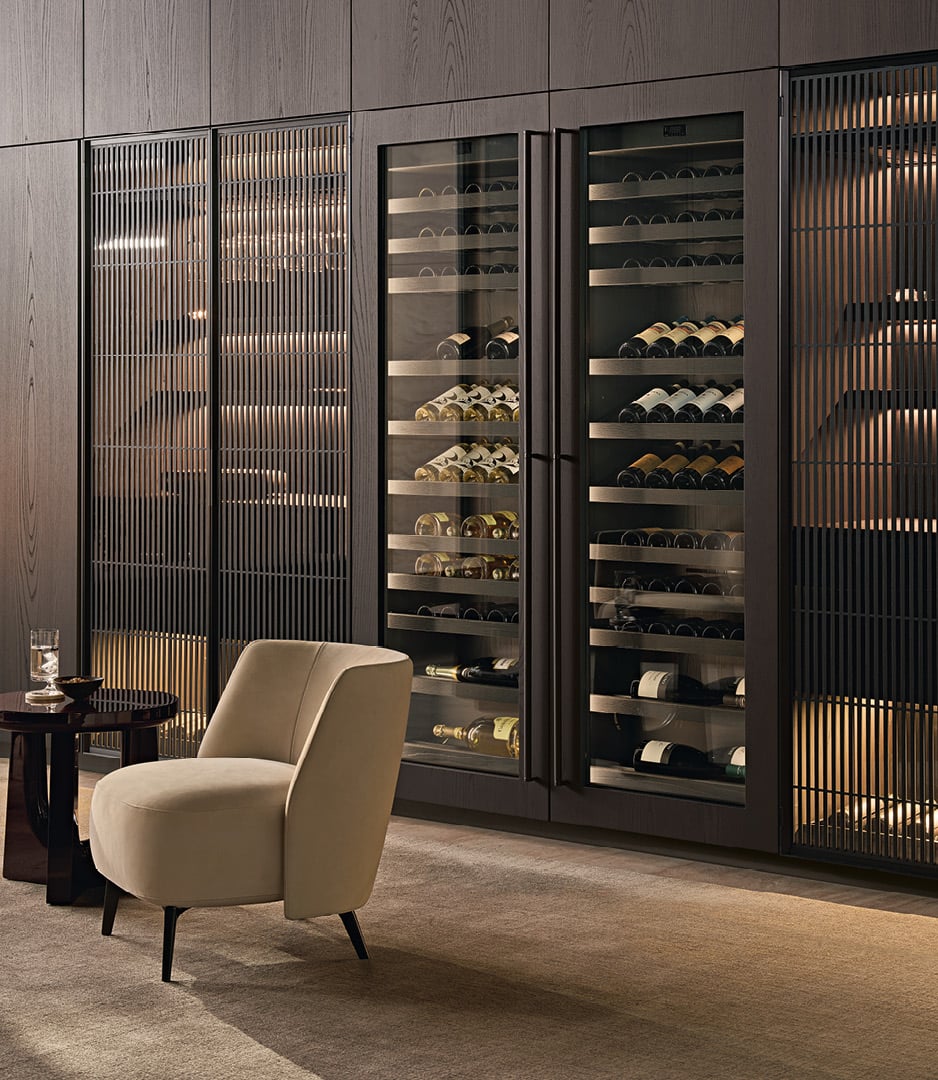
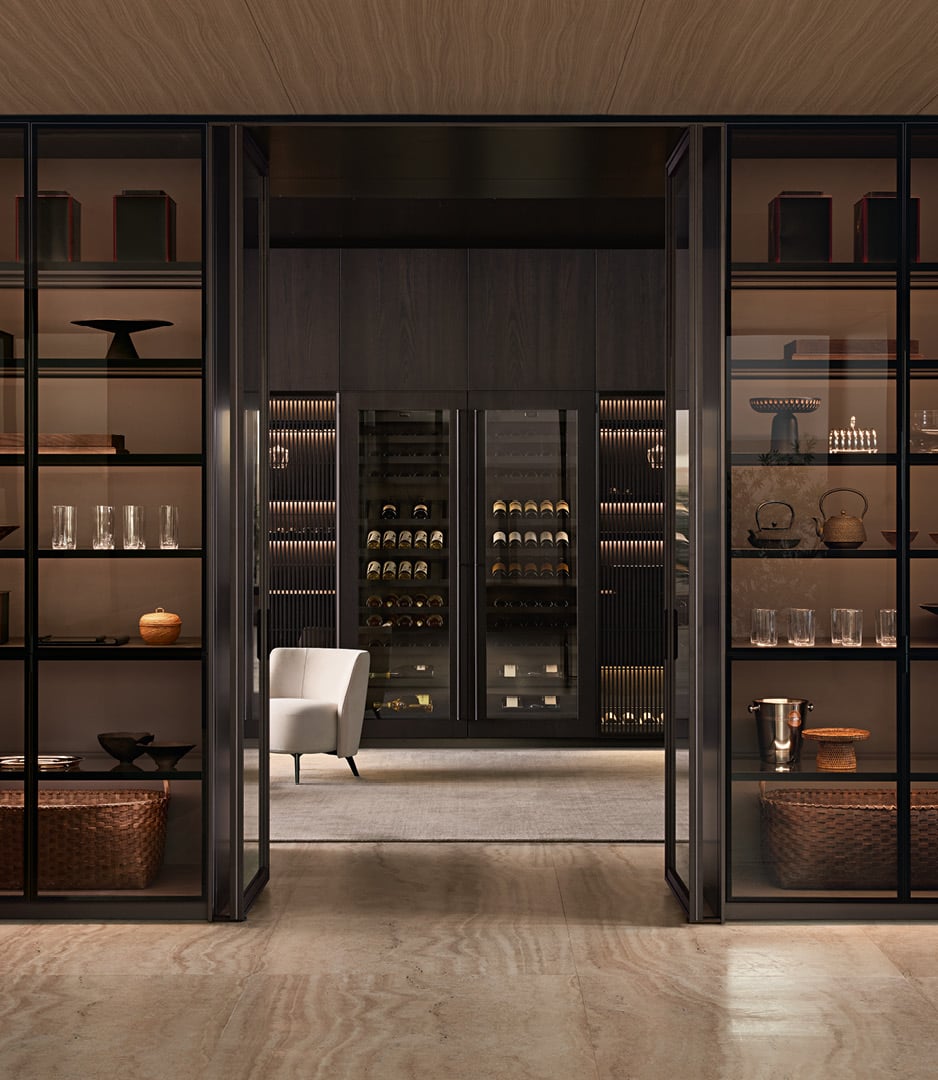
An intimate and elegant setting, where one can gather for an aperitif or a drink after dinner.
Large windows let the light of the sun or the moon filter in, creating the feeling of a space suspended in time.

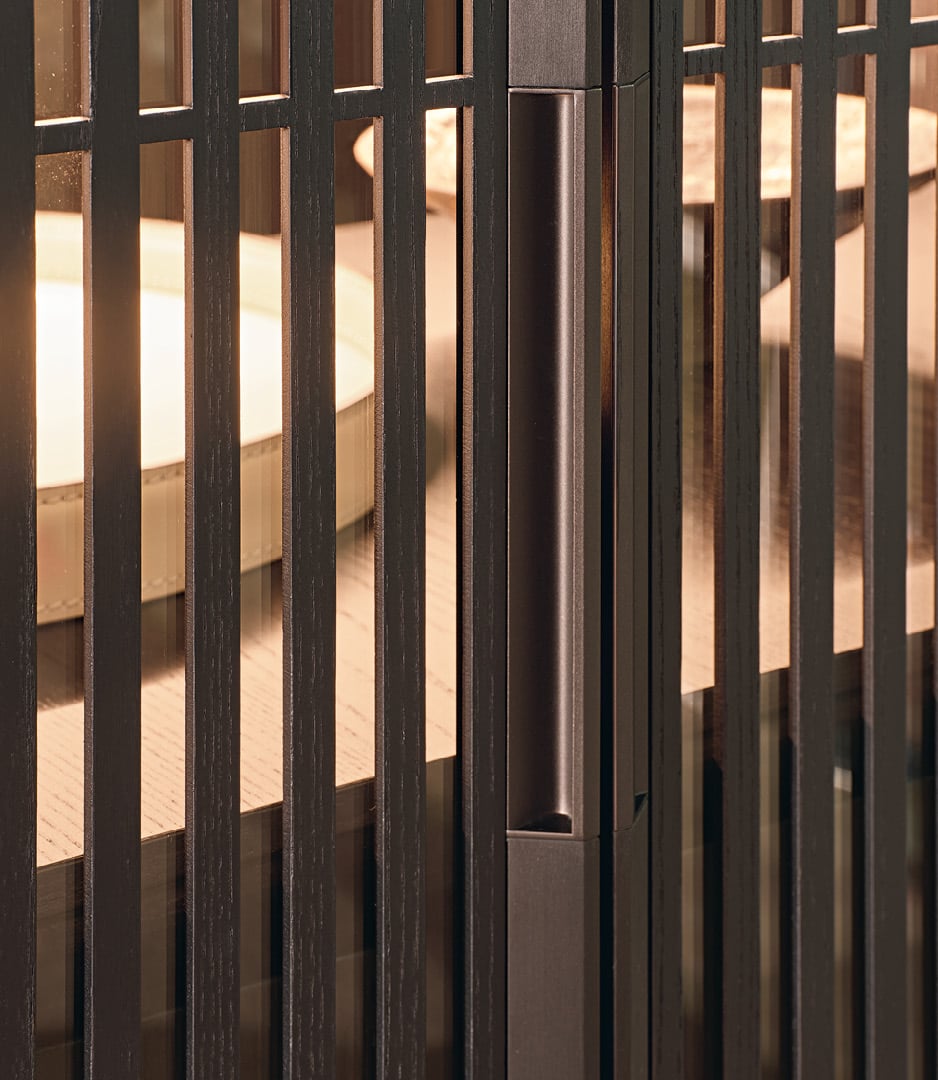
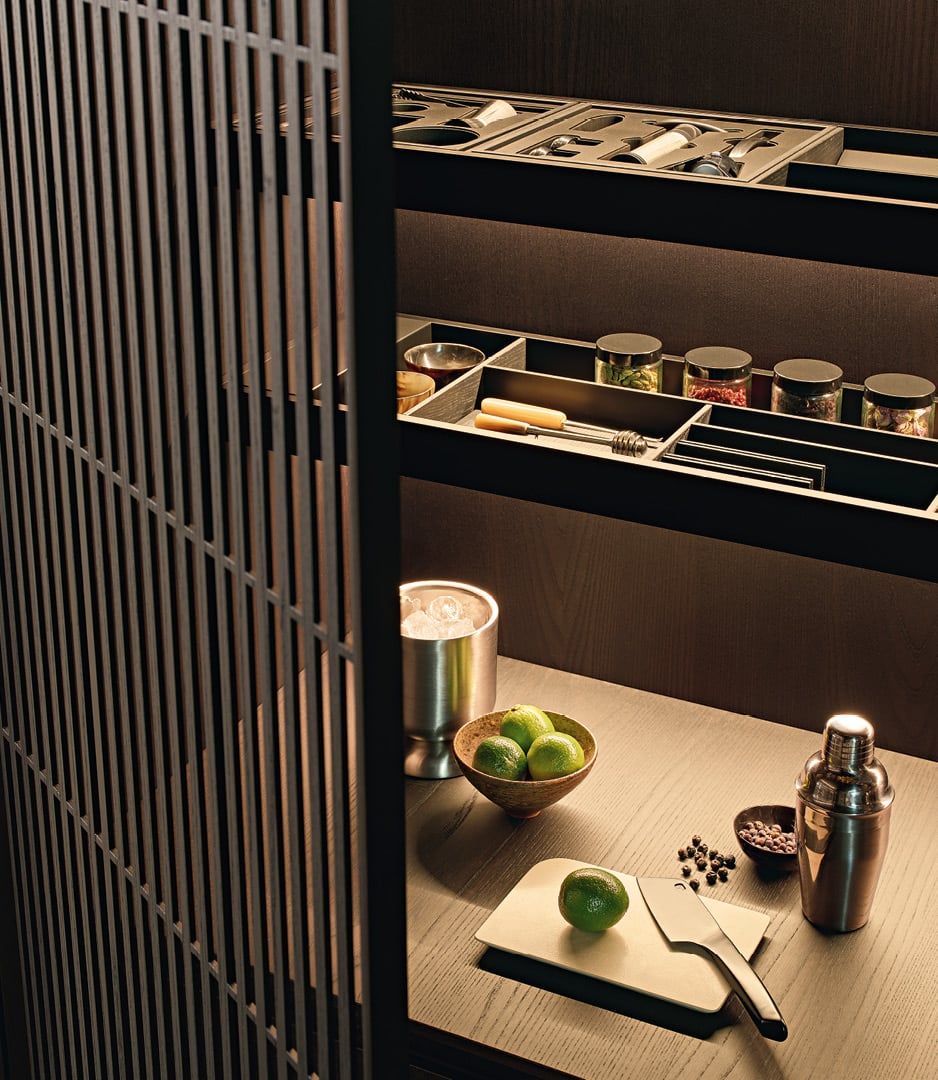
The Sunday armchairs invite a relaxed, conversational posture. The columns, in the same dark finish as the boiserie, are equipped with a wine cellar and with all the accessories needed for preparing cocktails.
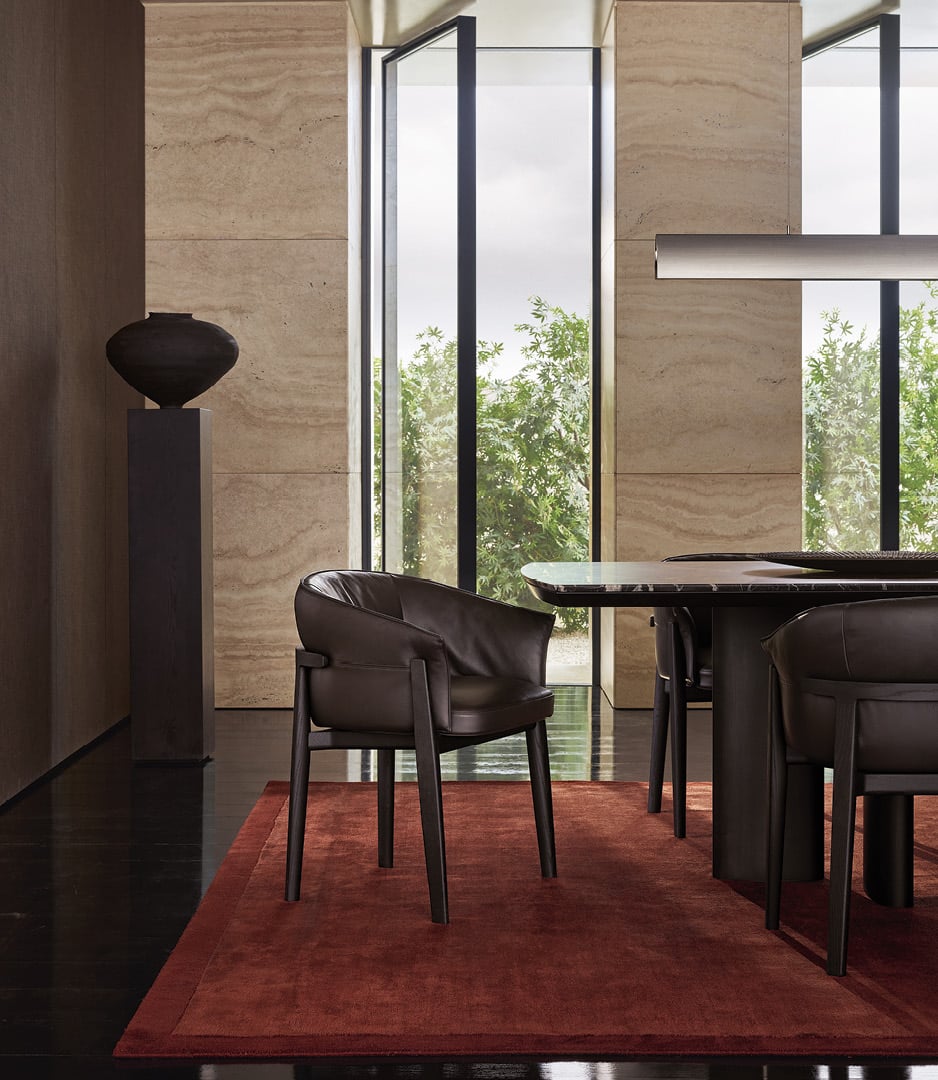
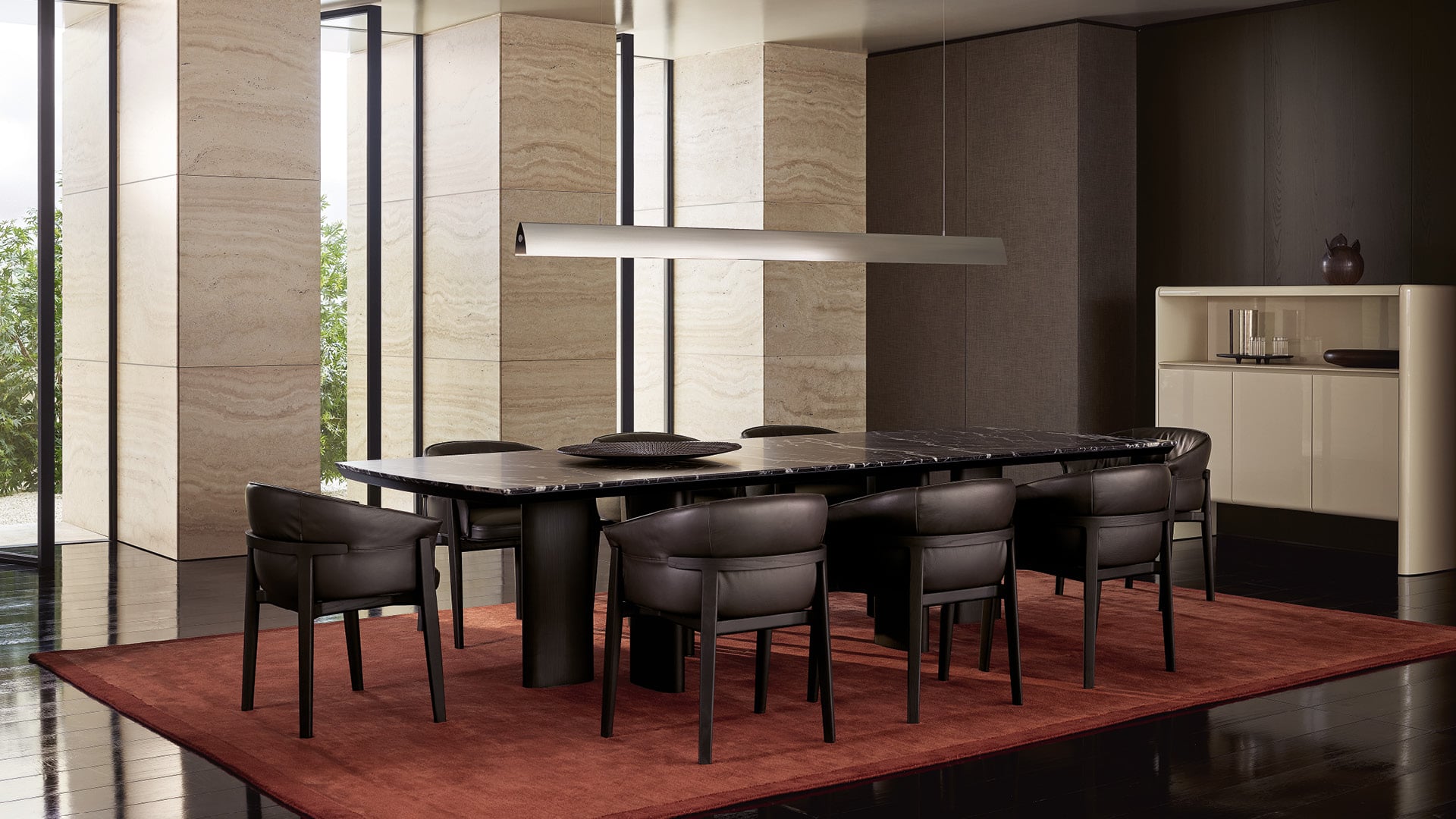
The architecture of the dining room recalls the one of the living area. Here too, the scenographic backdrop is formed by the sharp geometries of the travertine marble pillars, interspersed with windows that open onto the greenery outside.
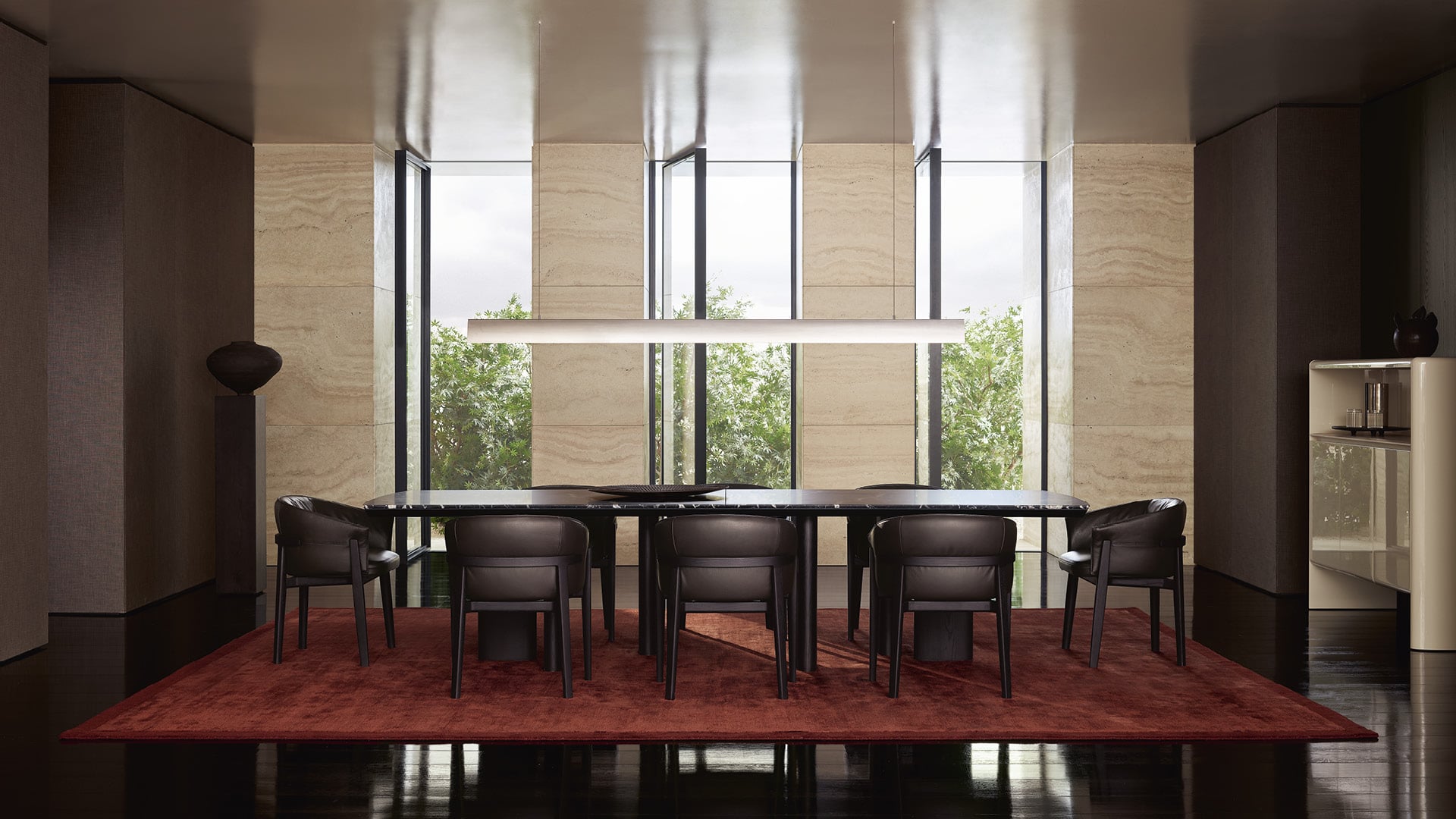
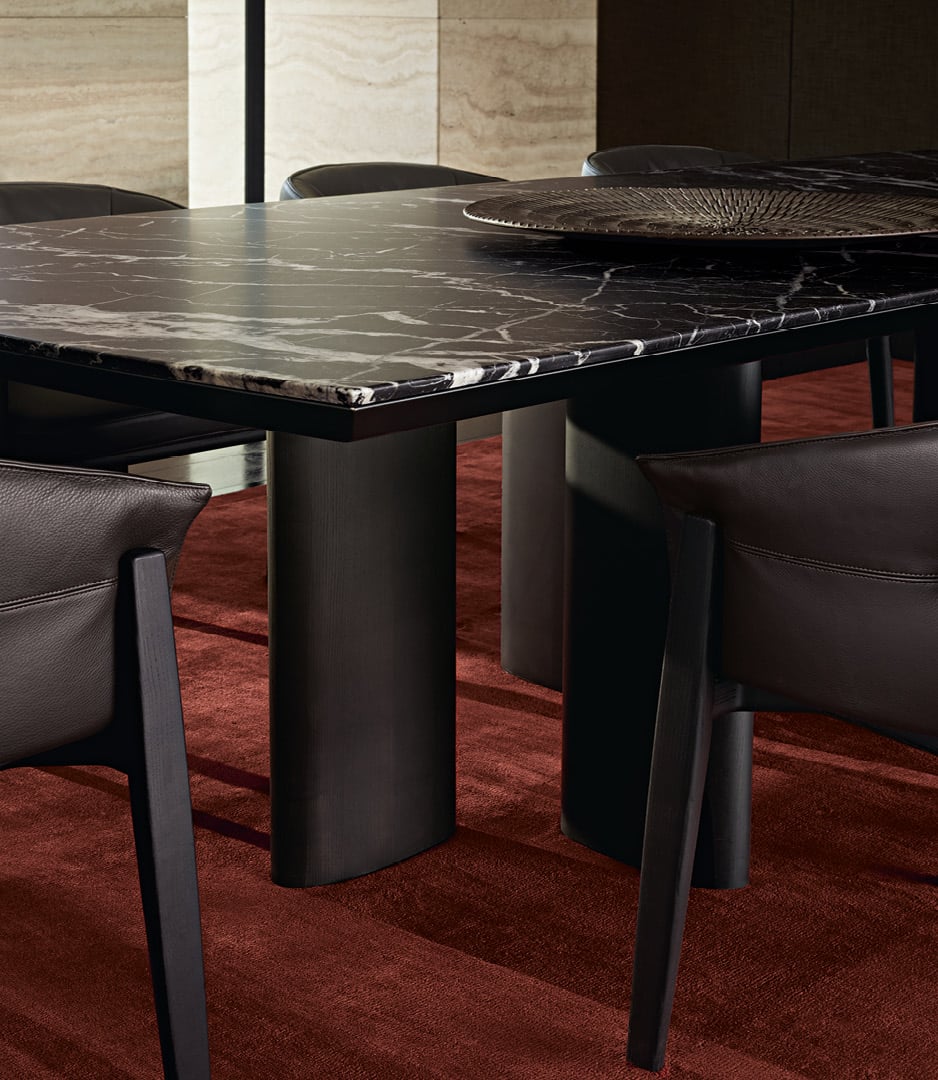
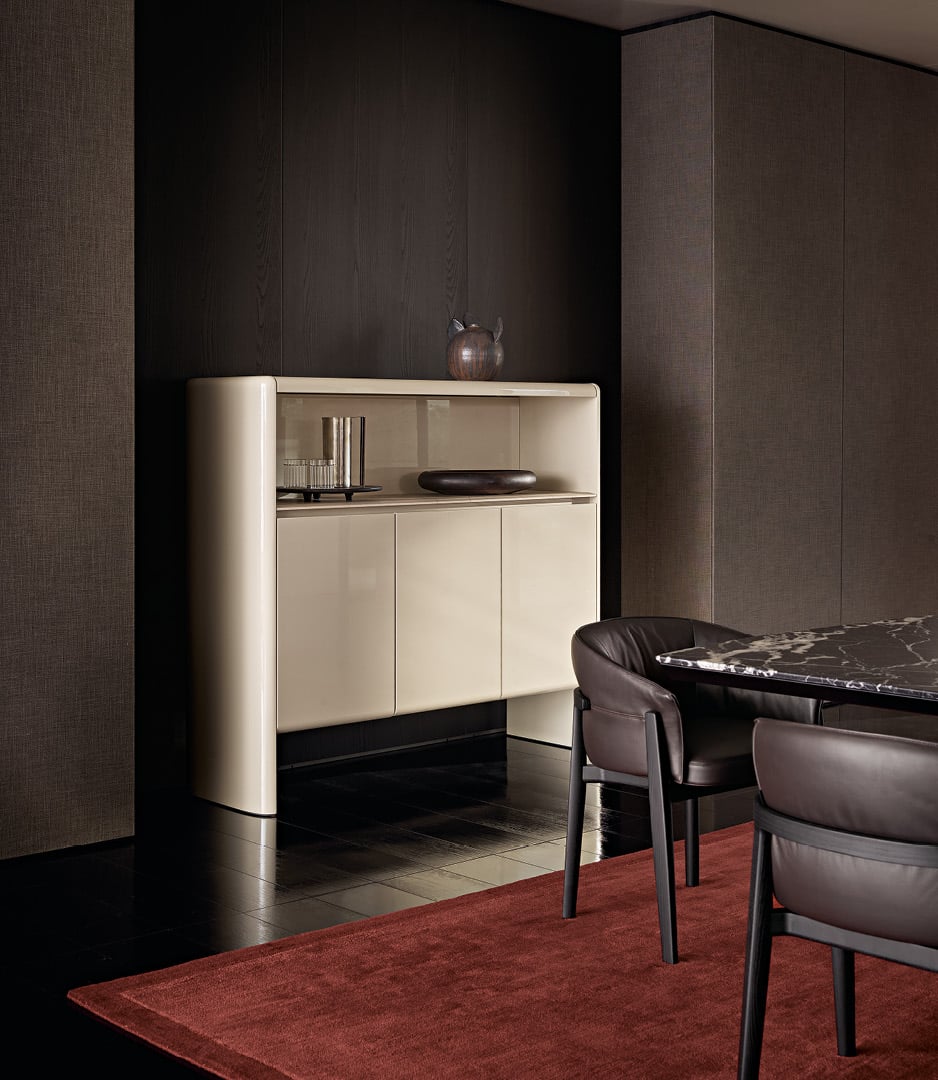
The furnishings of the dining room are majestic: the Monolith table with a marble top and the Leopold leather chairs stand out not only for their refined aesthetics, but also for an exceptionally high level of comfort, making the convivial experience truly unforgettable.
From the dining room one enters a new living area designed to welcome guests.
The tones become lighter, in continuity with the architectural elements in travertine marble.
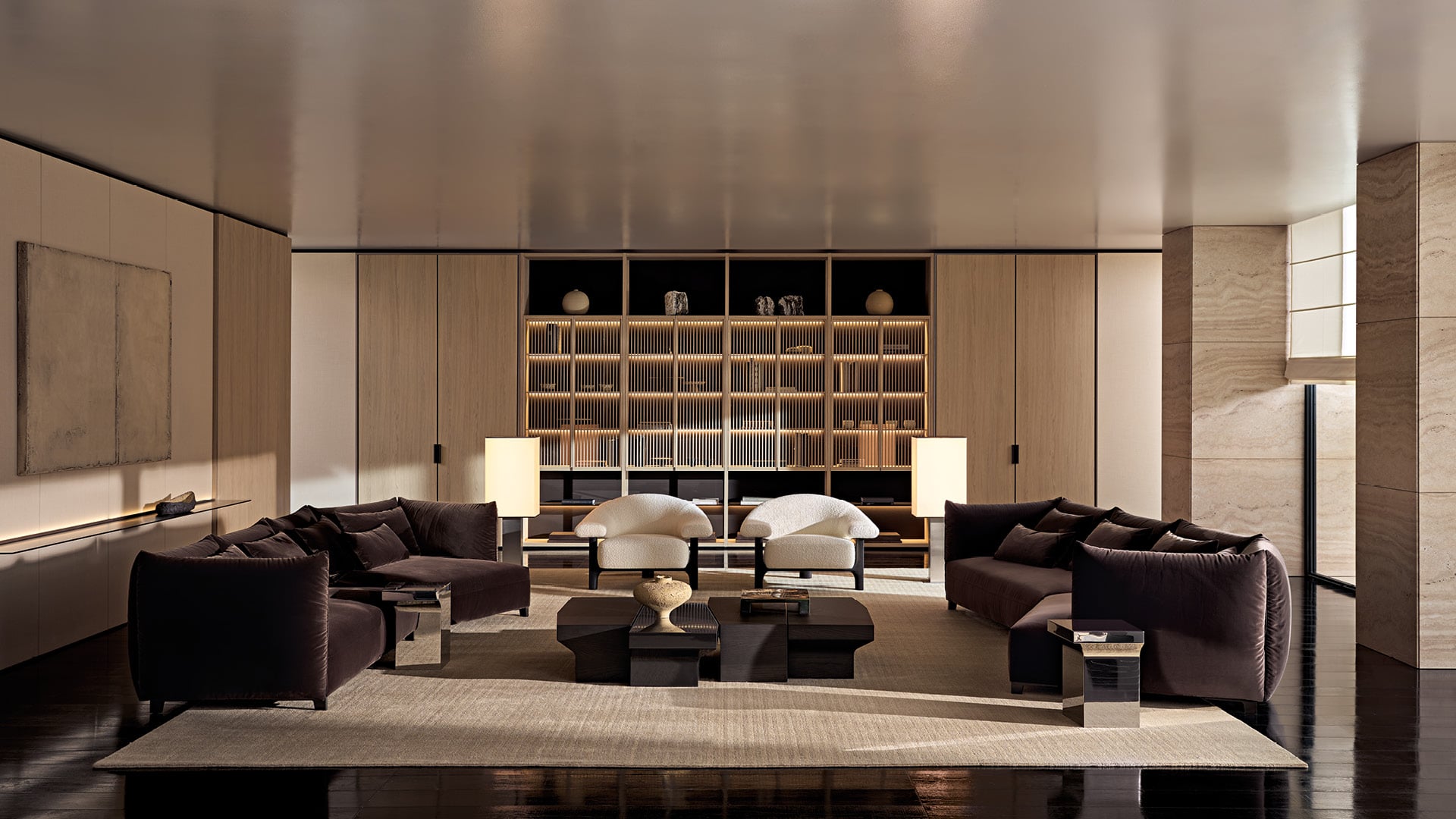
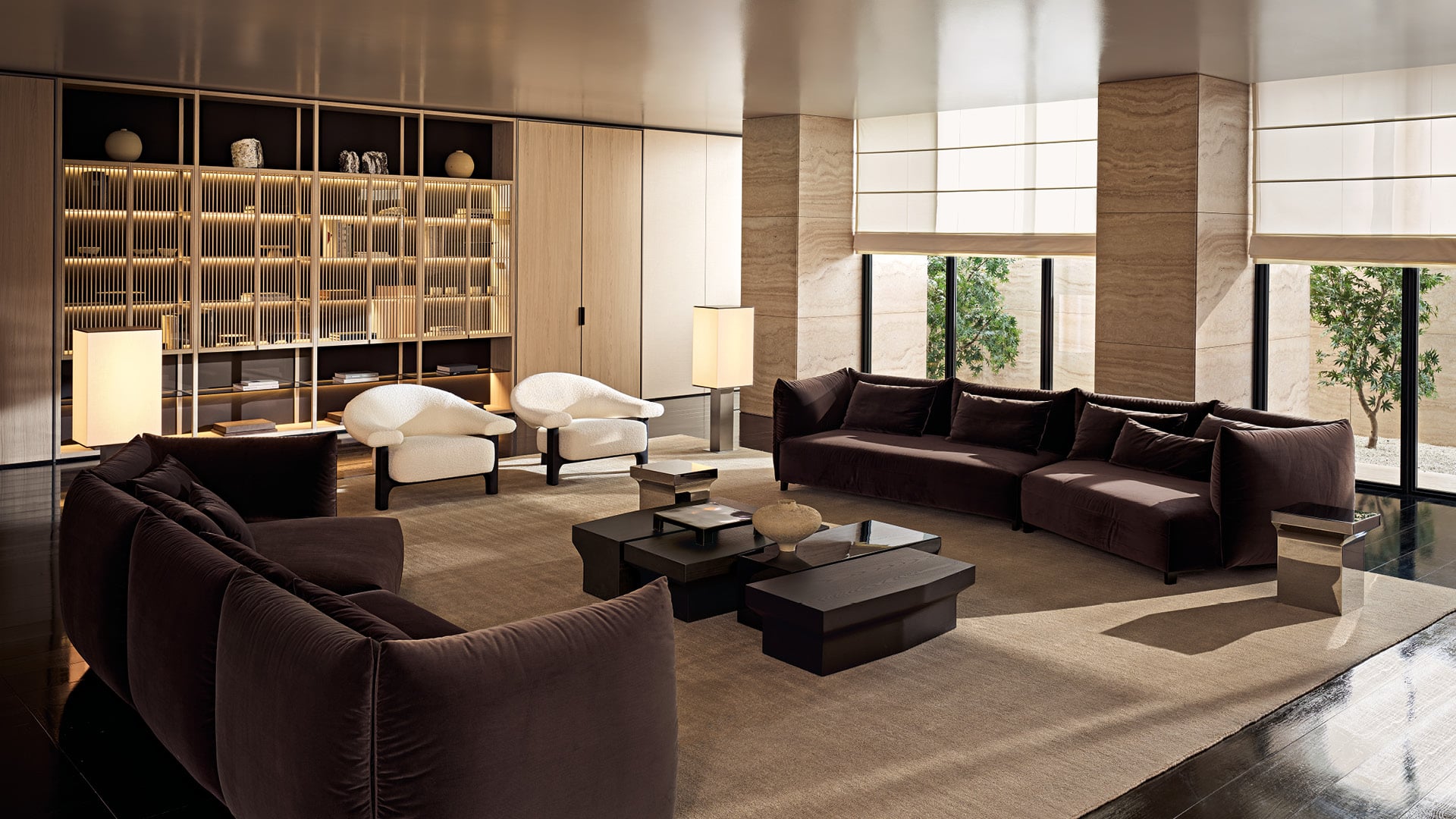
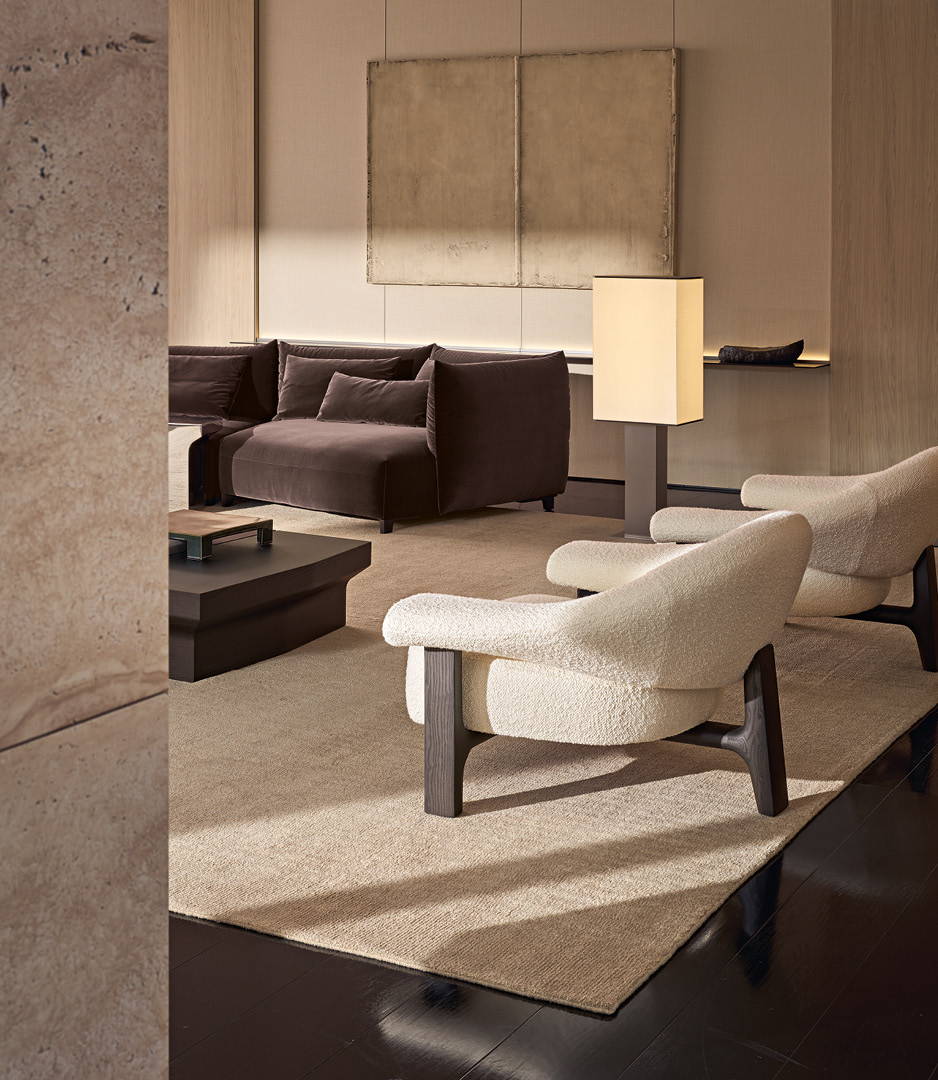
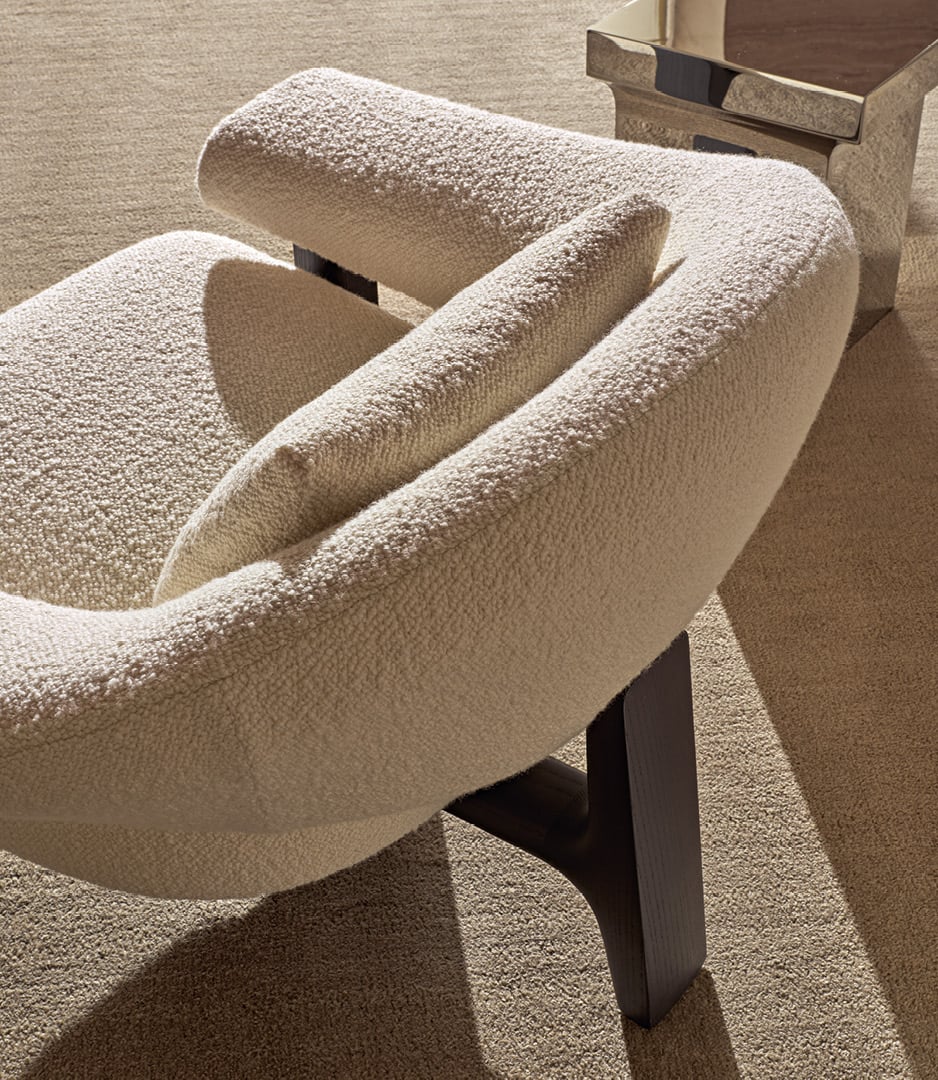
The Joan sofa and the Owen armchairs, with clean lines and generous volumes, define a minimalist design focused on absolute comfort. A fil rouge throughout all the spaces, the Helga lamps become a recognizable and sophisticated detail.
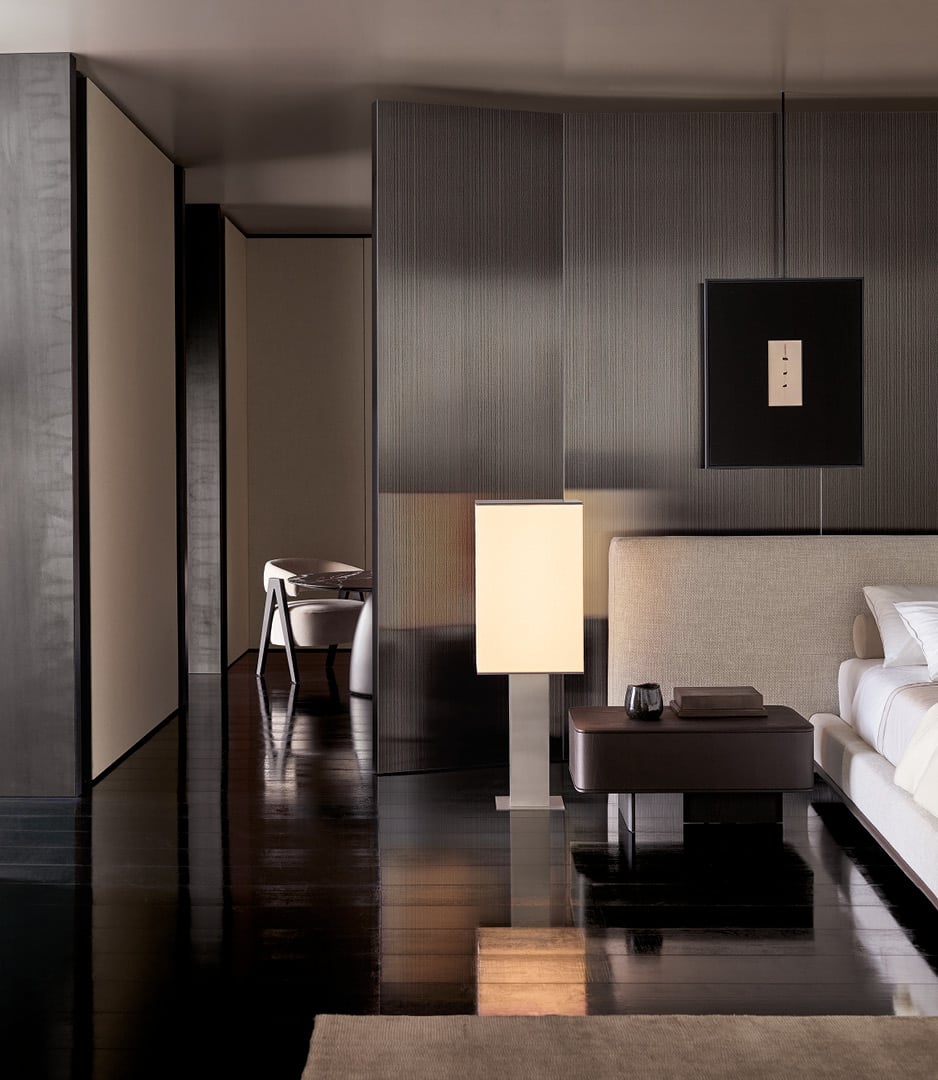
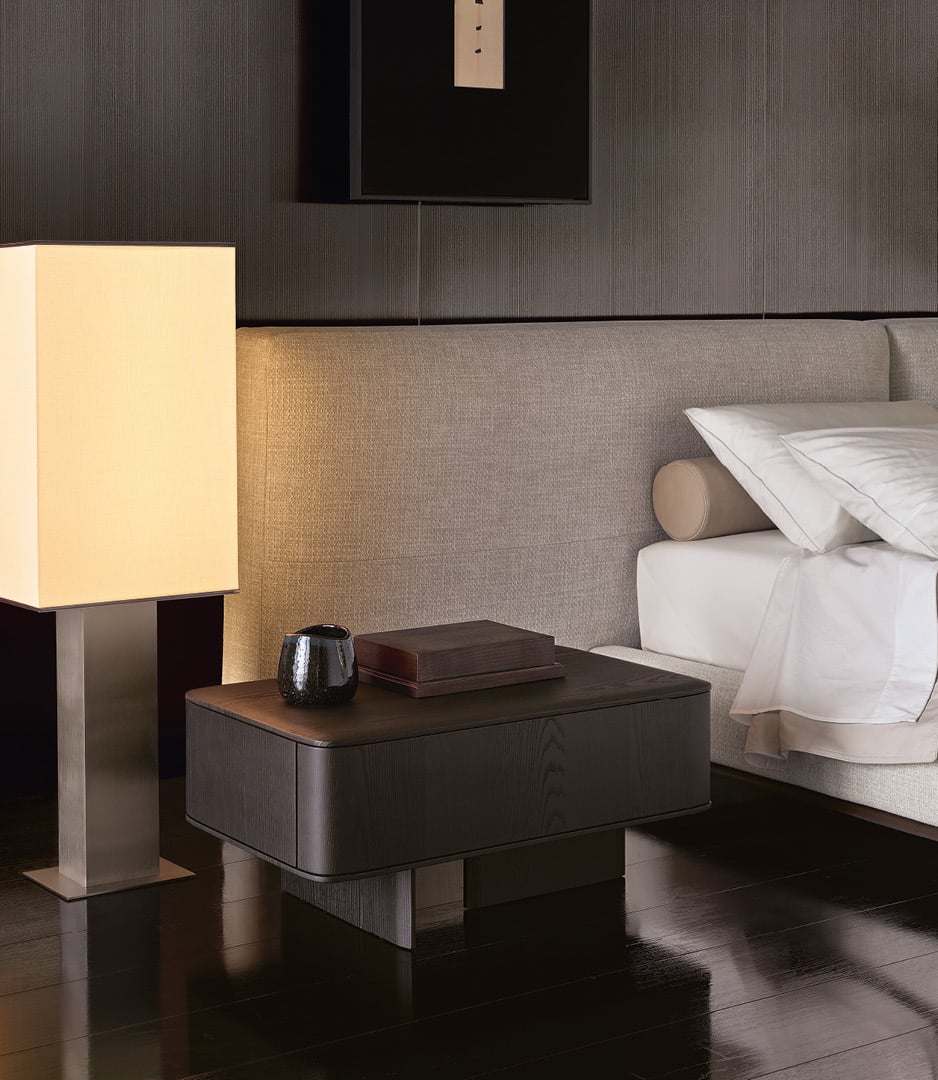
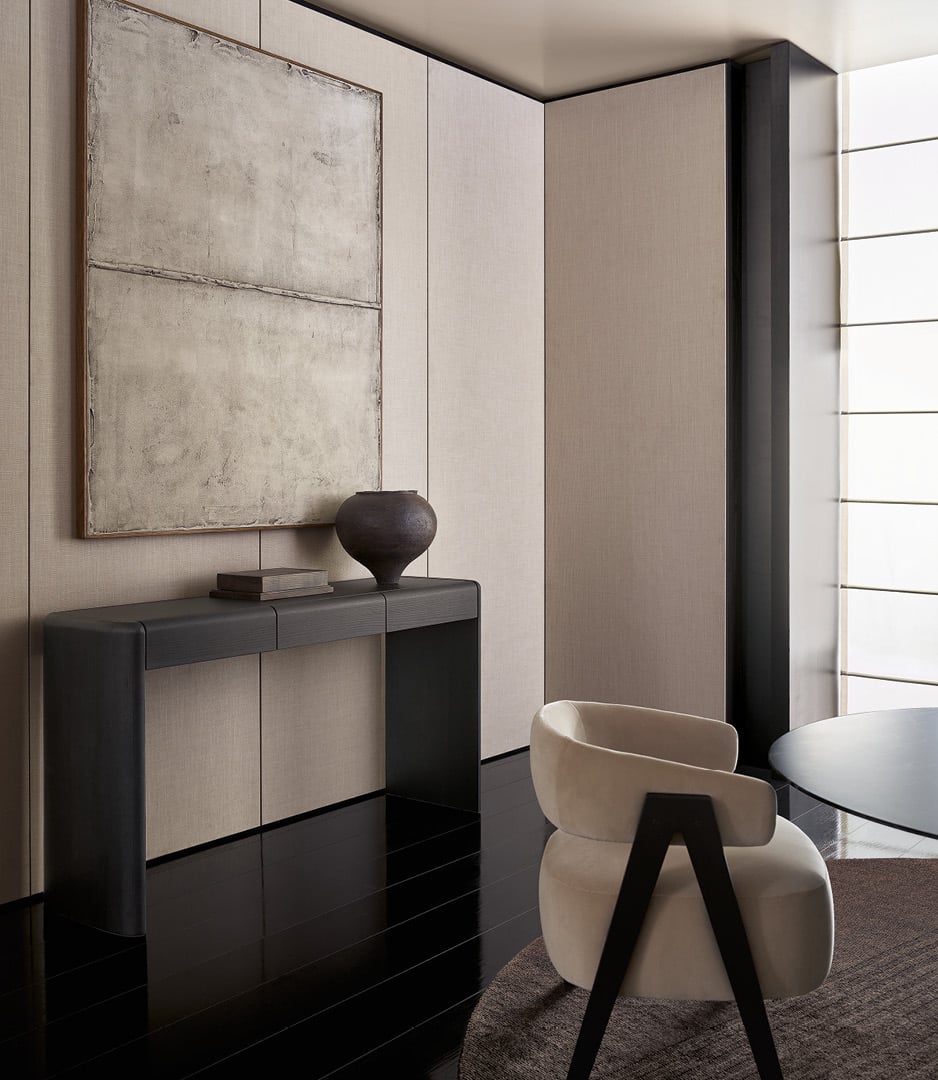
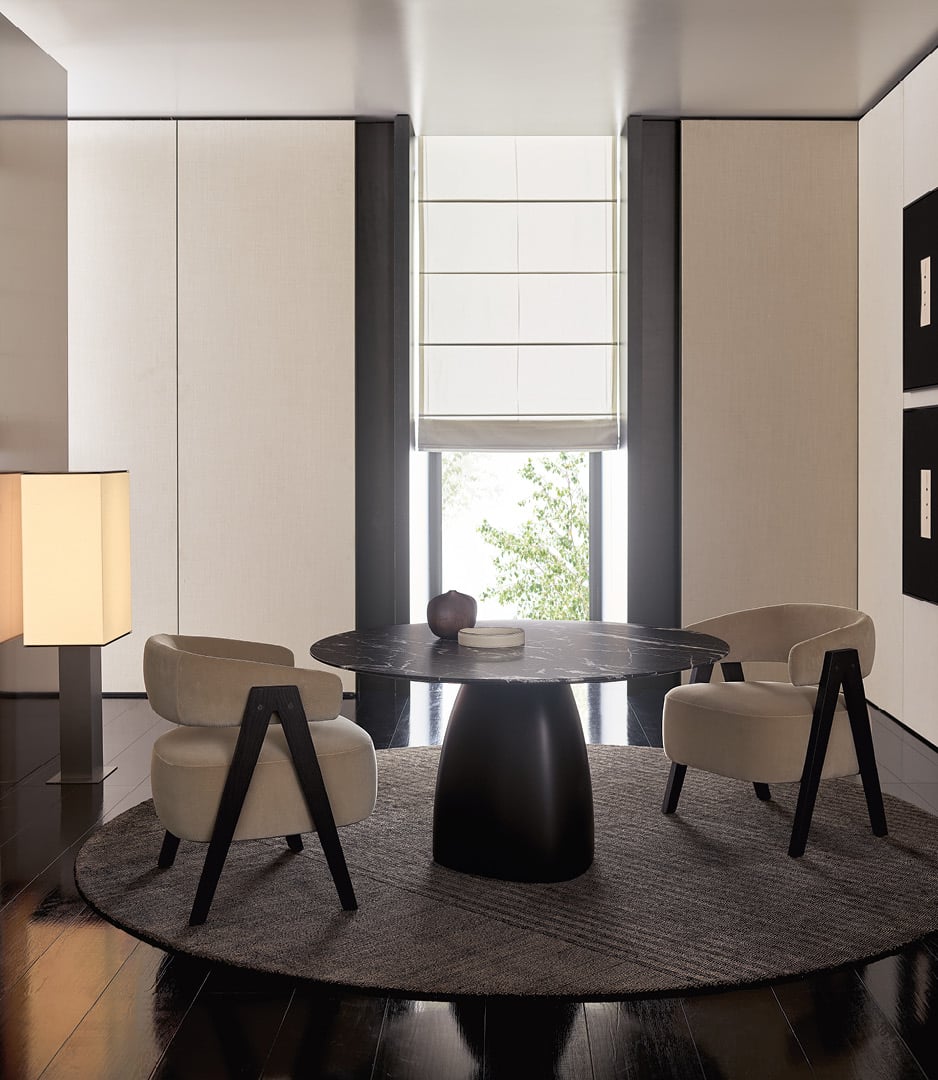
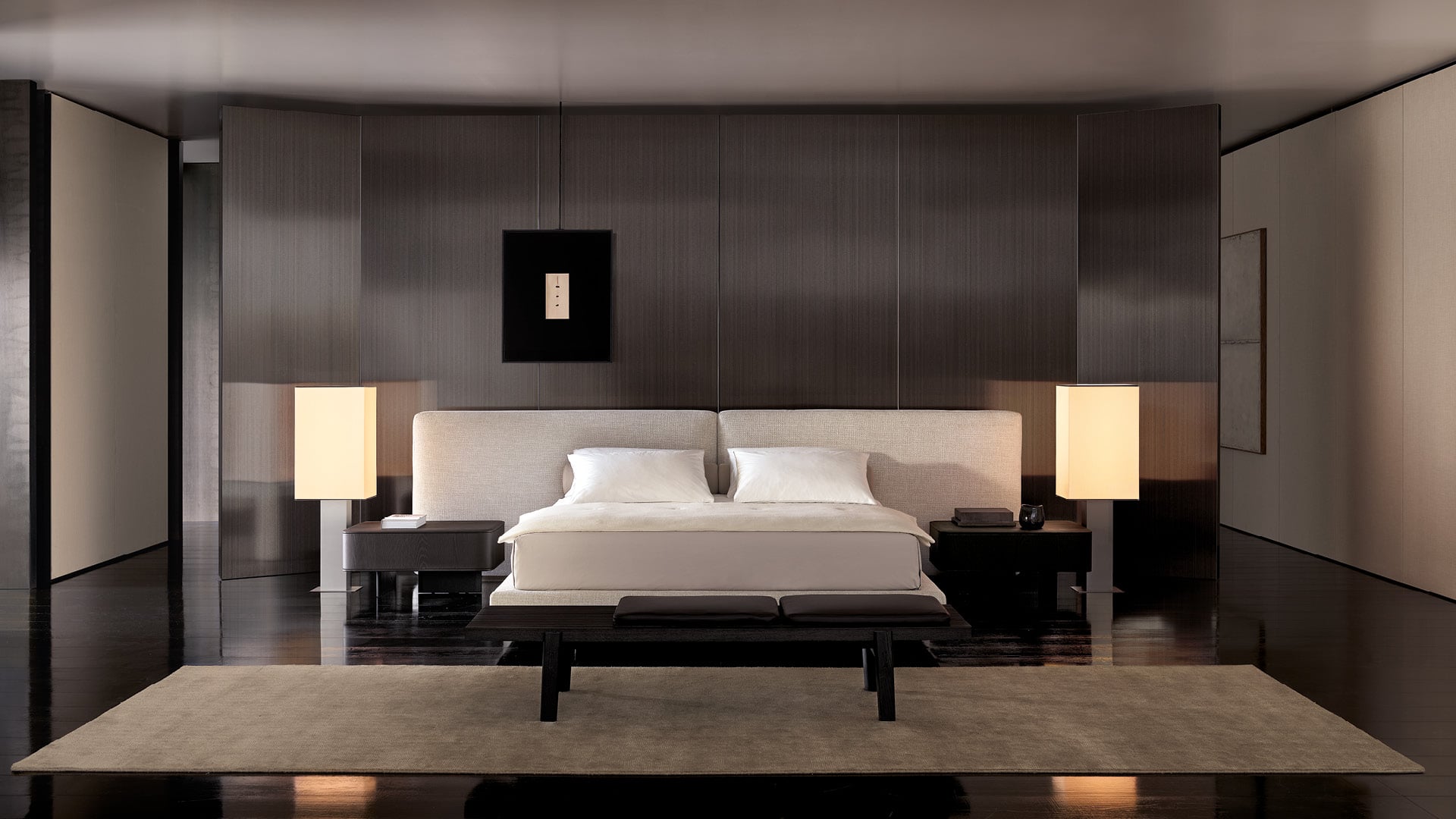
The bedroom combines two areas: the first dedicated to sleep and rest, the second to moments of relaxation, with a low dining table and armchairs. Between the two, a wall separates the spaces like a theatrical backdrop.
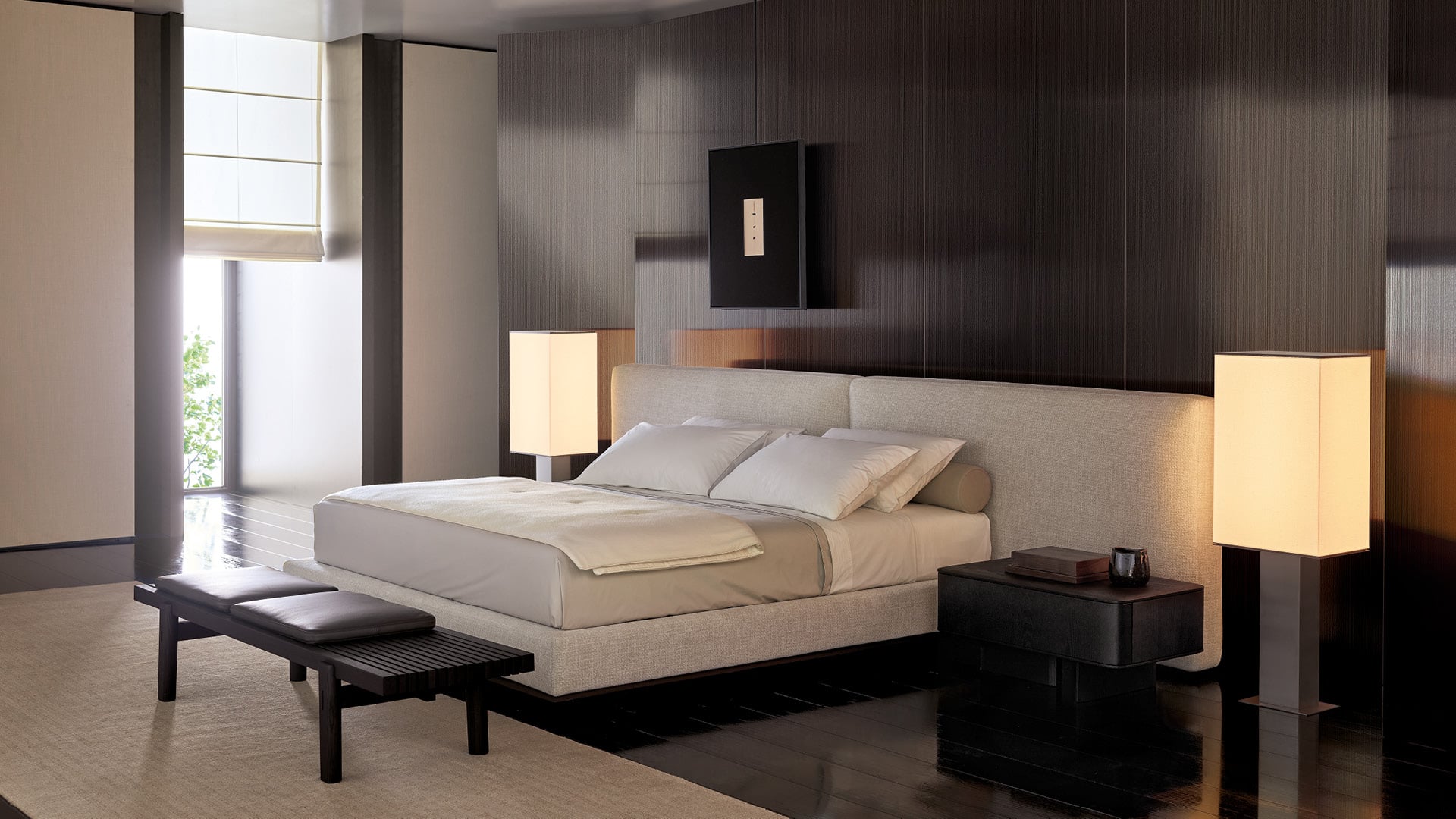
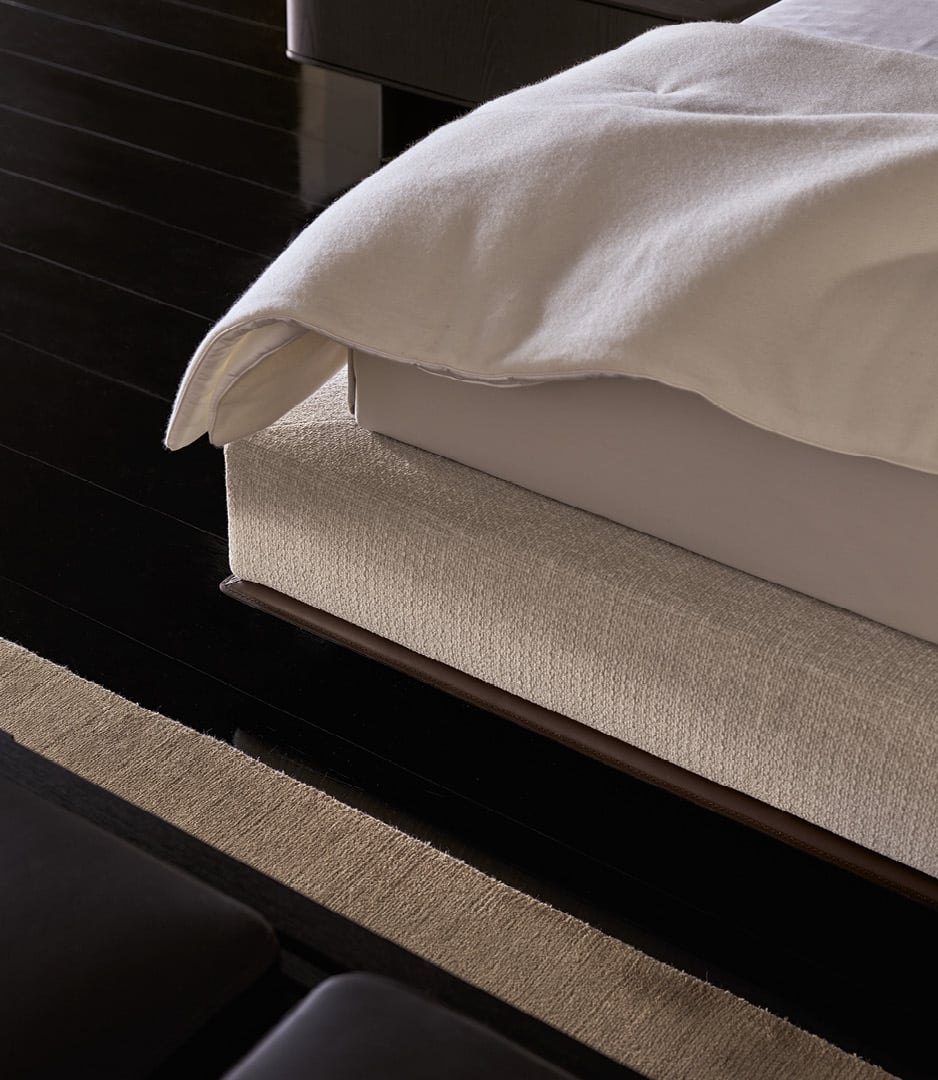
The Brera bed by Jean-Marie Massaud brings the idea of a domestic landscape with a strong architectural character into the sleeping area. Essential and elegant, it echoes the aesthetic of the most exclusive suites.
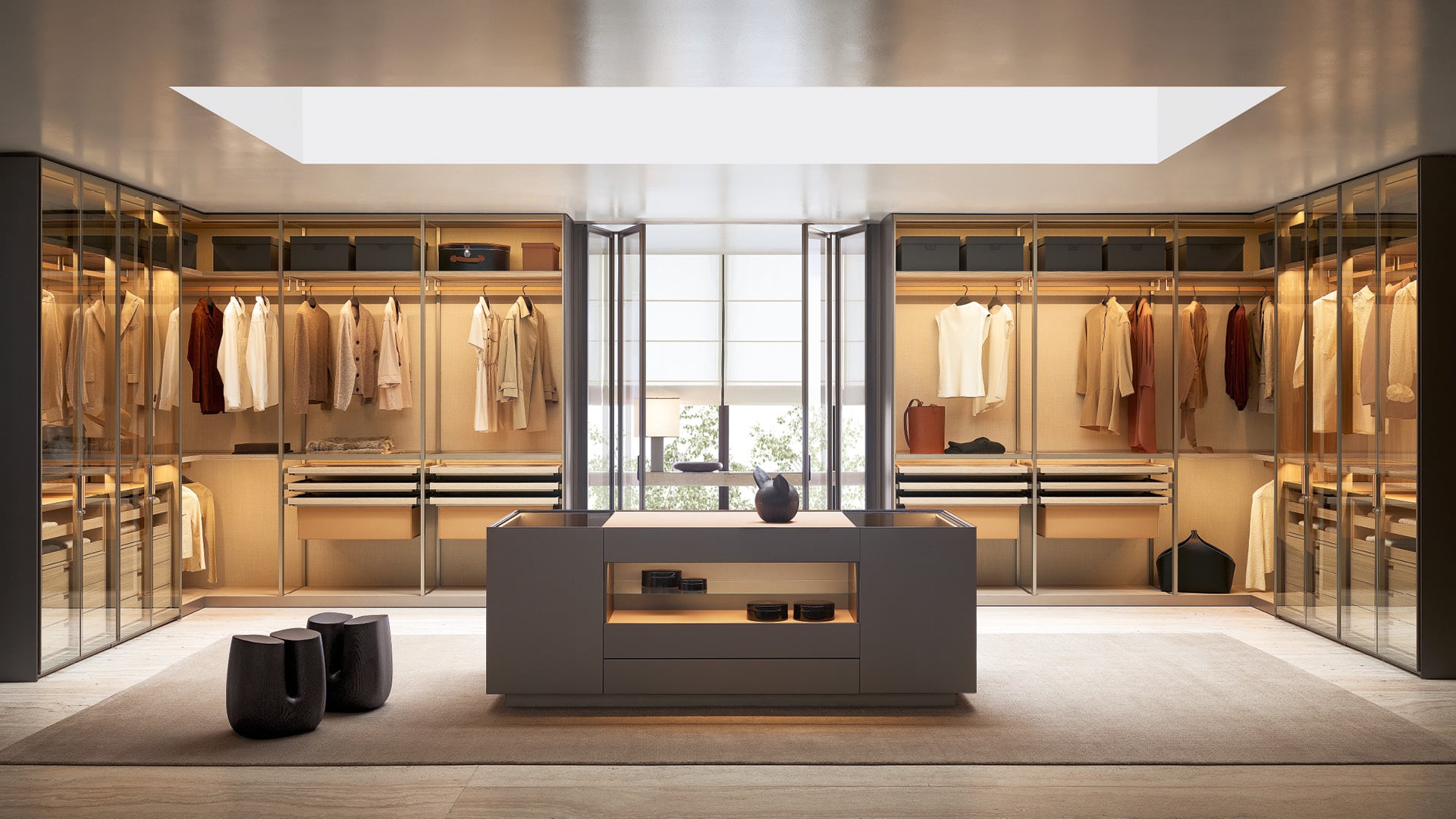
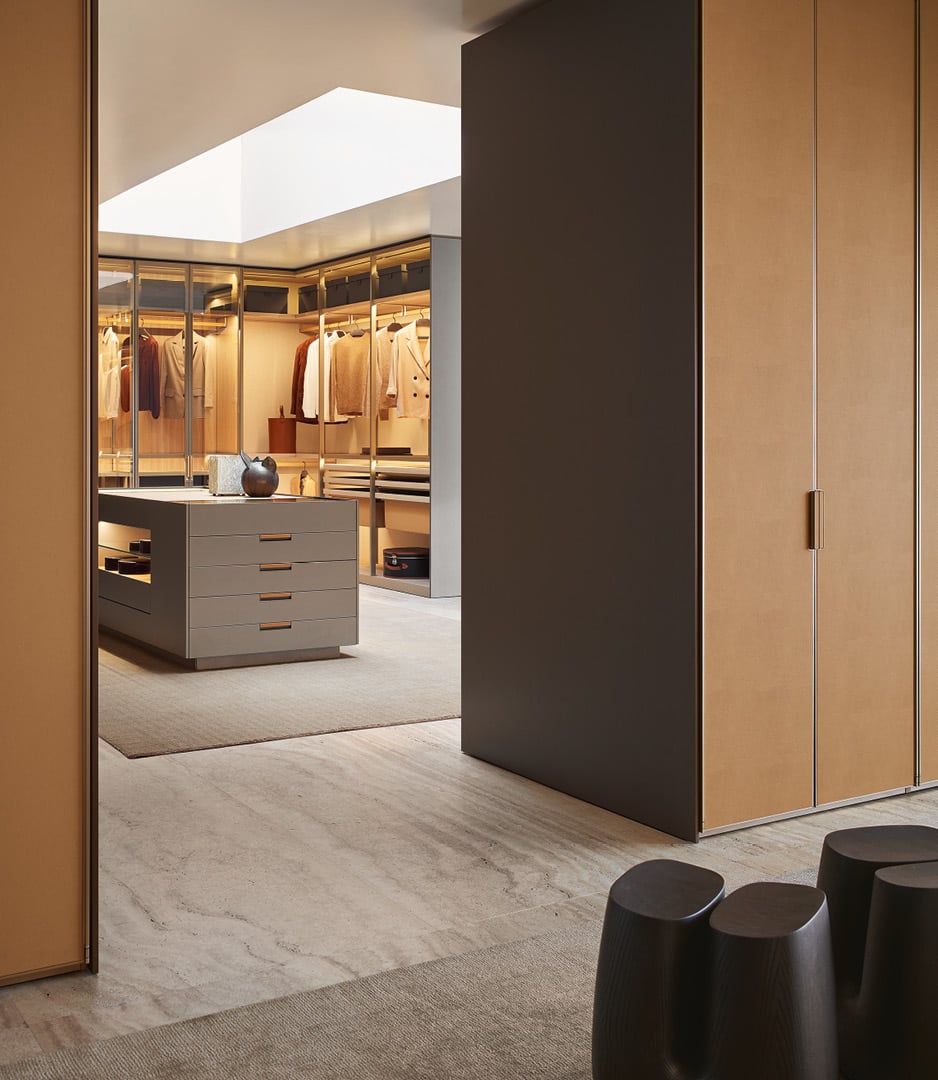
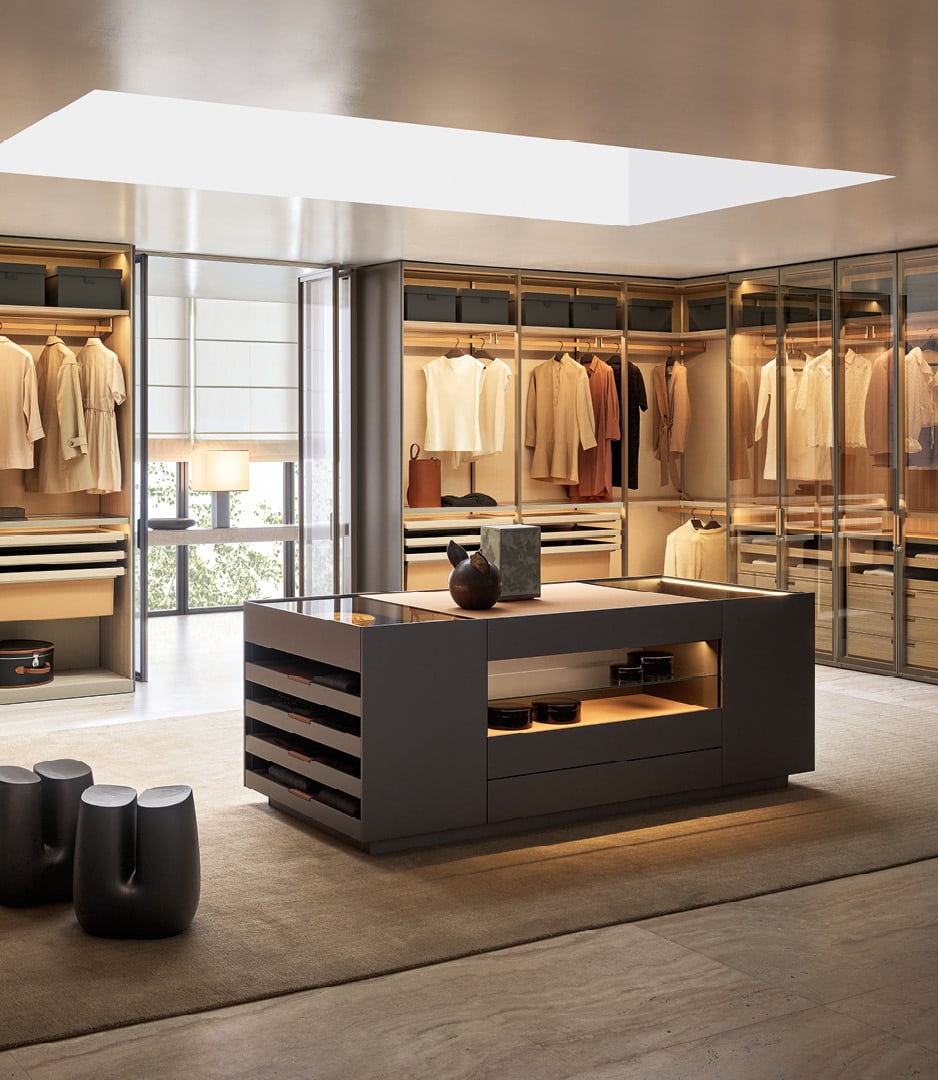
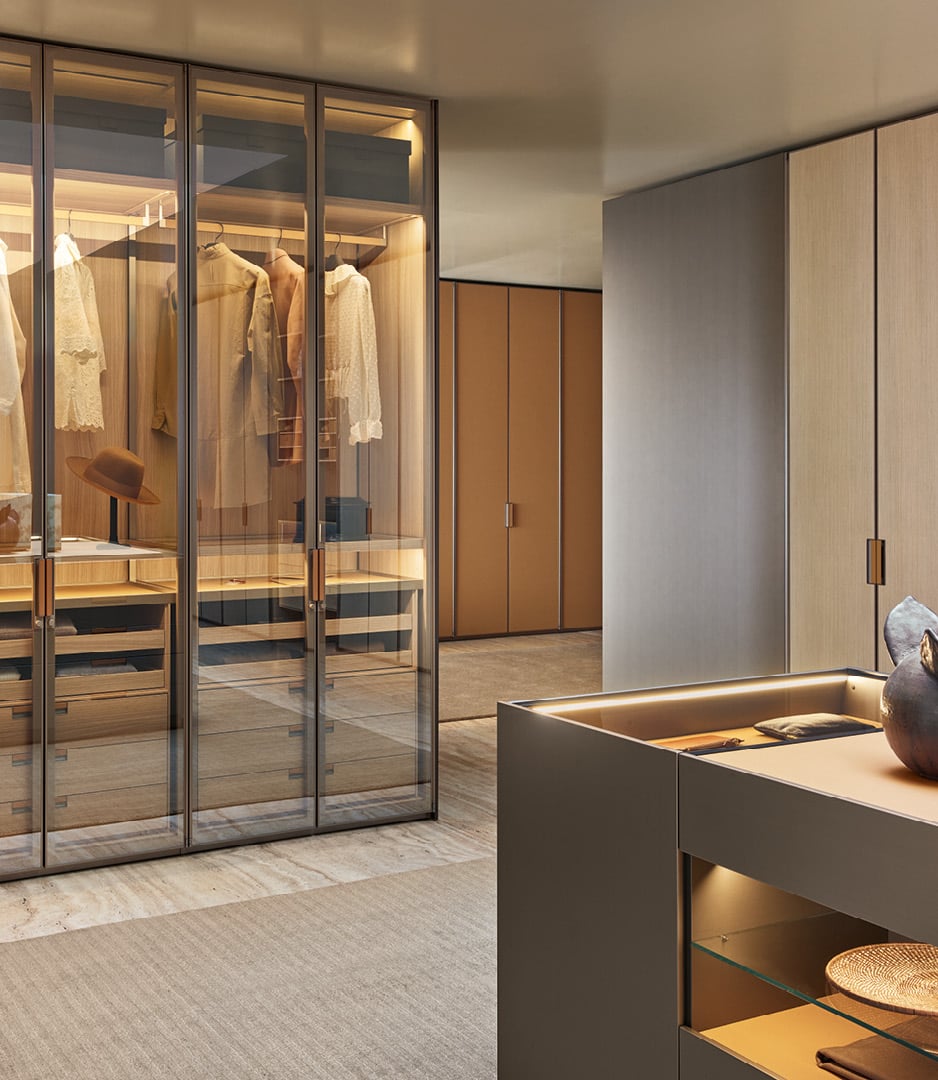
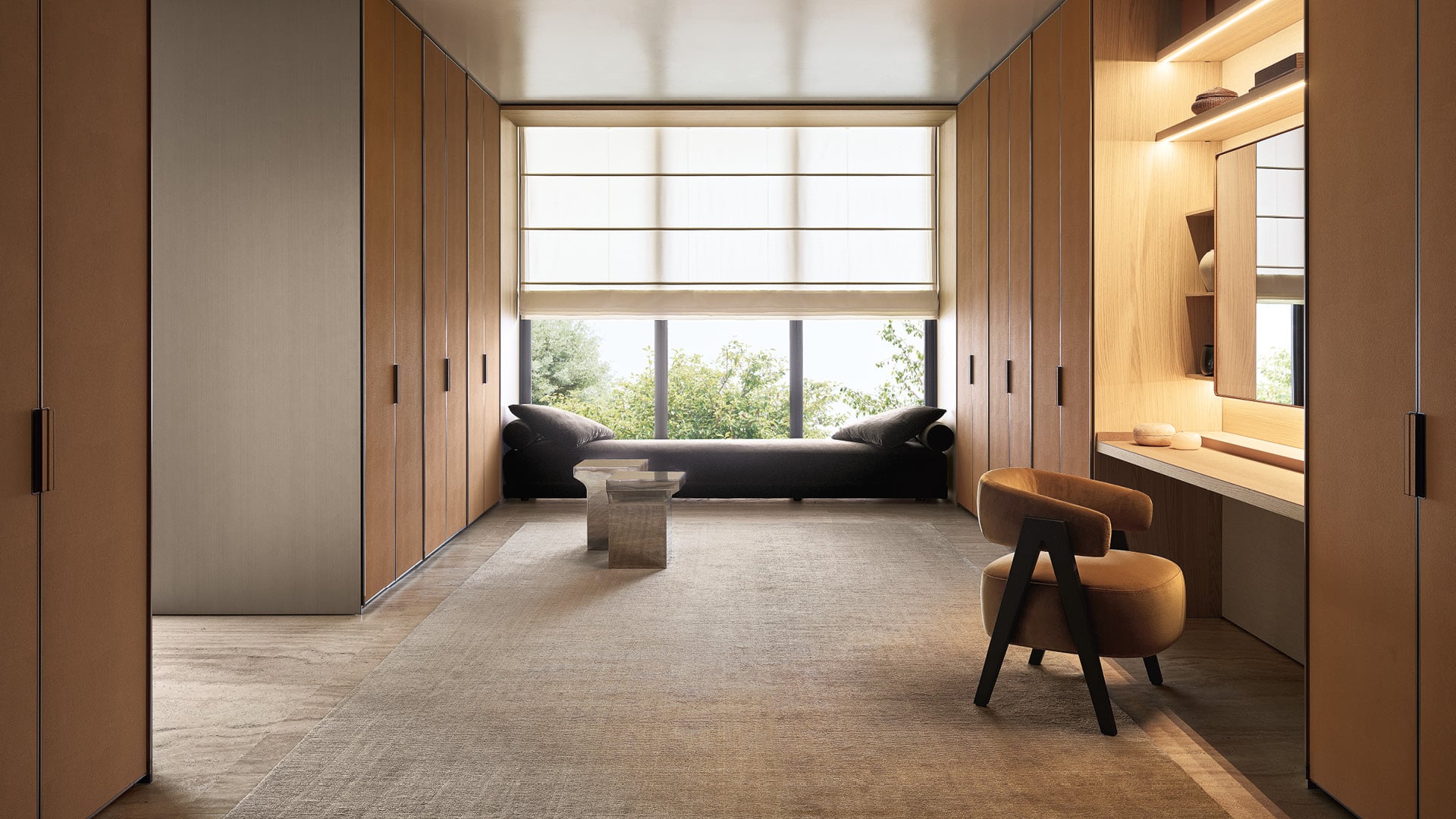
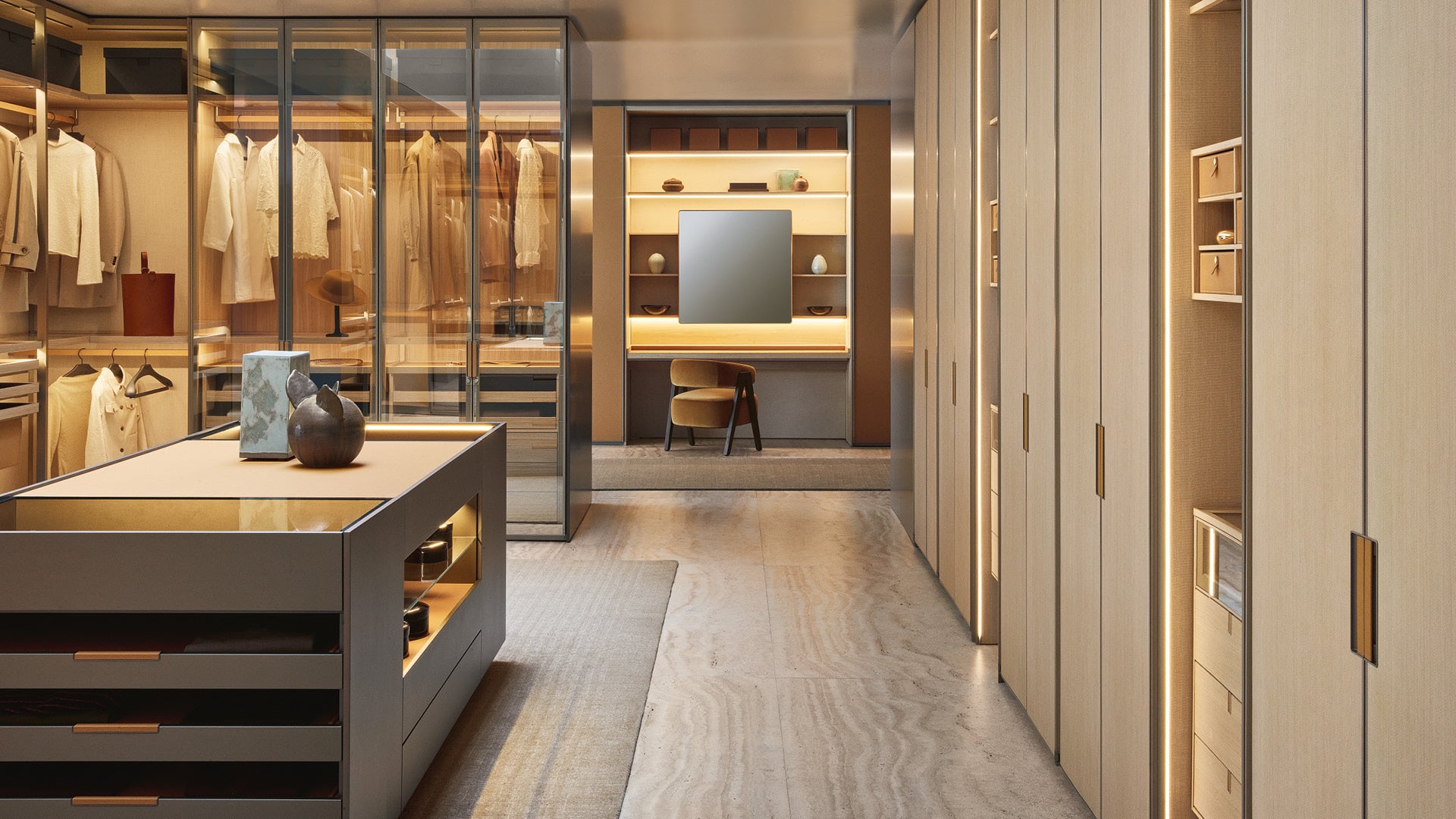
From the bedroom one enters the wardrobe area, characterized by large windows and a wide opening in the ceiling that floods the space with natural light. Together with the light finishes, the light transforms the walk-in closet into an ideal space for self-care.
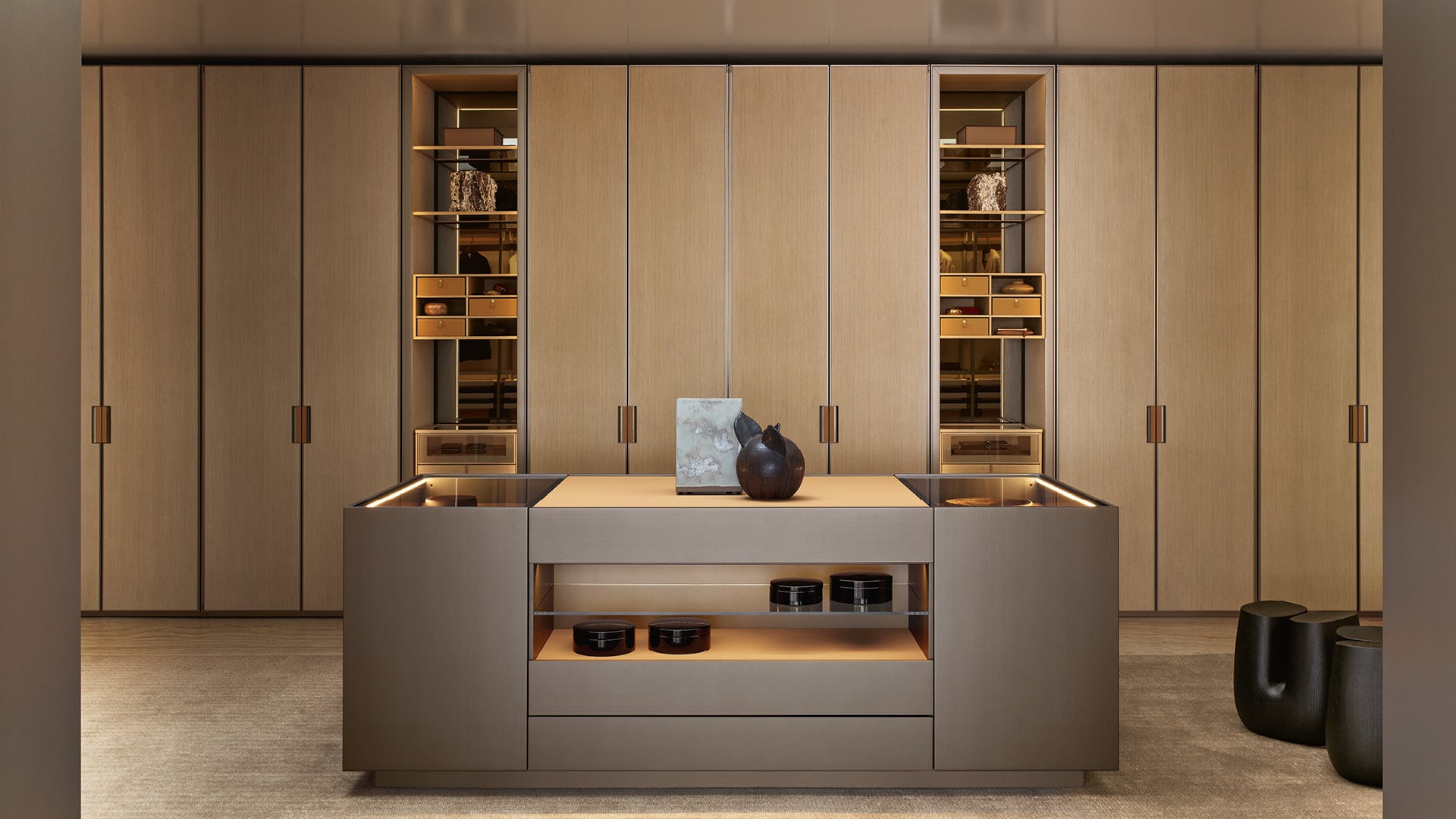
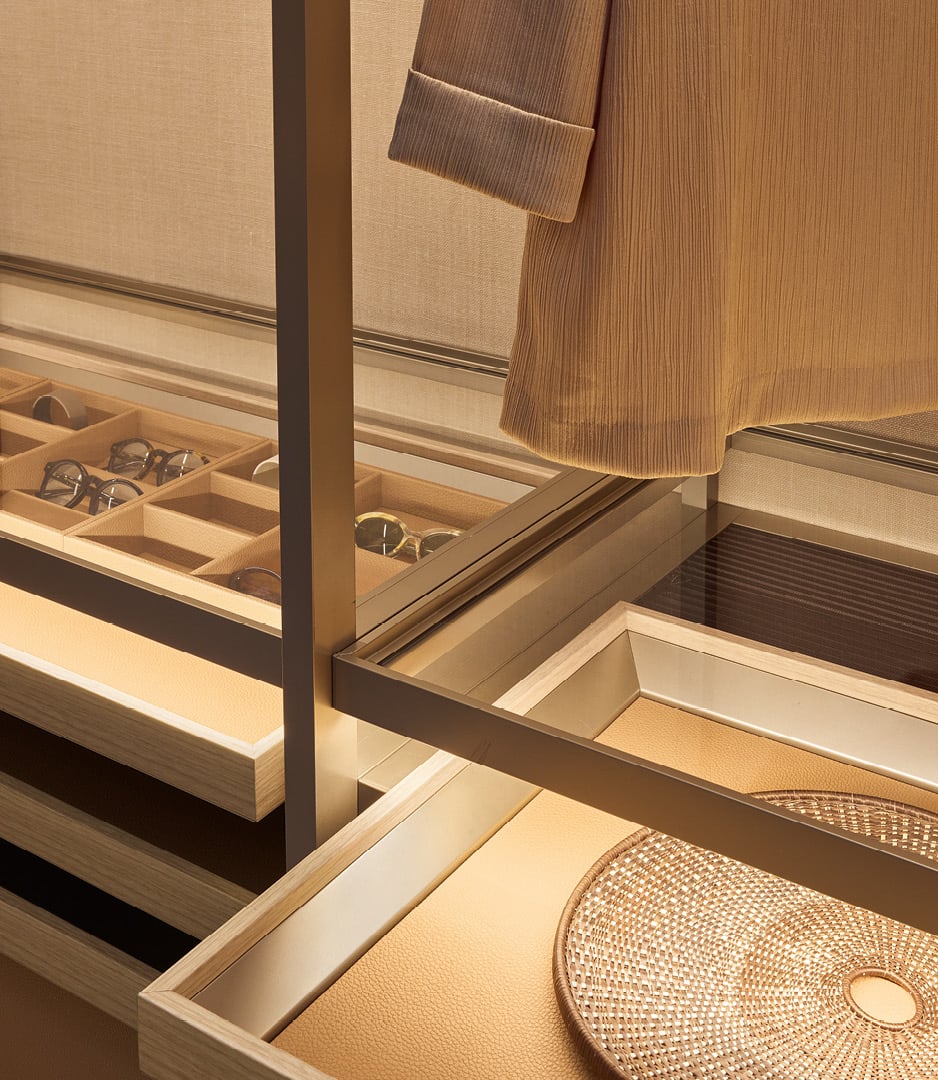
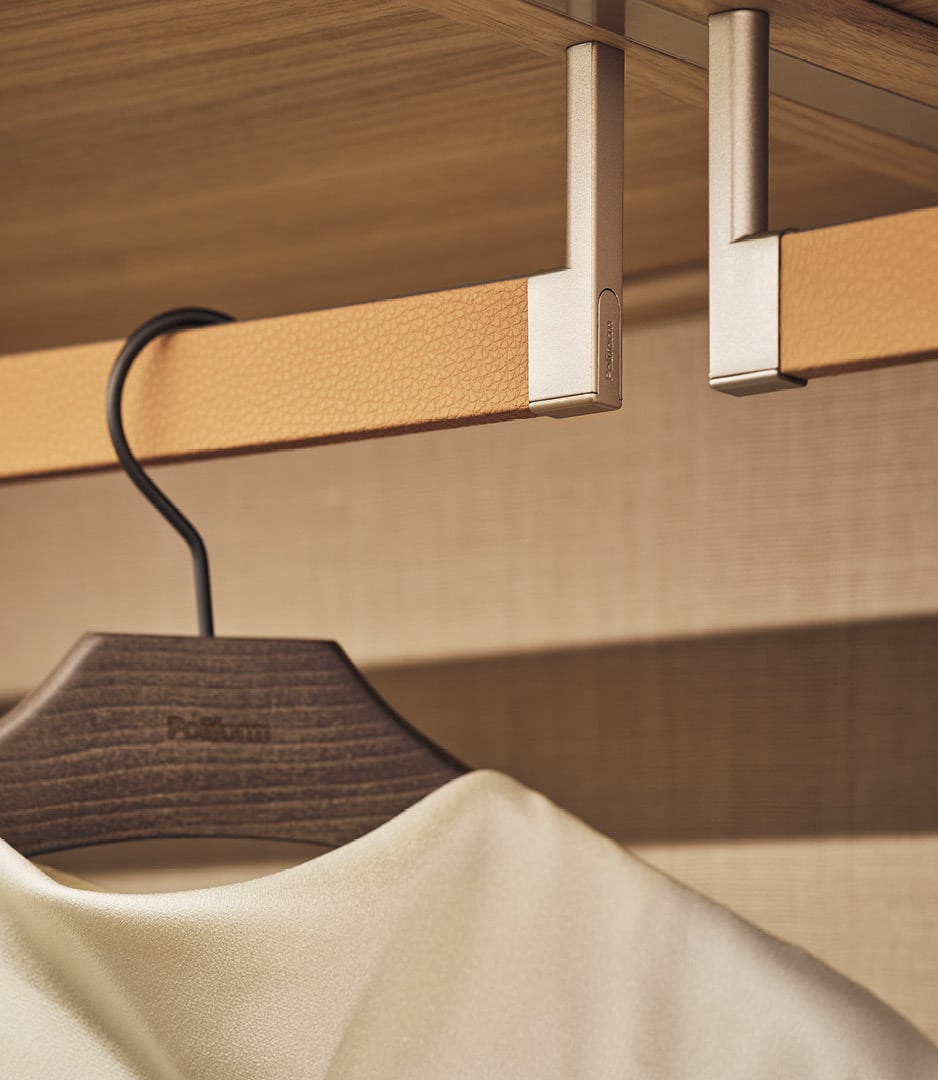
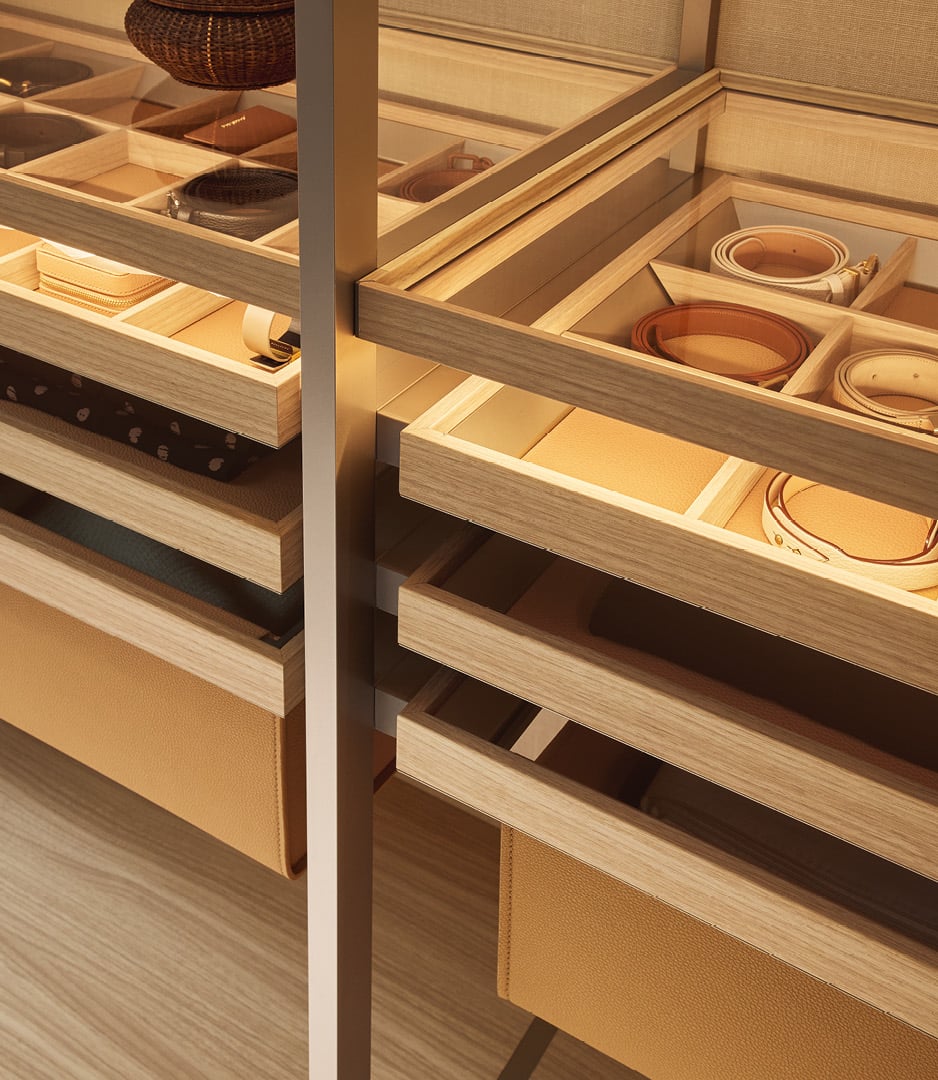
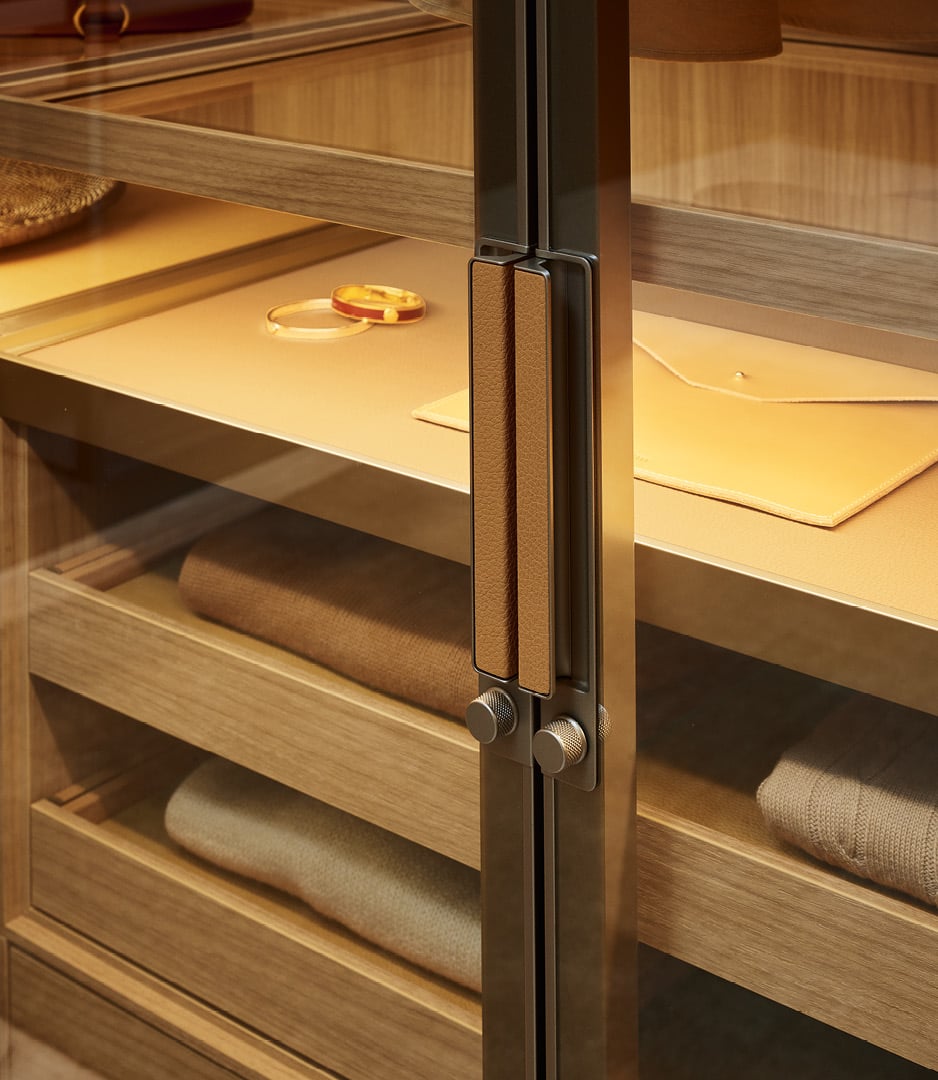
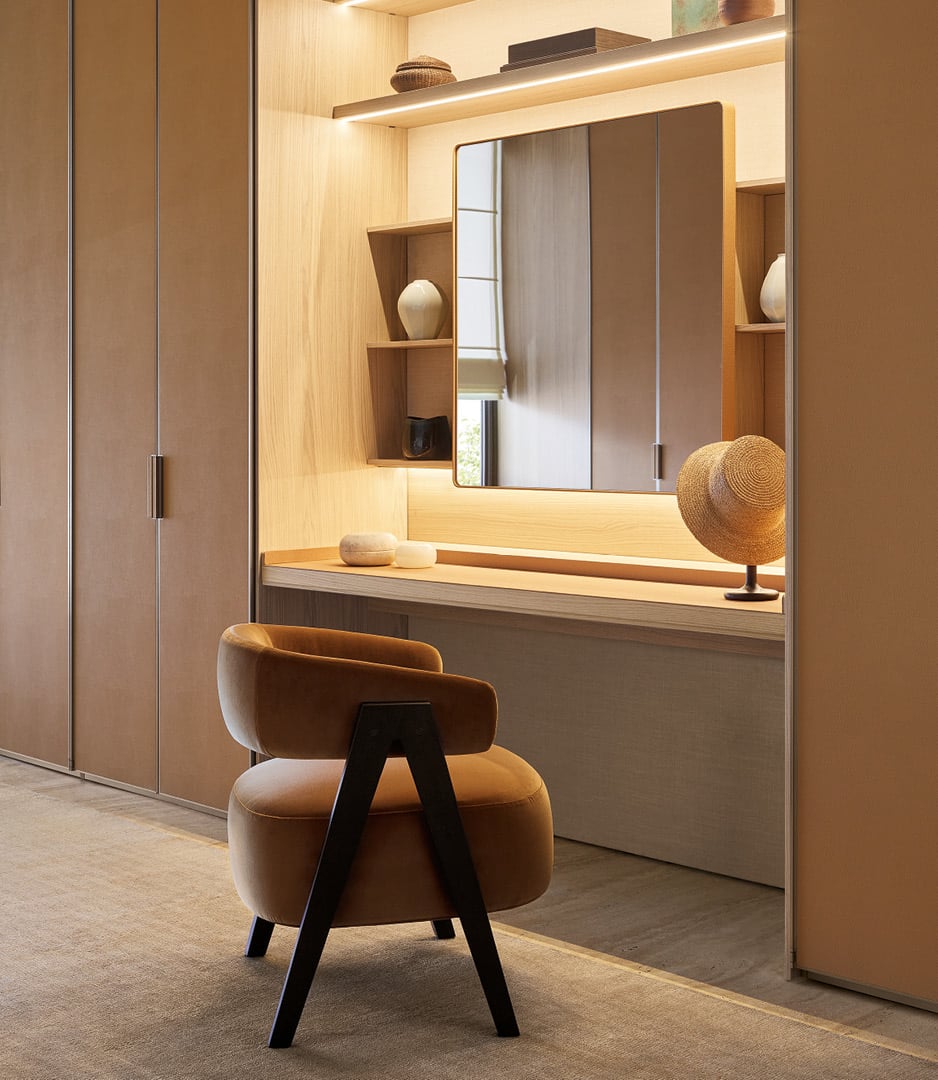
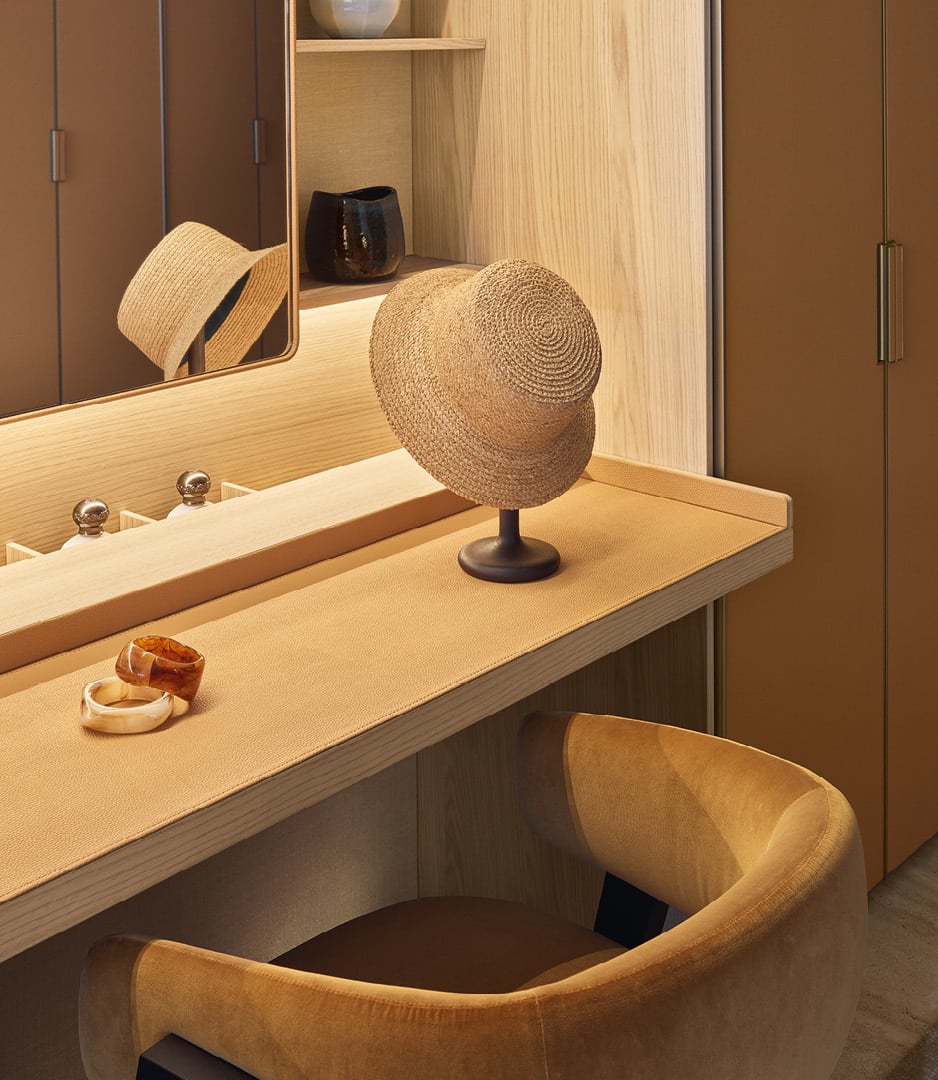
Walk-in closets, display wardrobes, and closed wardrobes coexist within the same space, offering the widest freedom in organizing clothes and accessories. Vanity niches and equipped columns break up the wall of wardrobes, enhancing its functionality.
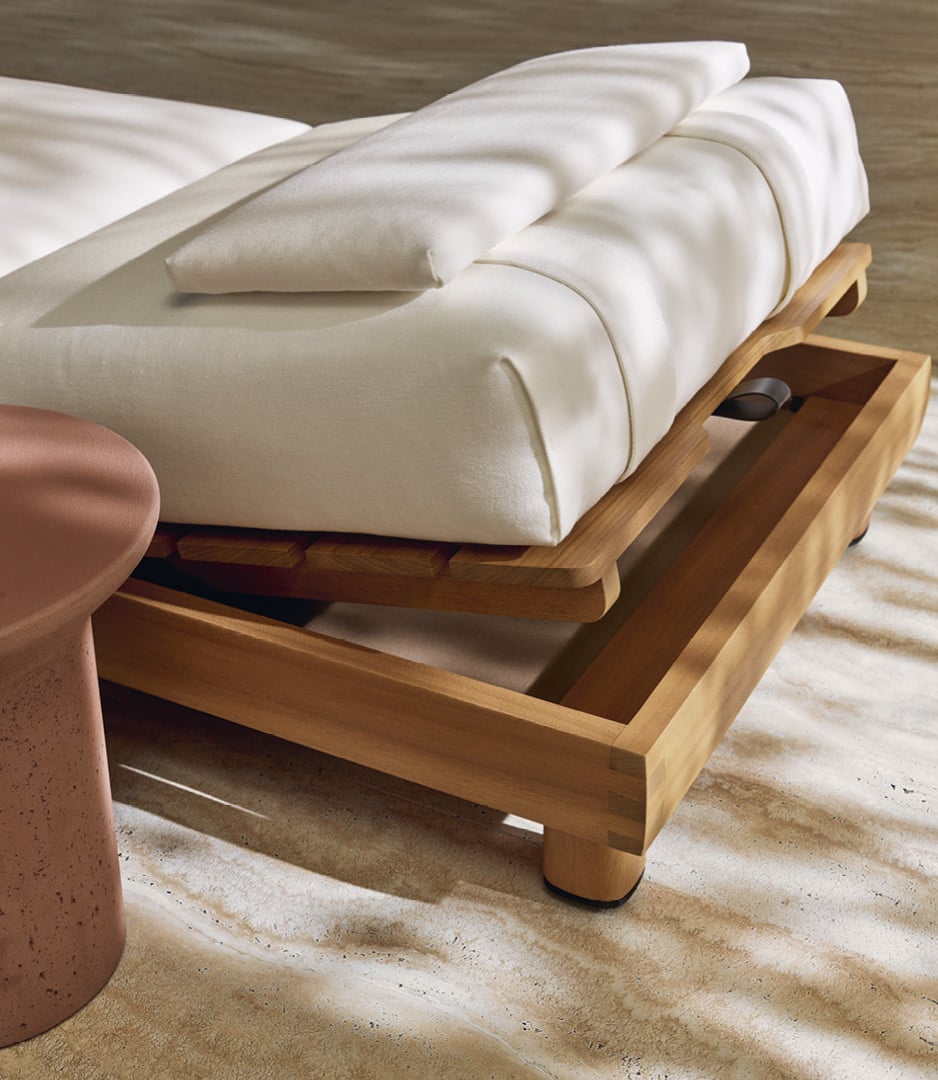
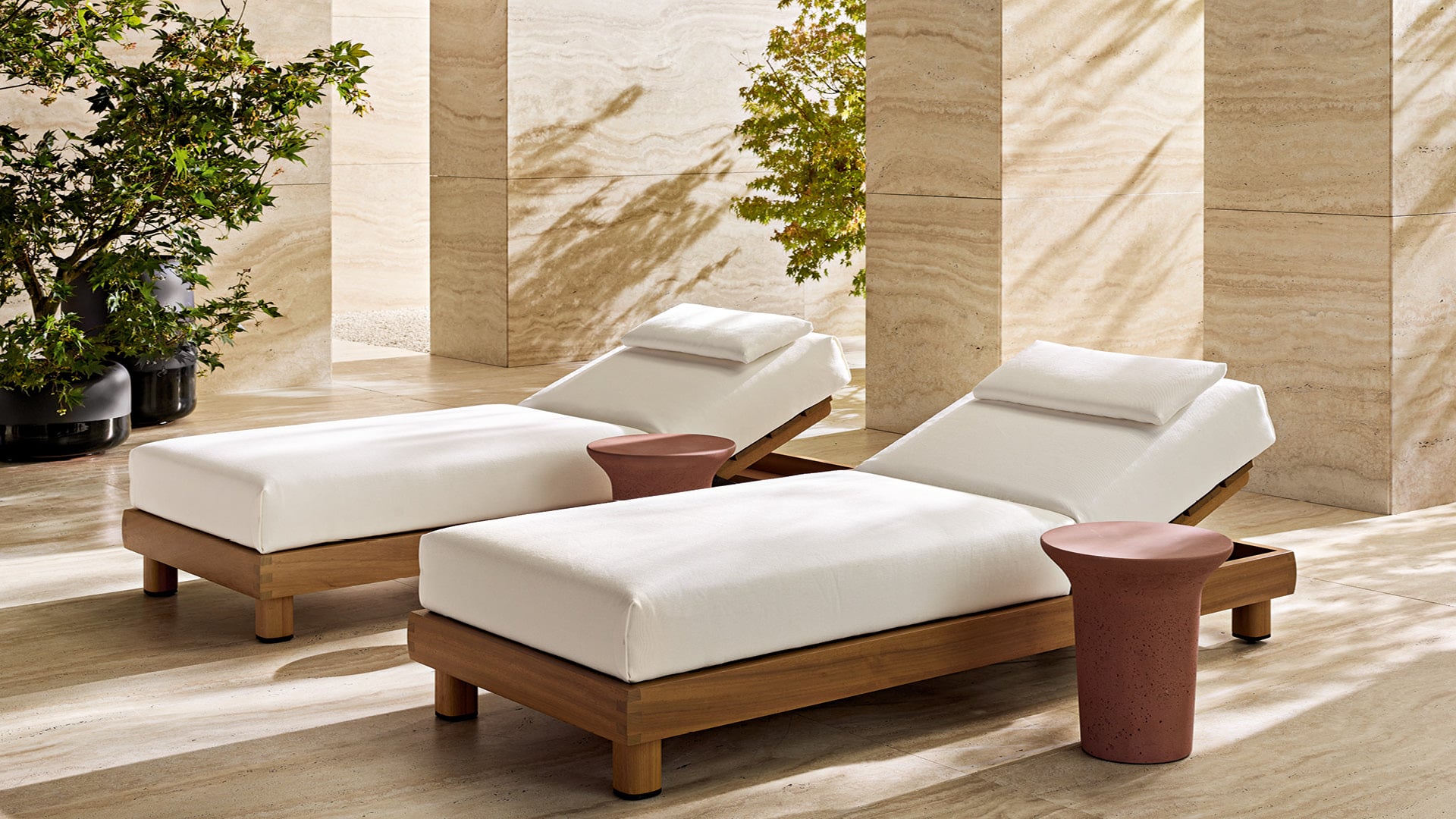
From the sleeping area, one can also access a private outdoor space, where sunbeds accompany the lounge seating. Ponte armchairs and sofa, together with Ketch sunbeds, bring a natural touch to an outdoor area perfectly integrated into the architecture.