In the serenity of authentic, spontaneous nature, where humans are admirers rather than participants, in a villa suspended between the land and the sea, the rooms are designed in sequence, each part of a complete and coherent narrative linked by the quality of the materials and natural colours.
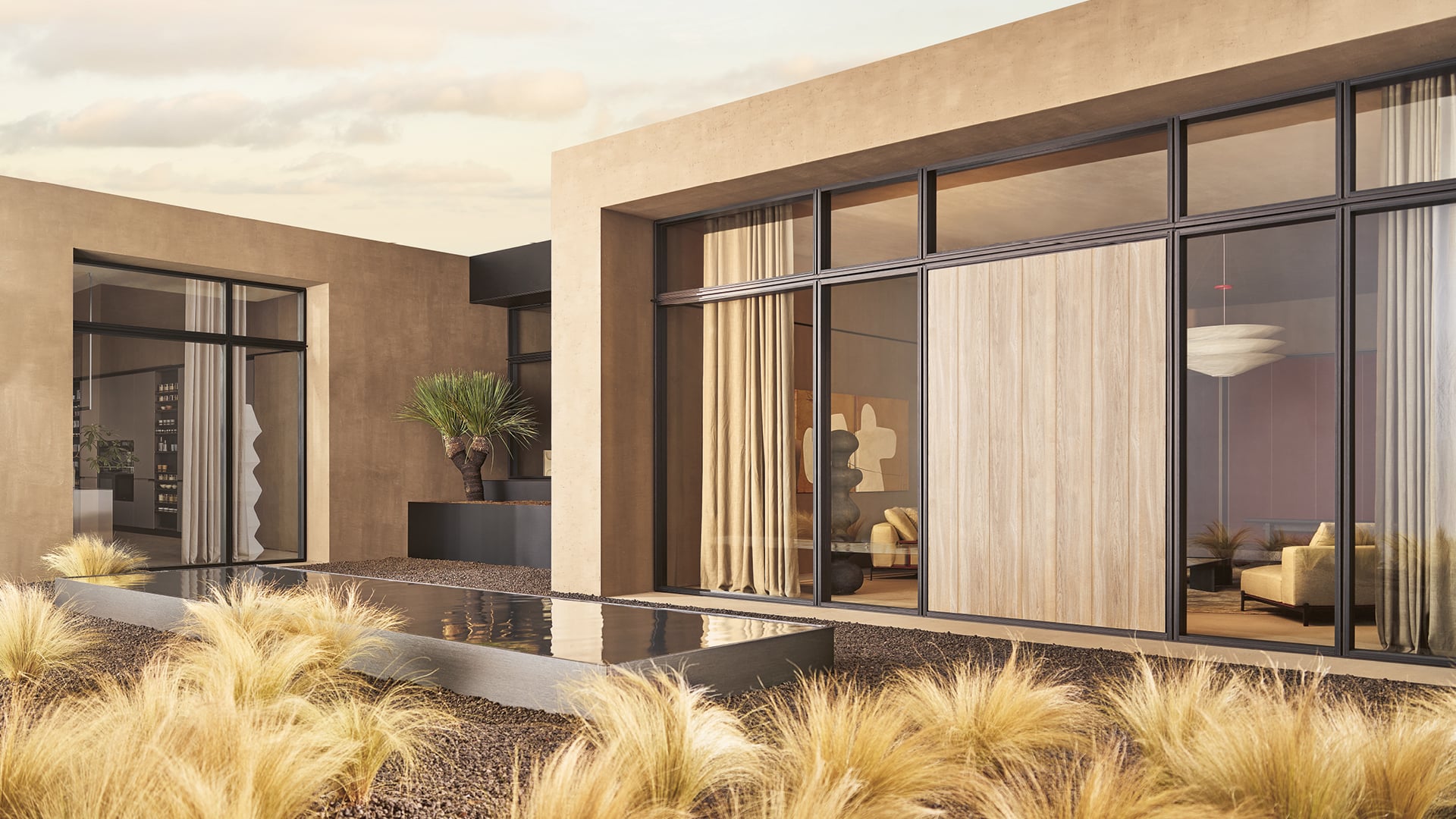
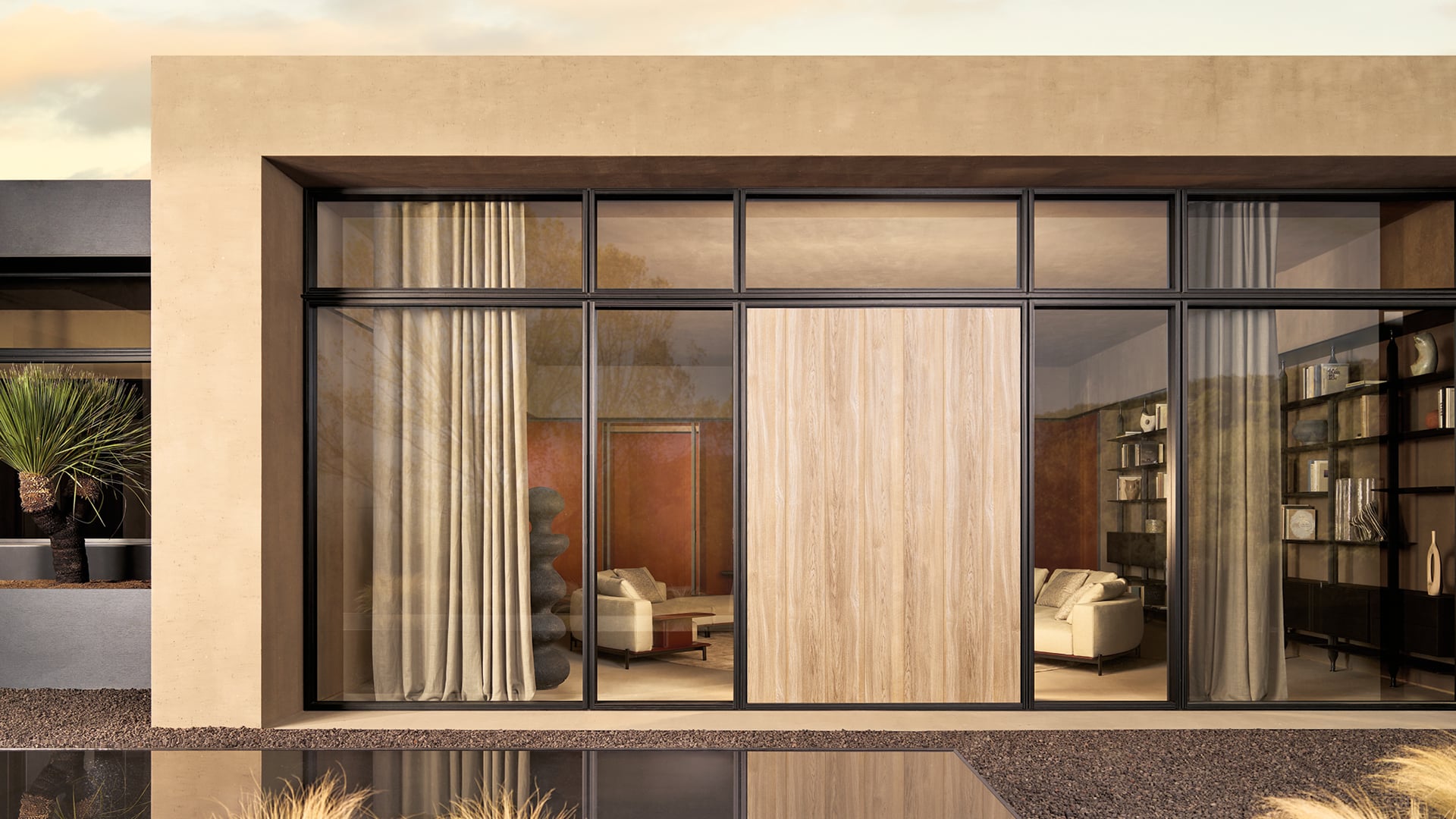
Moving through the rooms of the house one by one, what is described is a way of life. The living environment is designed as a fluid space where seamlessly integrated systems and furnishings give rise to a cohesive architectural whole, interacting with works and objects created by contemporary artists and artisans.
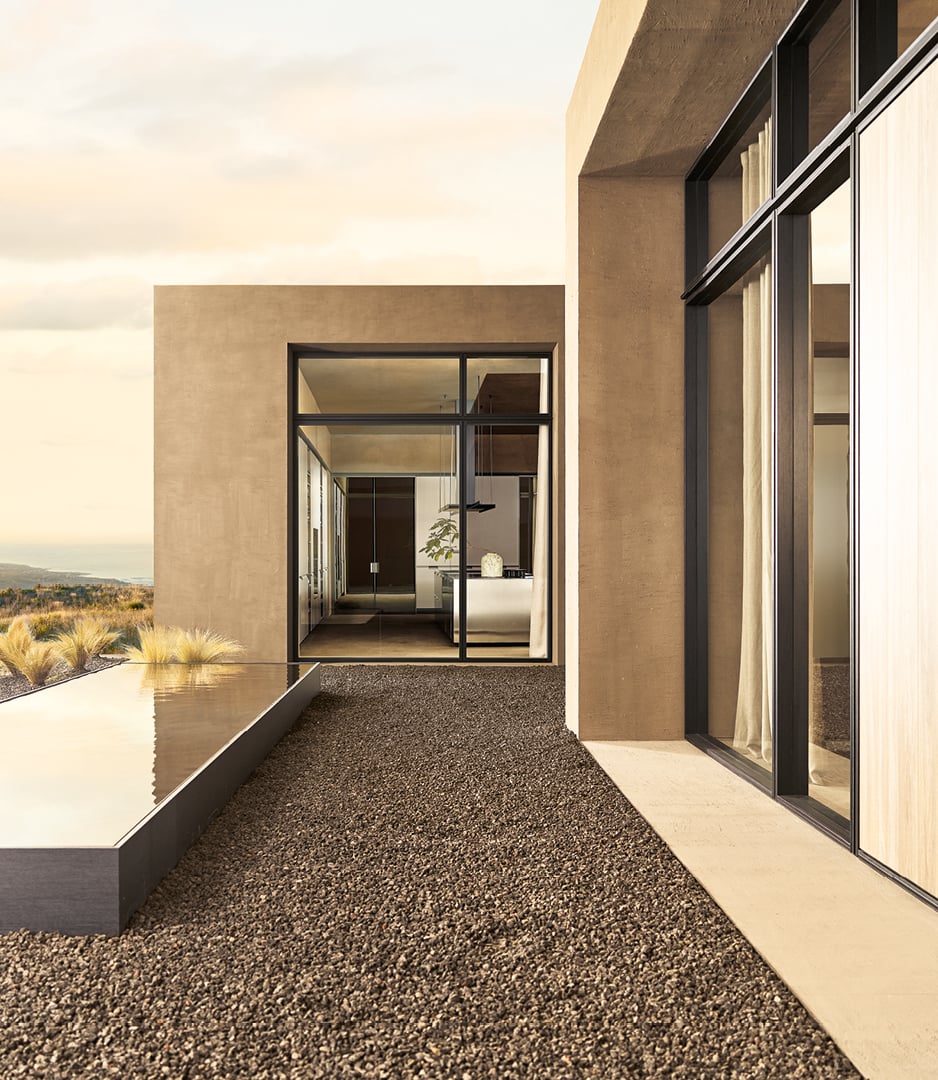
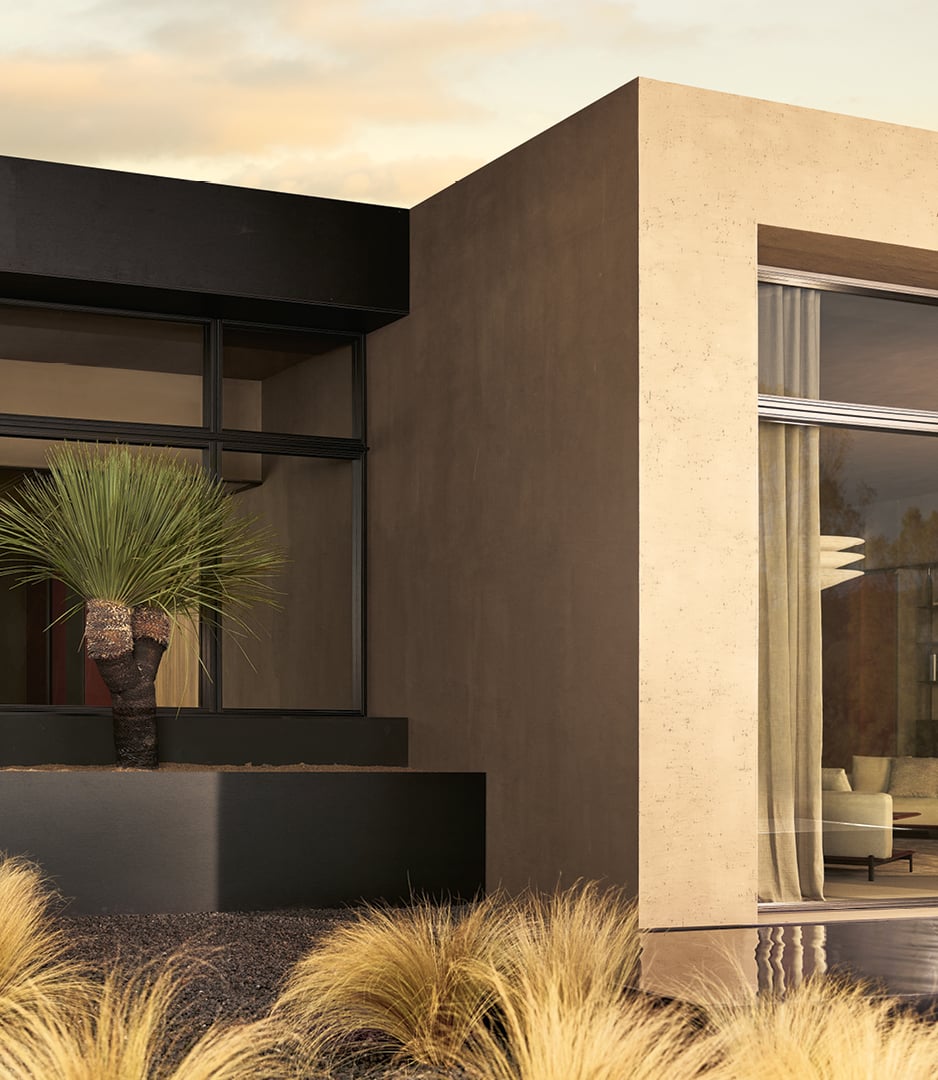
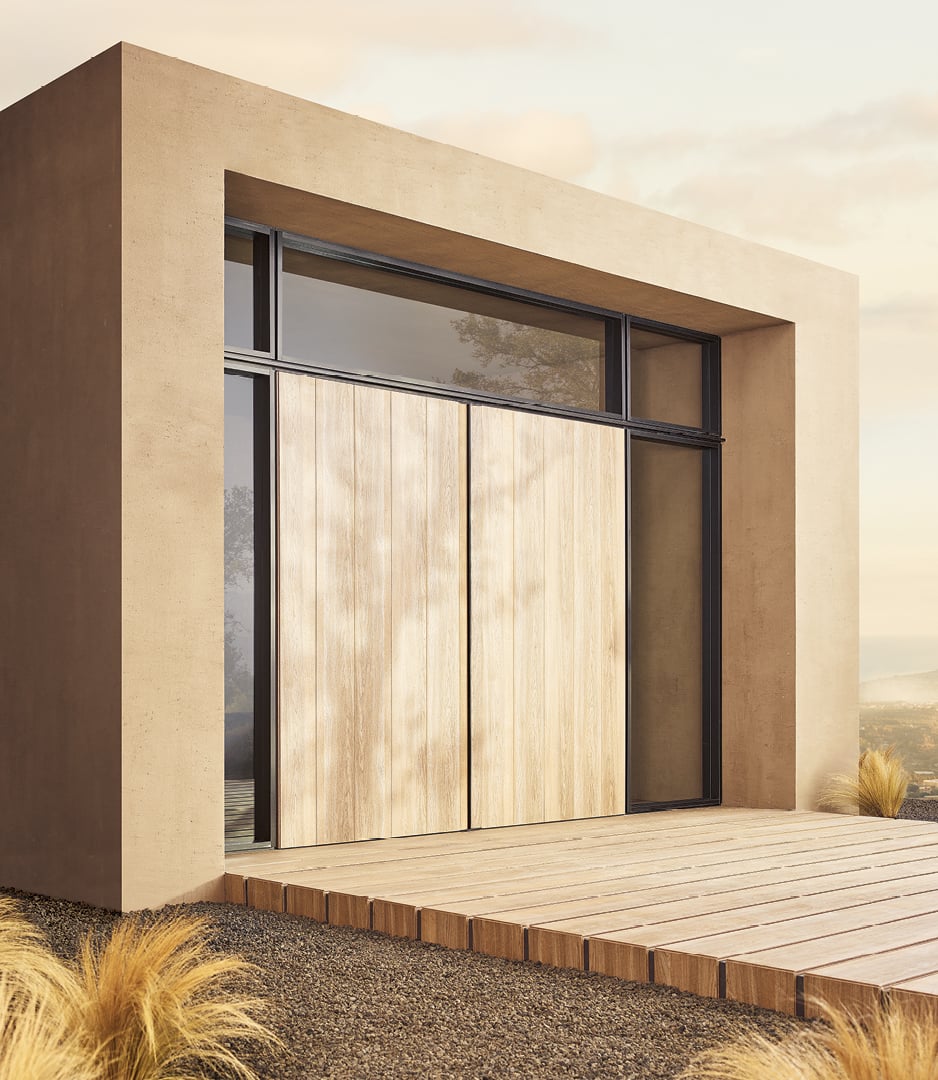
The entrance greets visitors and sets the scene for the rooms beyond. Here, the warm, varied tones of the surrounding landscape are reflected in the materials and surfaces, creating an instant connection with nature and the architectural context of the villa. The rooms of the house are arranged around this central space, which sets the overall mood in terms of shapes, selected materials and colours.
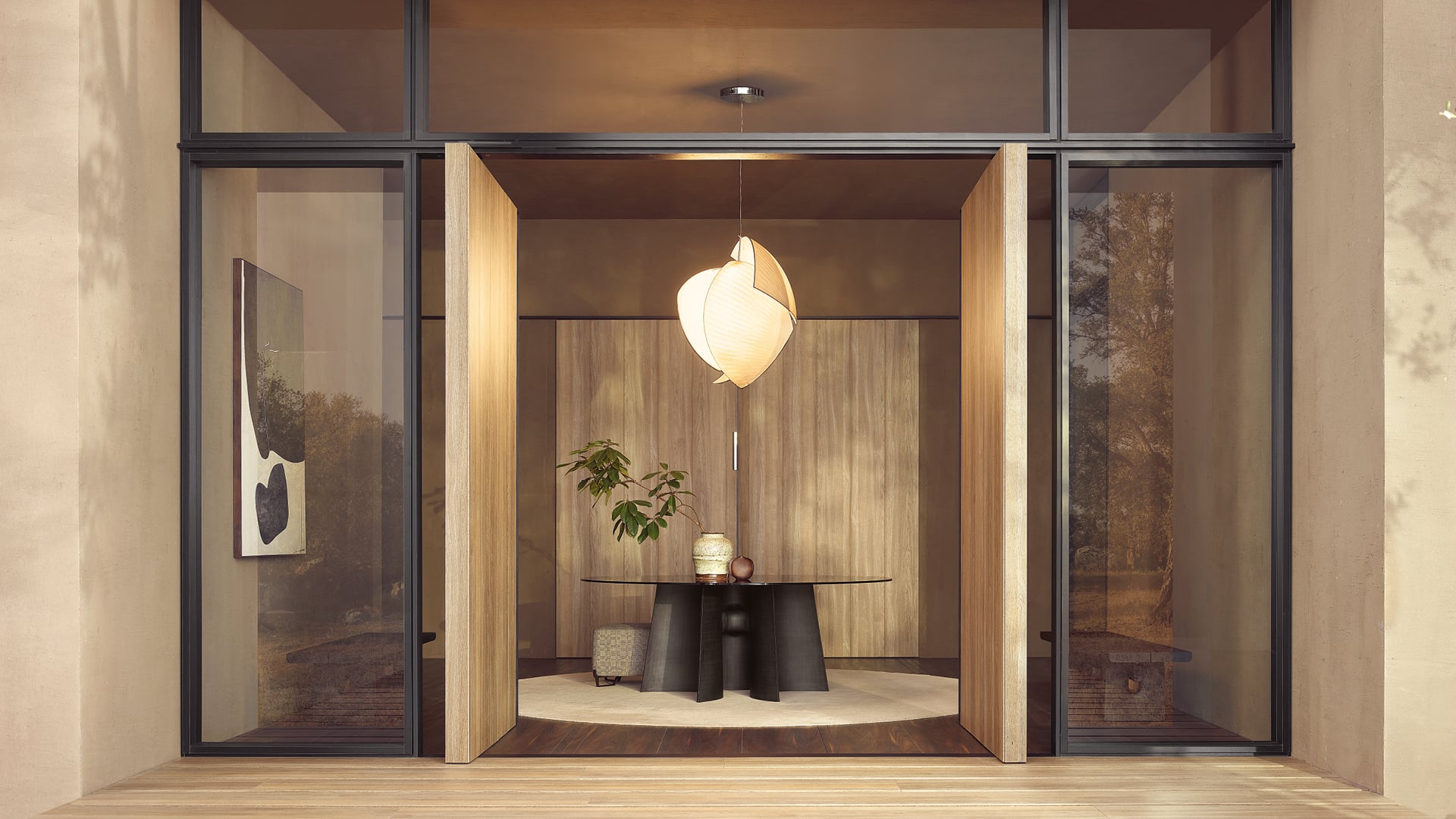
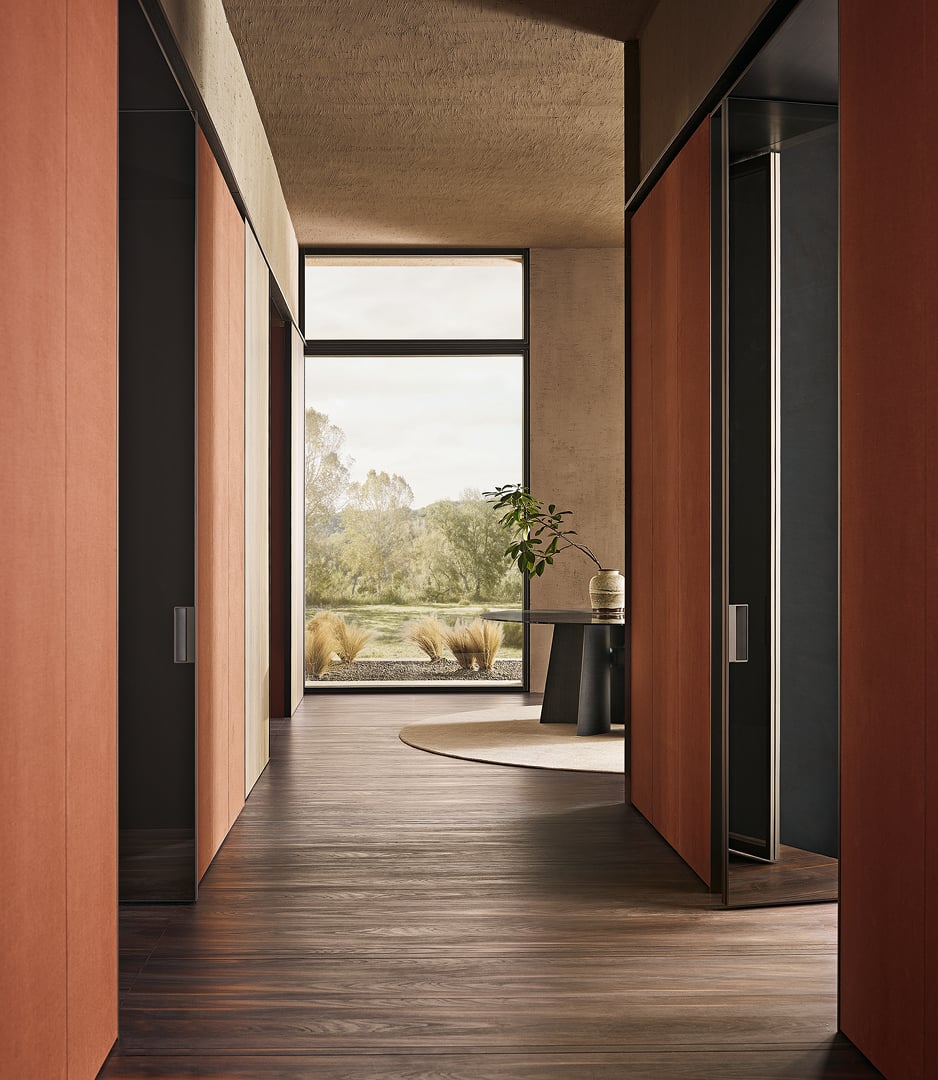
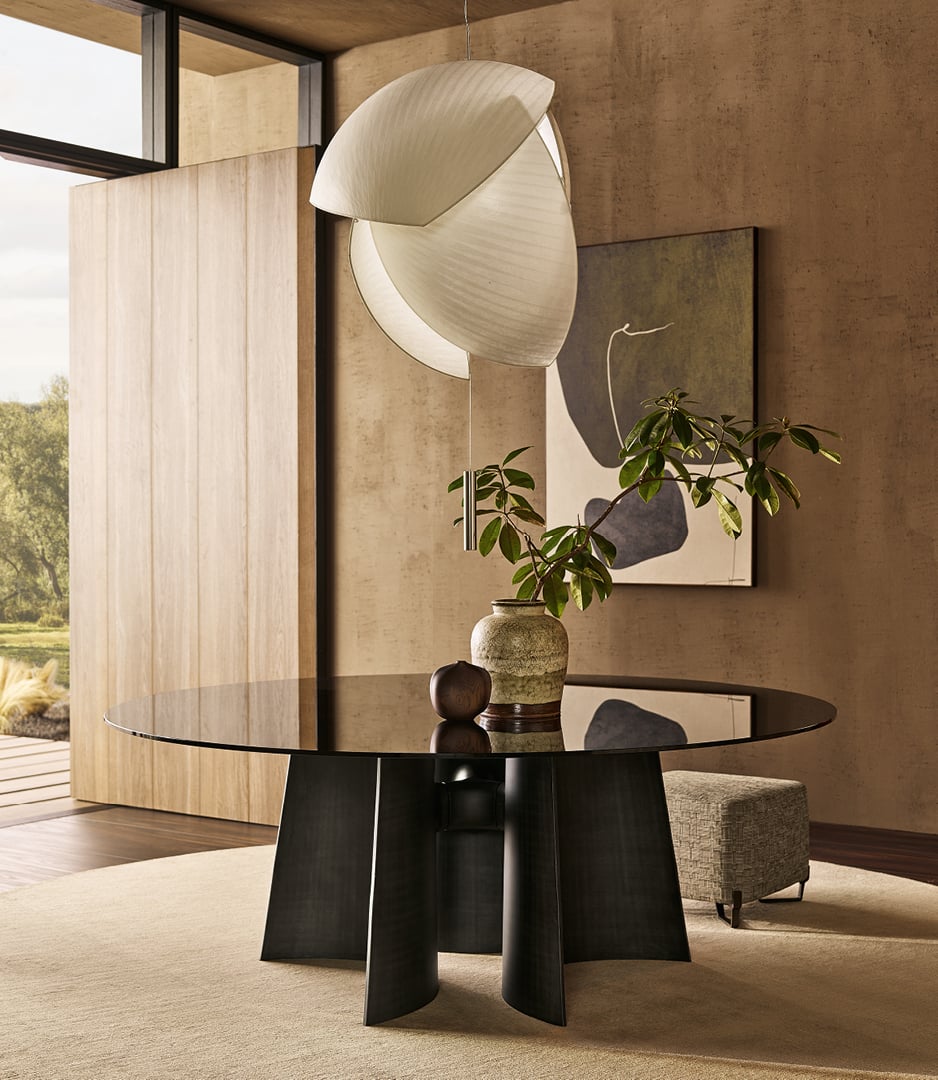
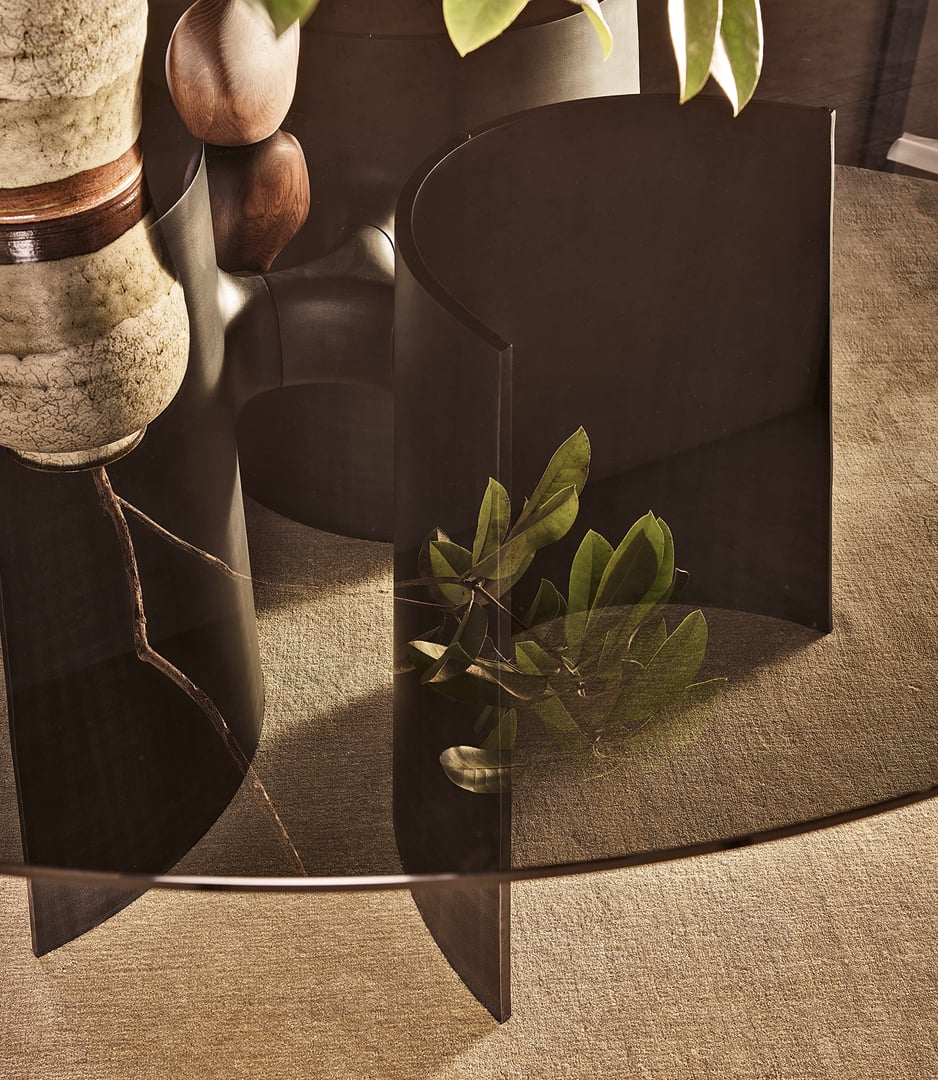
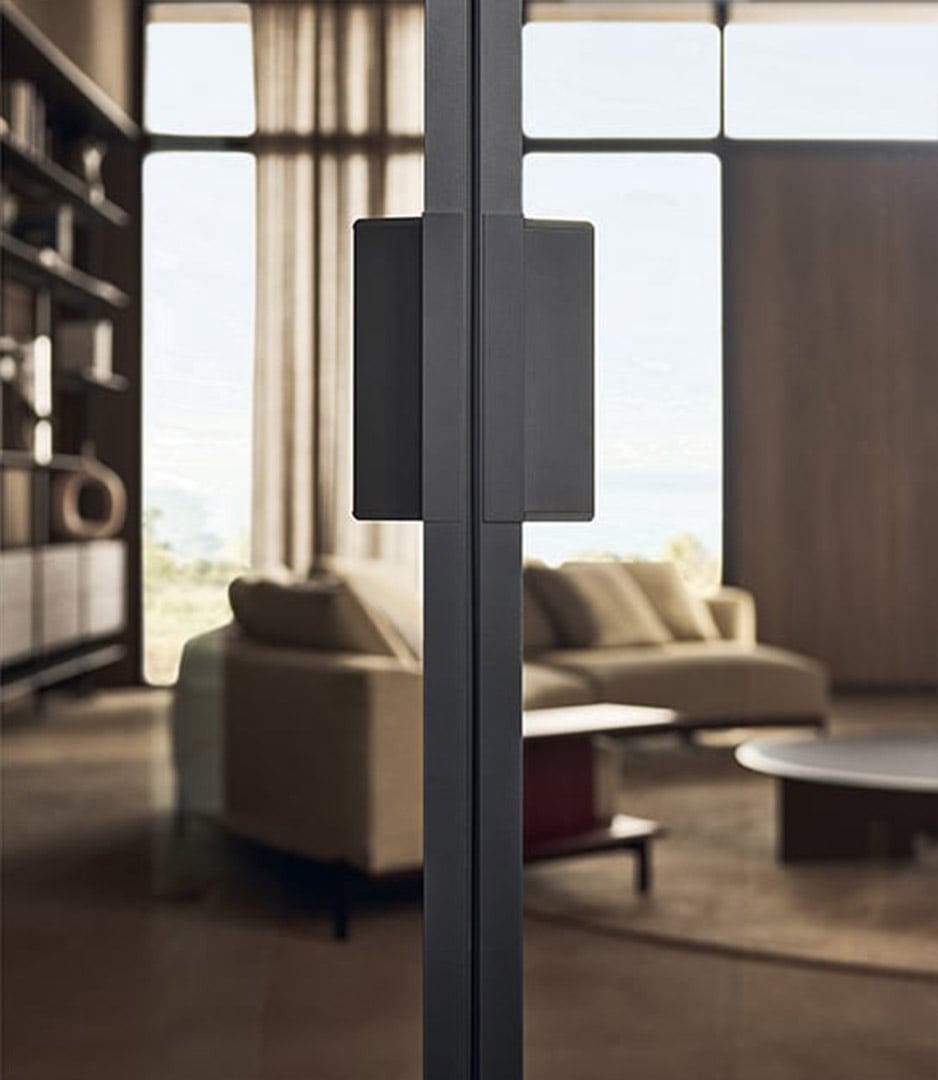
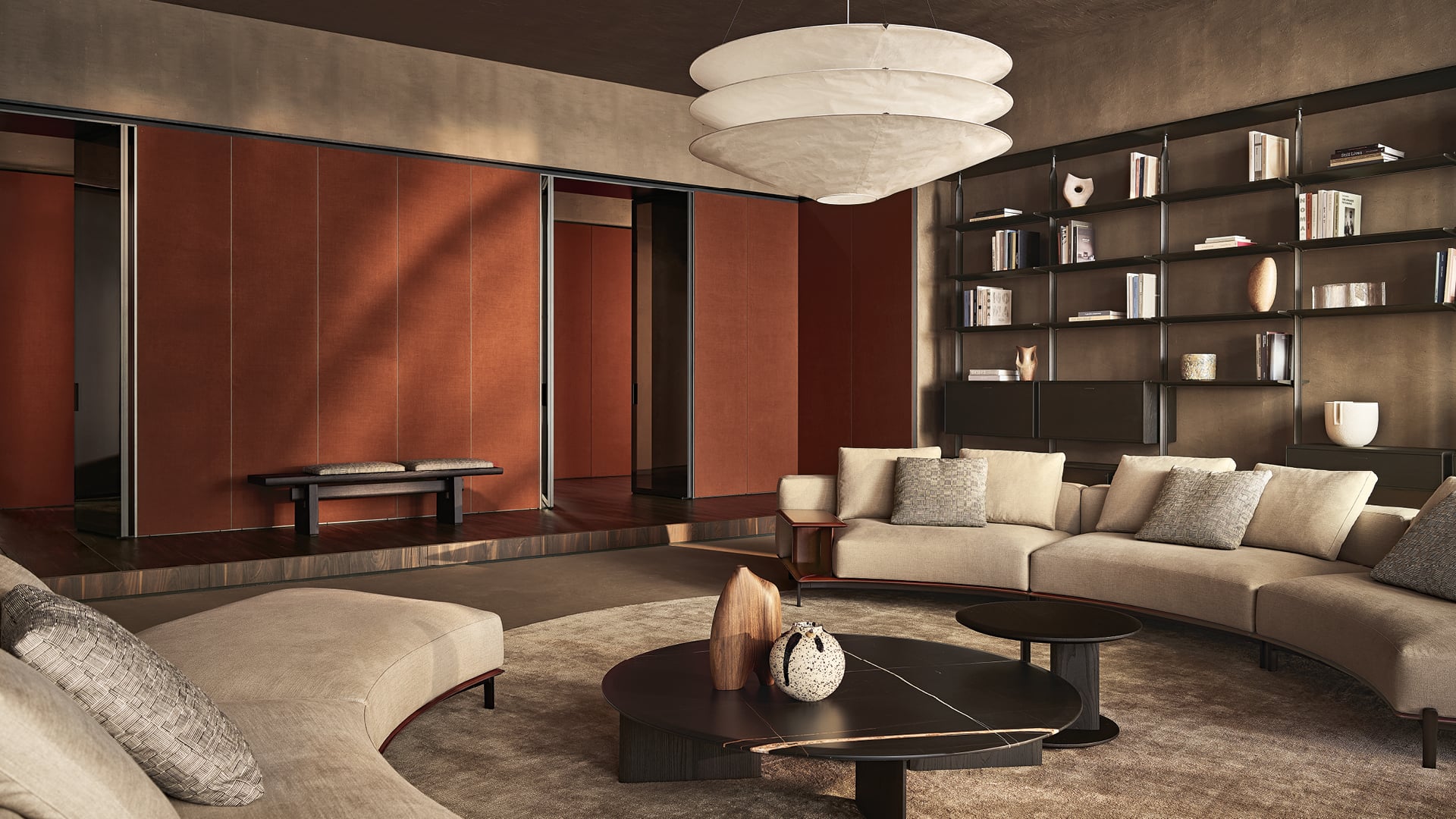
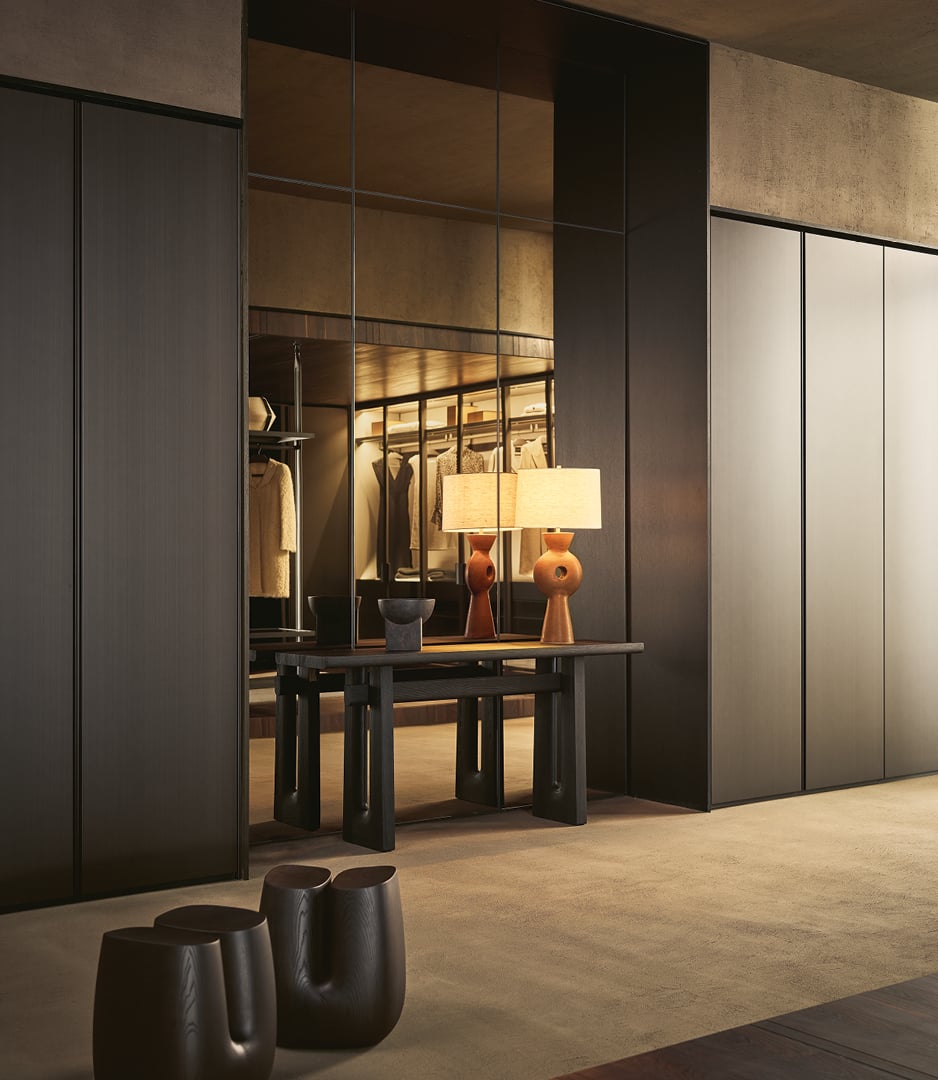
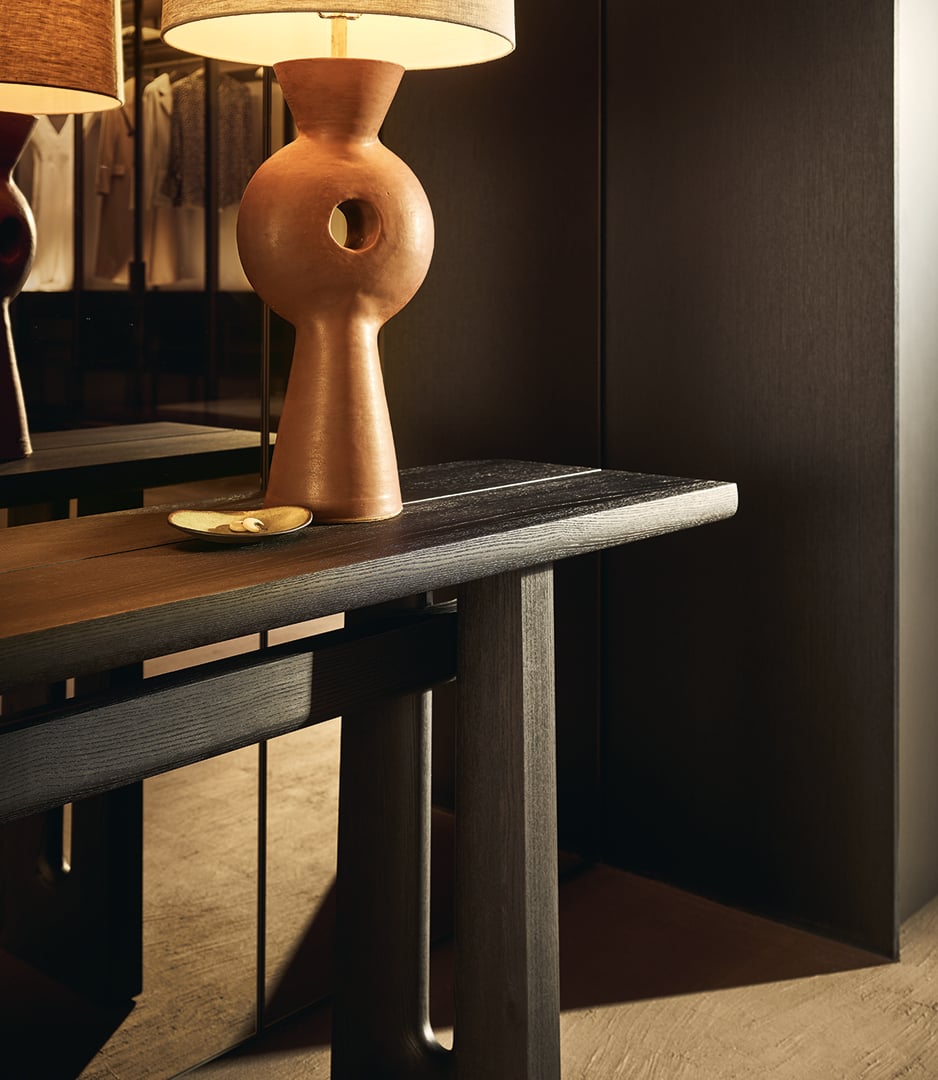
The centrepiece of this space is the Kensington table, majestic and statuesque, yet given a lightness by its curved lines and slender top. The burnt linen panelling surrounds and captivates the gaze, while the Architectural doorways mark the passage to other rooms, dividing them and connecting them to one another.
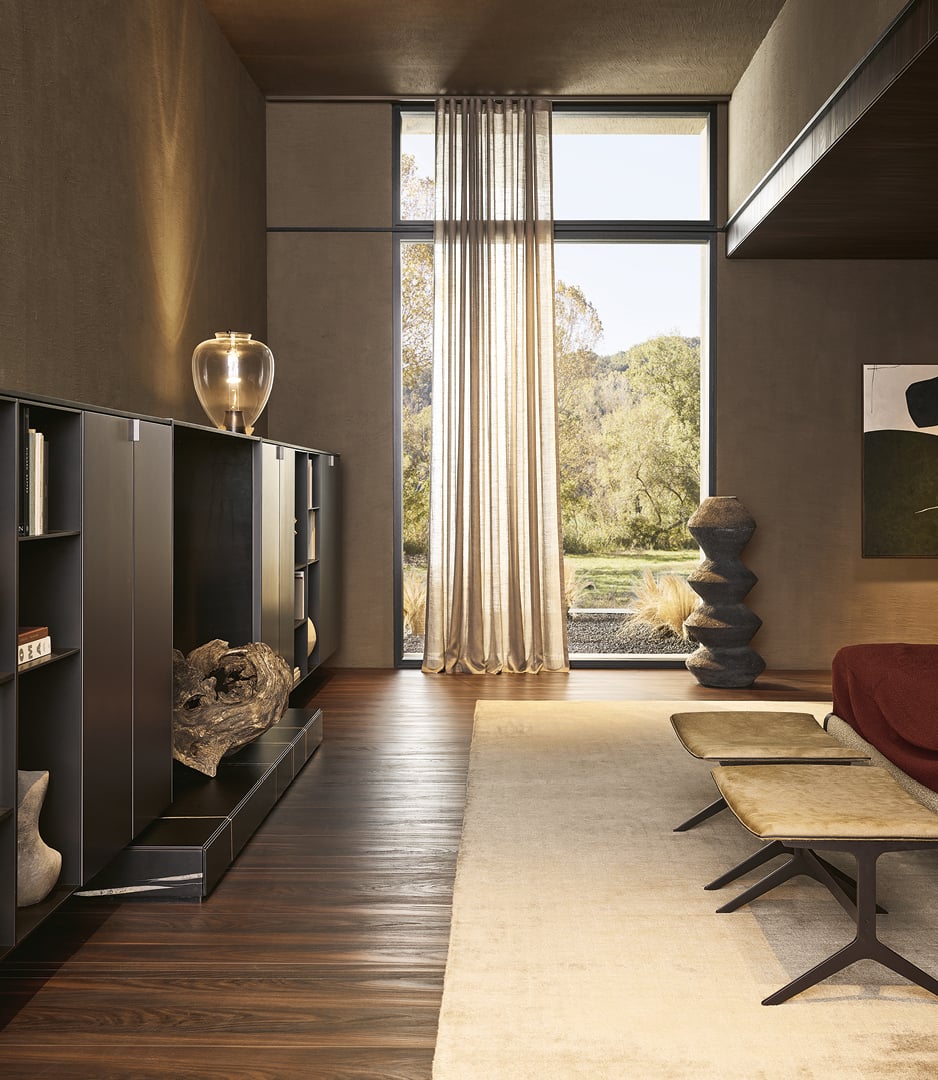
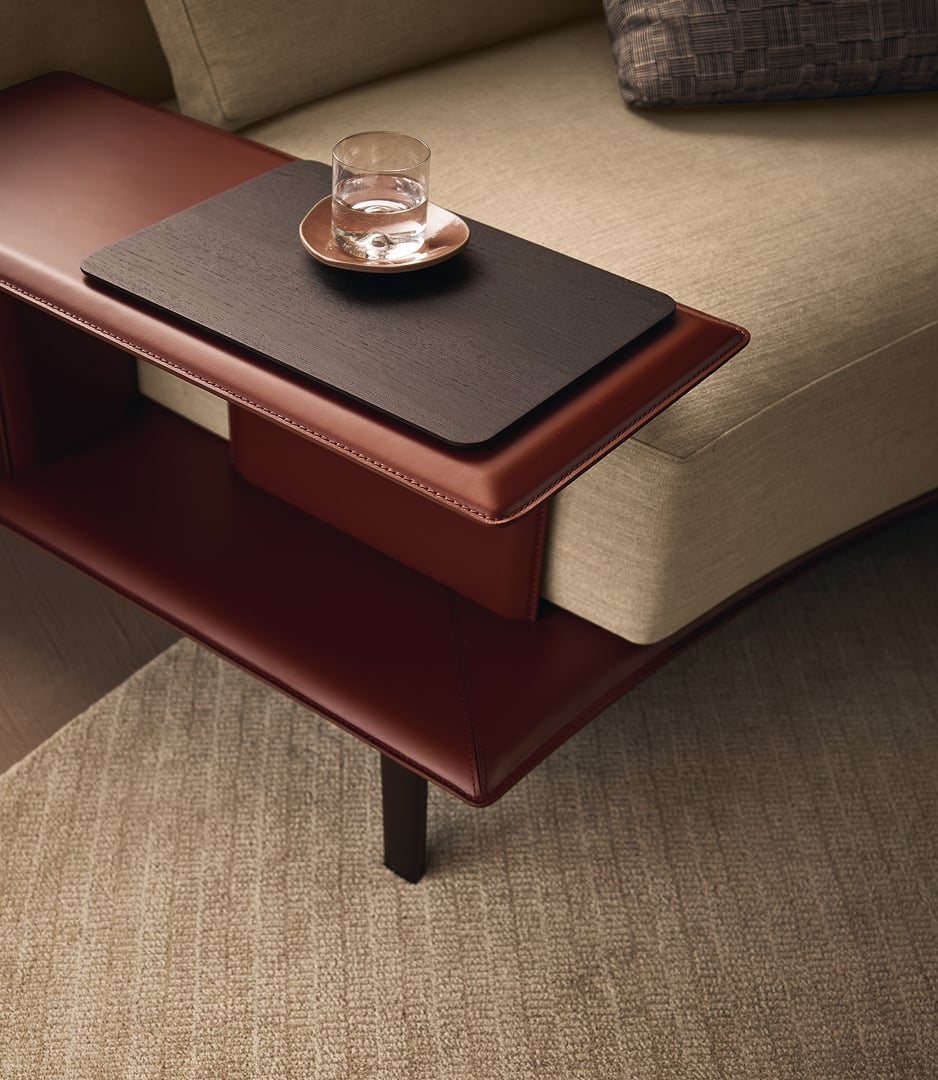
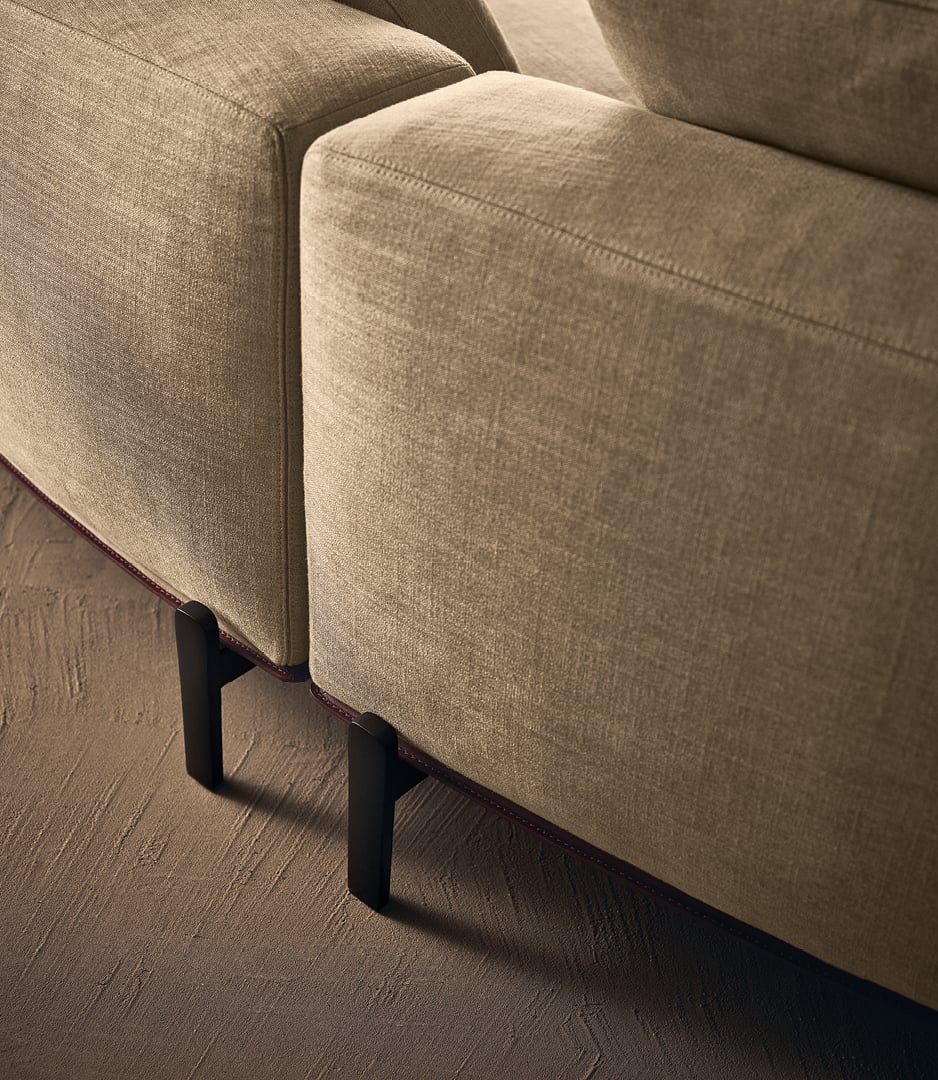
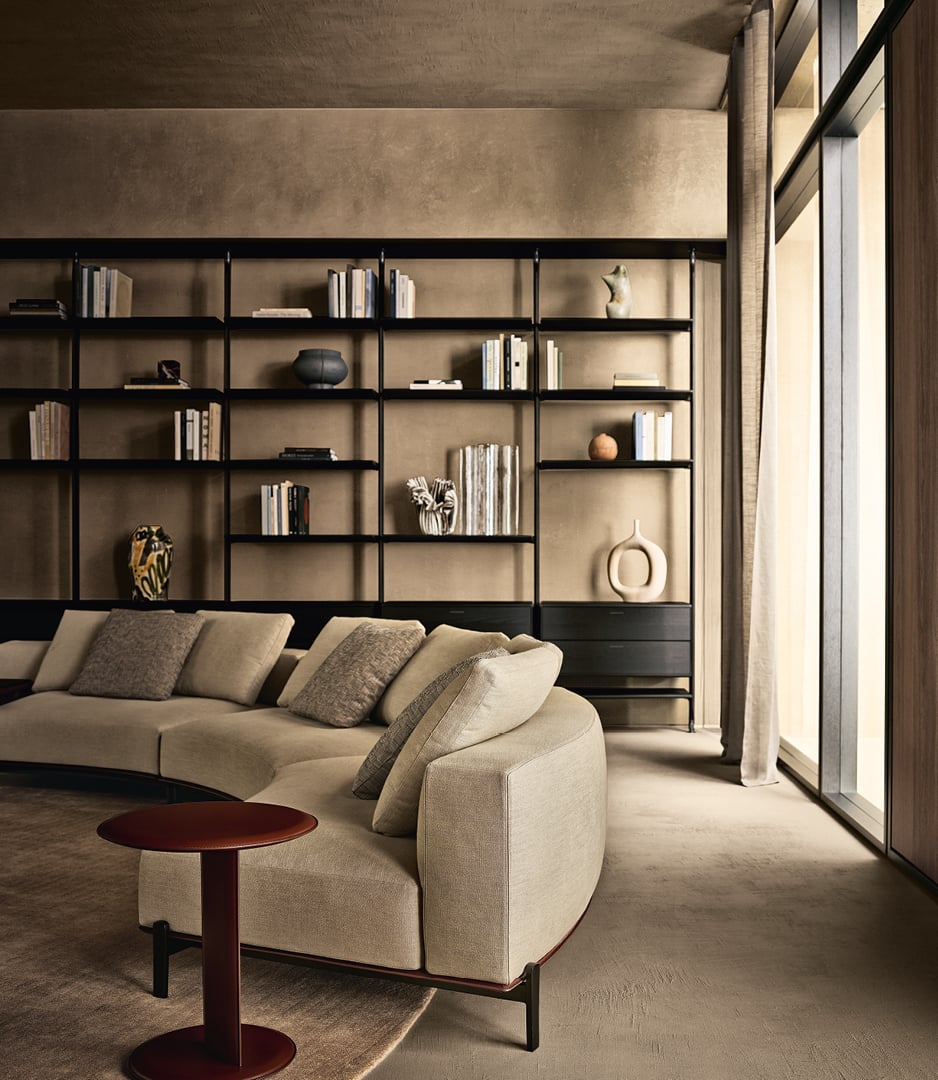
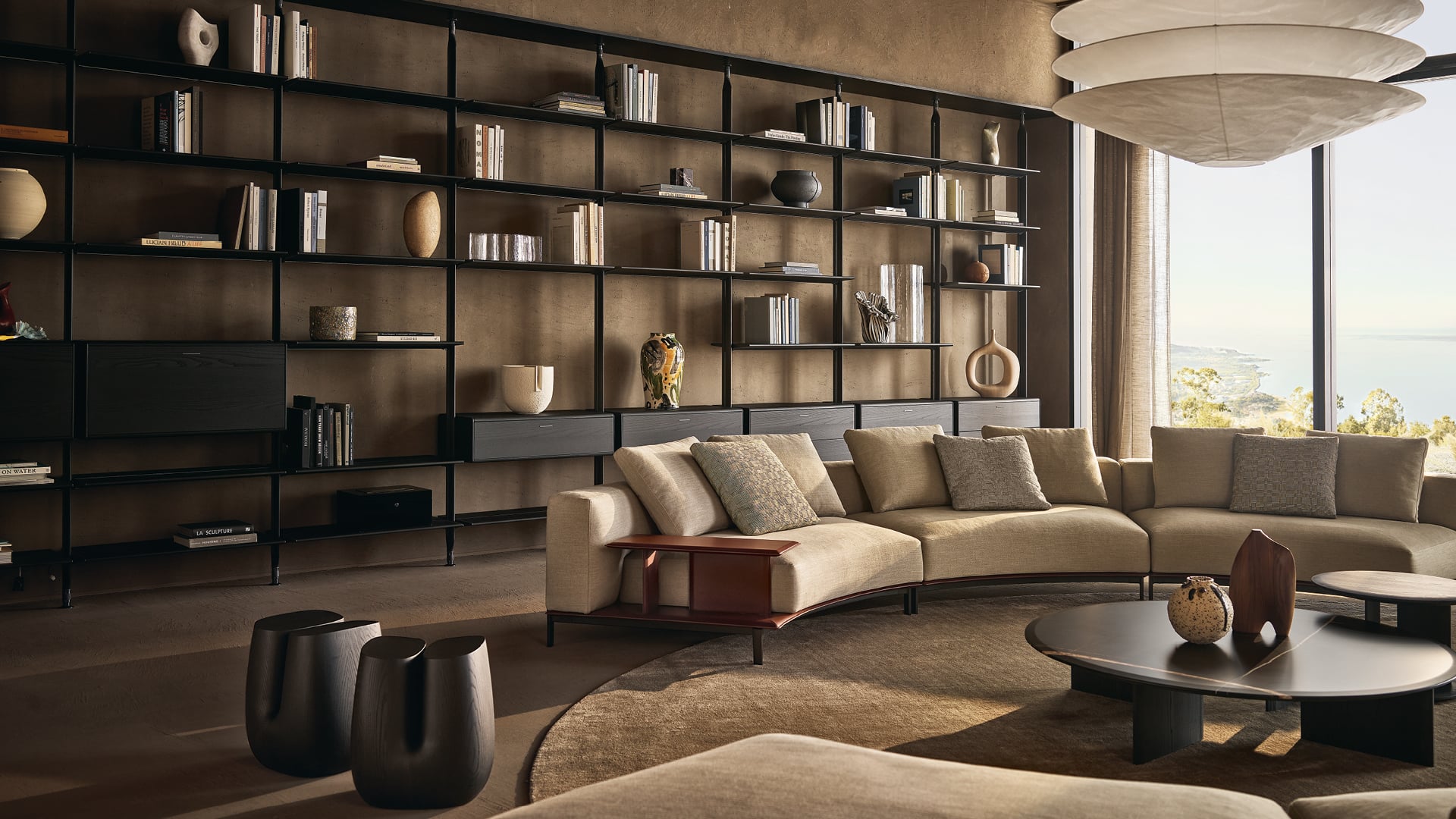
In the main living room, the space is designed to be a place for gathering and contemplation, where nature flows in through the large windows and becomes an integral part of the domestic setting. Extremely elegant and marked by tailored leather details, the curved version of this sofa provides a high level of comfort, perfect for a living room that also serves as a reception area.
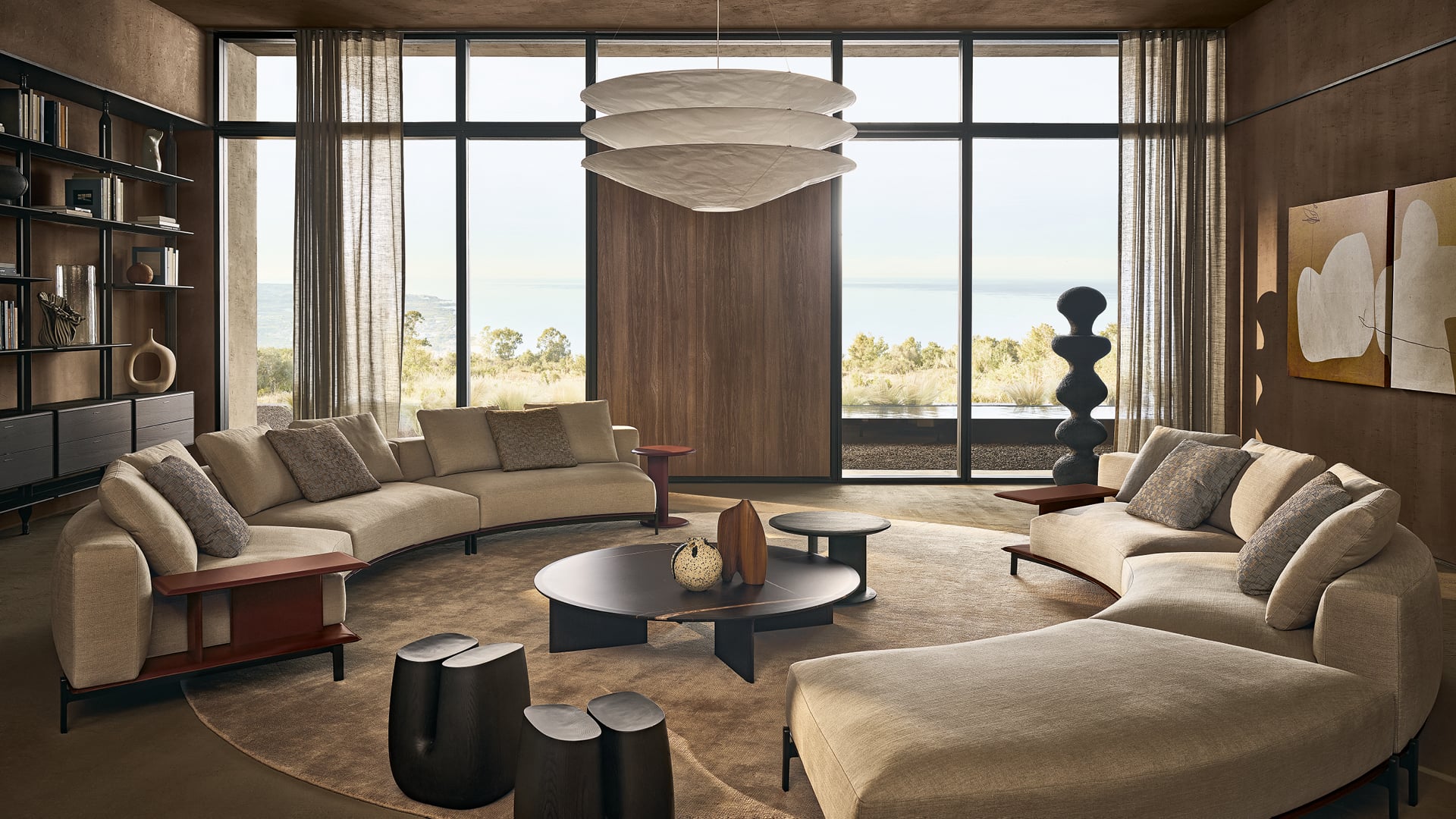
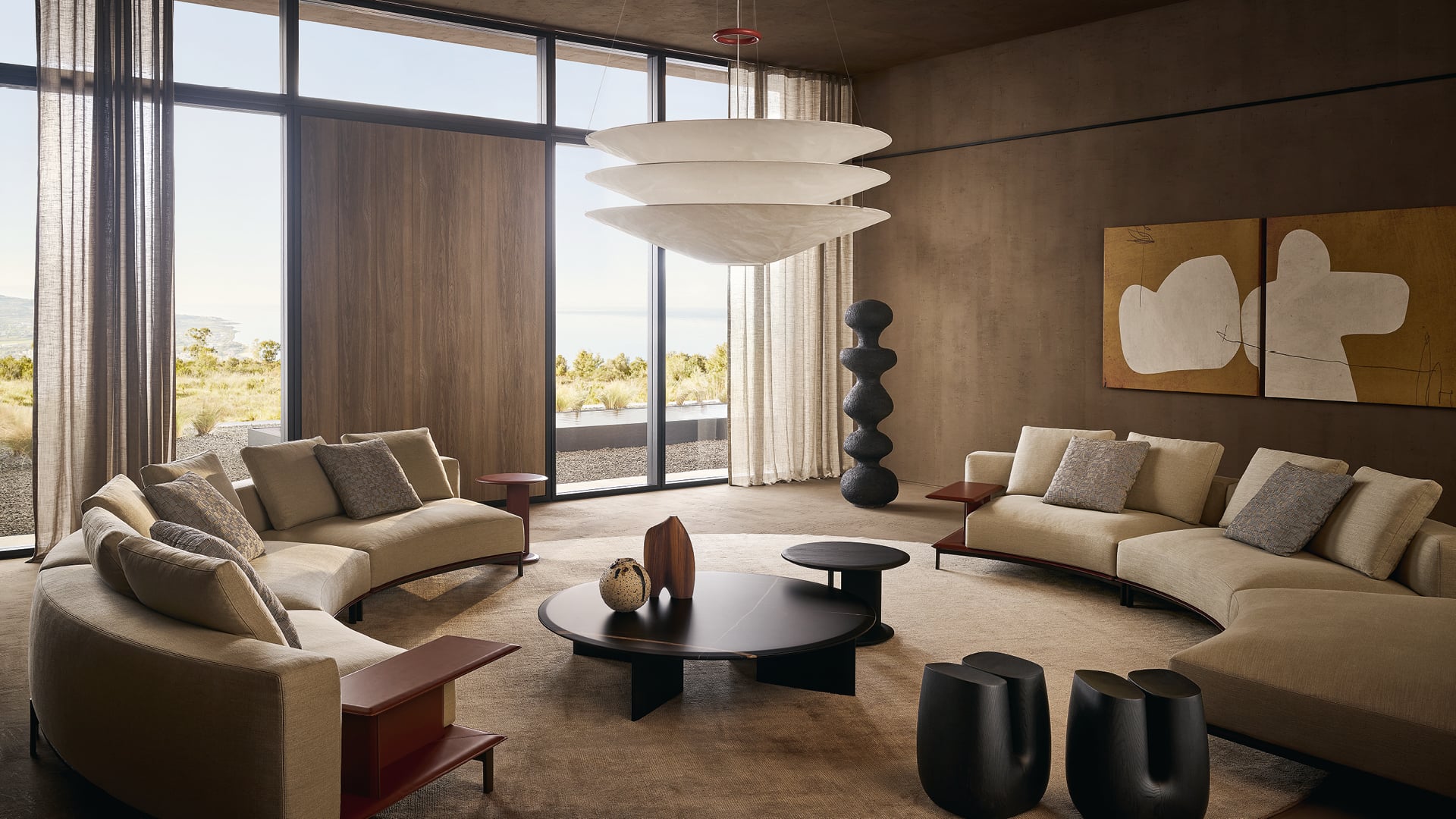
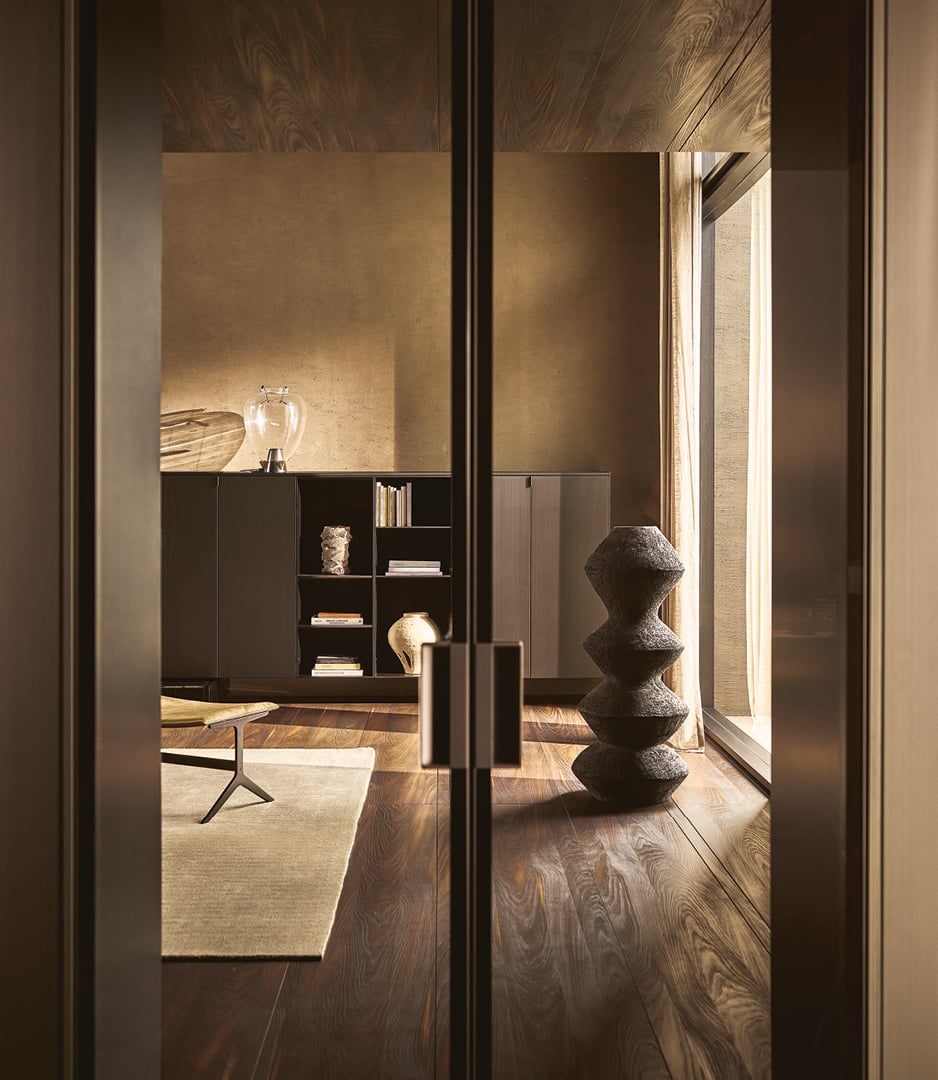
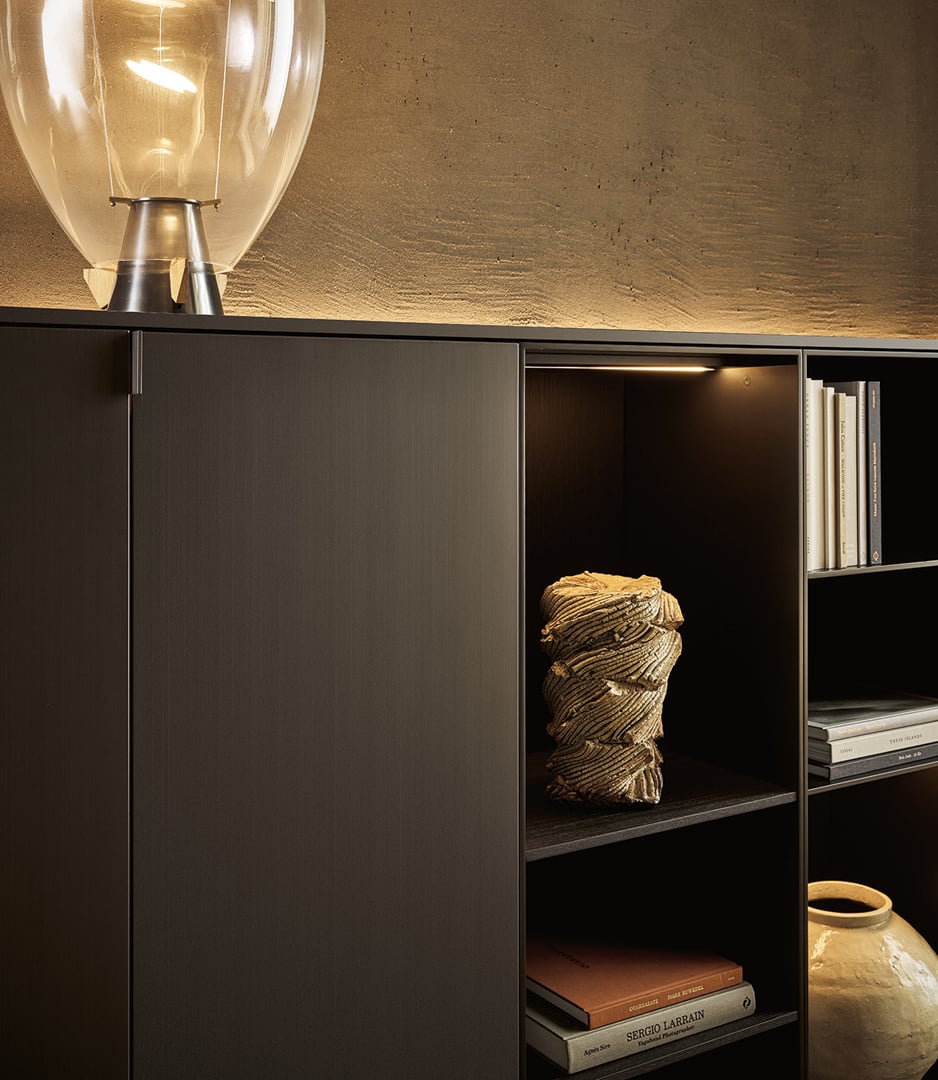
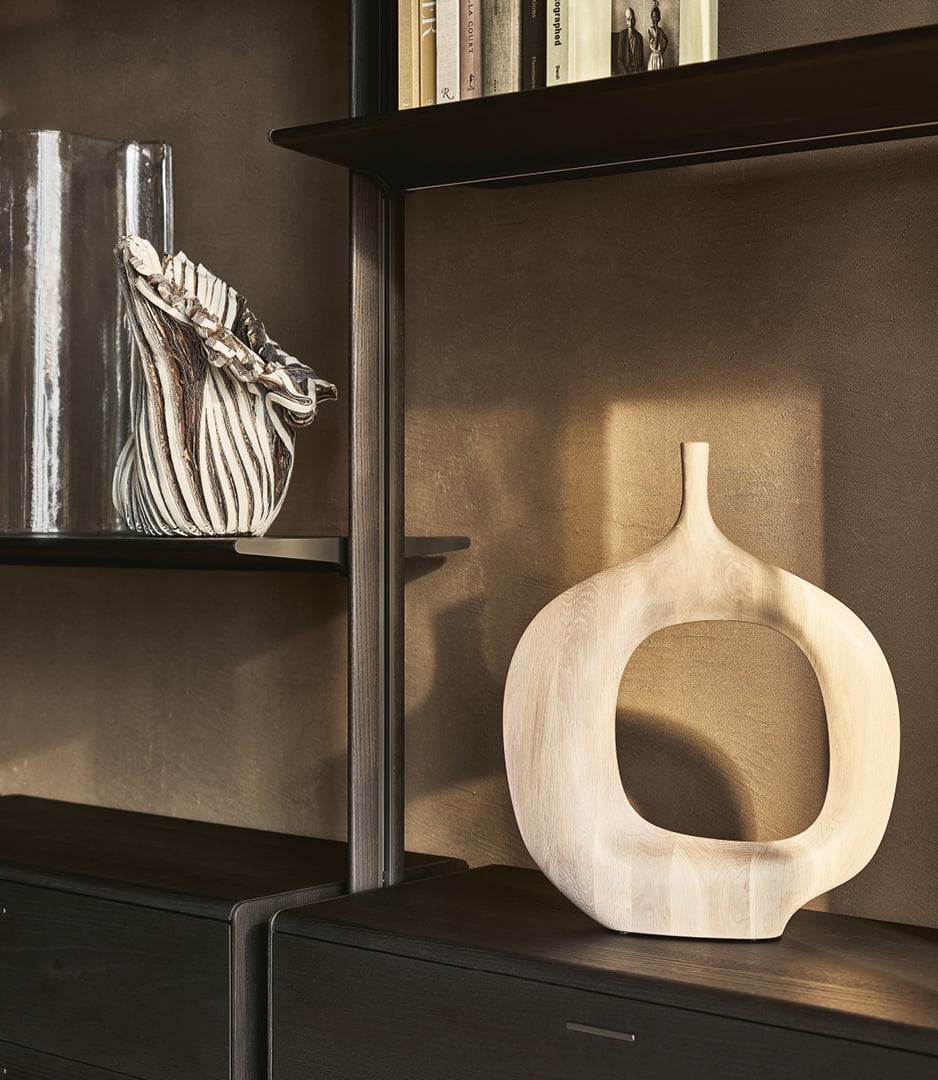
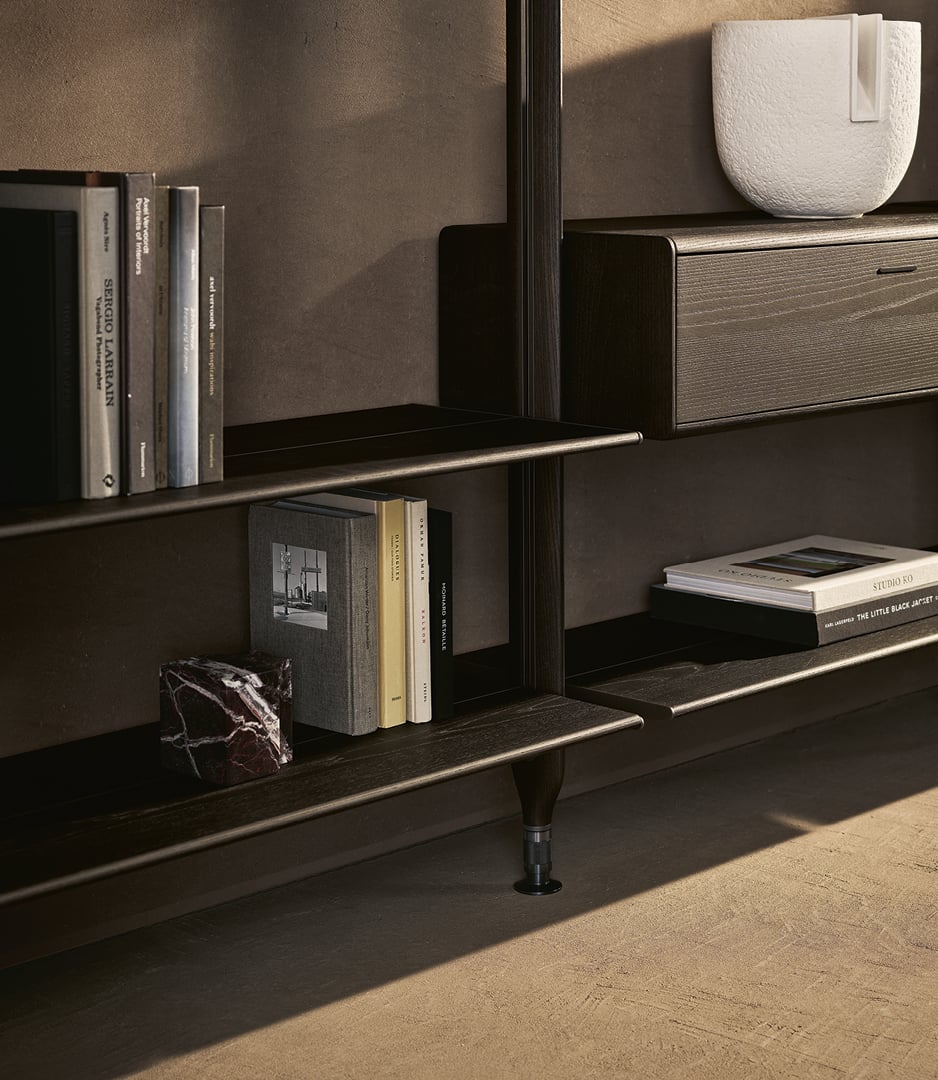
The Lexington system adds the finishing touch to the living room, with its architectural yet understated presence. With its contemporary, minimalist design, it serves as both a bookcase and a display case for your favourite objects and books. Next to the Brera sofa, the Ube stools provide a contrasting element, almost like works of art lending themselves to the functionality of this space.
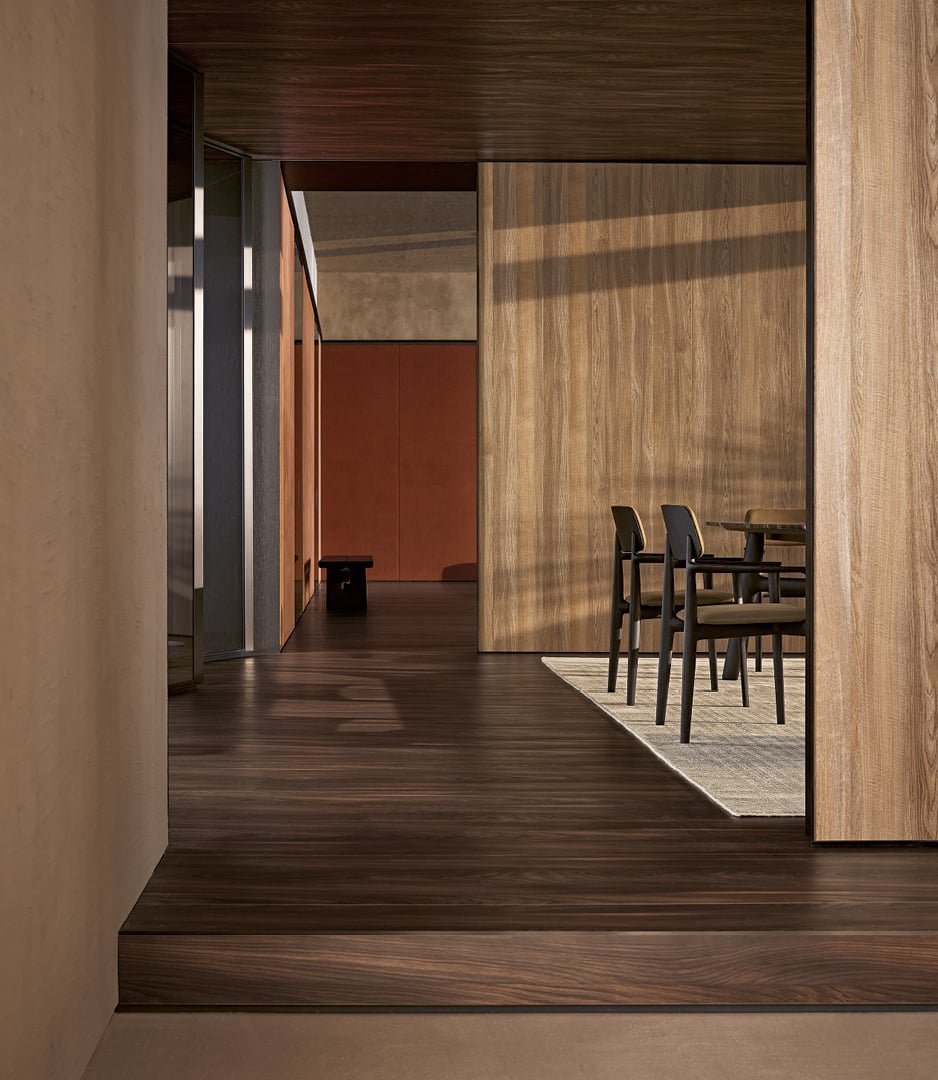
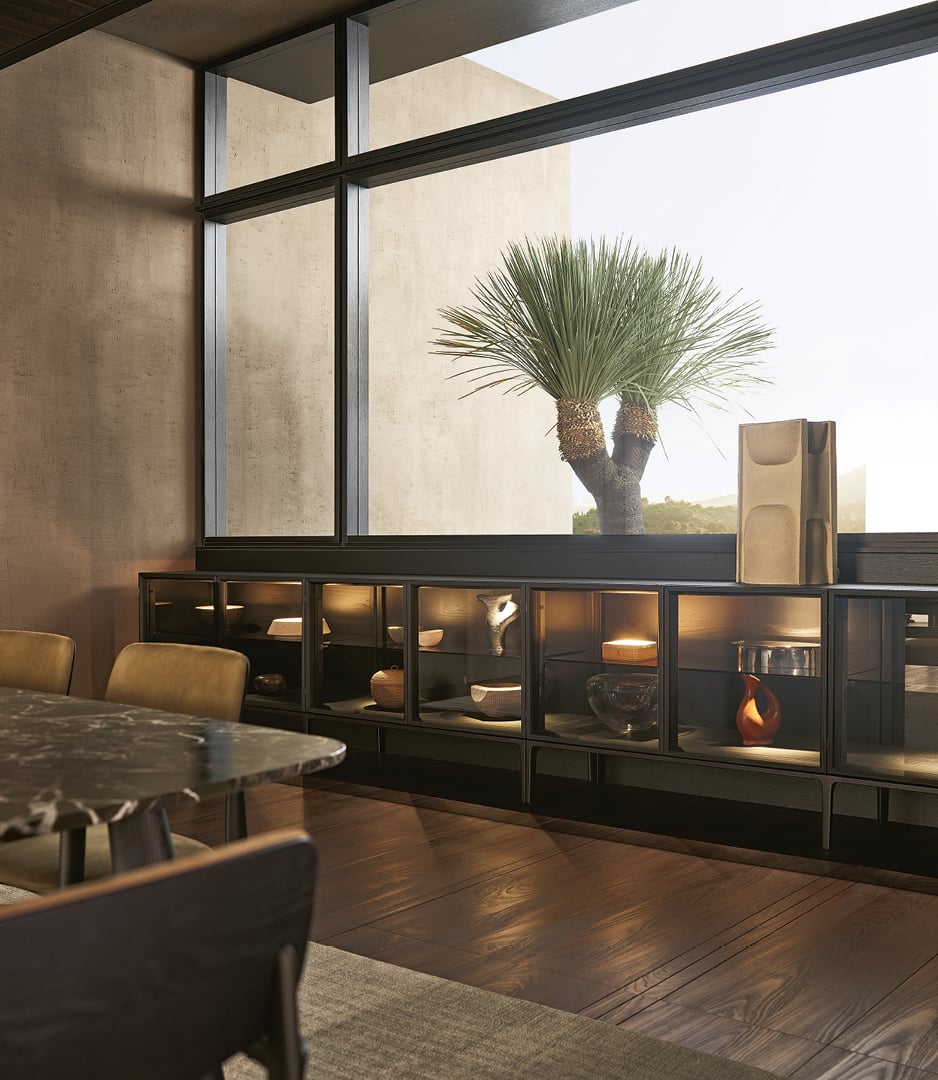
The dining room unfolds as a natural extension of the living room, in constant dialogue with the outside world. The large openings create a seamless relationship with the nature surrounding the villa, connecting it visually, but also through colour and texture, with the environment, creating a balance that emphasises the sense of continuity between inside and outside.
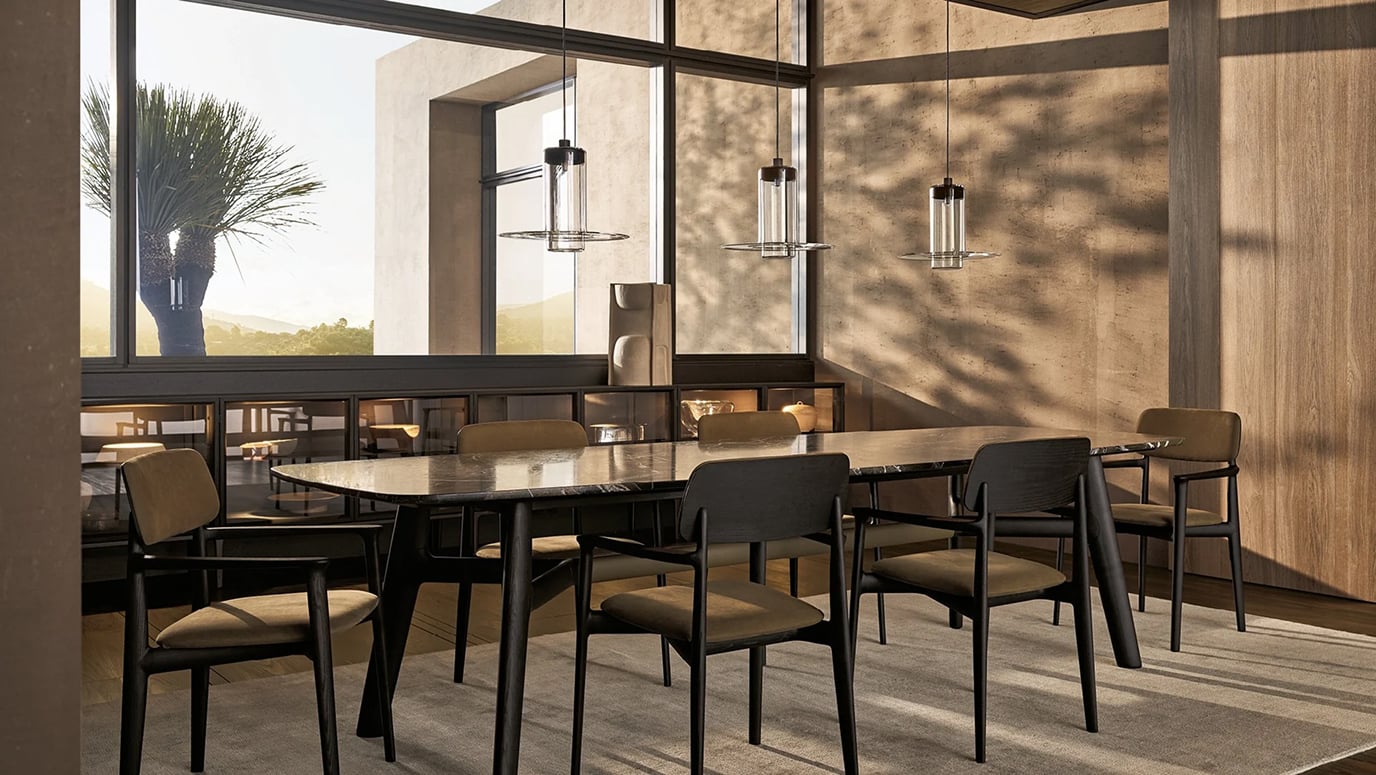
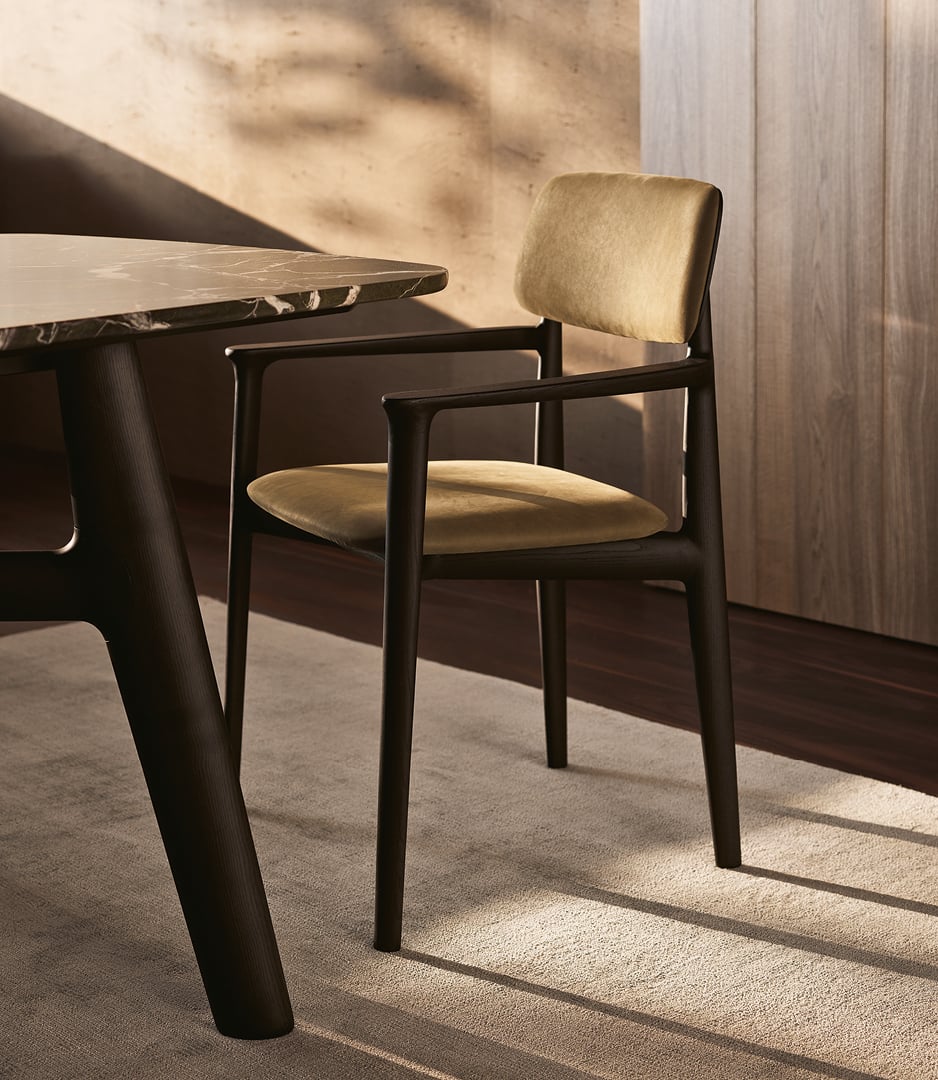
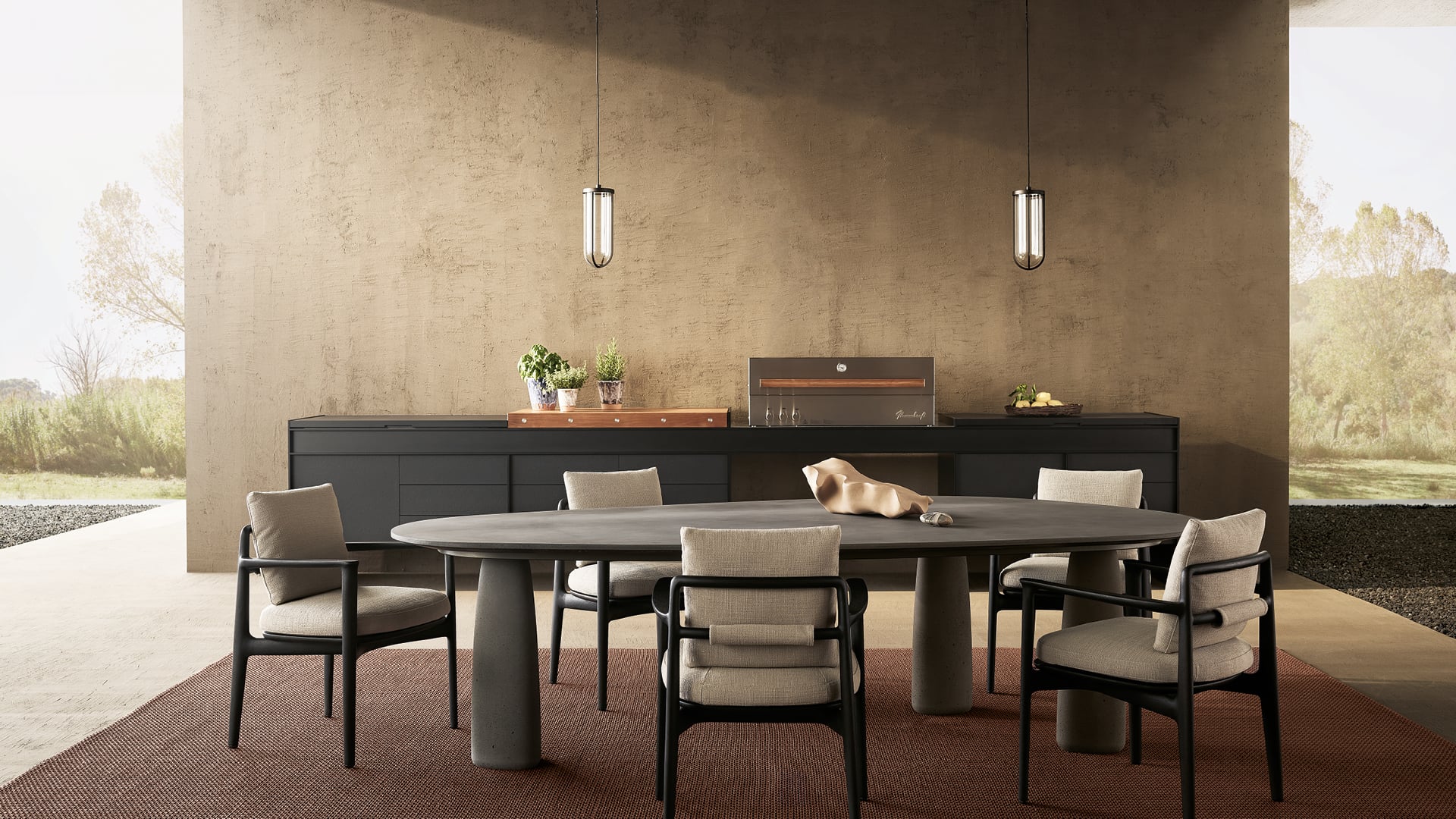
In the centre of the dining room, the Curve table and chairs have soft, rounded lines that contribute to a sense of calm and conviviality. The material pairings are carefully considered: from marble to wood to the soft, smooth fabrics of the chairs, everything is designed to engage the senses.
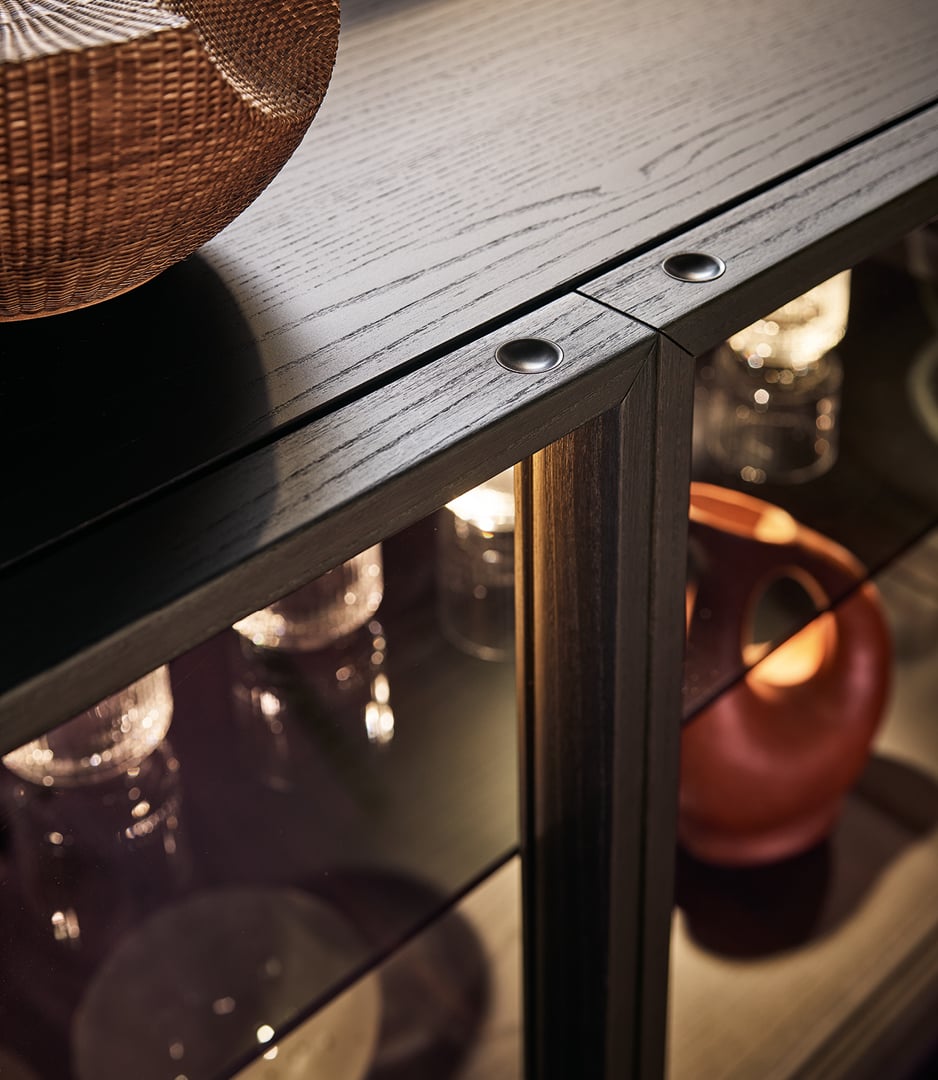
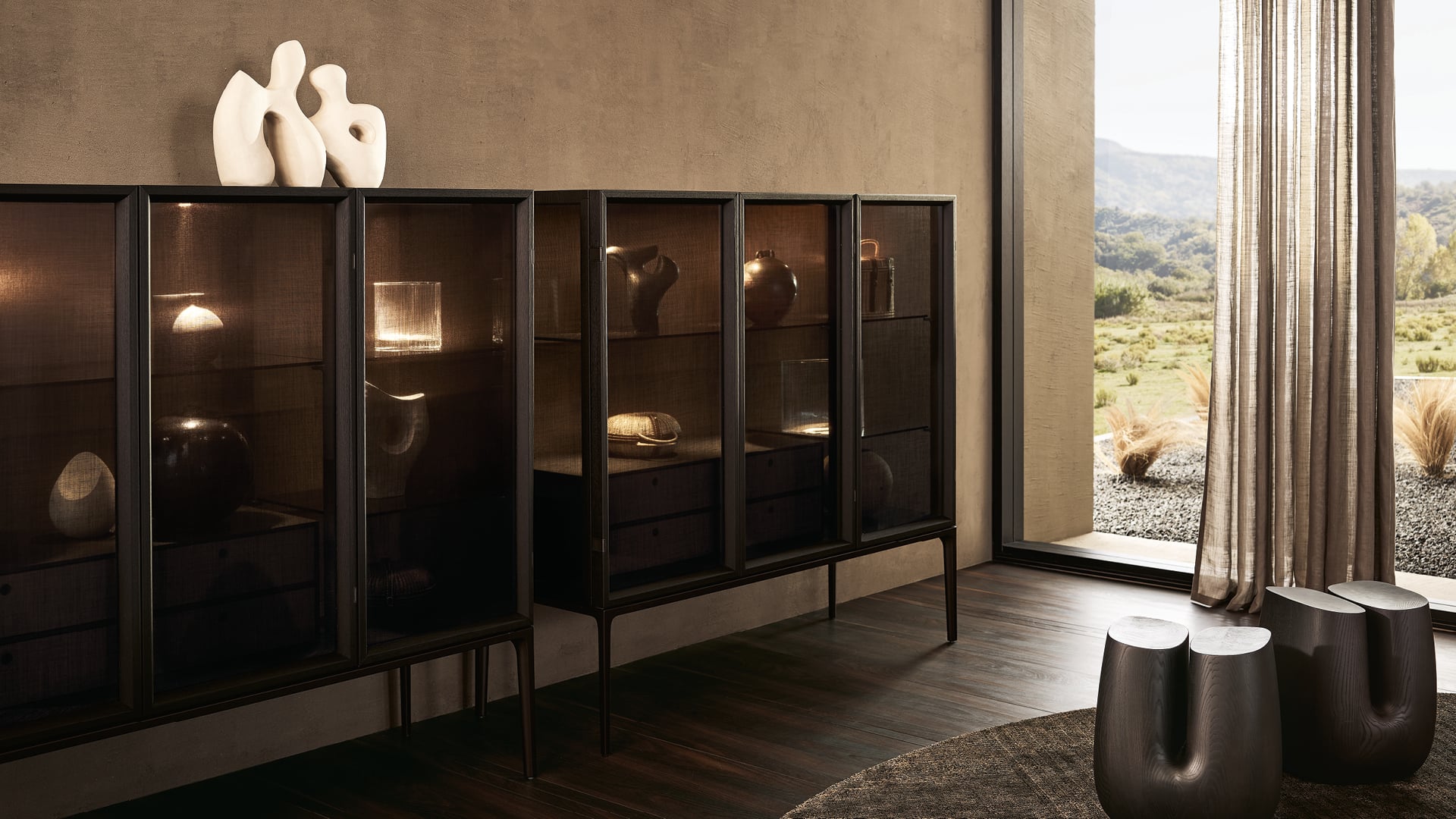
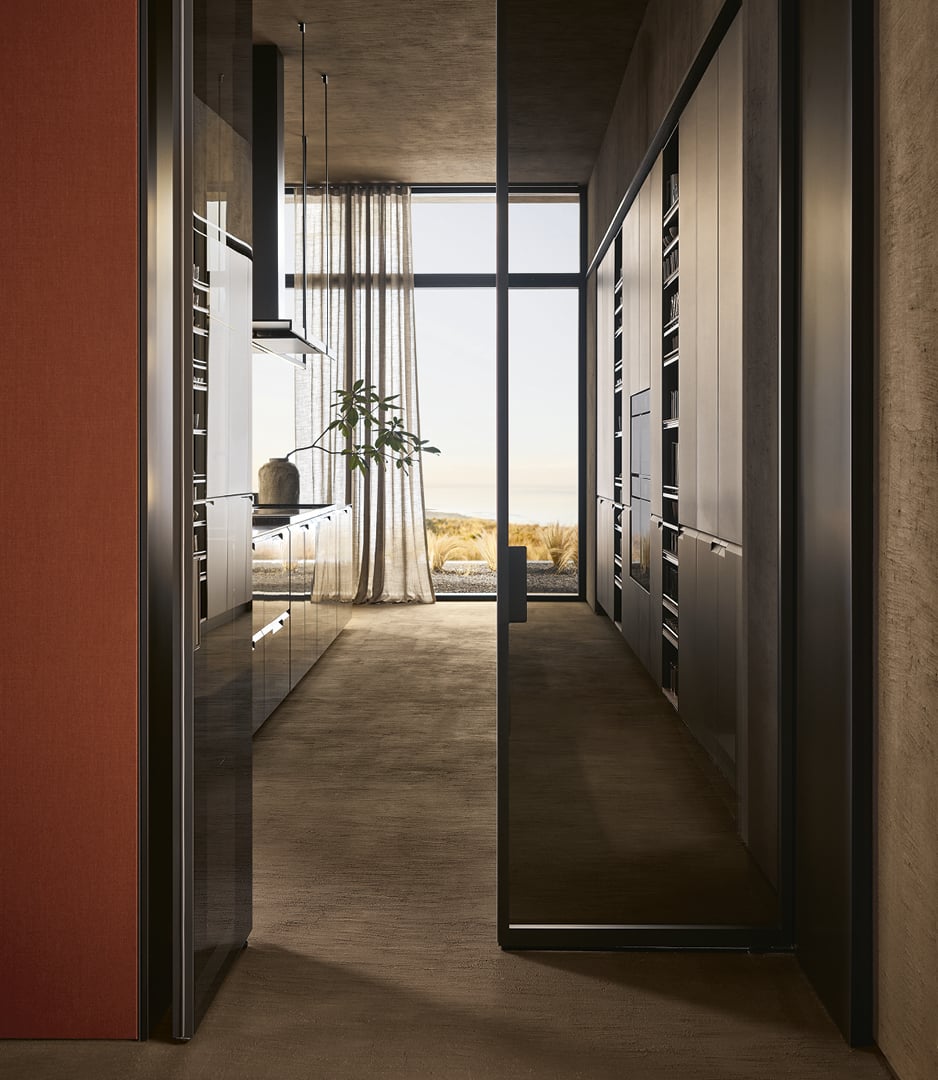
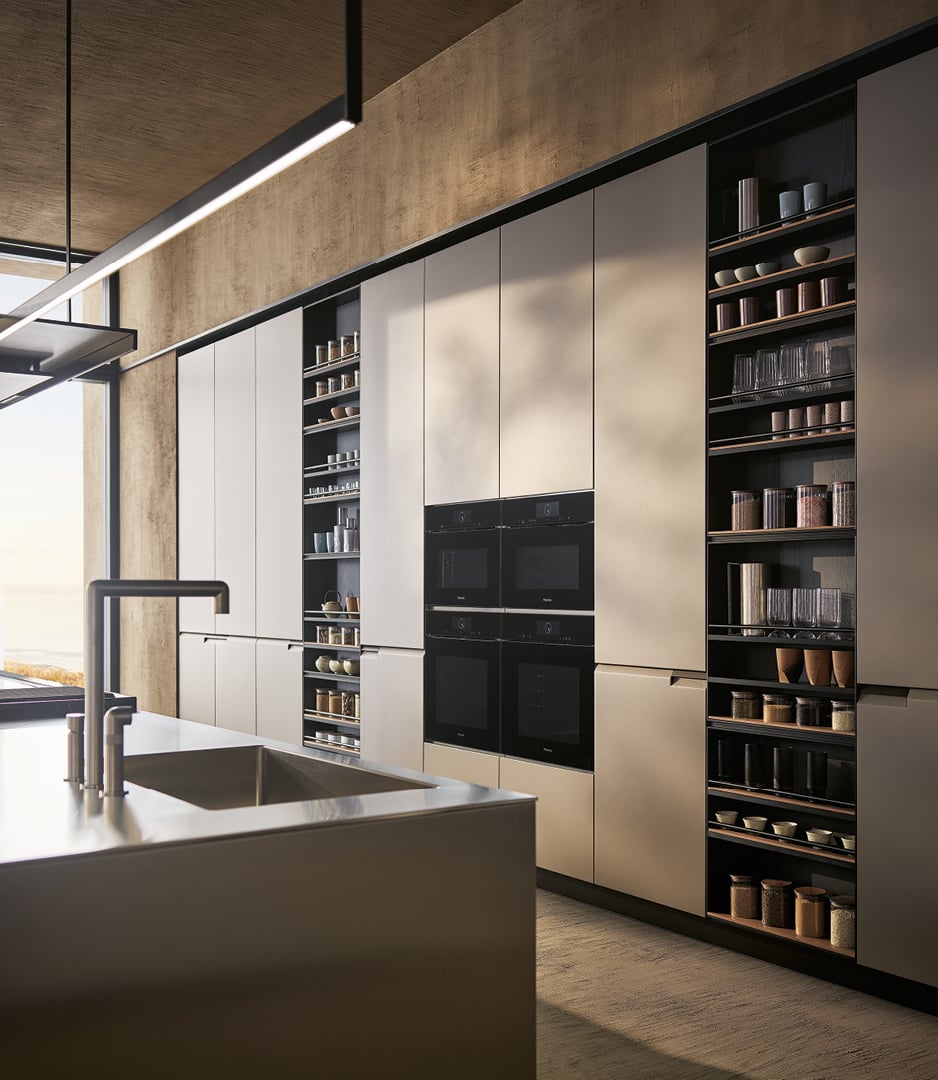
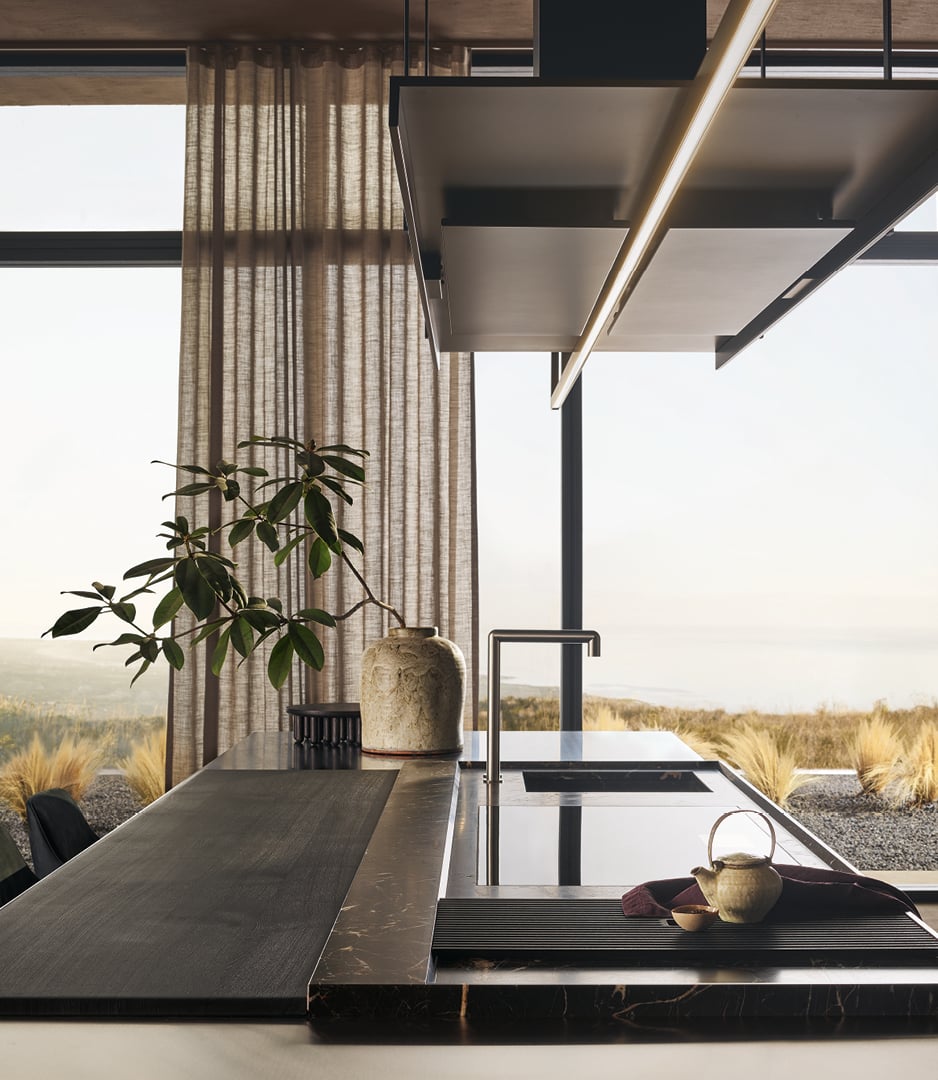
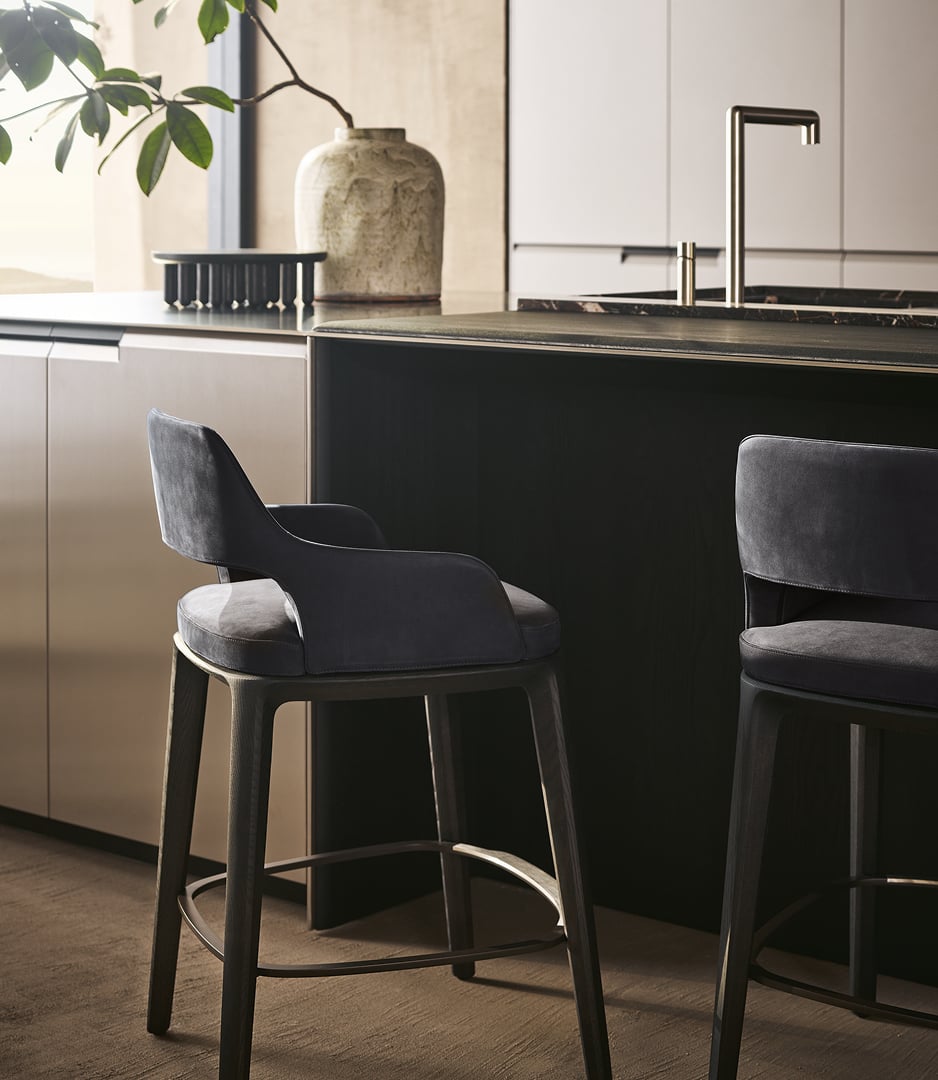
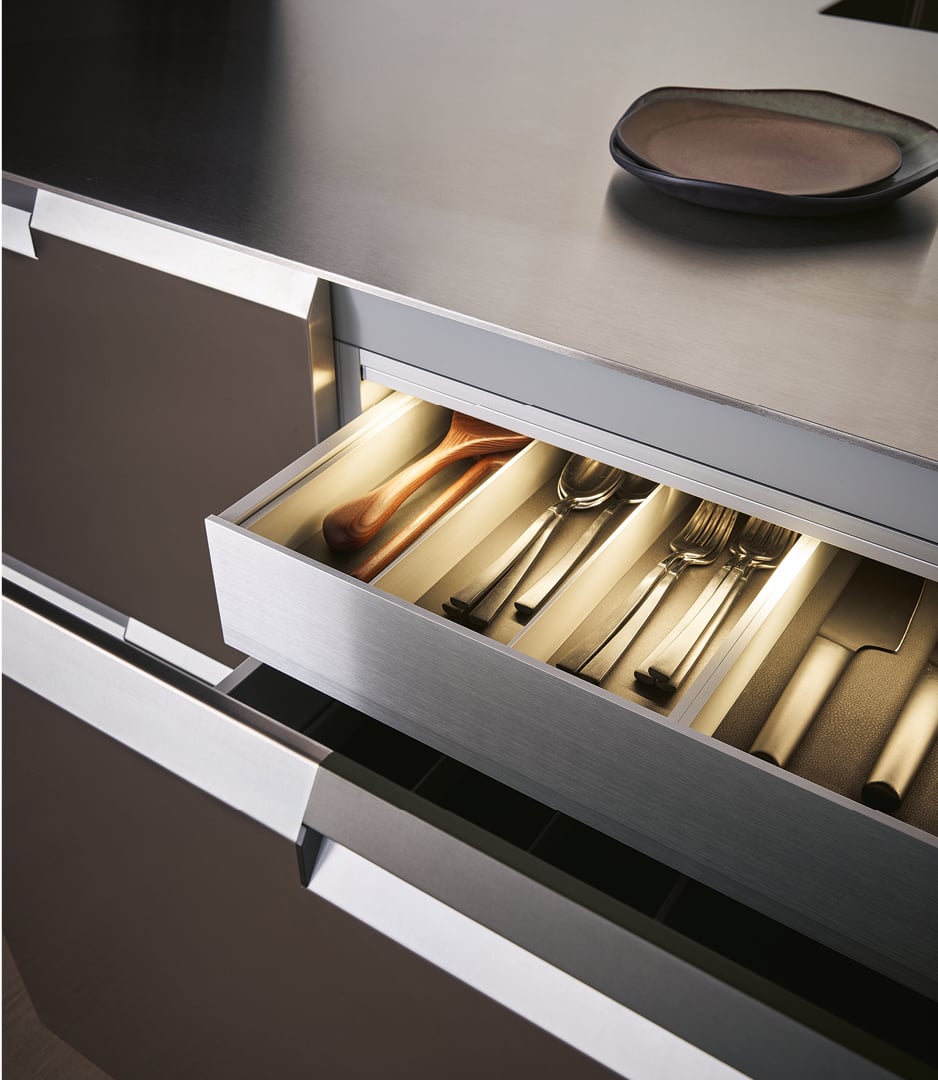
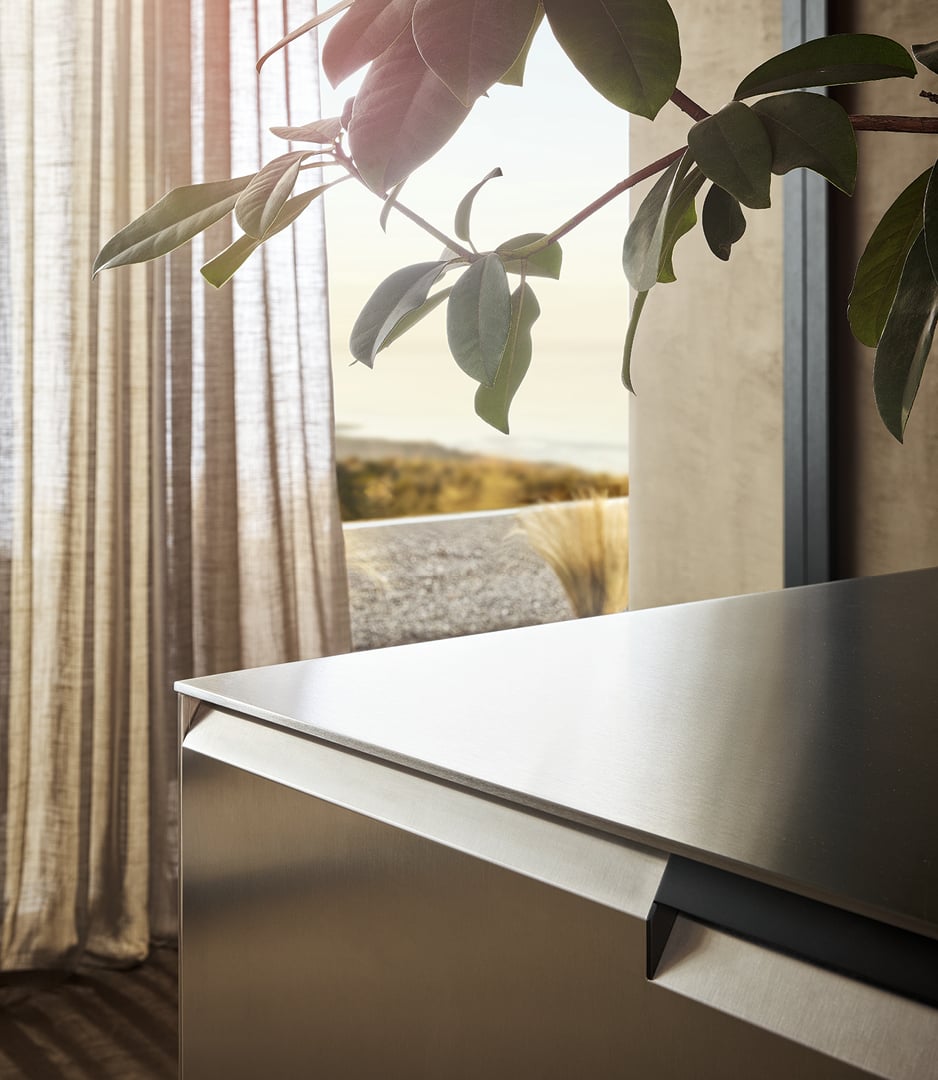
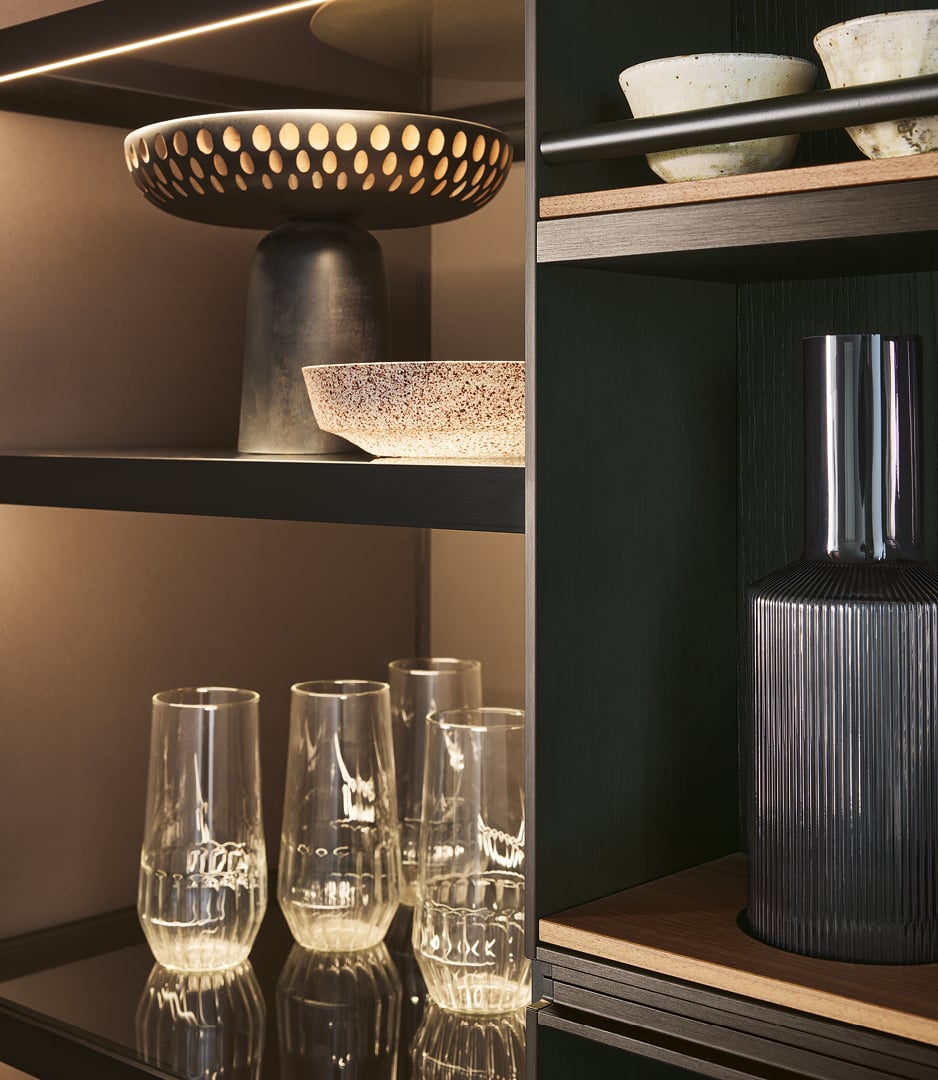
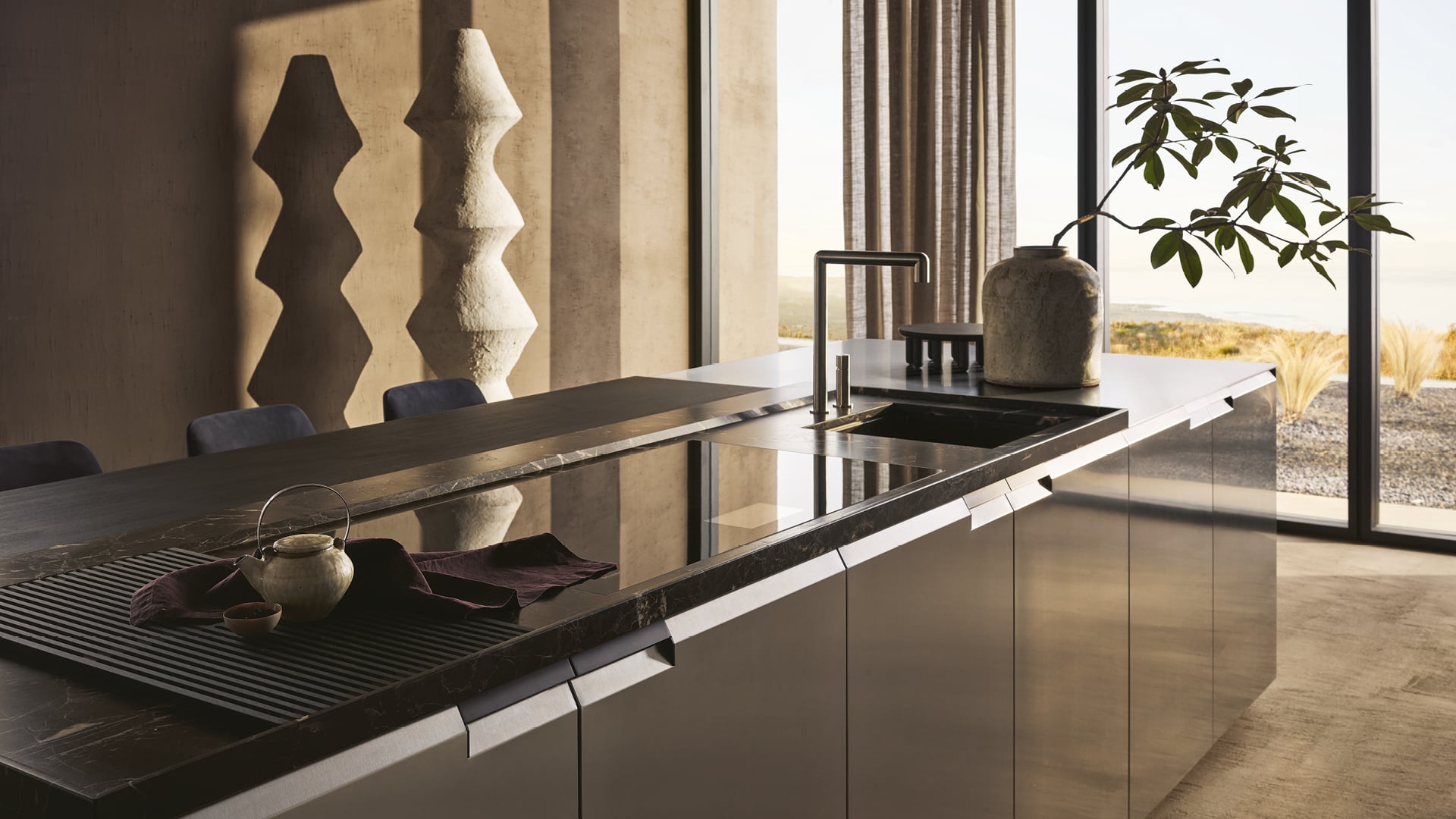
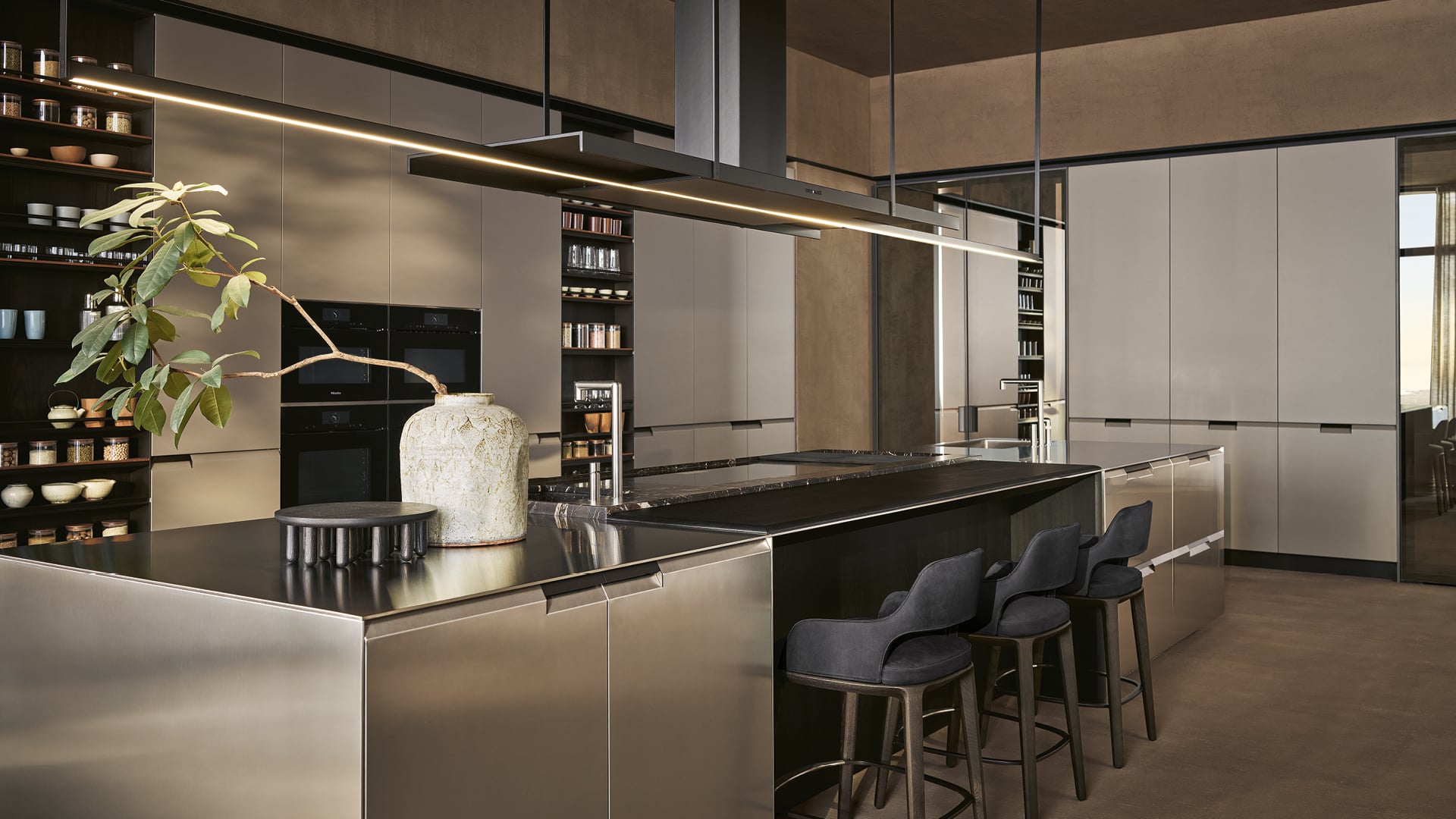
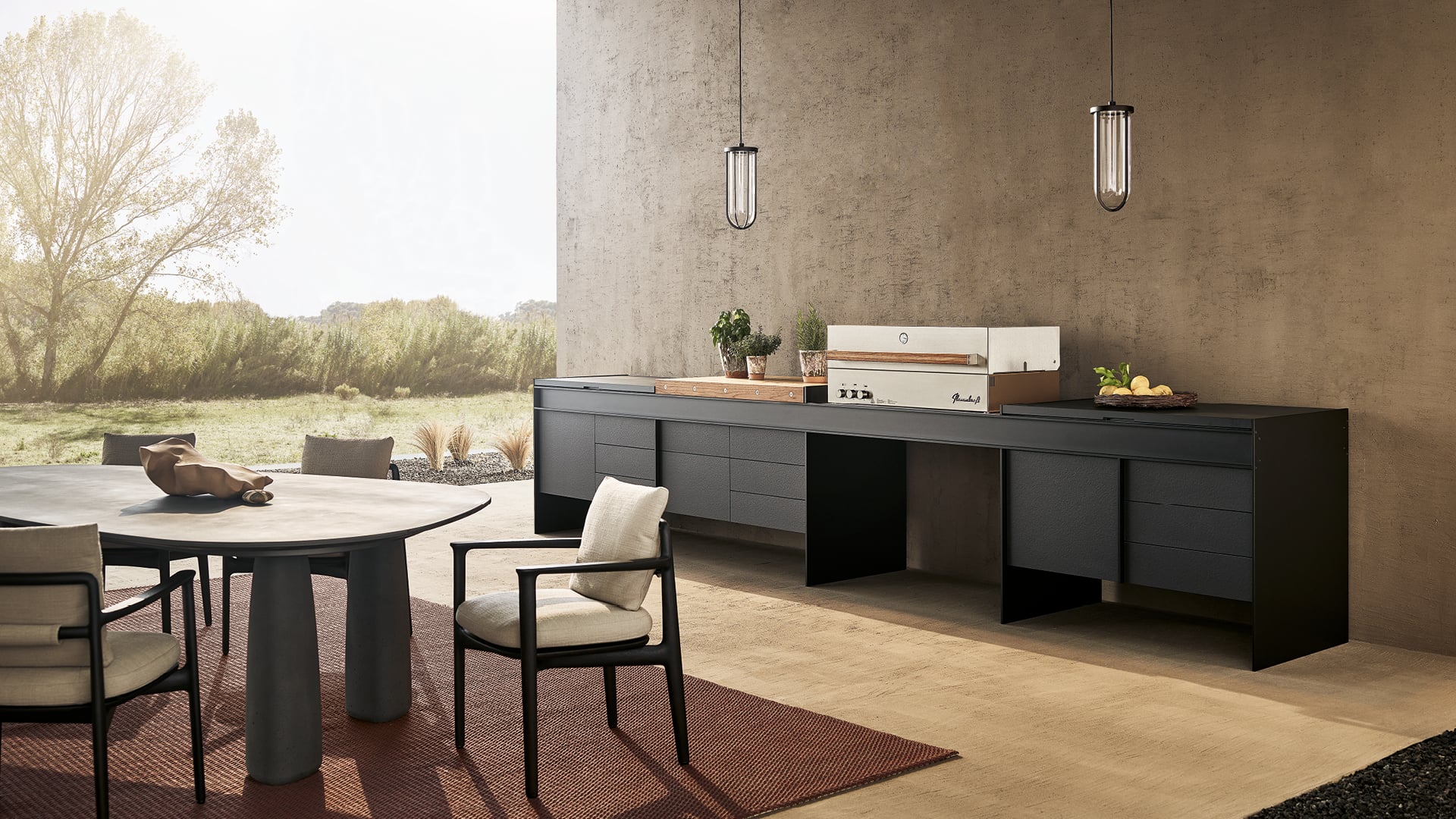
Aesthetics and functionality come together in perfect harmony in the kitchen, where every detail contributes to creating a refined and welcoming environment. In keeping with the other rooms in the villa, neutral tones enhance the texture of the floors and the lightness of the surfaces, while large windows maintain constant contact with the outside world.
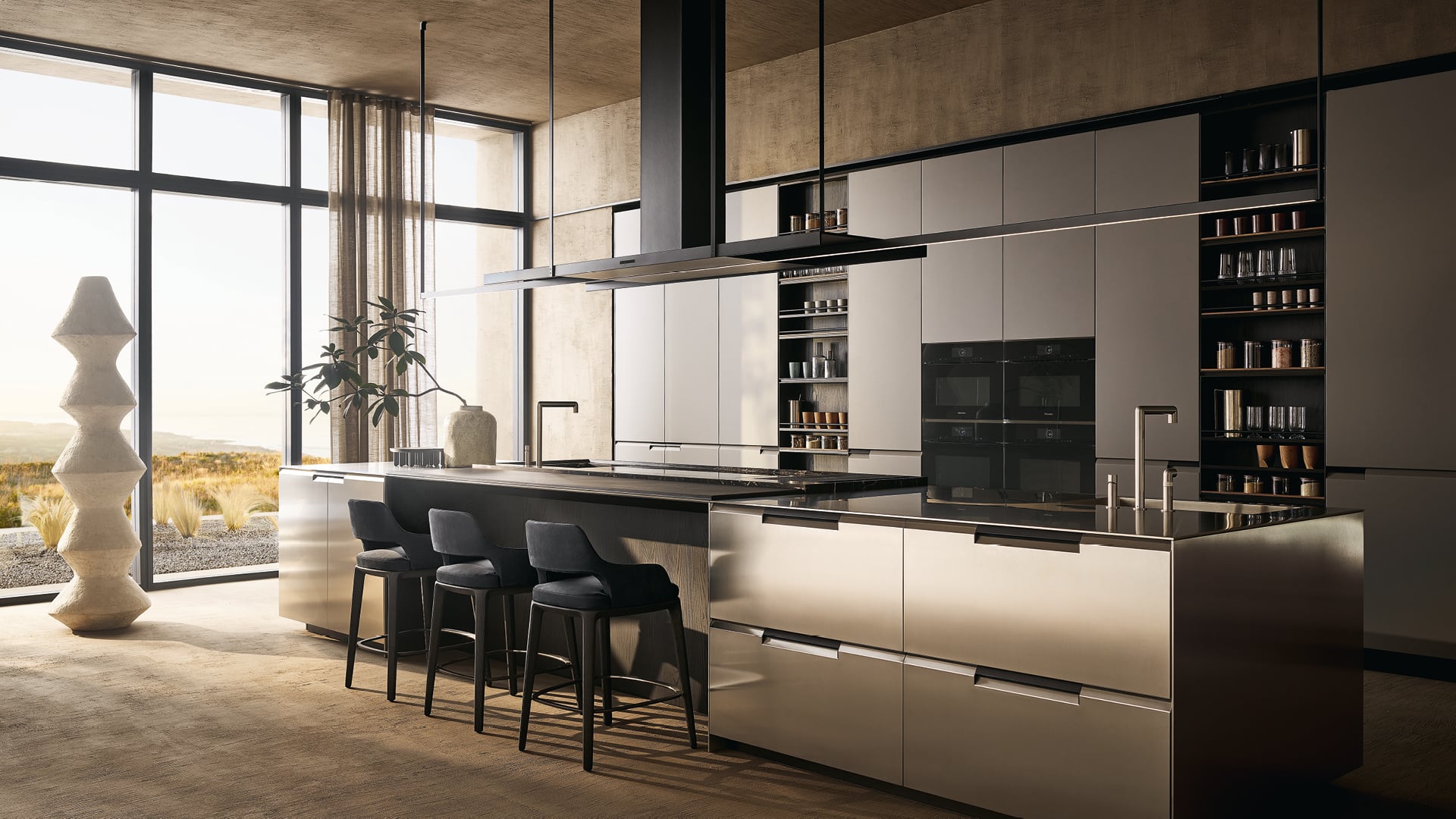
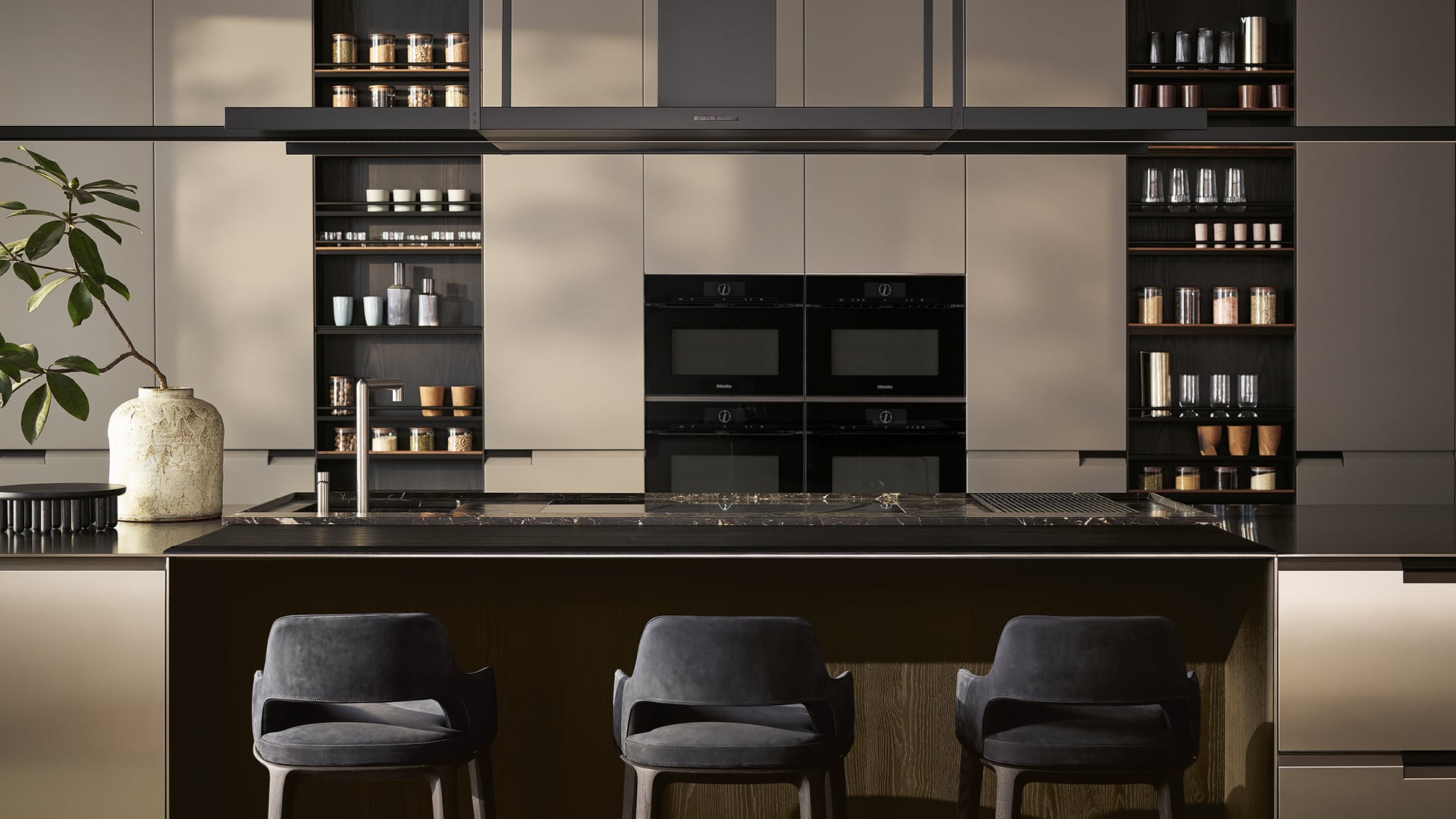
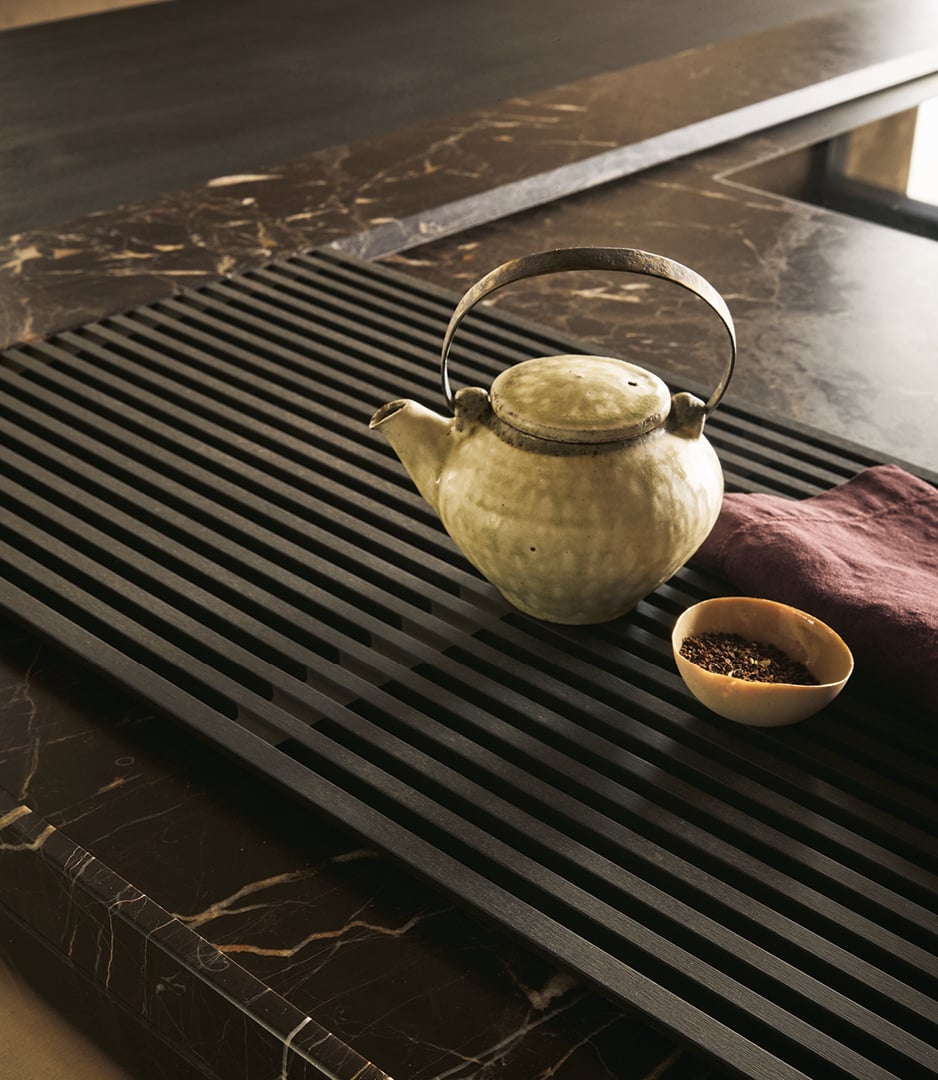
Contemporary design, functionality, cutting-edge materials: Shape is the absolute star of this space. With its elegant wooden top, the central island takes centre stage, drawing everyone together and turning cooking into an aesthetic ritual as well as a practical one.
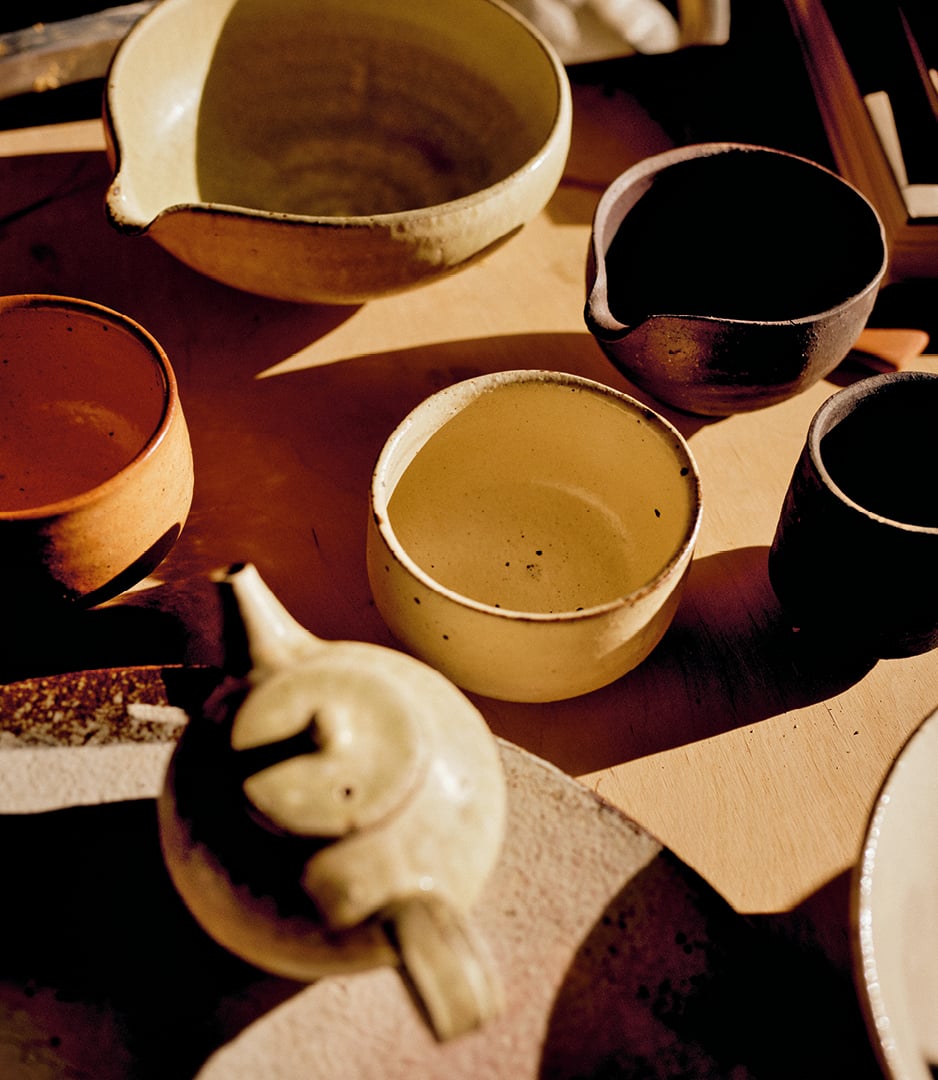
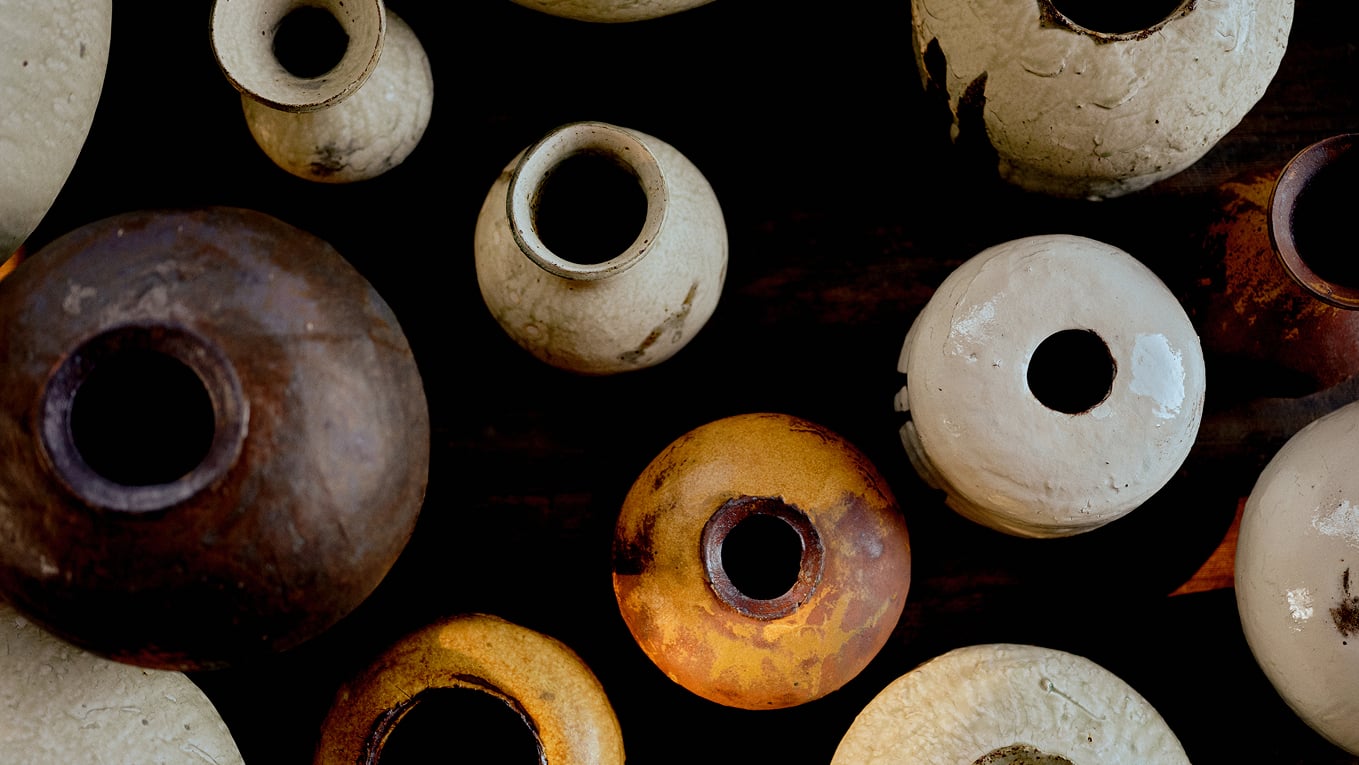
Outdoor spaces are a natural extension of the home, places defined by the same elegance as the interiors, but set within the landscape. Here, comfort combines with spontaneity, and the domestic experience opens up to the surrounding nature, transforming time spent outdoors into a ritual of wellbeing.
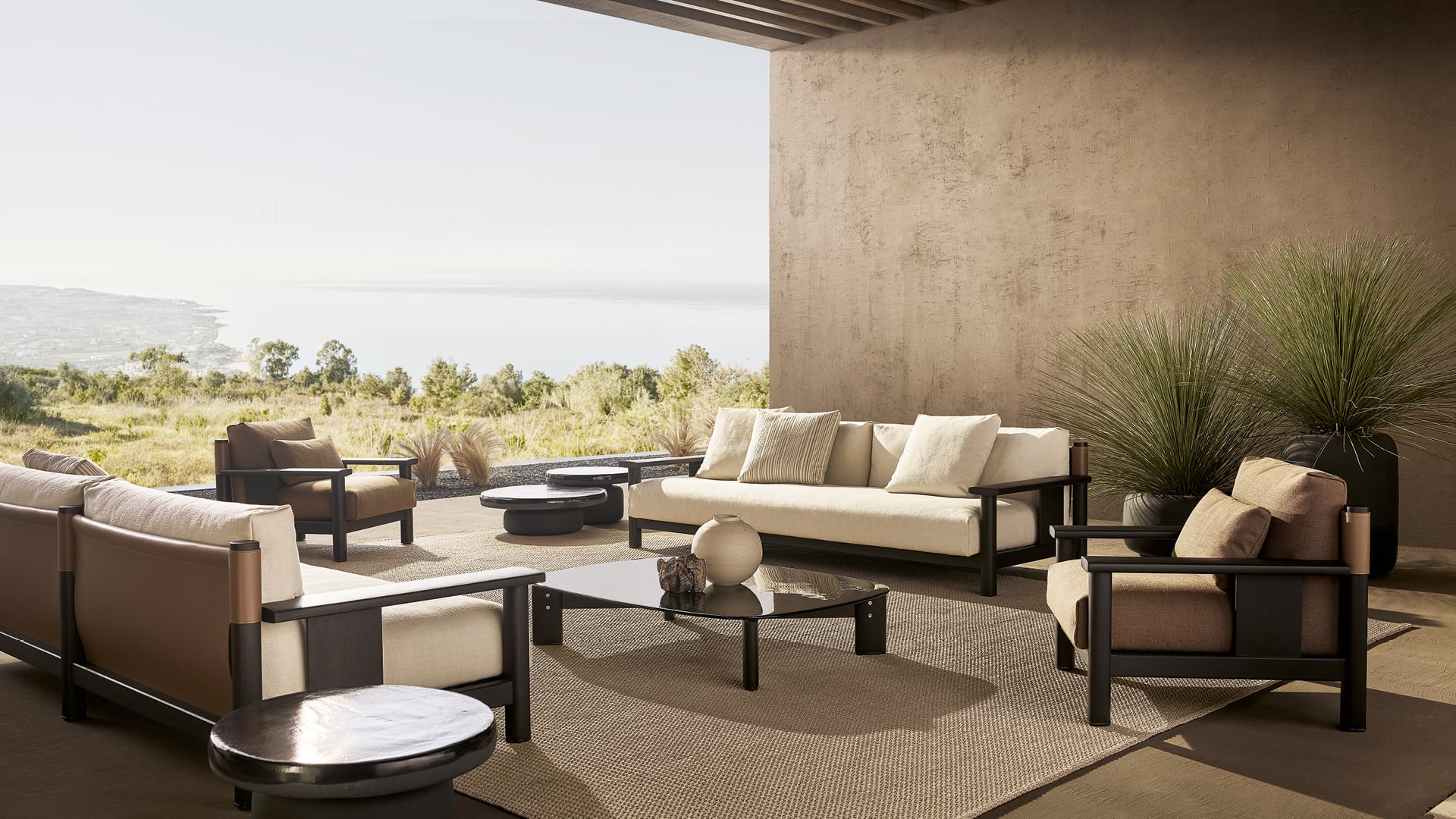
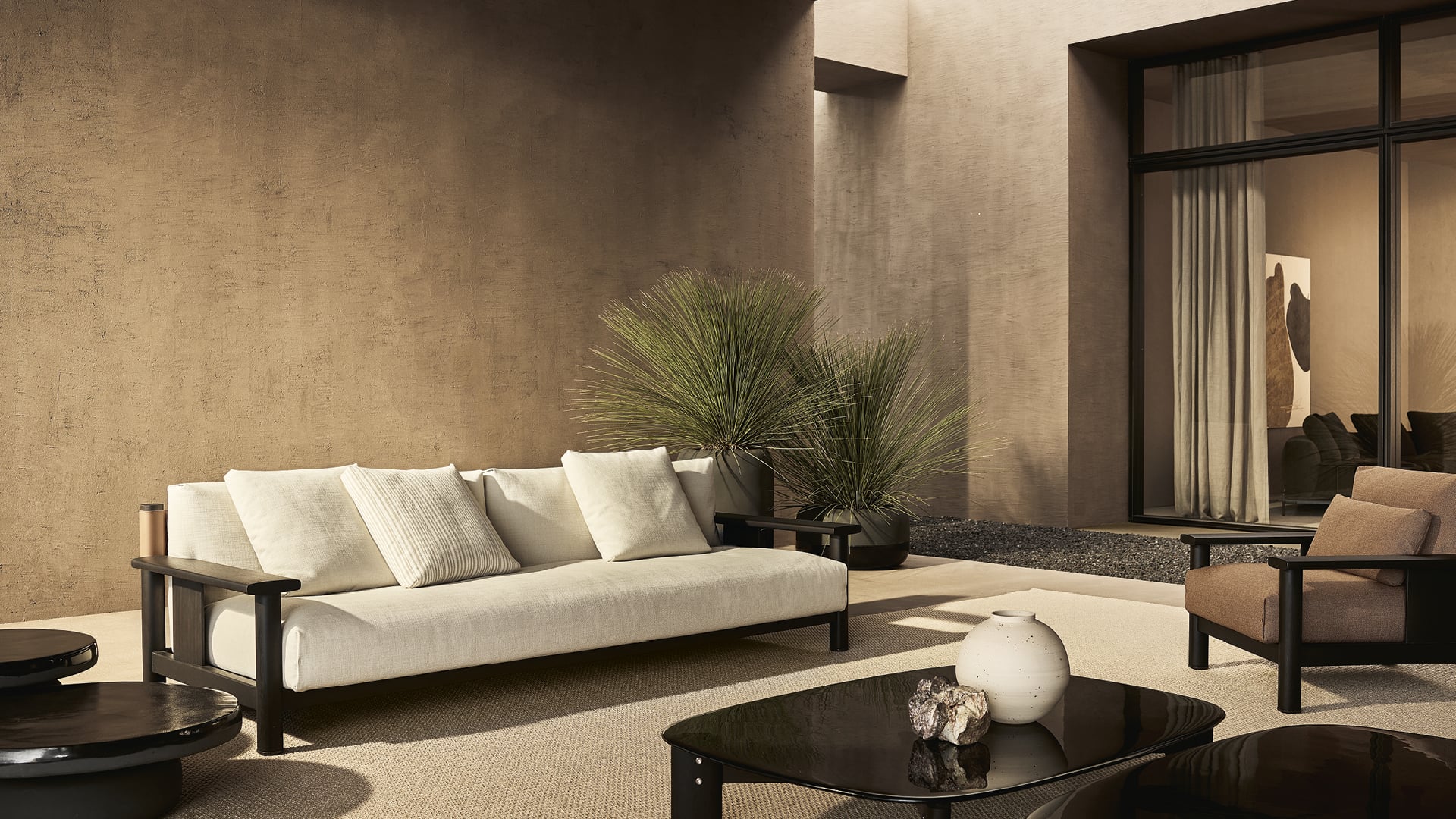
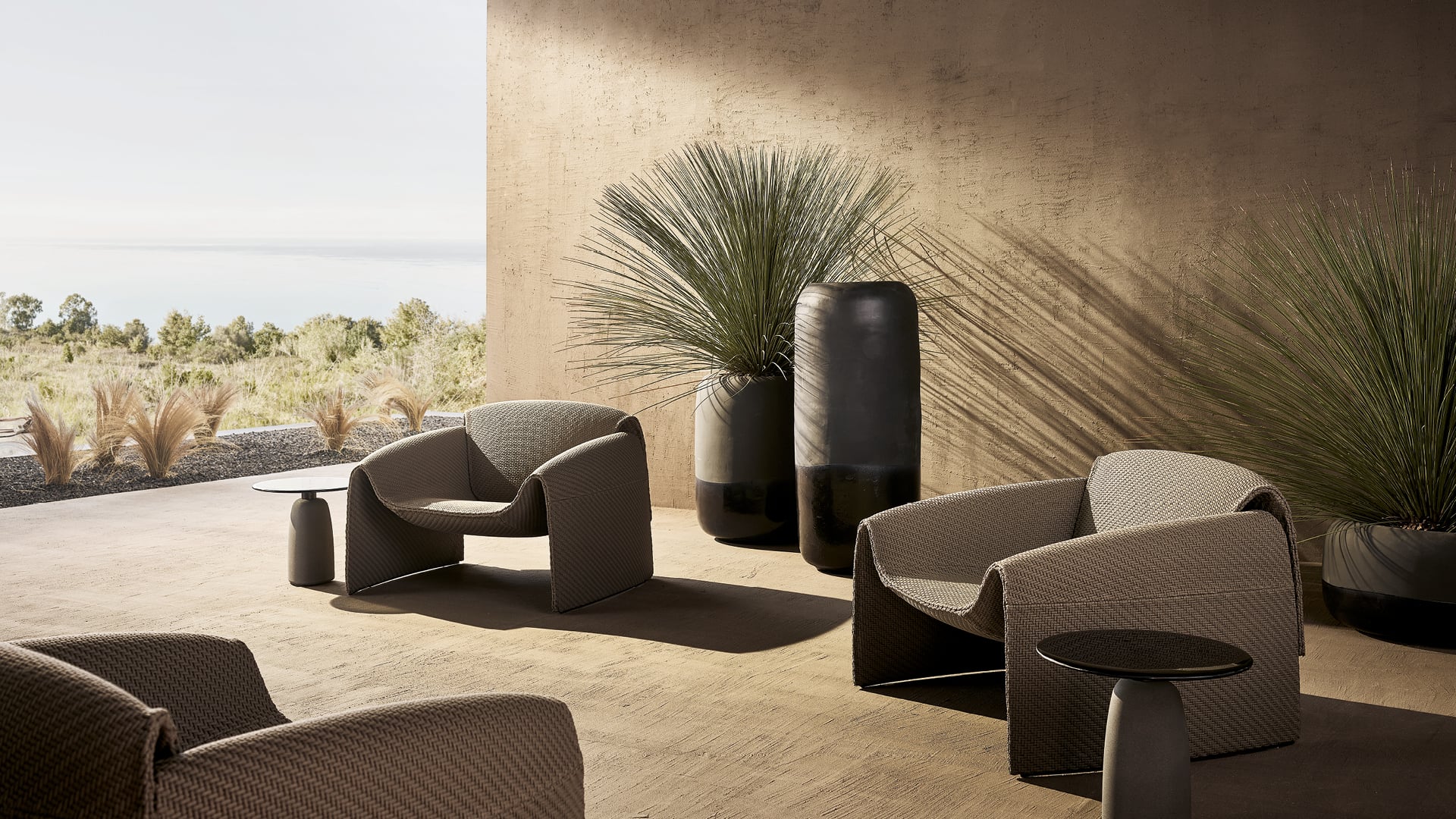
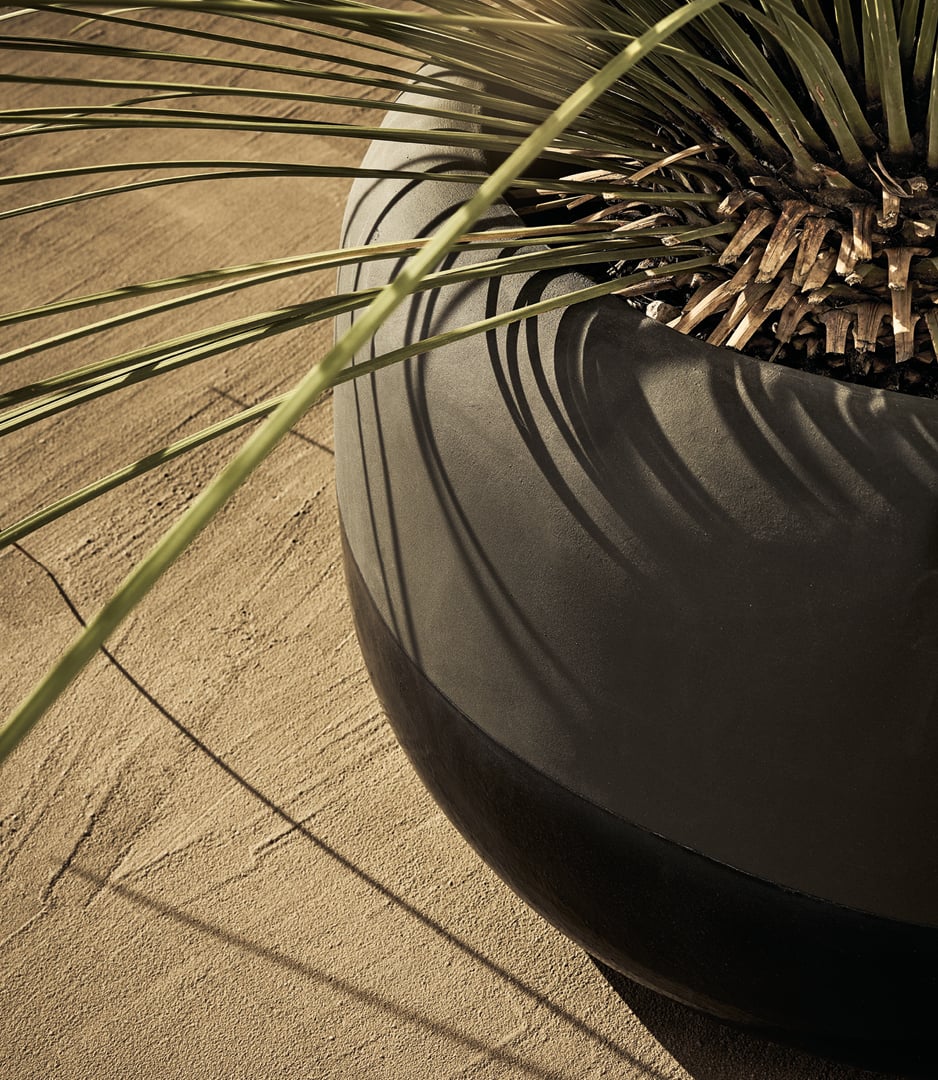
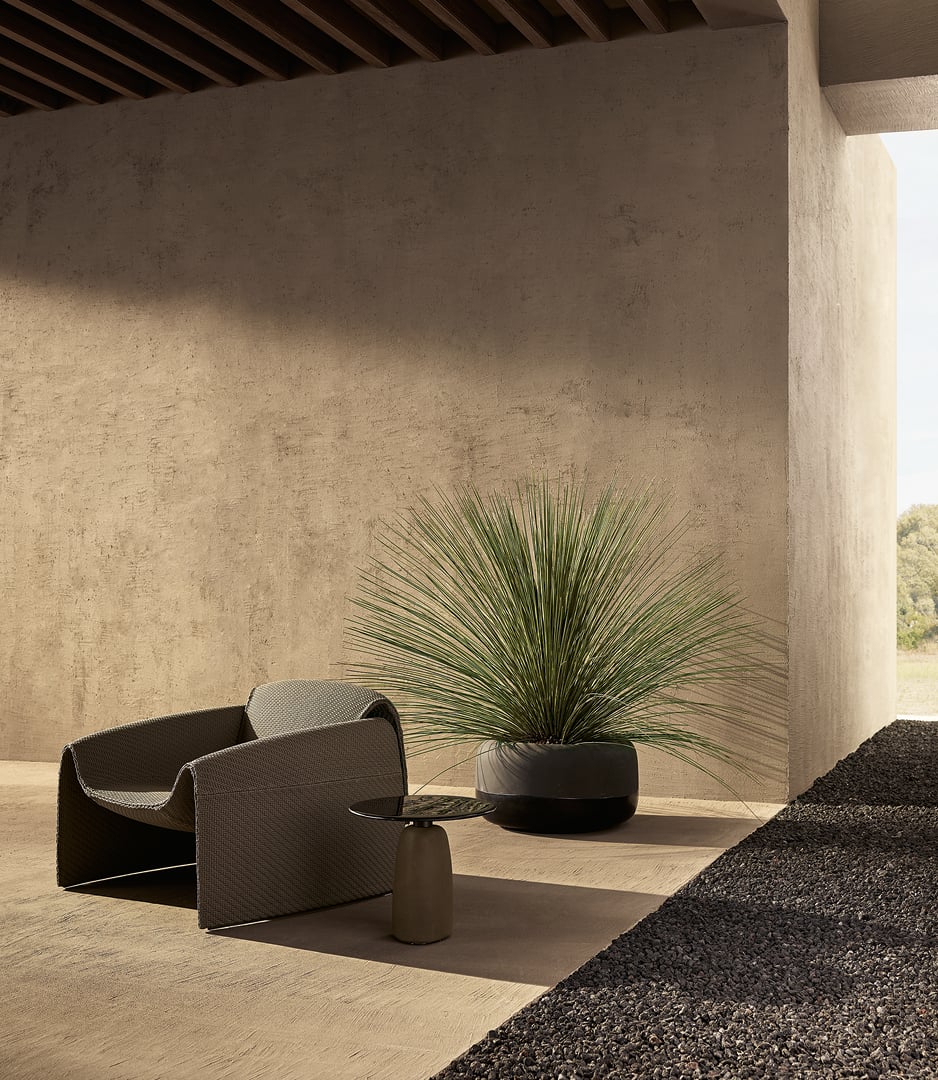
The chairs are from the Ketch Collection, which, with their solid lines and generous volumes, are inspired by the nautical world. Alongside them, Crew vases and Le Club armchairs in their outdoor versions enrich the patio with sculptural and sophisticated details, interacting with the architecture and surrounding nature.
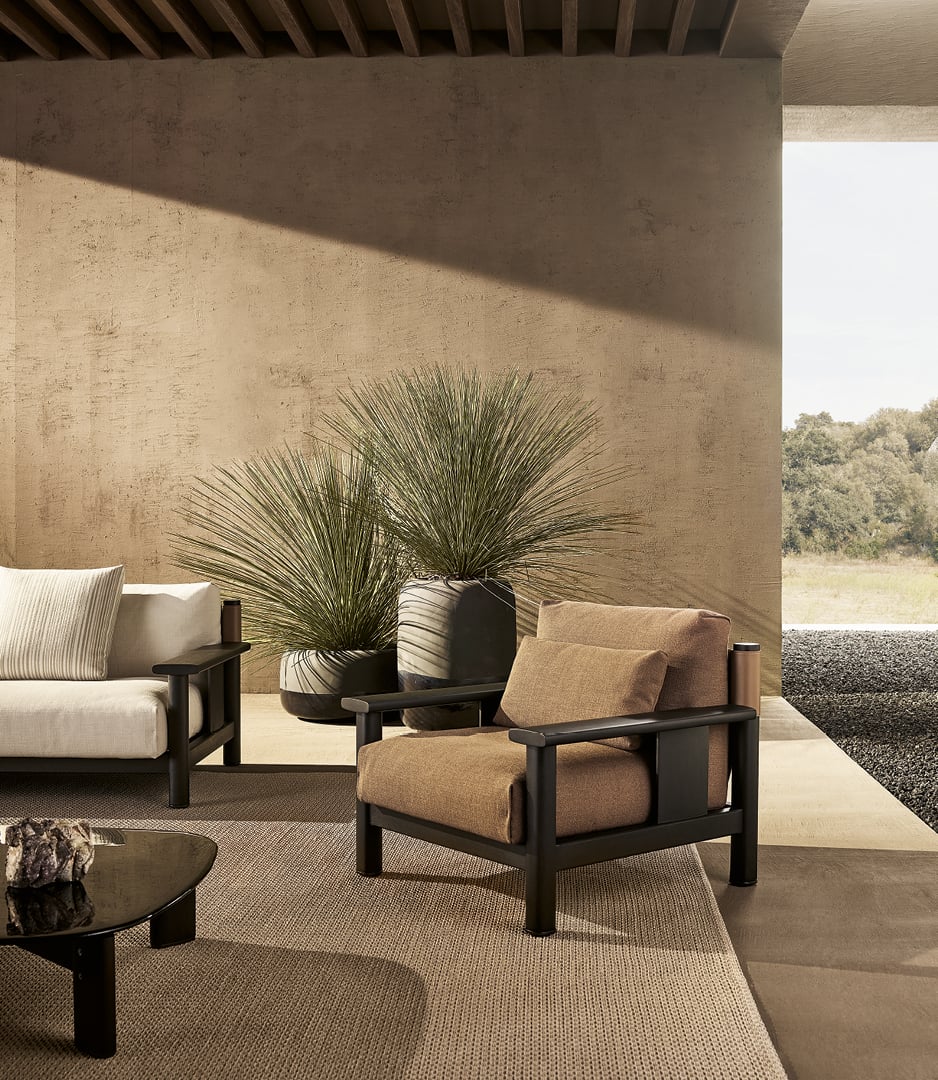
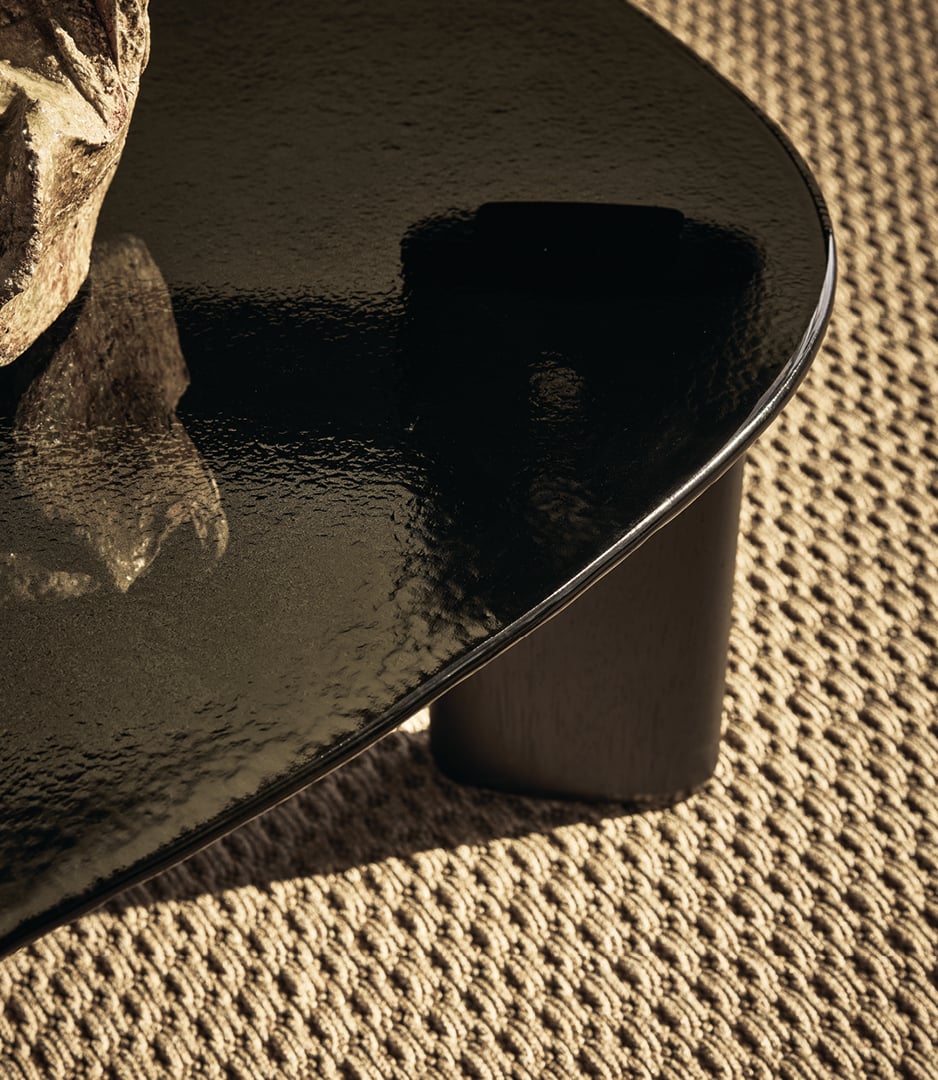
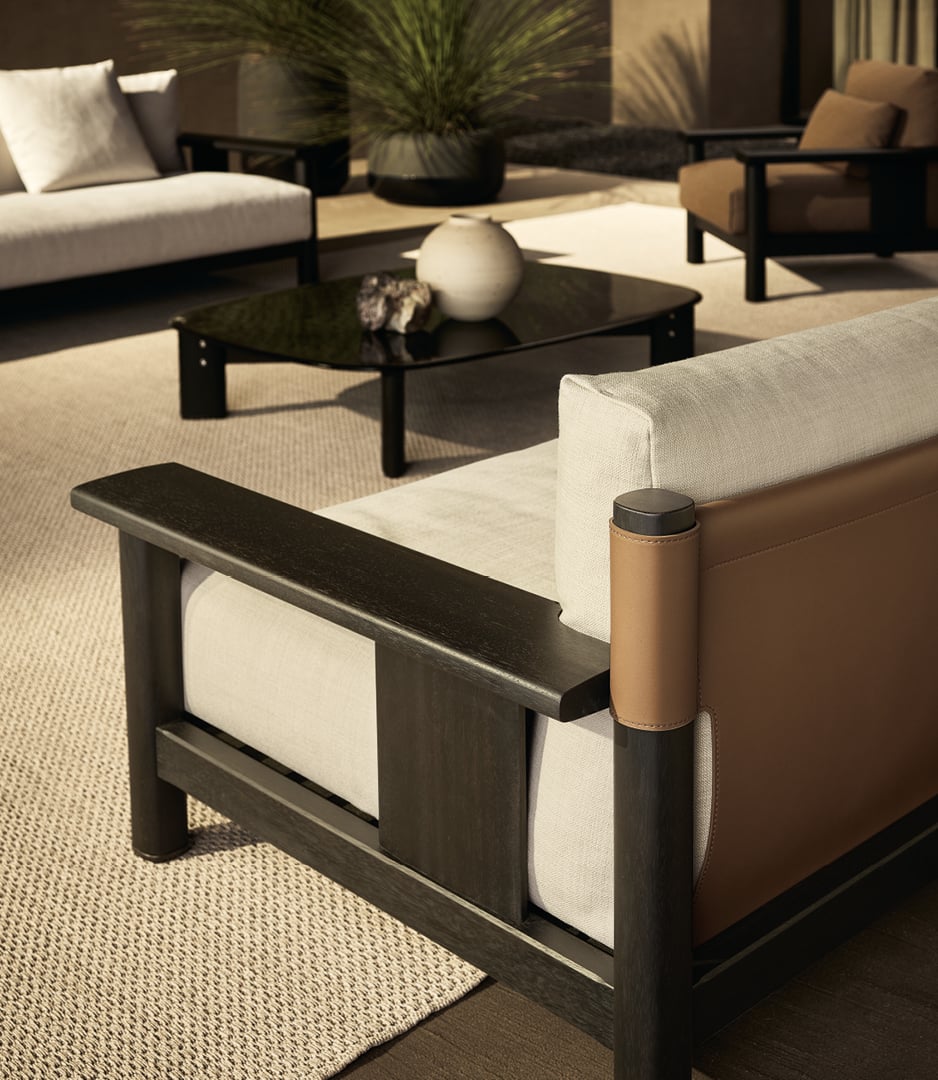
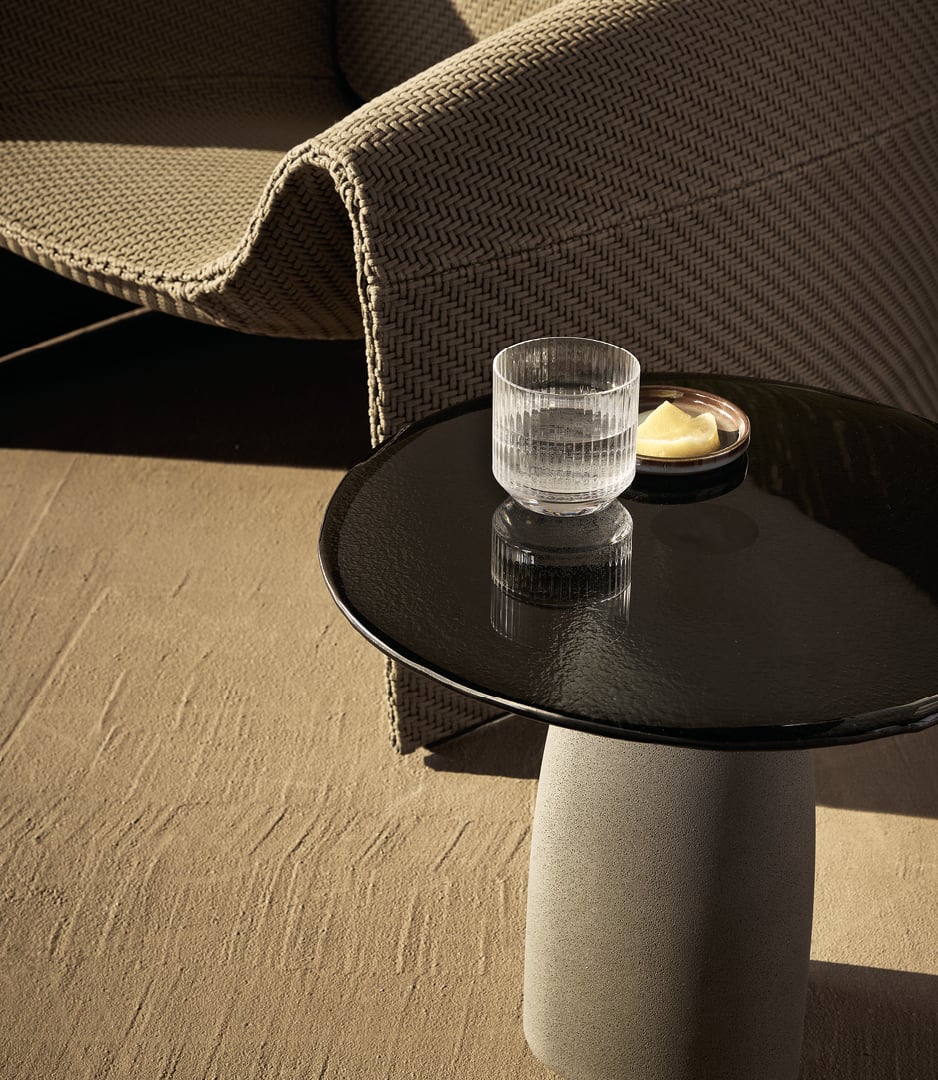
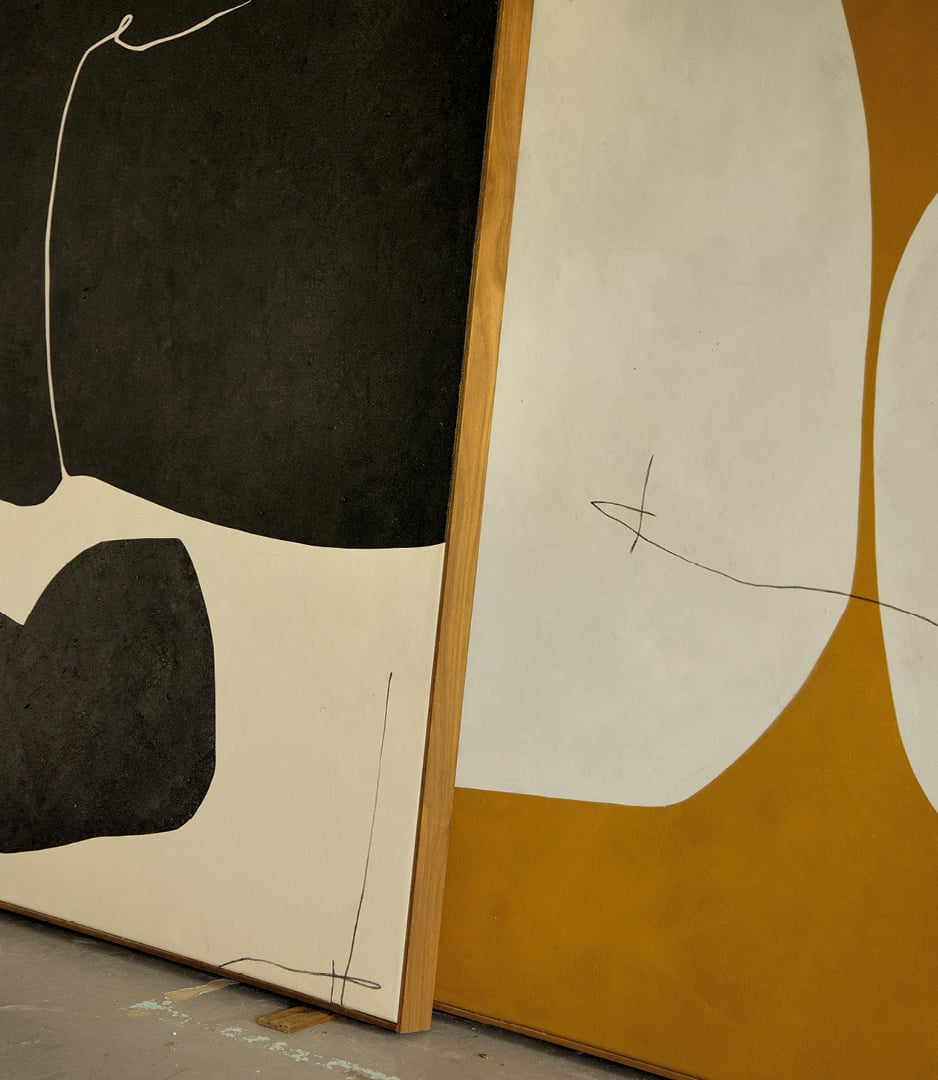
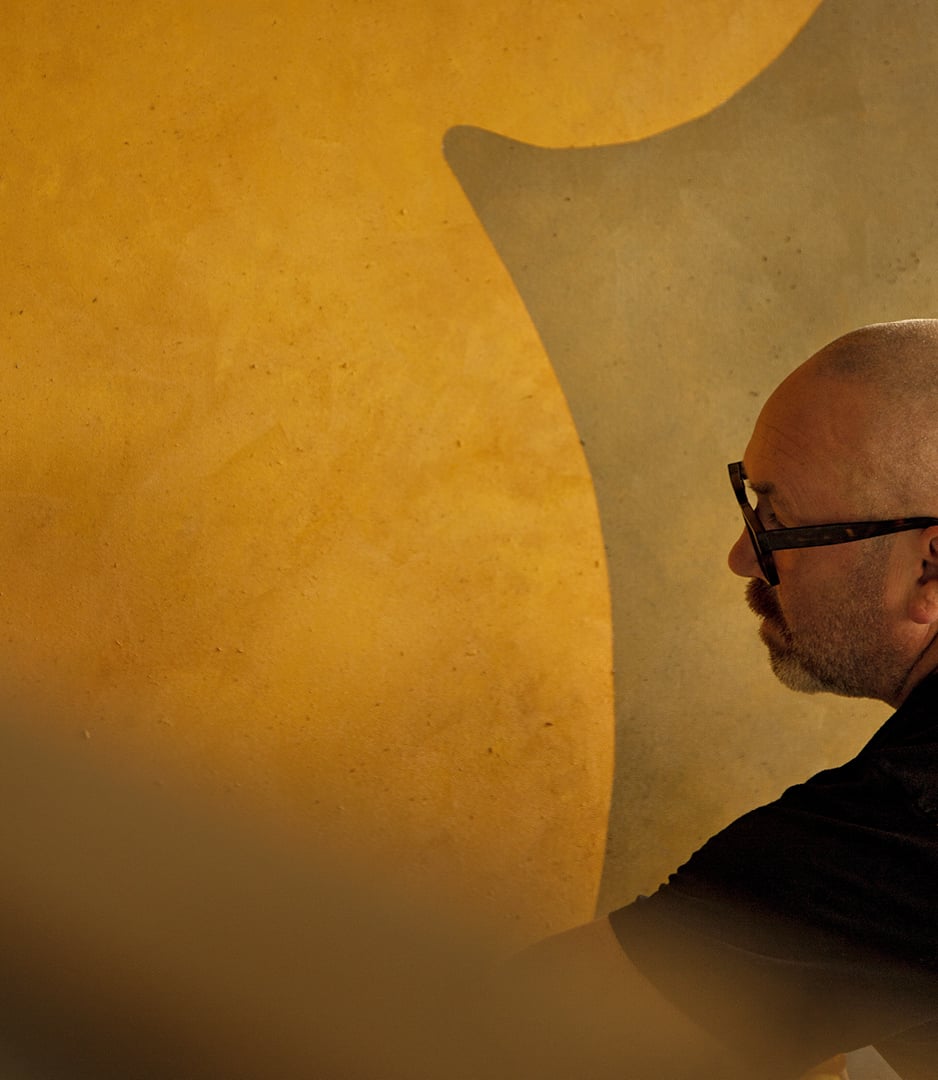
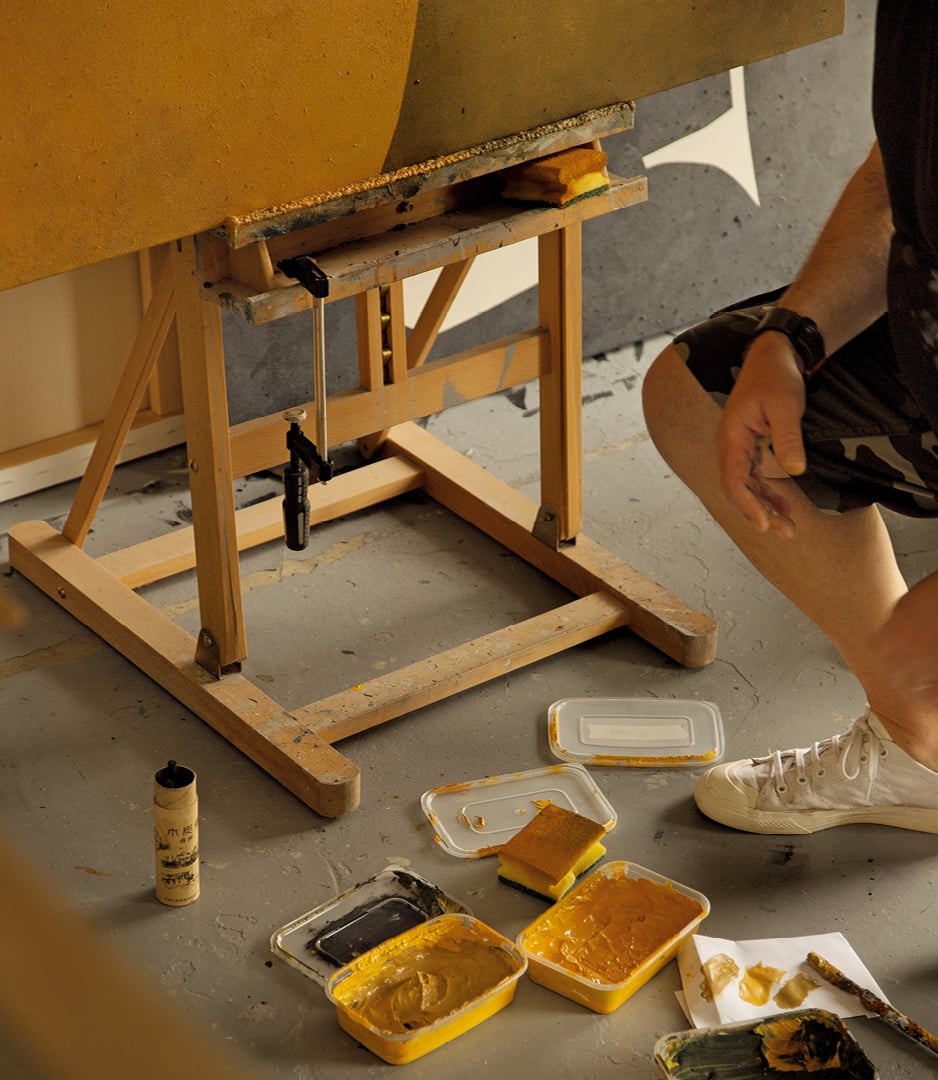
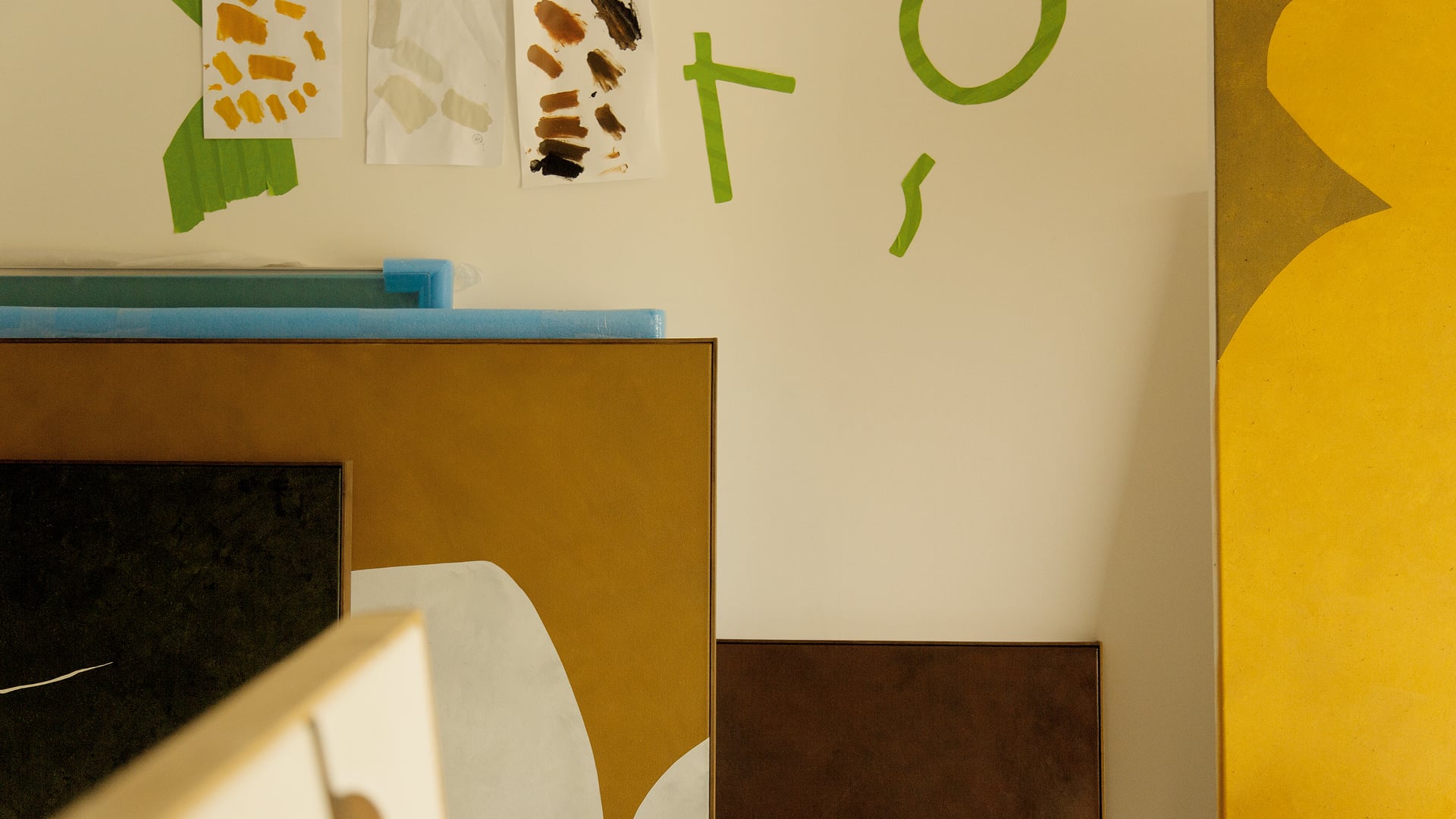
The second living room has a more intimate and cosy feel than the main one. It is a place of tranquillity, designed for moments when you want to take time out to read, have a conversation or simply enjoy the silence. Natural light enters in a softer way, filtered through openings that create a soft and relaxing atmosphere.
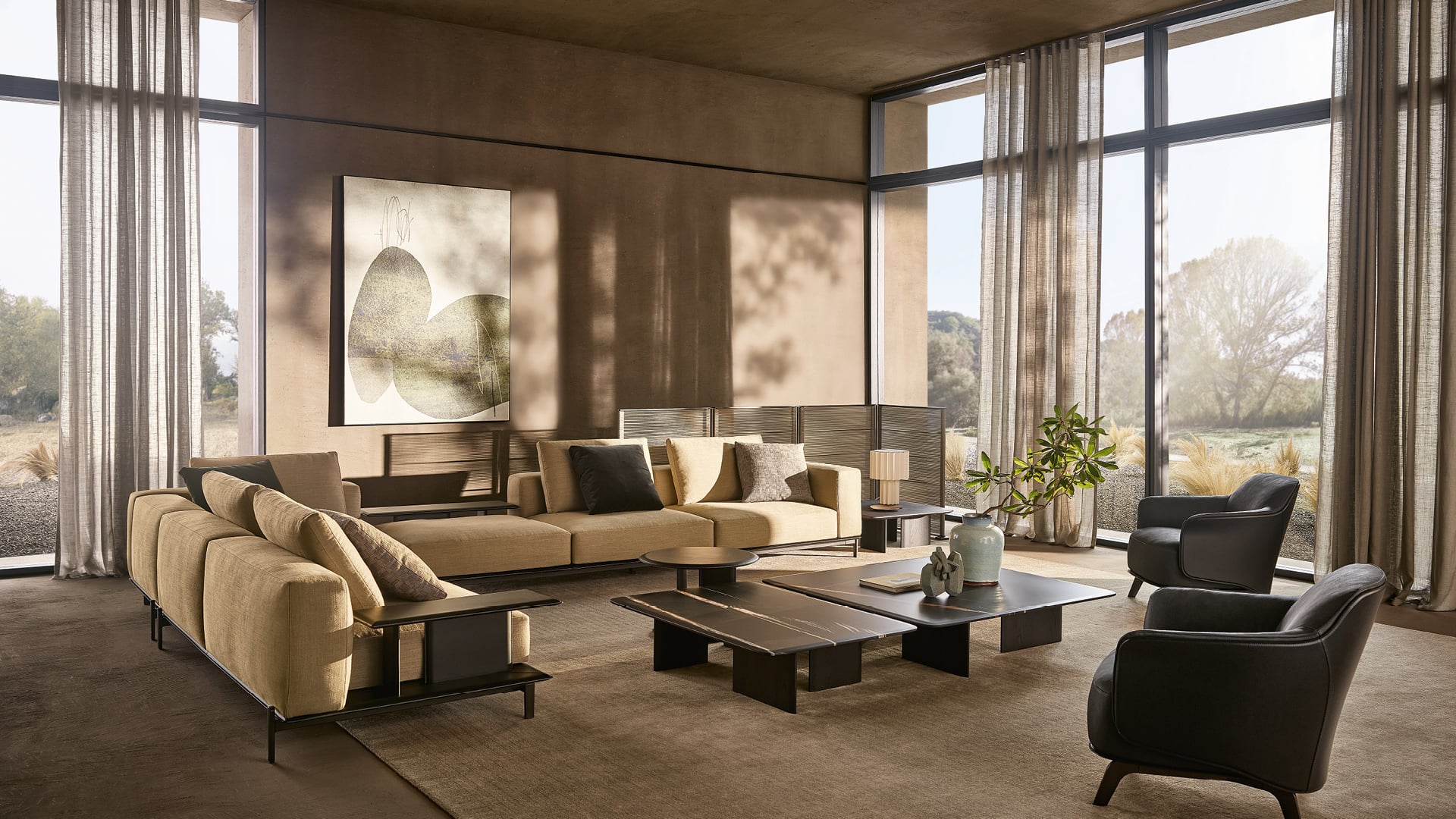
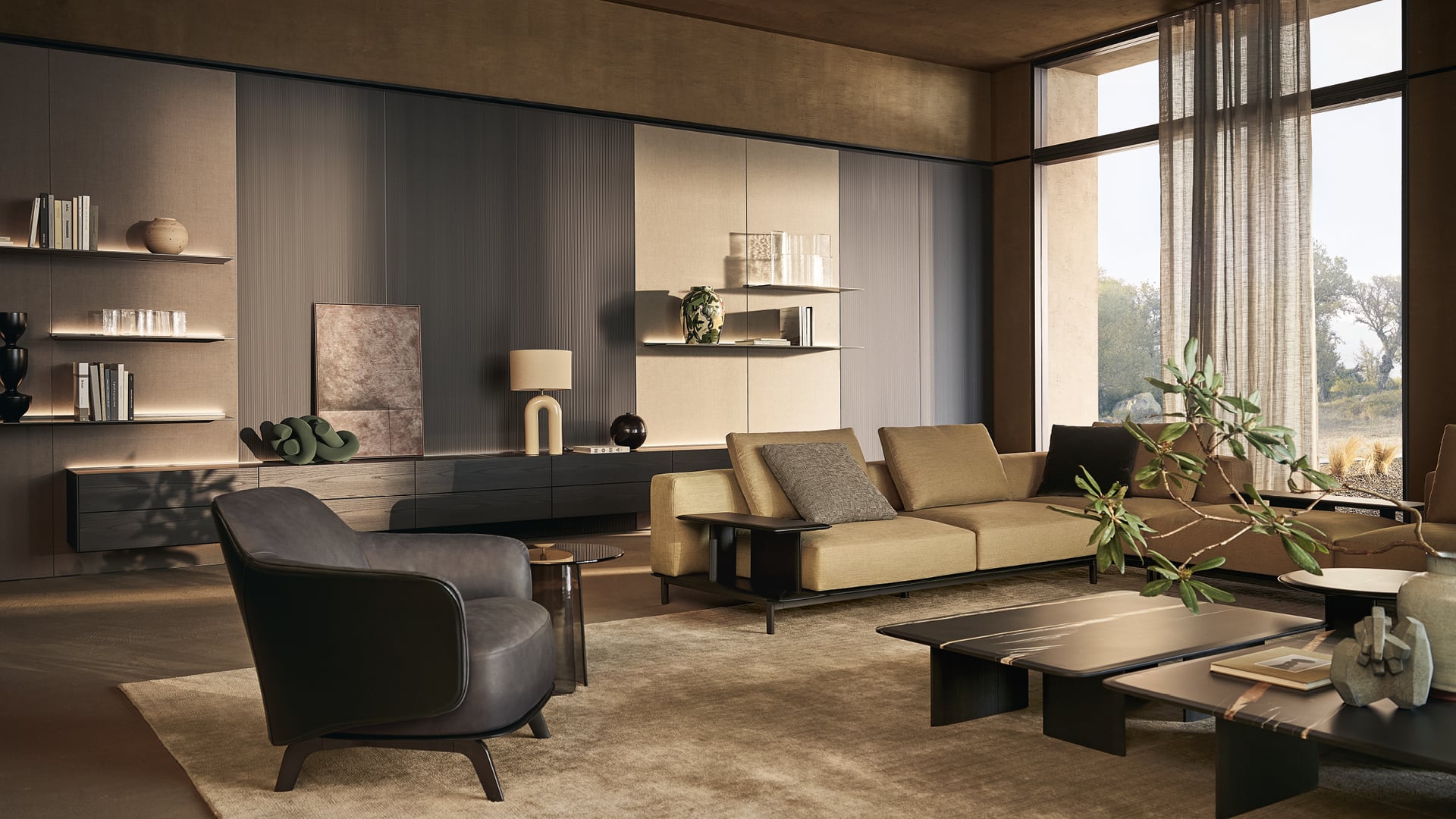
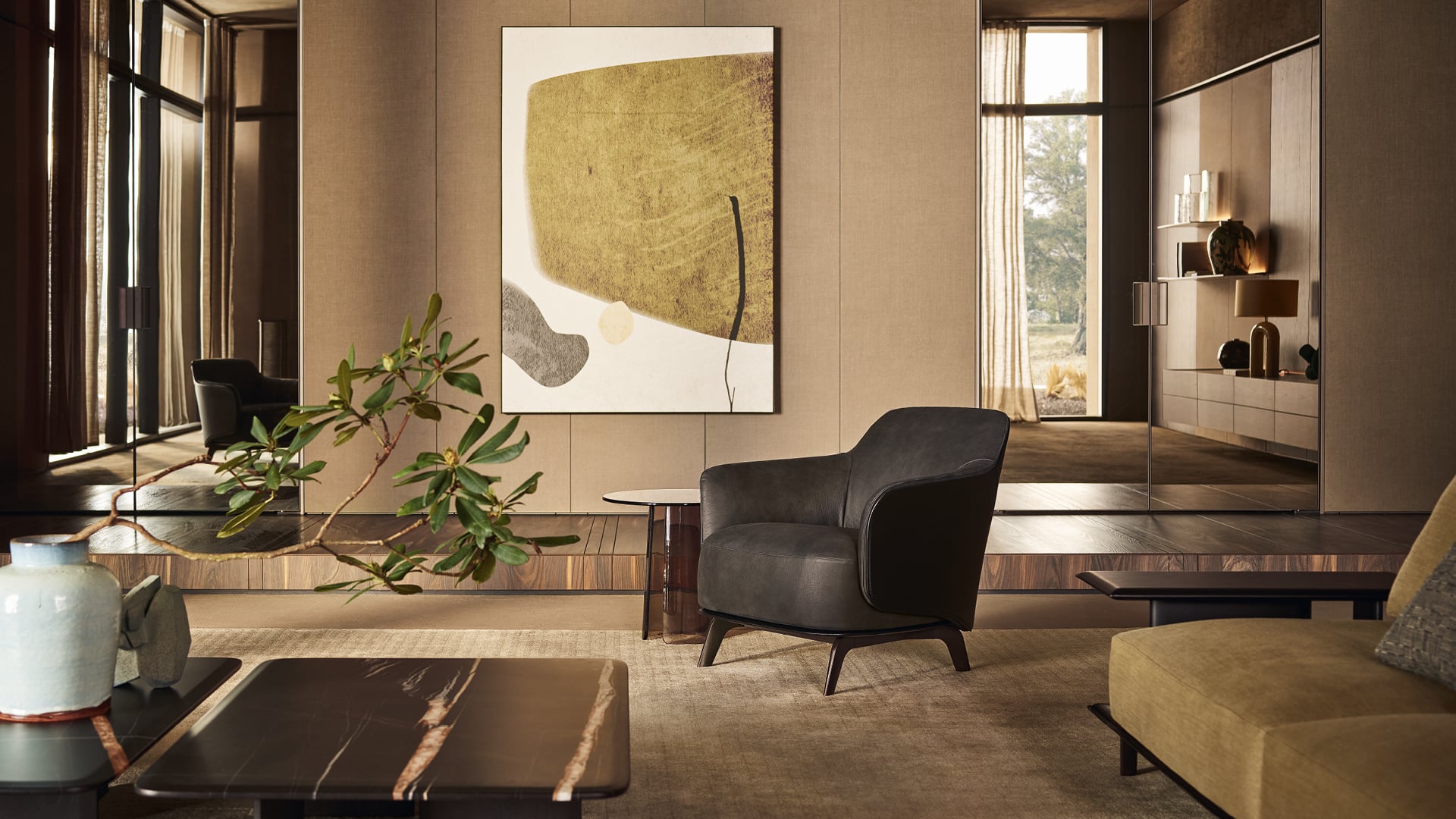
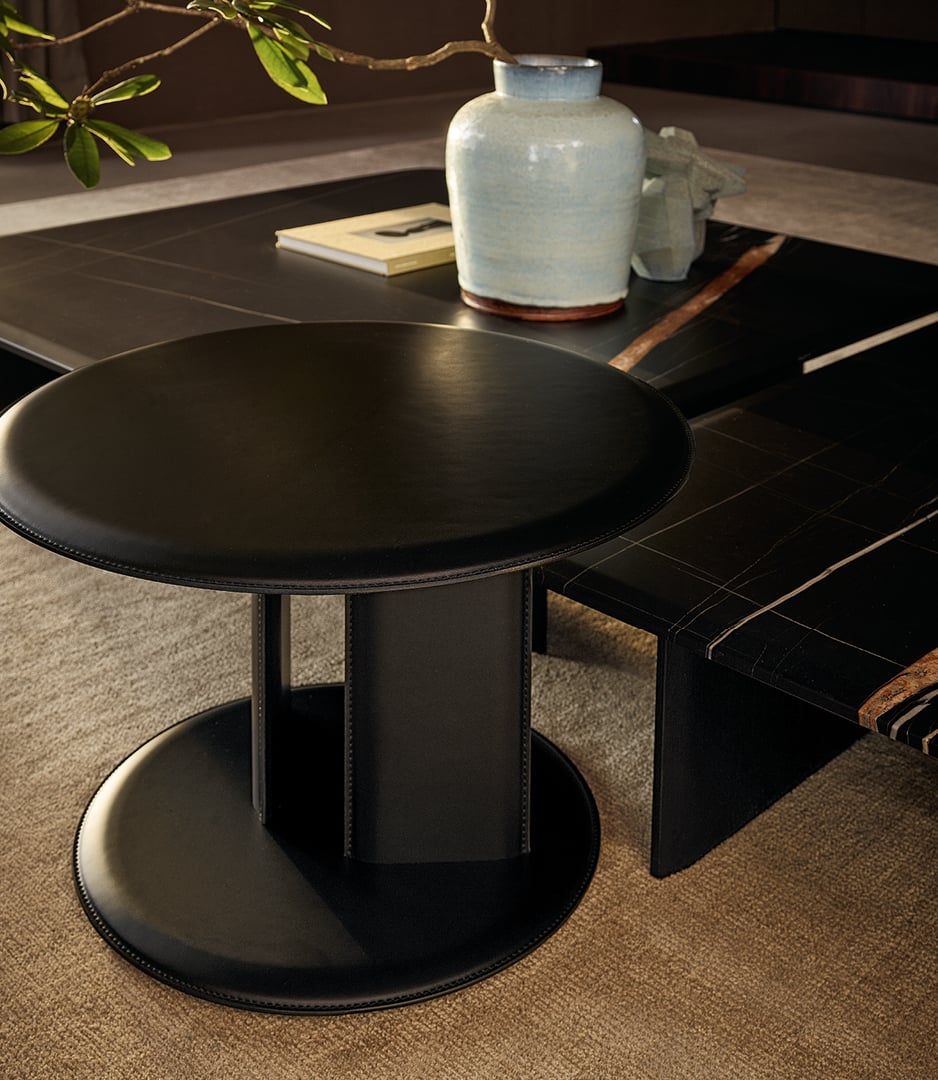
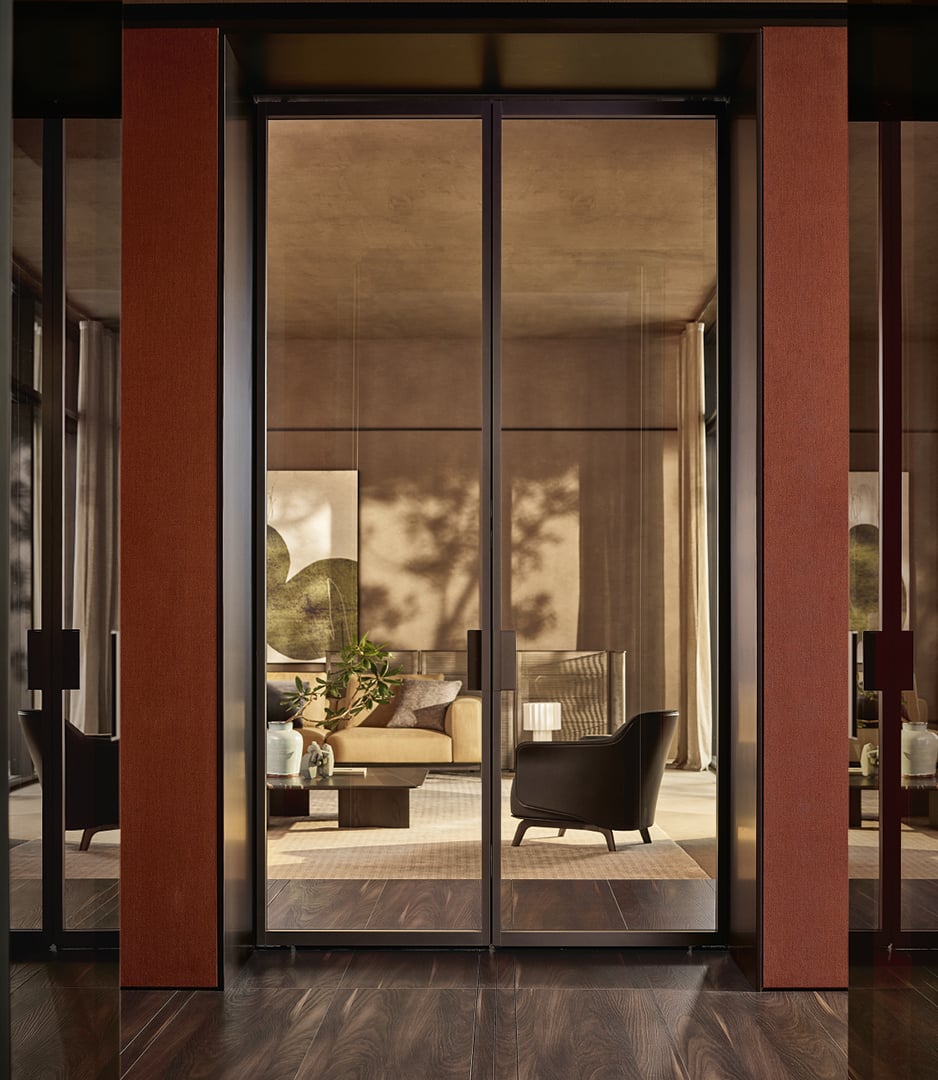
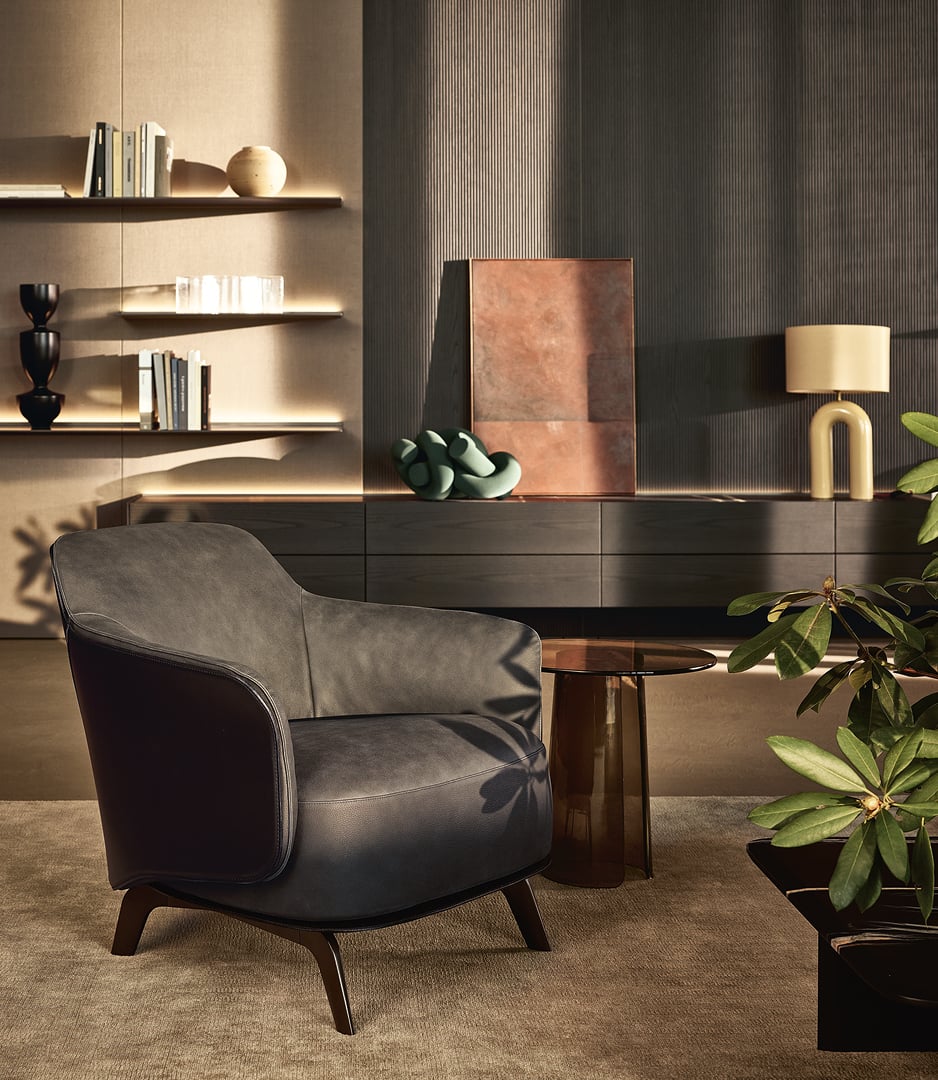
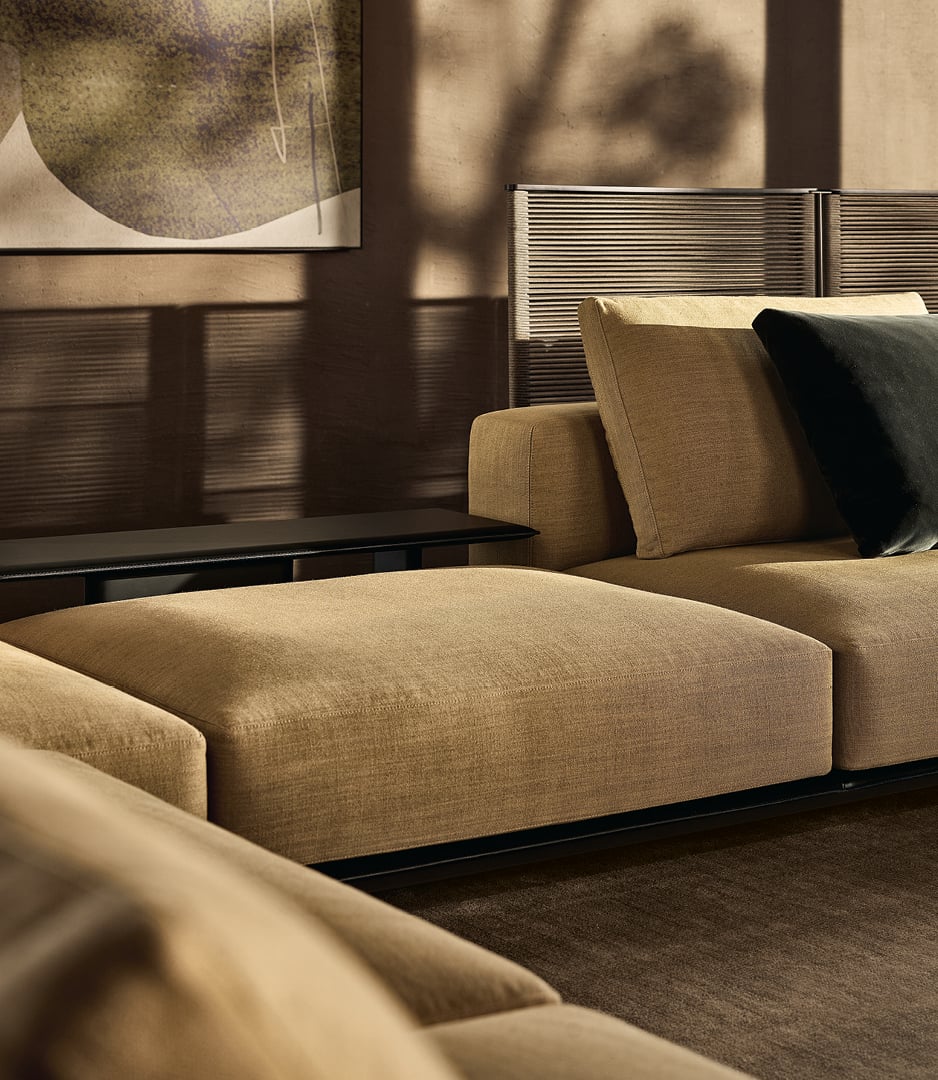
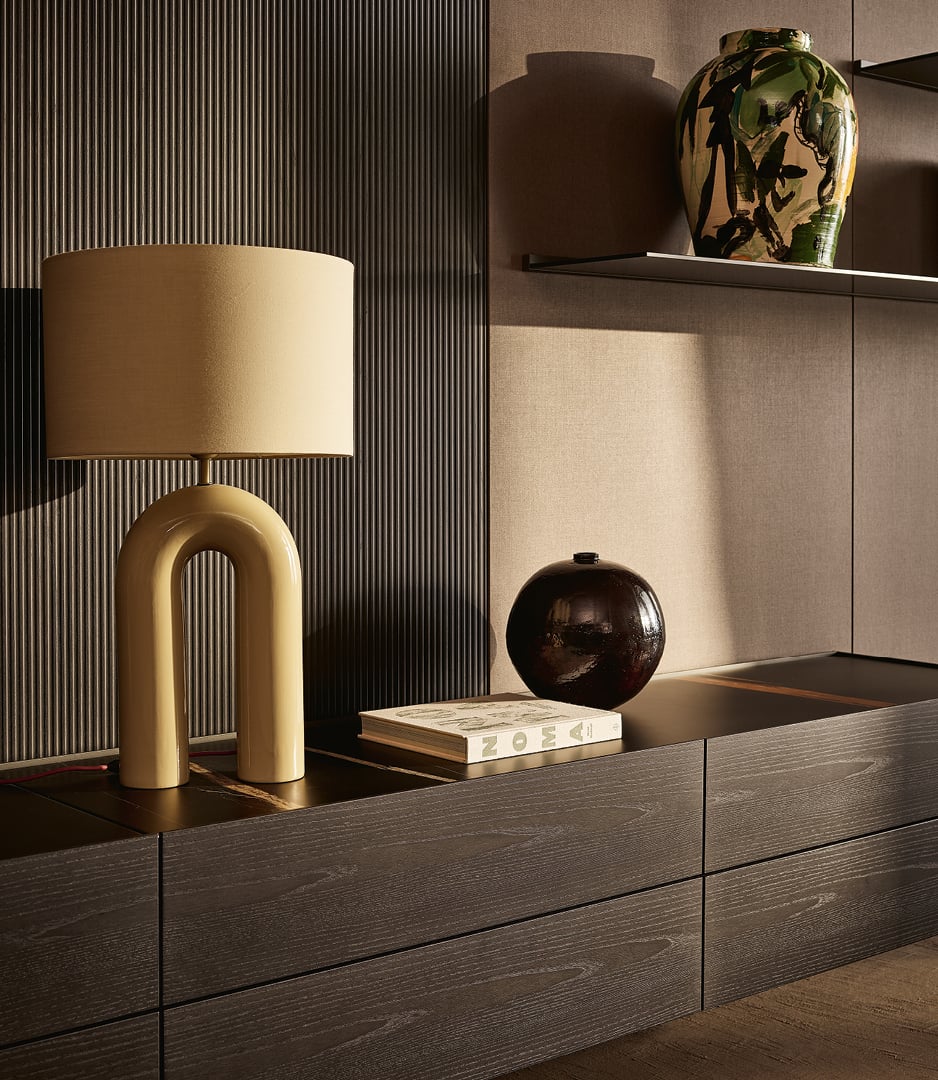
The transition from the living area to the sleeping area is fluid, thanks to the natural light that caresses the curved surfaces of the table and armchairs. The linen panelling creates a visual sequence that draws the eye upwards to the sleeping area and beyond, to the large window overlooking the landscape. The repetition of shapes and finishes creates a sense of continuity and harmony, like a silent choreography.
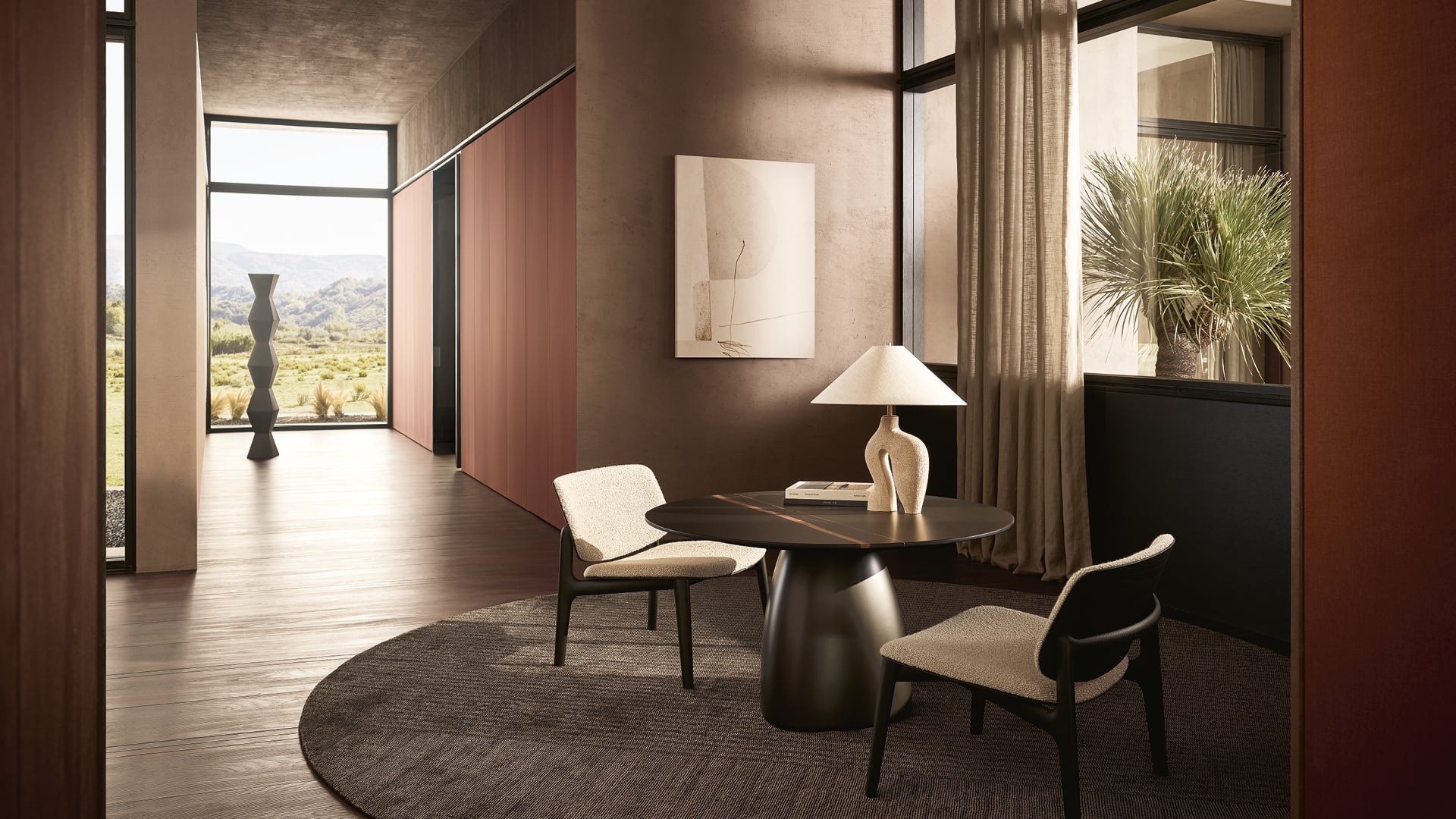
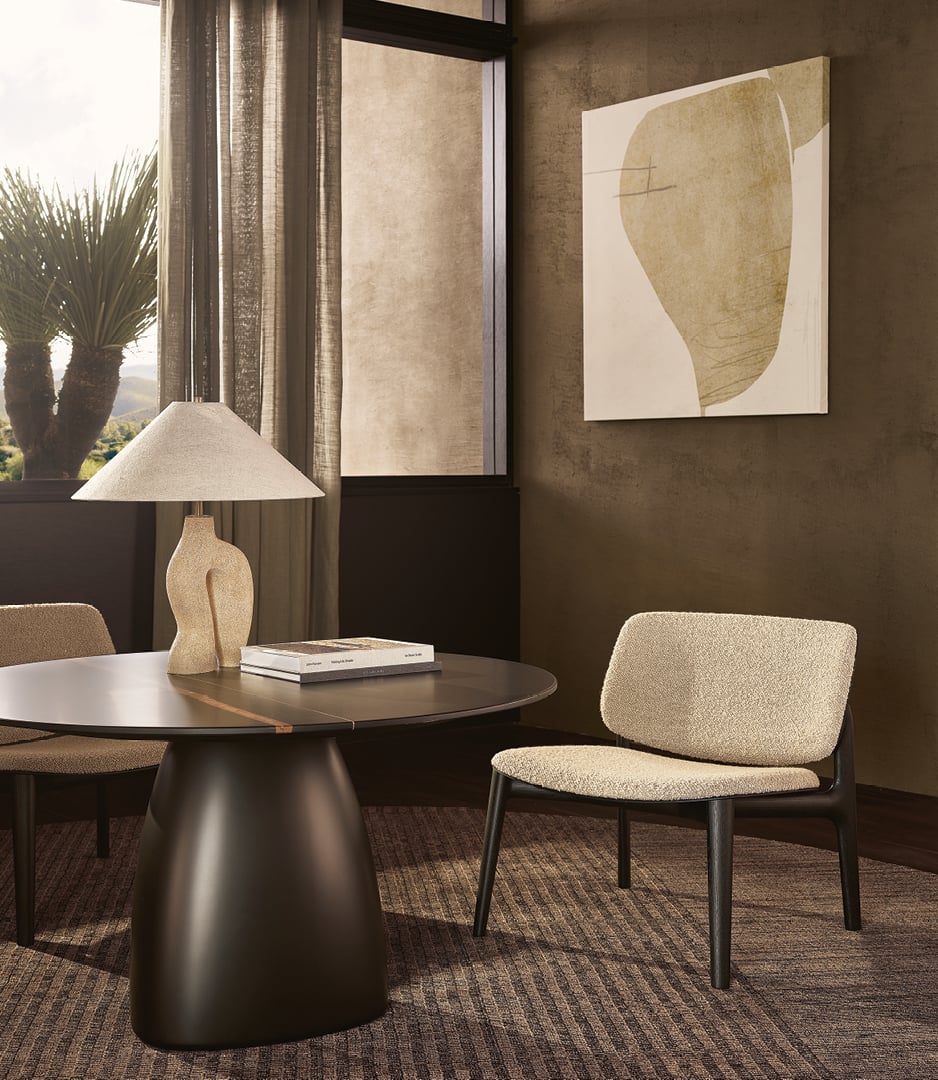
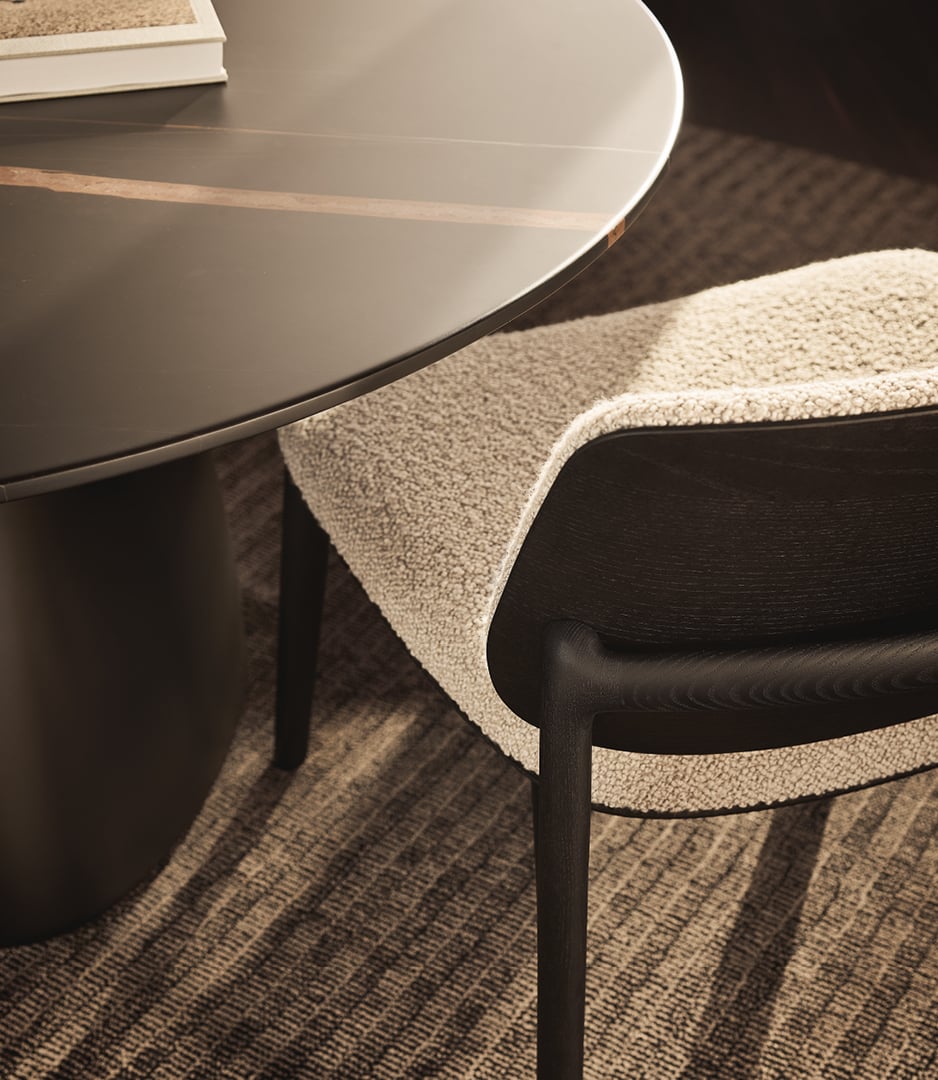
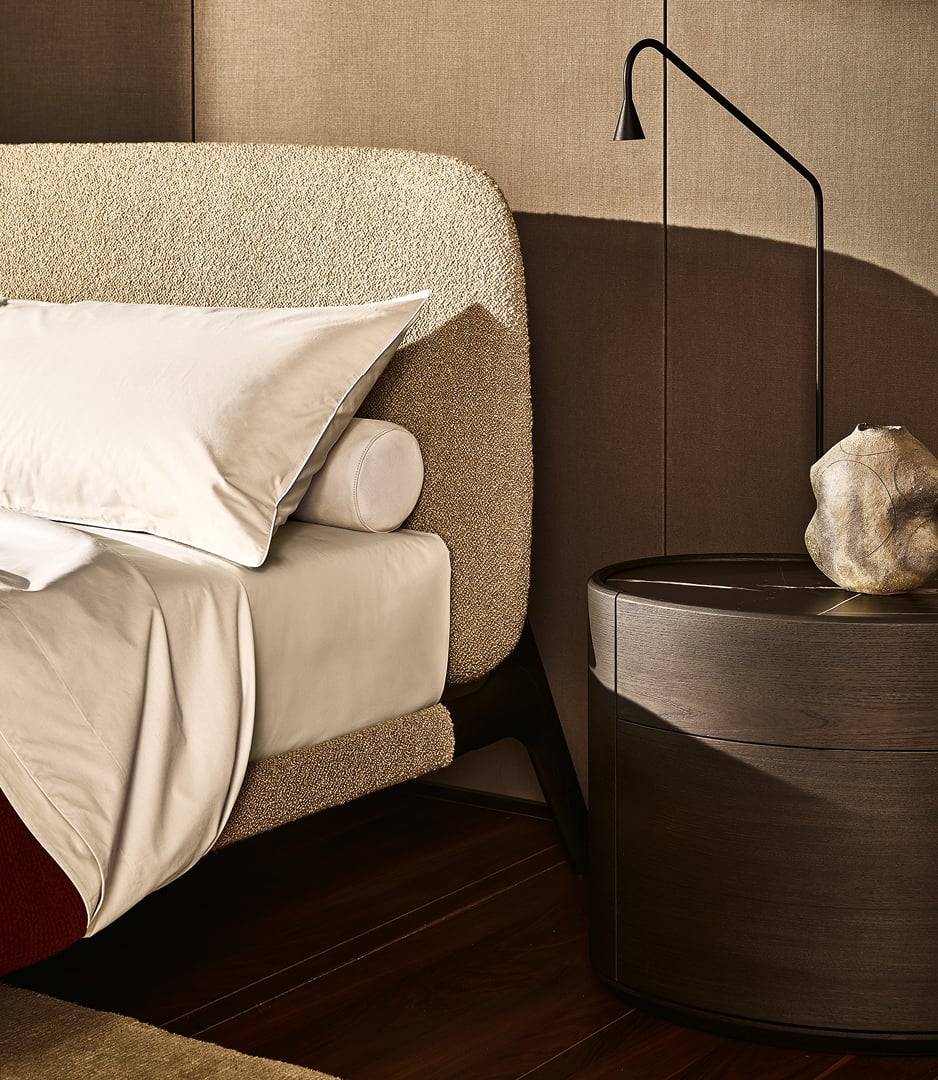
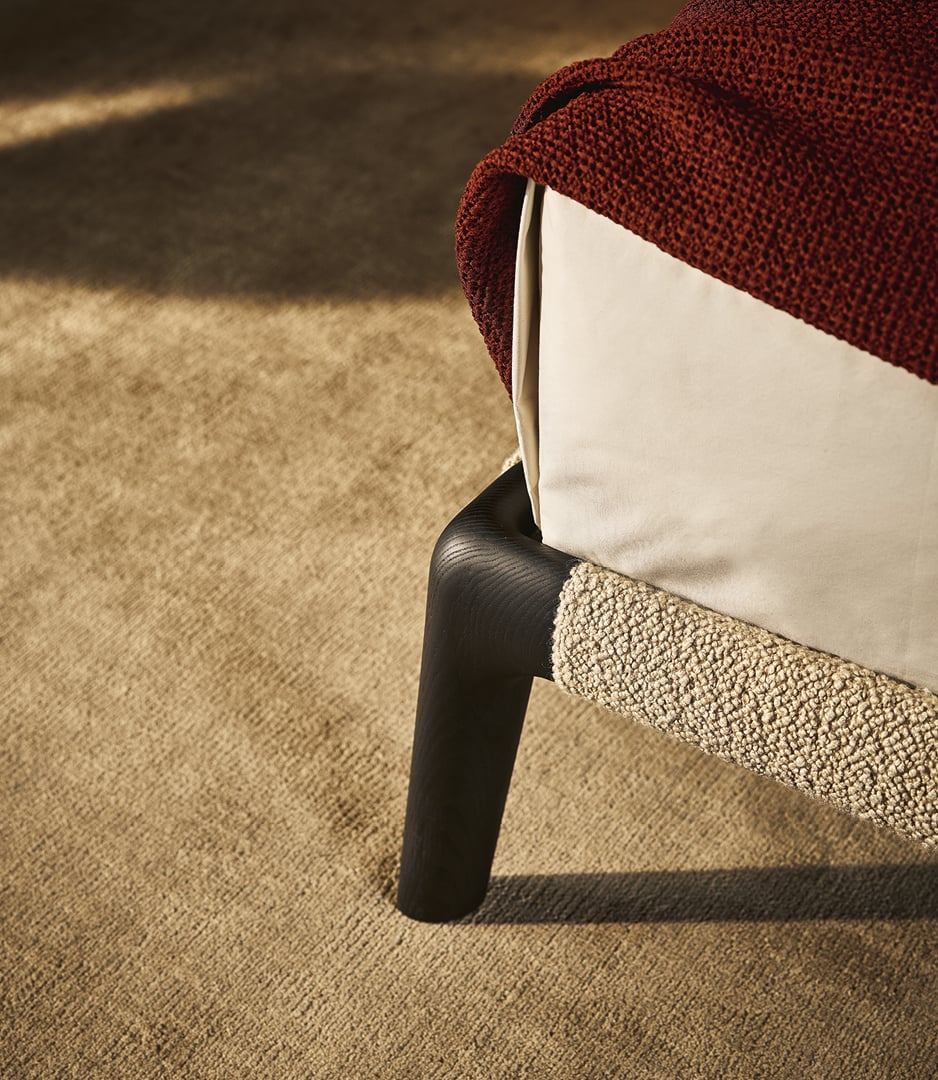
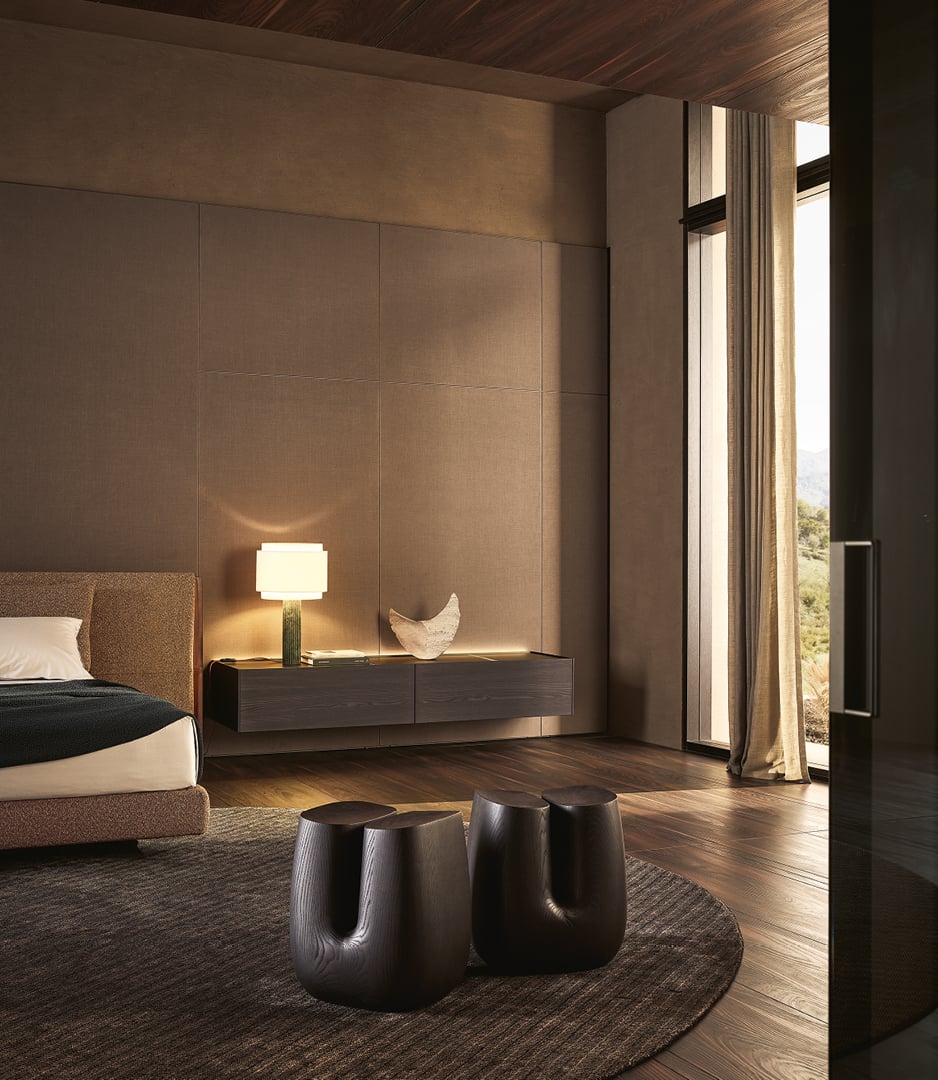
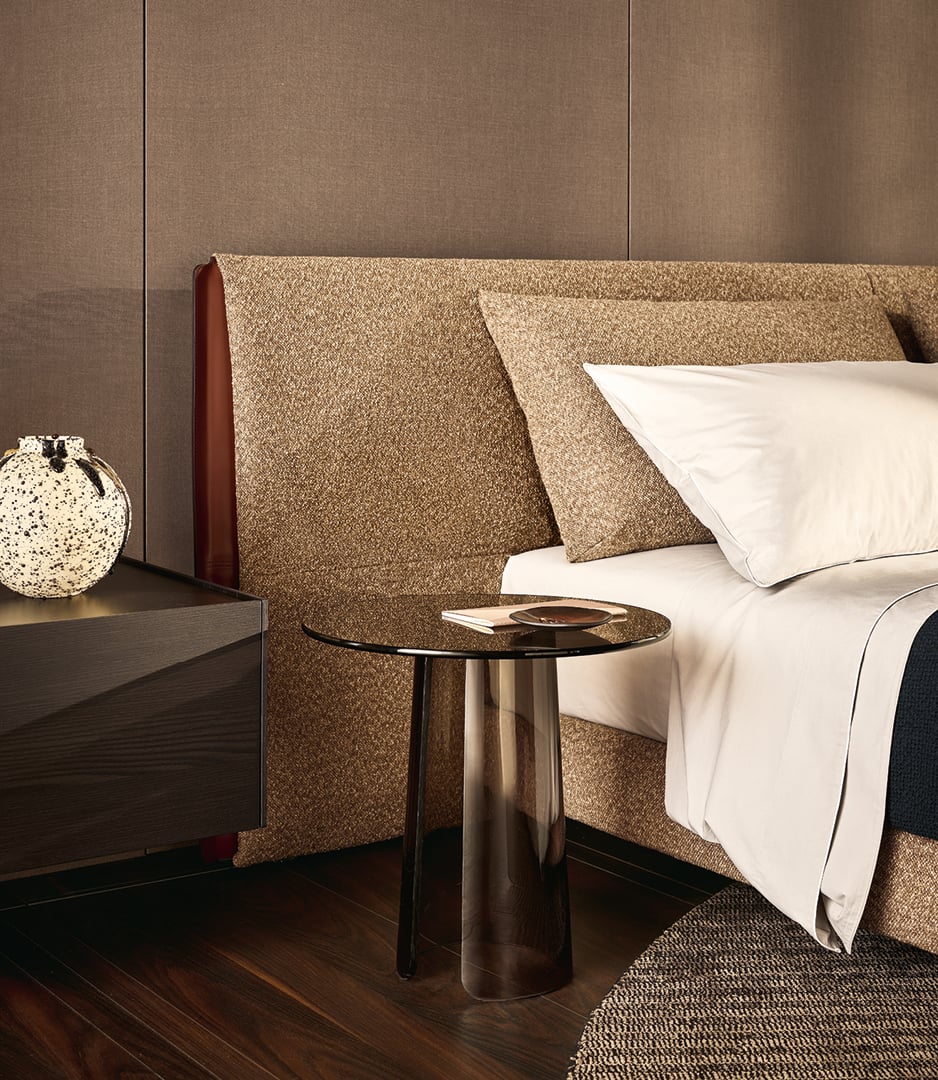
The master bedroom is designed as a cosy cocoon, where warm earth tones and rich textures transform the space into an intimate retreat, where every detail contributes to creating an atmosphere of calm and protection. The tactile quality of linen and bouclé coexists with the leather, glass and solid wood finishes of sophisticated accessories that transform the bedroom into an exclusive suite.
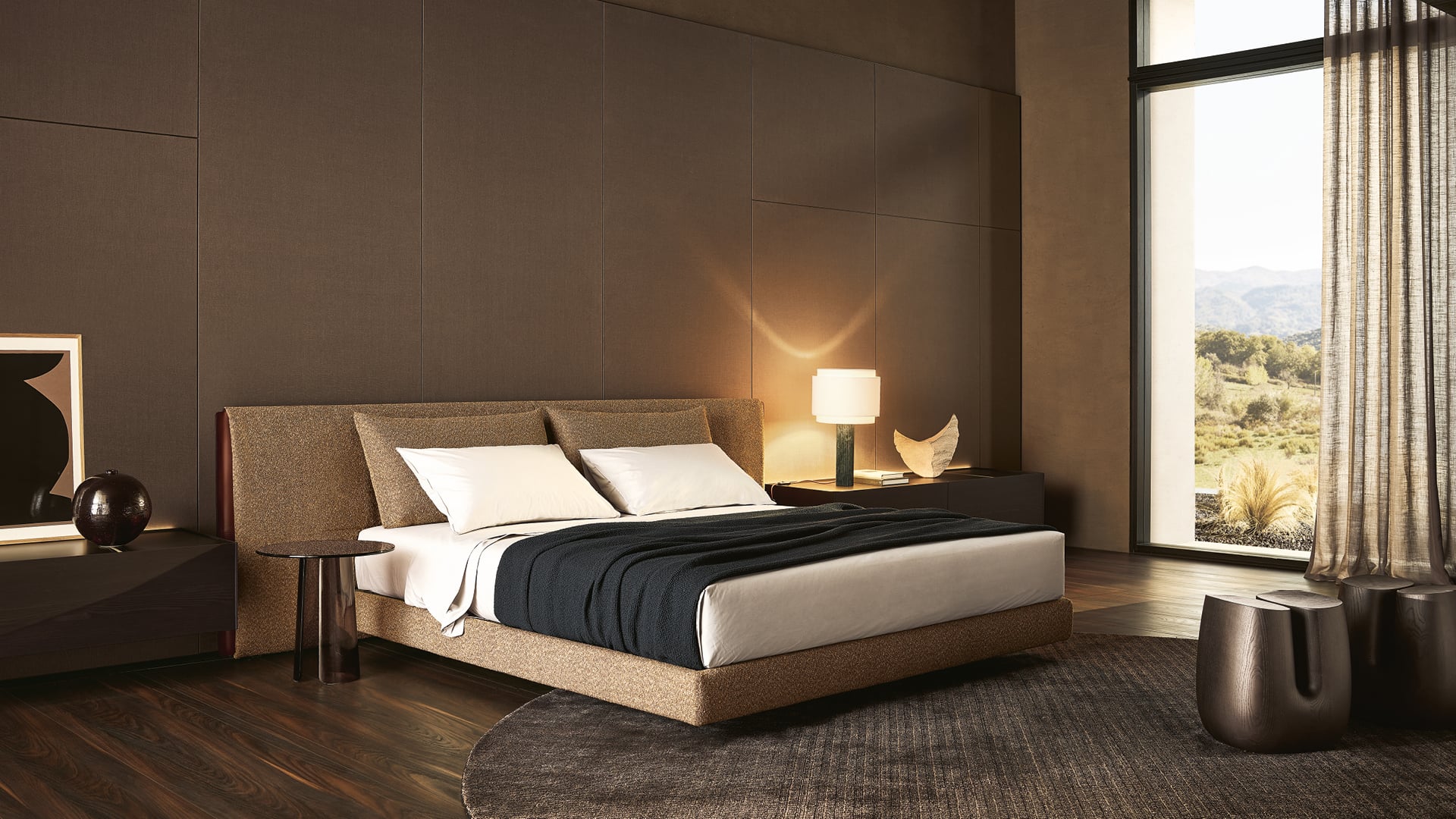
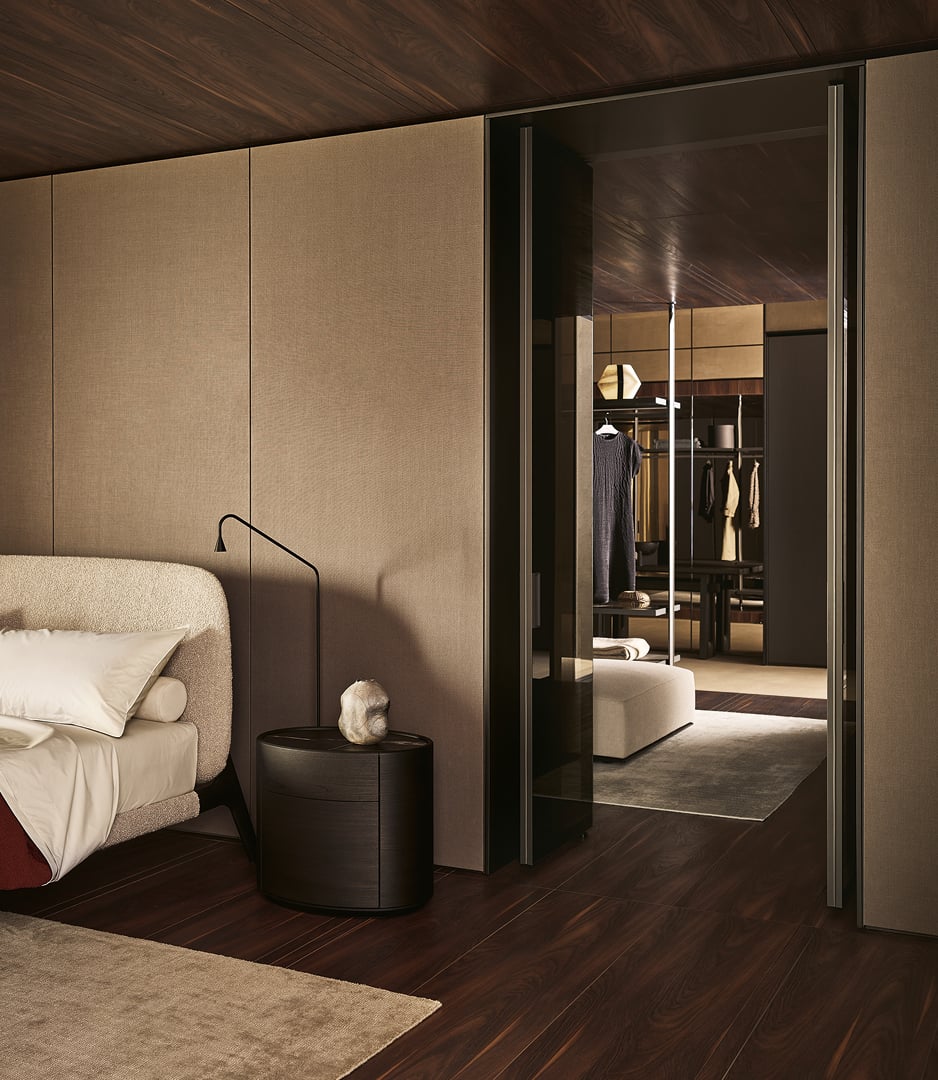
Wood panelling and linen-covered doors grace the walls, while the Brera bed highlights the textural qualities of the fabric, combined with the voluptuous opulence of couture details, such as leather inserts inspired by the world of fashion.
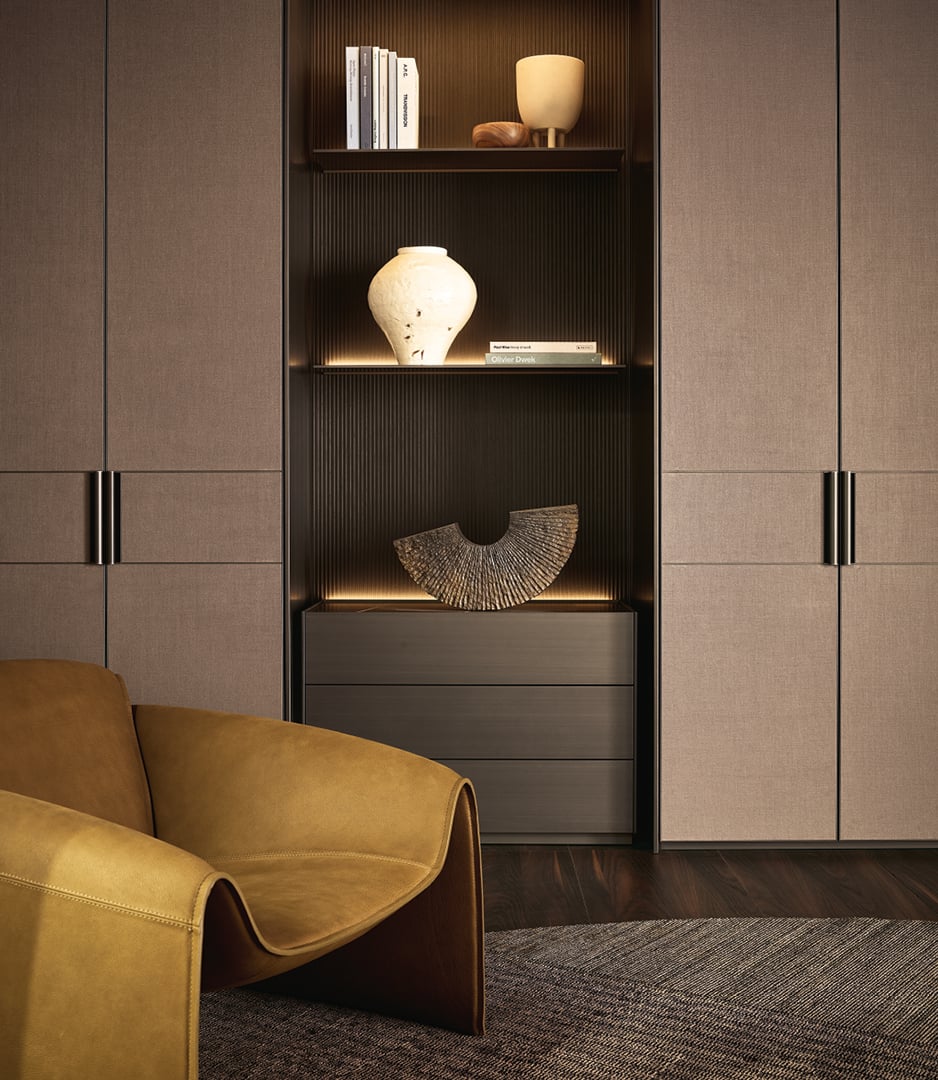
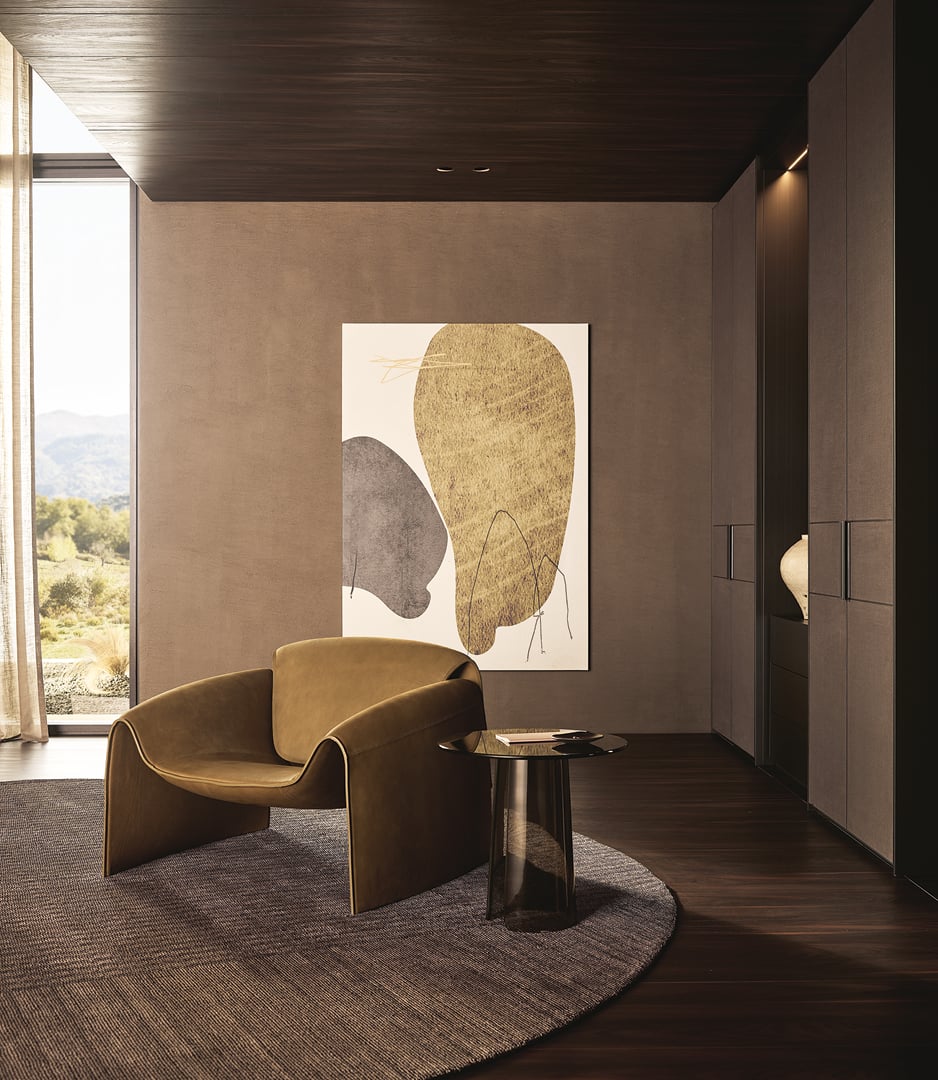
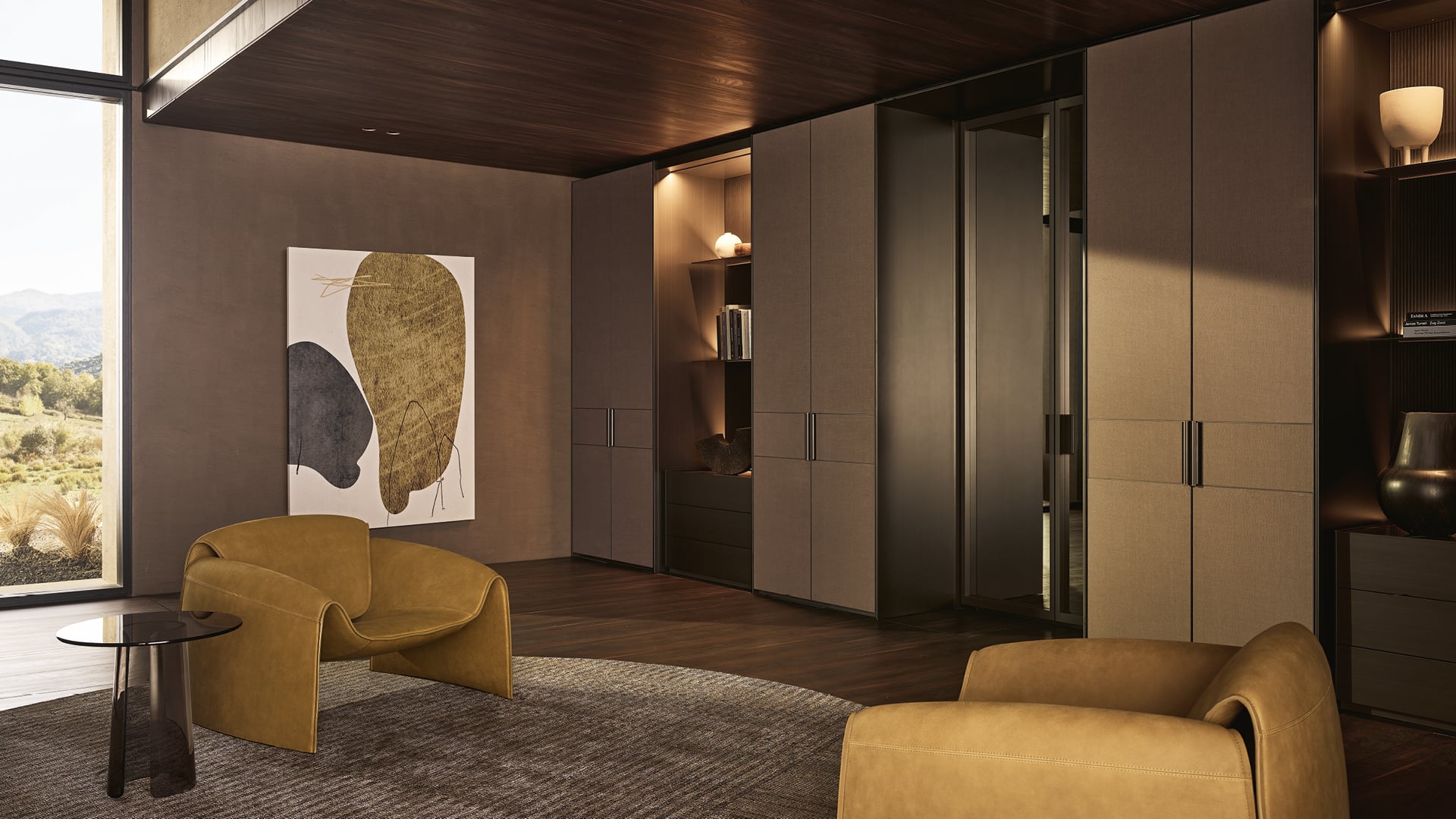
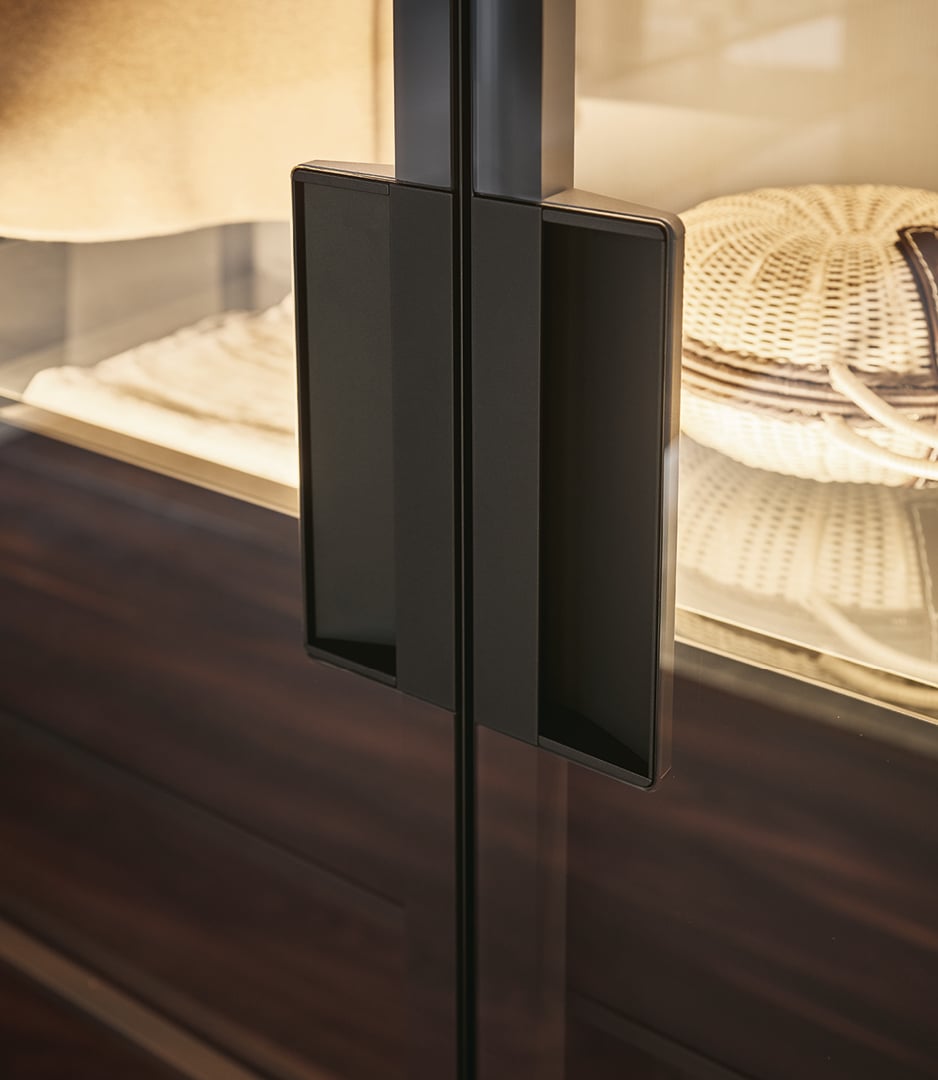
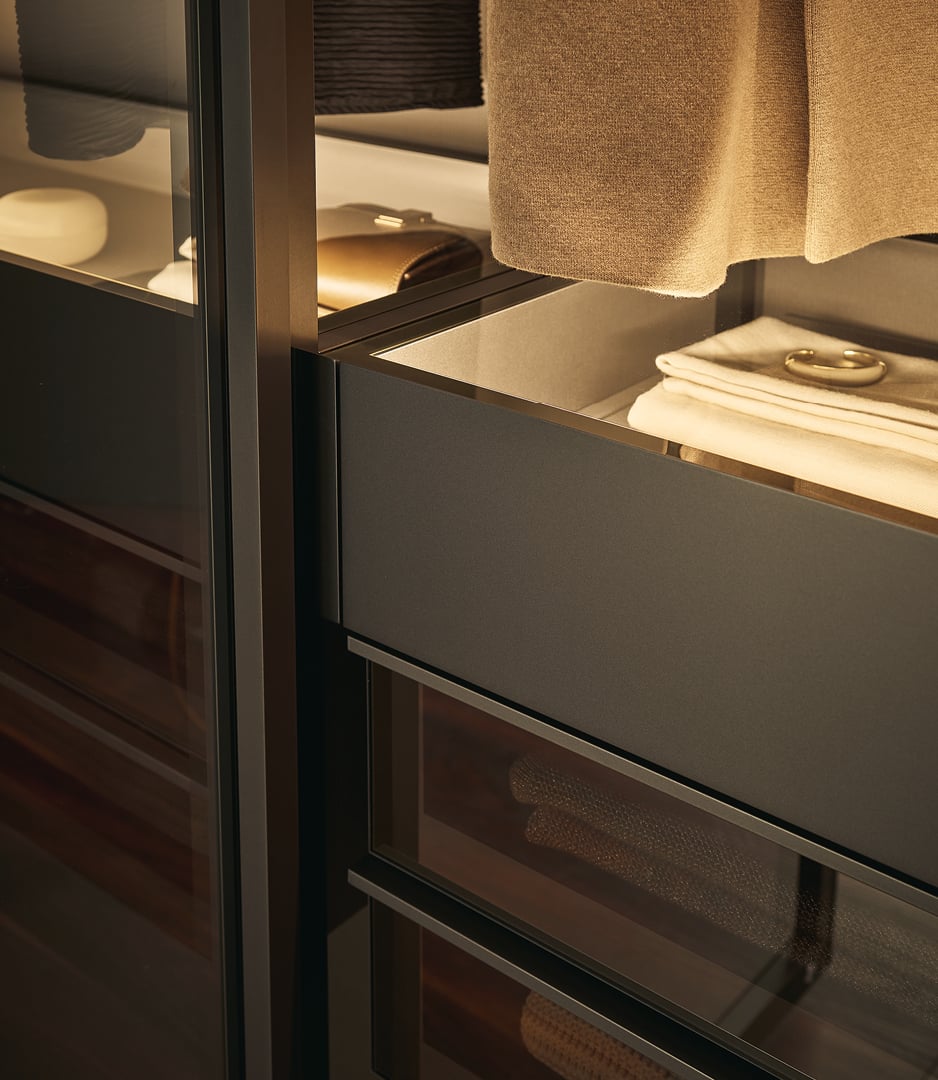
The wardrobe area is designed as a separate space, no longer just a storage area but a room dedicated to organising and enjoying personal belongings. Here, functionality intertwines with aesthetics, turning everyday life into an act of self-care.
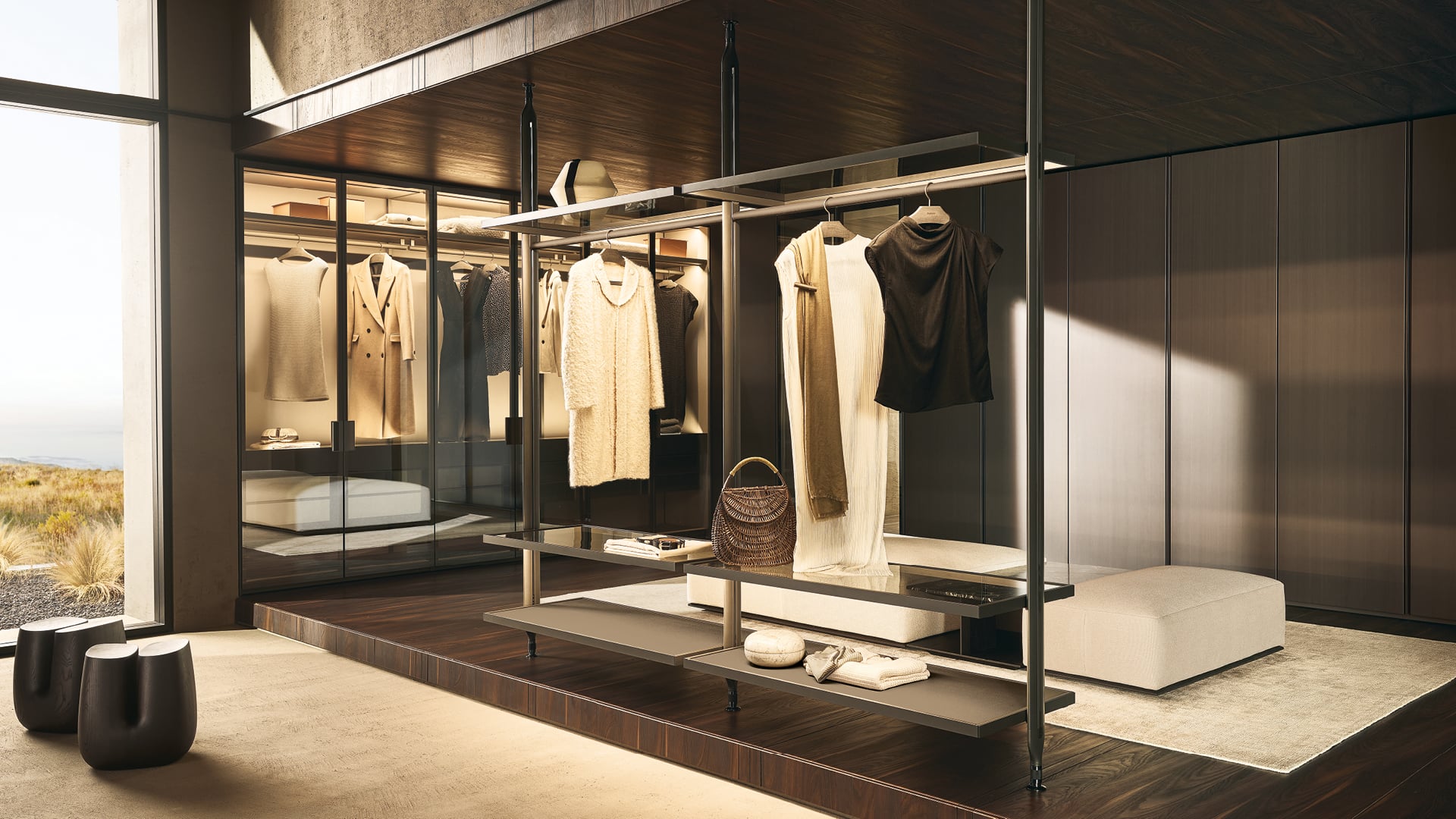
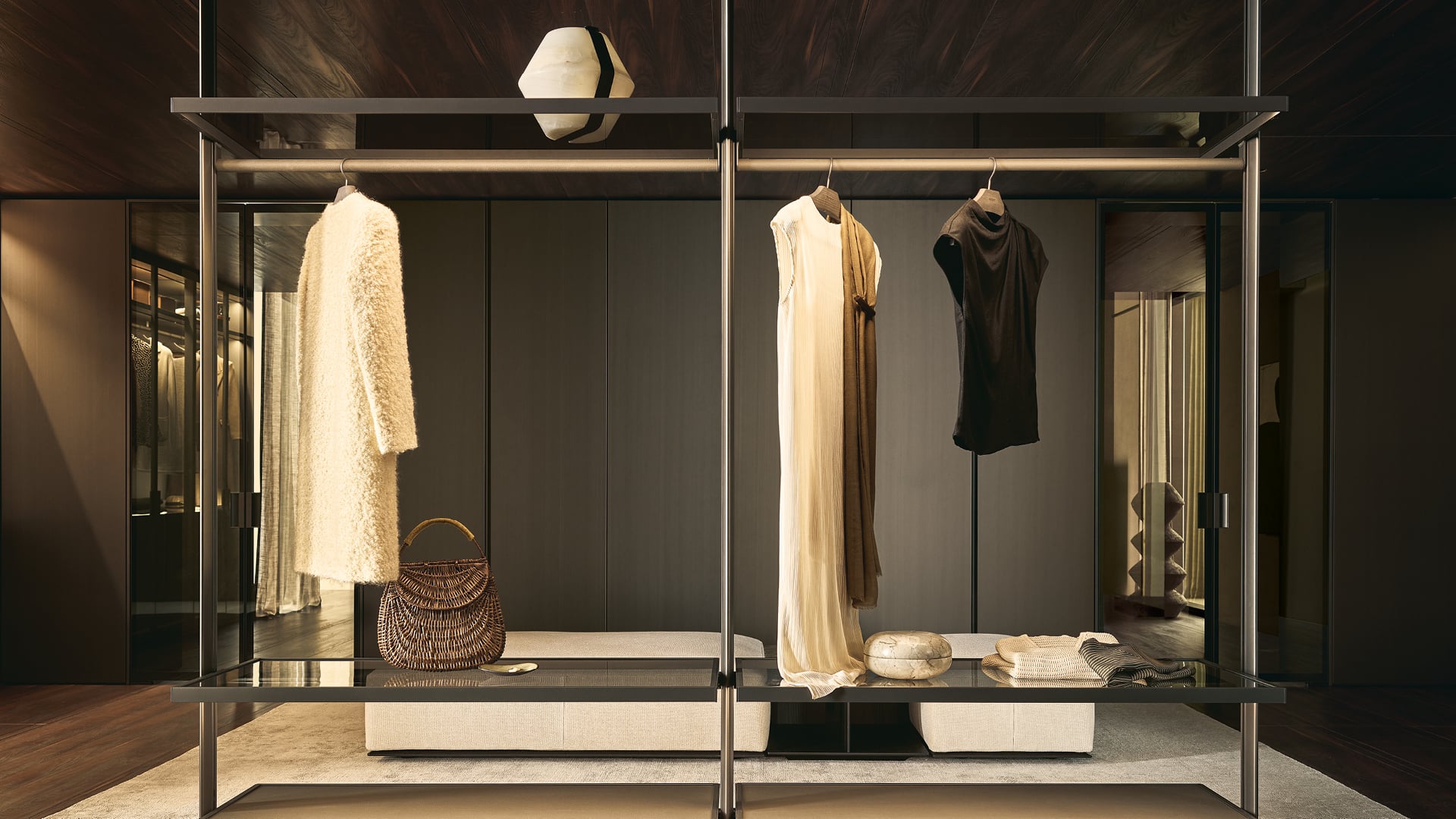
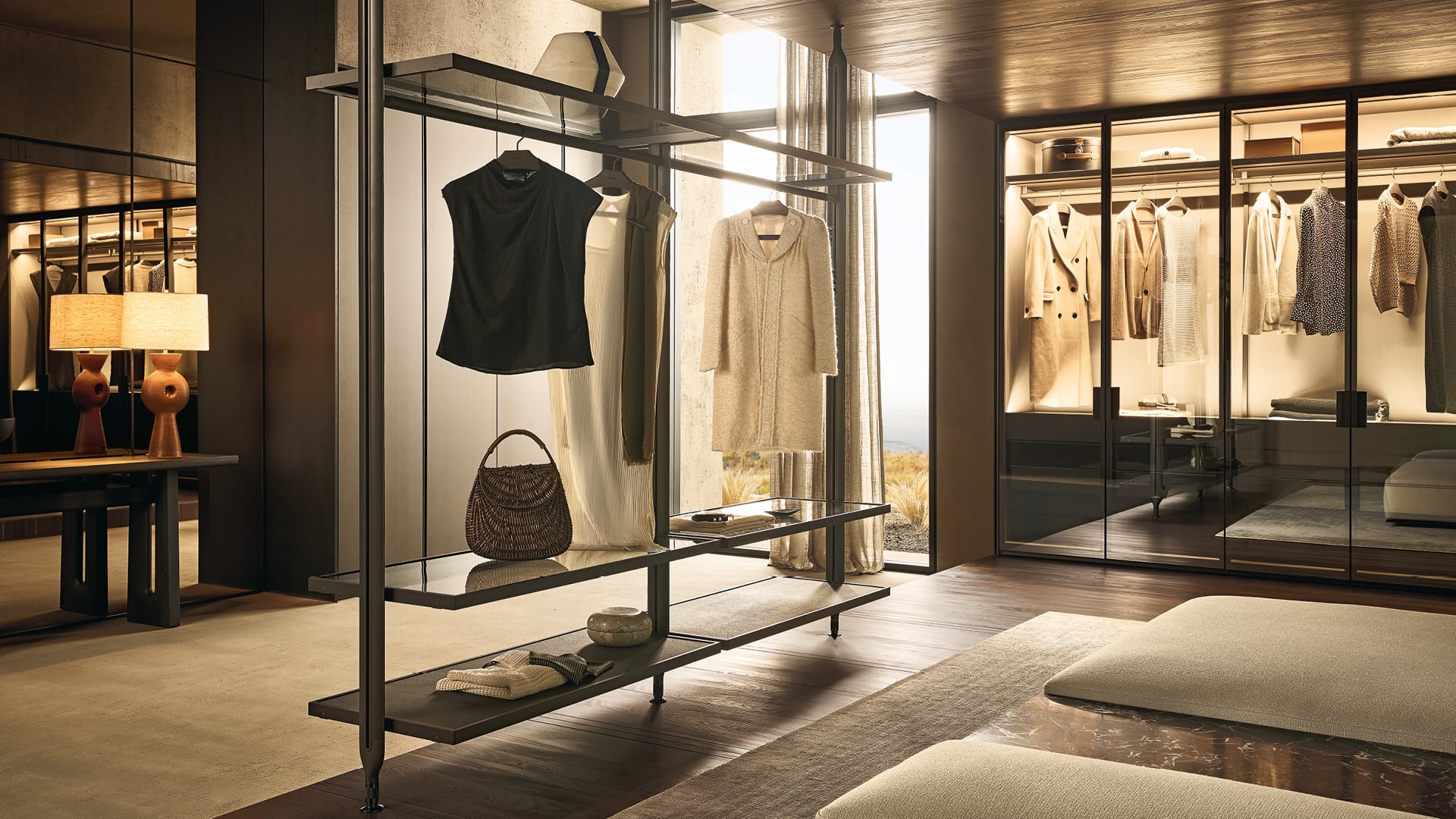
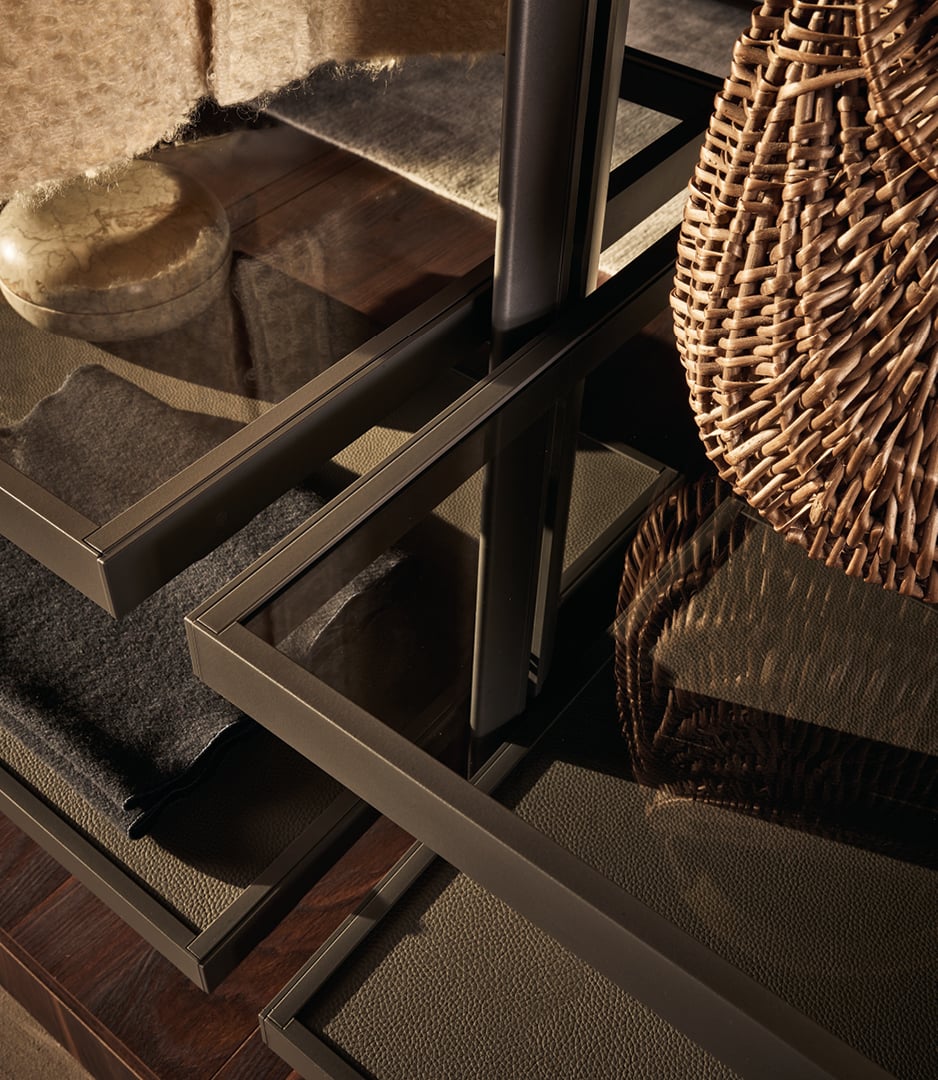
The wardrobes with glass doors coexist with the bed frame system in the ceiling configuration, creating an elegant and light architectural rhythm. Clothing and accessories remain on display, showcased as if in a private gallery, contributing to a narrative of taste that reflects the personality of those who live in the home.
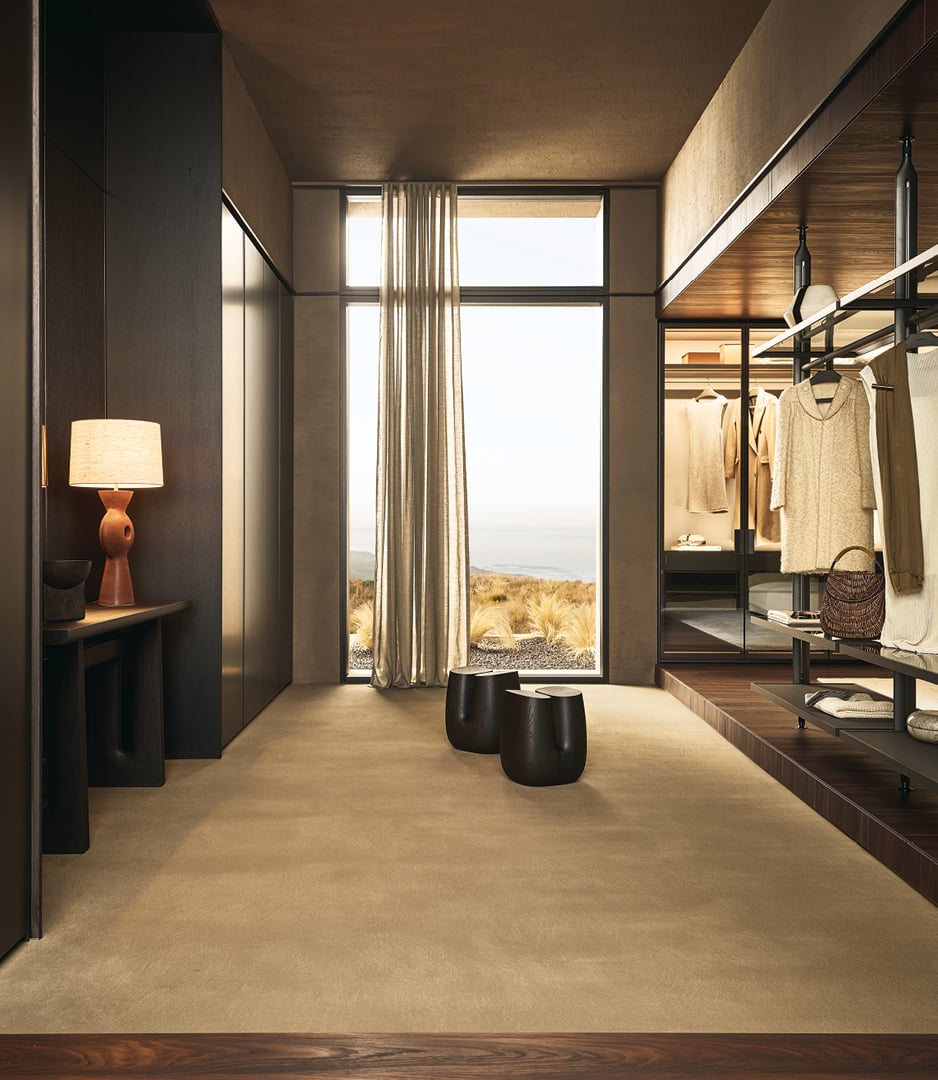
The bedroom has been designed with the same attention to detail and stylistic harmony that characterises the entire home. Nothing is left to chance: from the light linen panelling to the soft, curved shapes of the furnishings and decorative objects, everything works together to maintain continuity with the other rooms – resulting in a recognisable style that creates a fluid transition from one room to another.
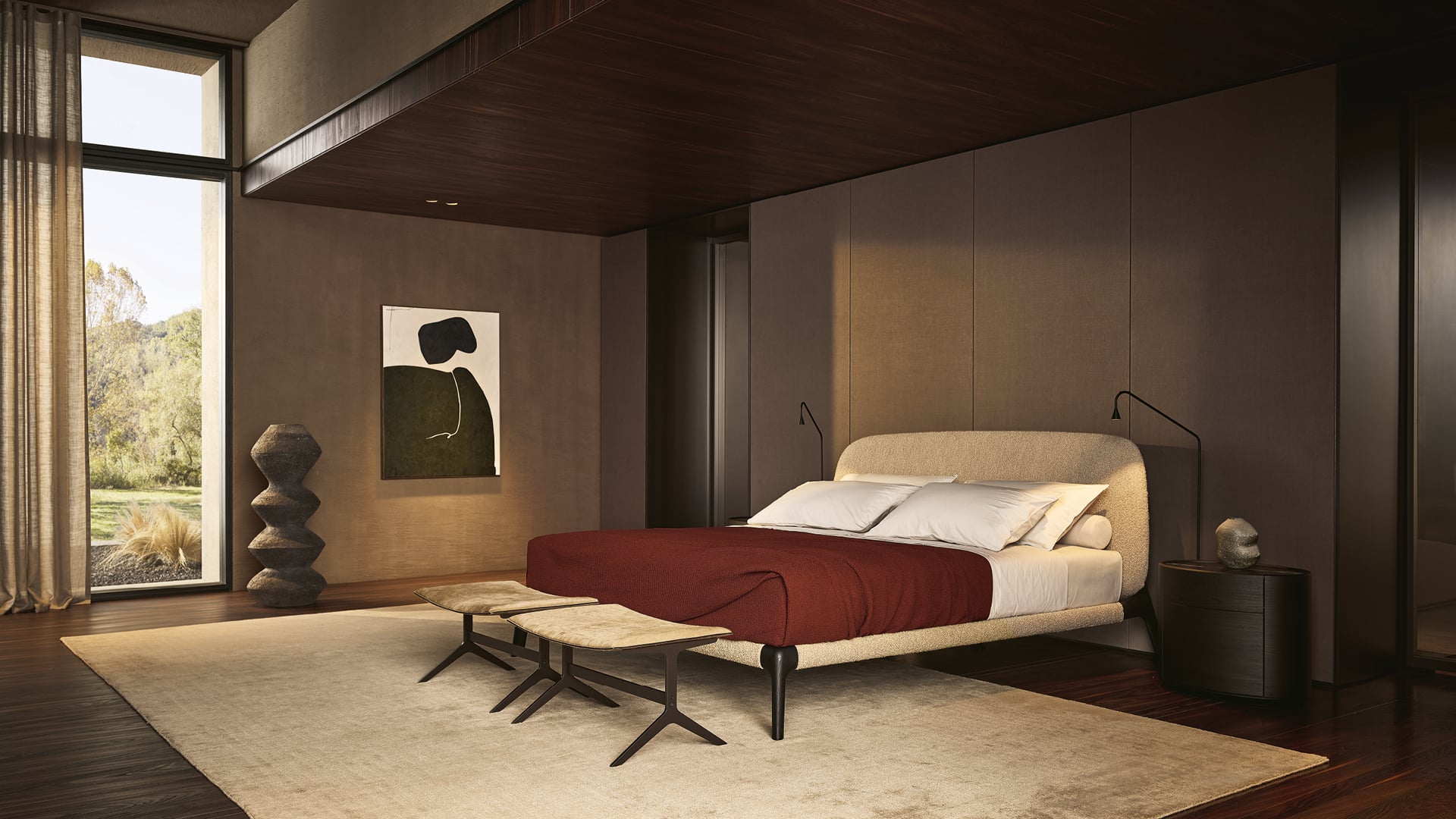
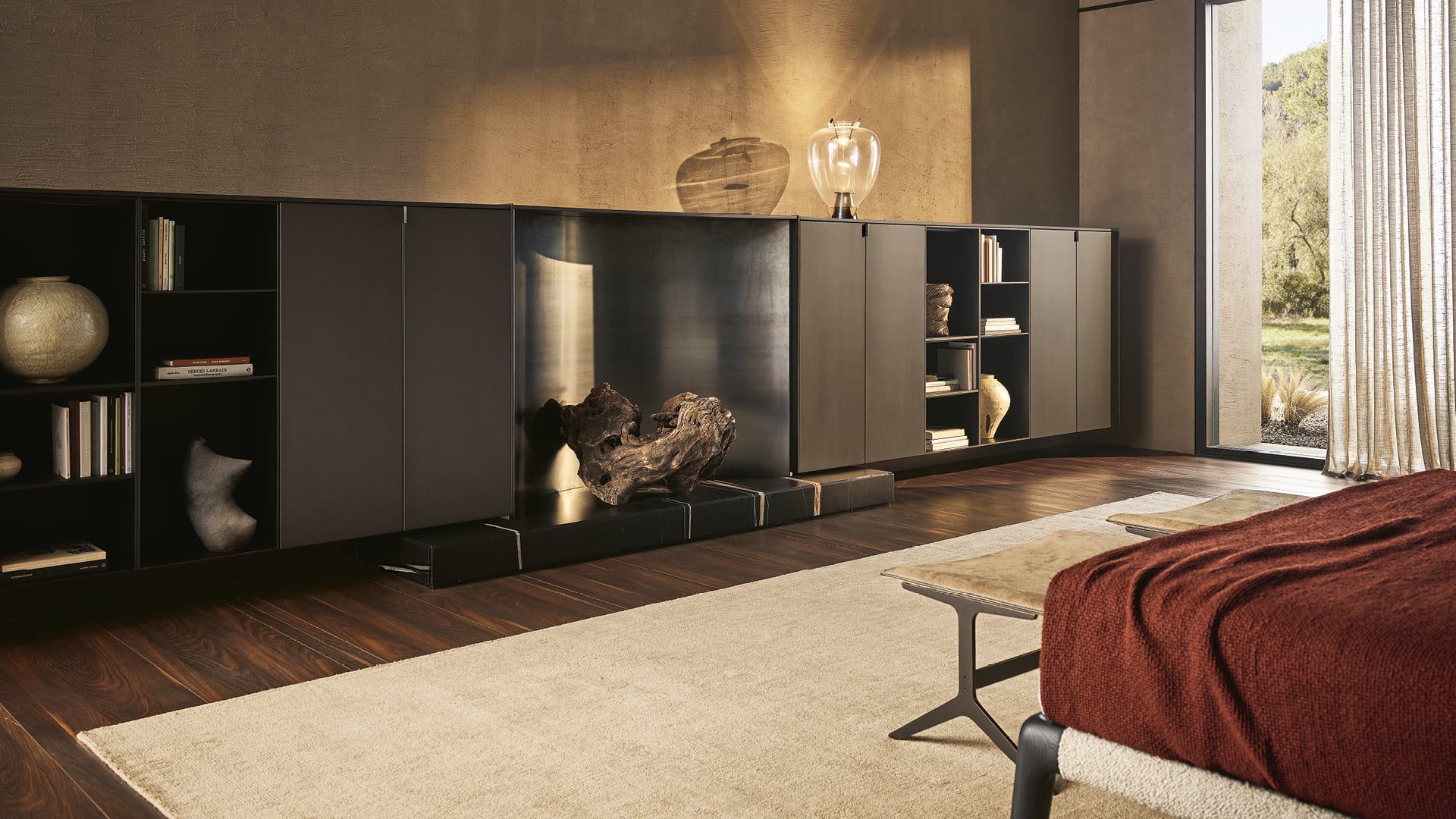
The contemporary bedroom is no longer used solely for rest; it is a versatile space. Generously sized bookcases and sideboards add richness to the room, providing surfaces to display books, objects or personal mementos. The separate, luxurious walk-in wardrobe adds further comfort.