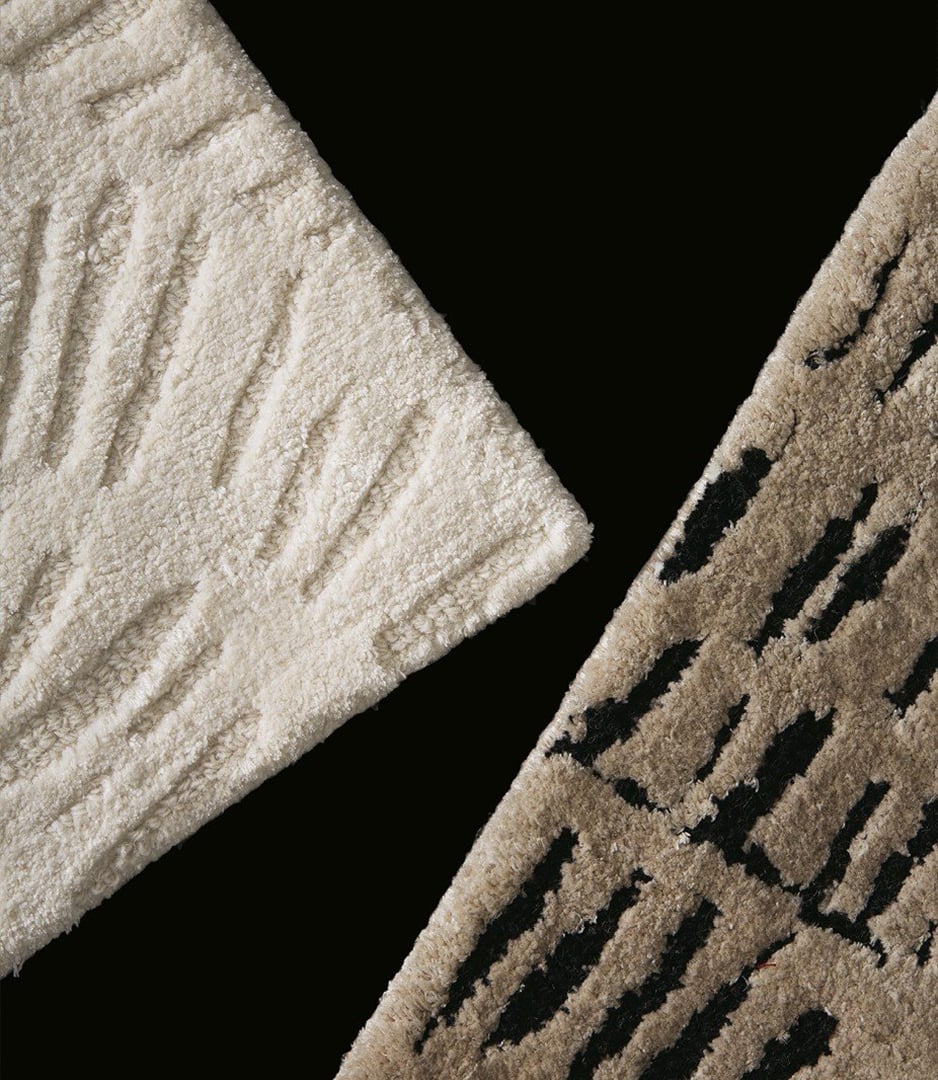
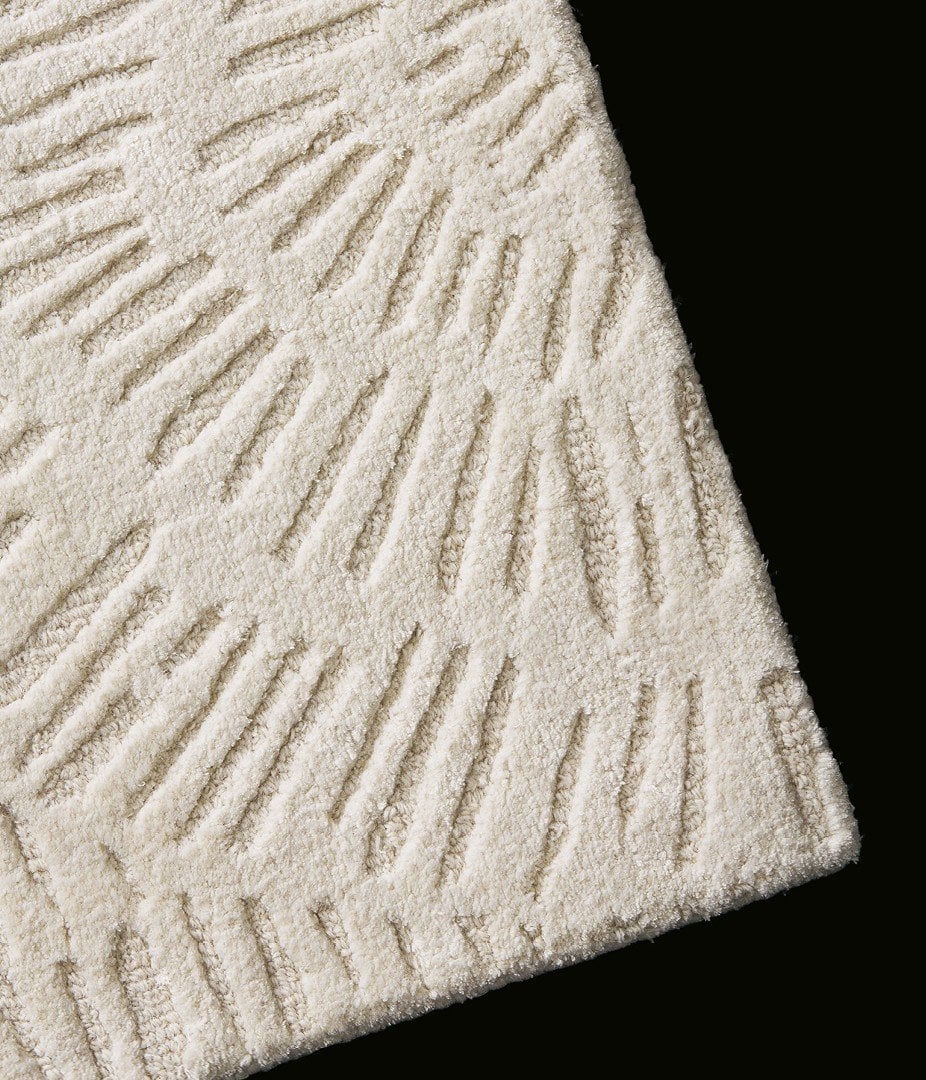
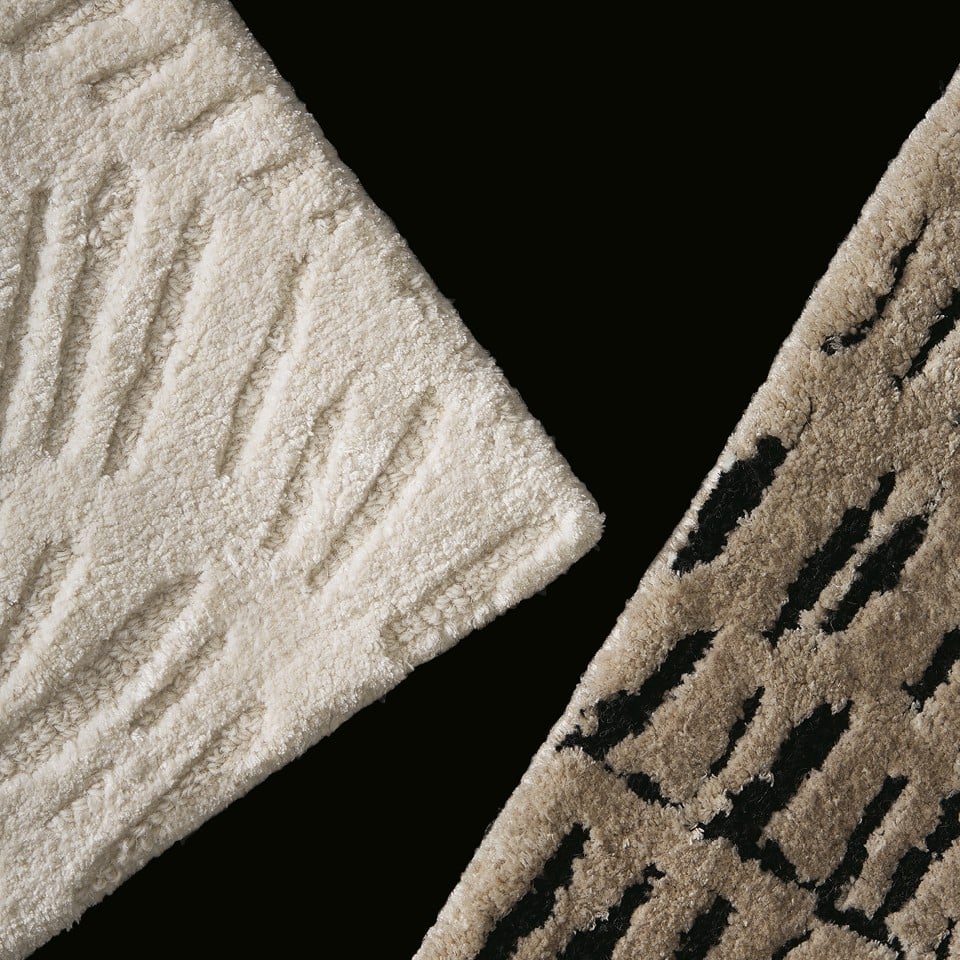
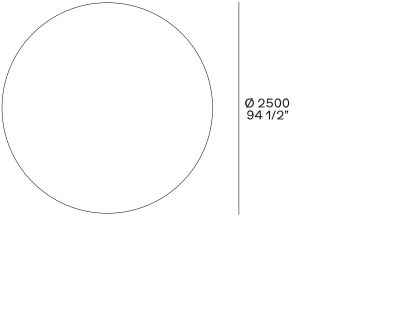
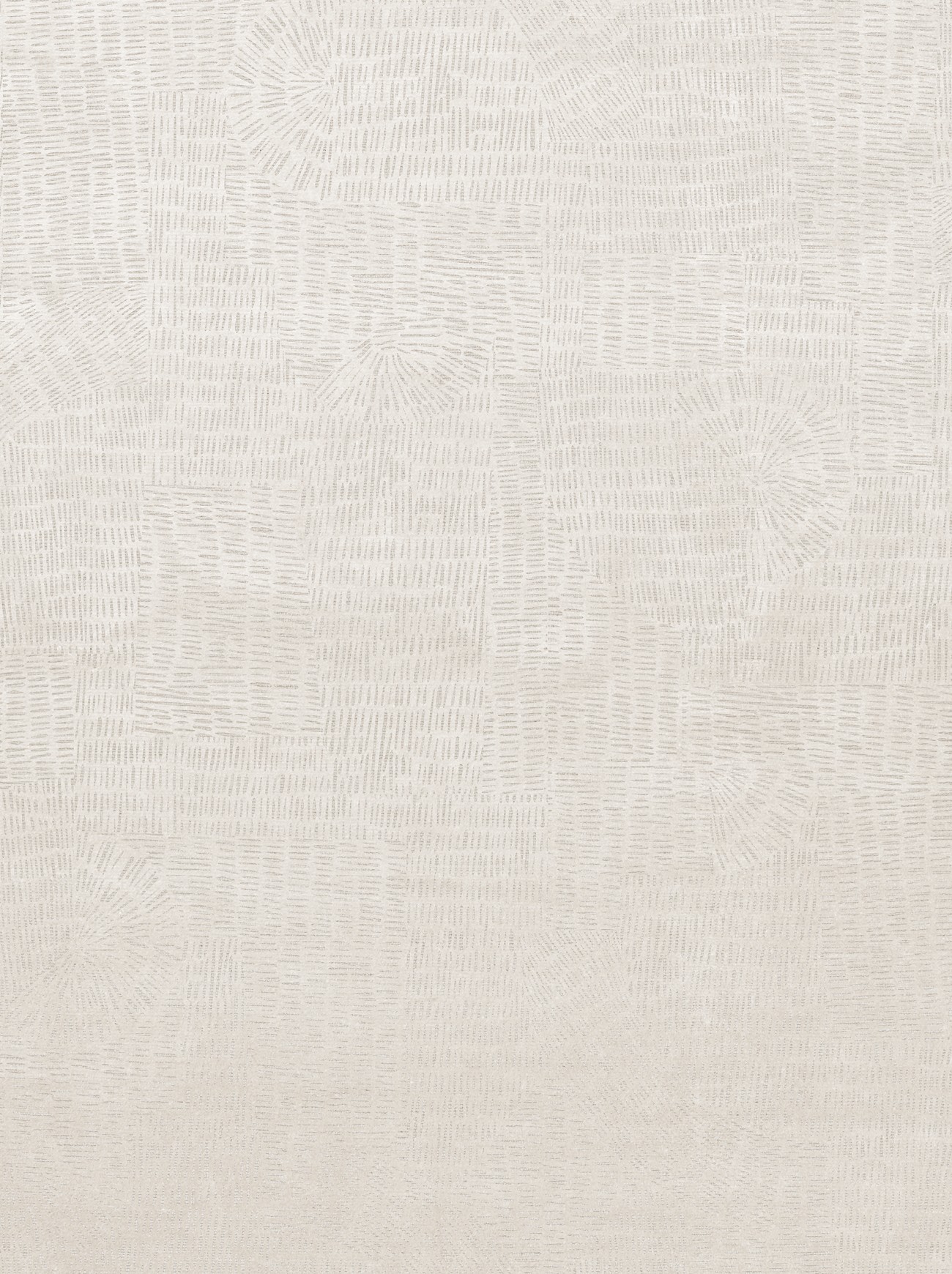
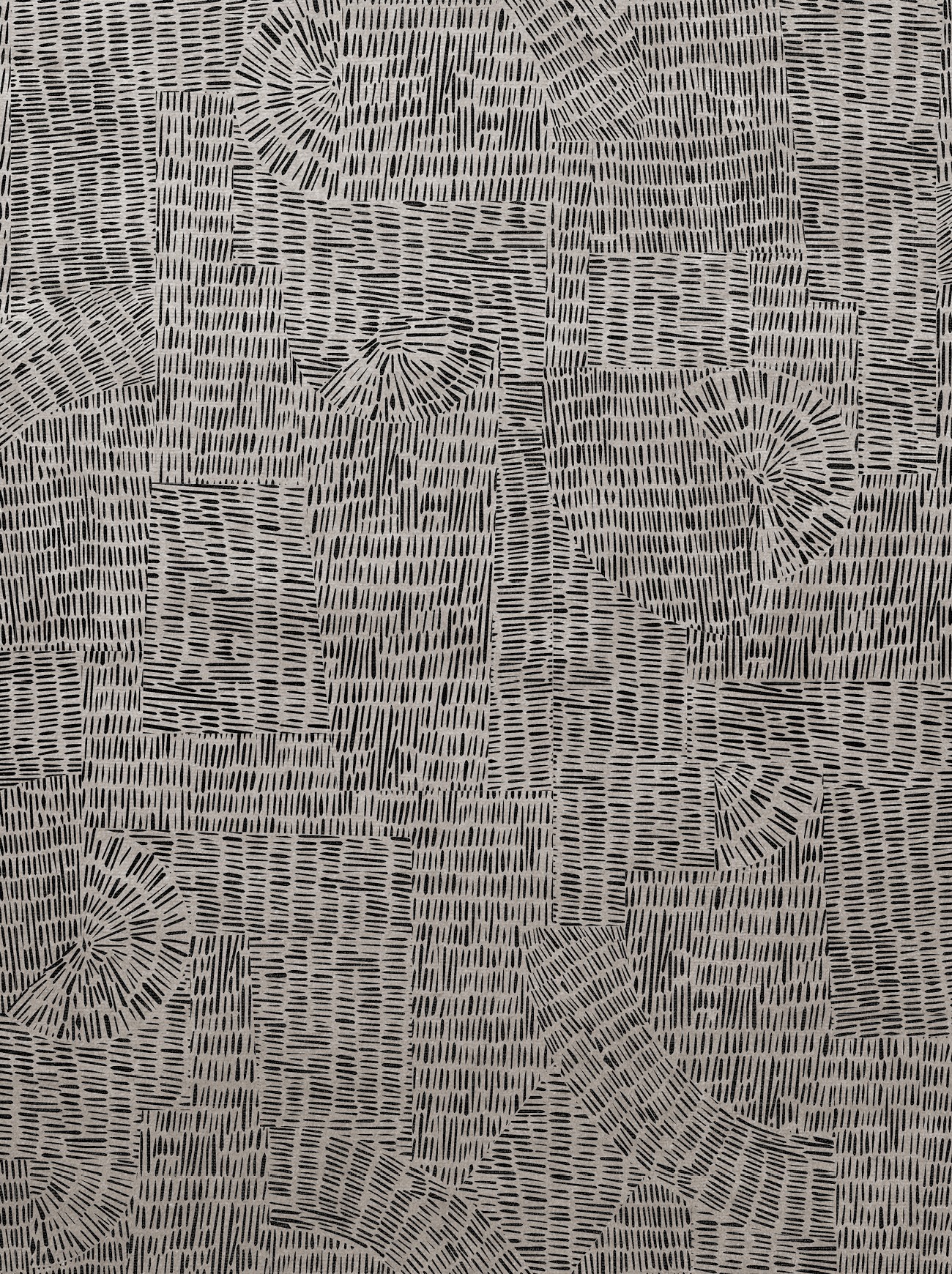
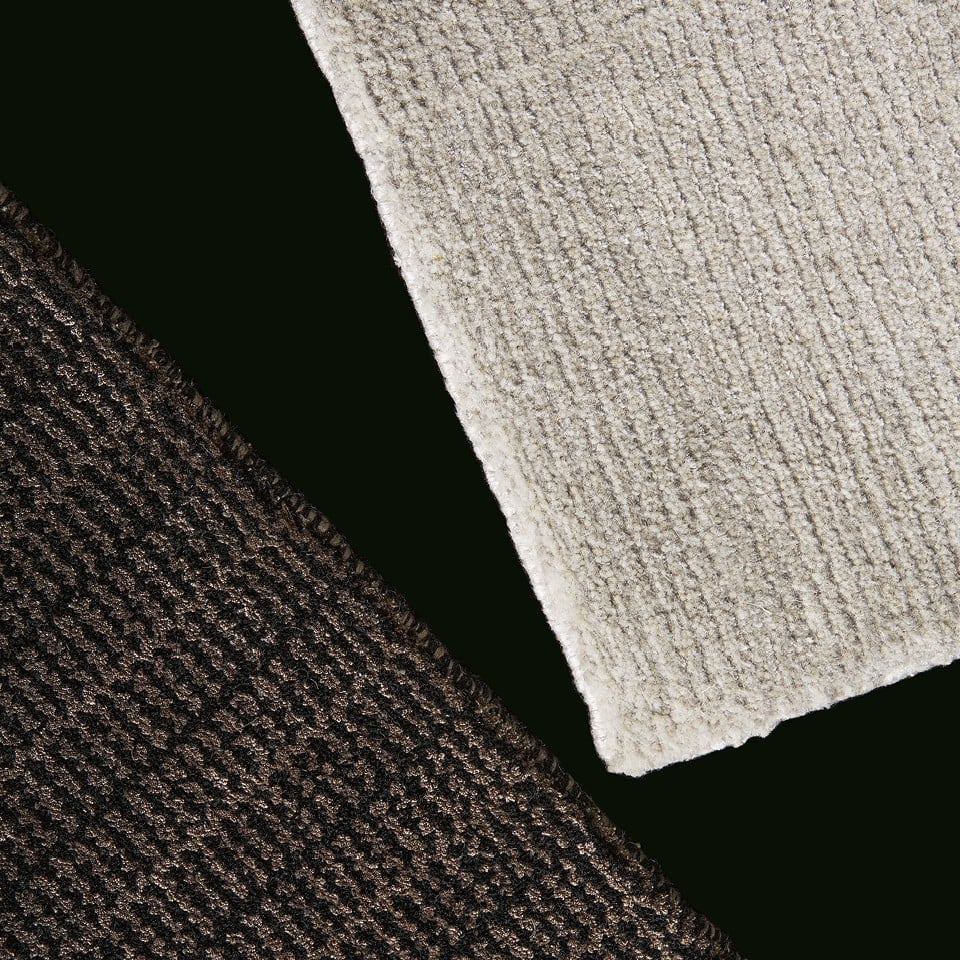
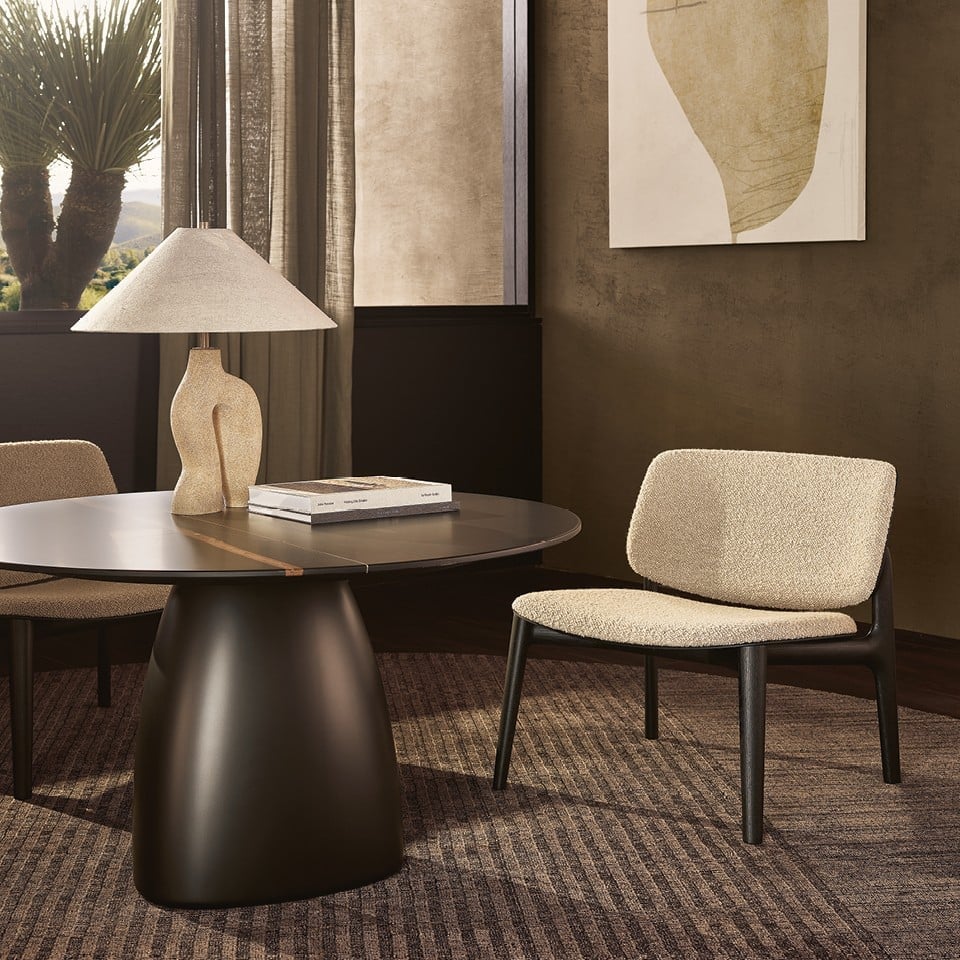
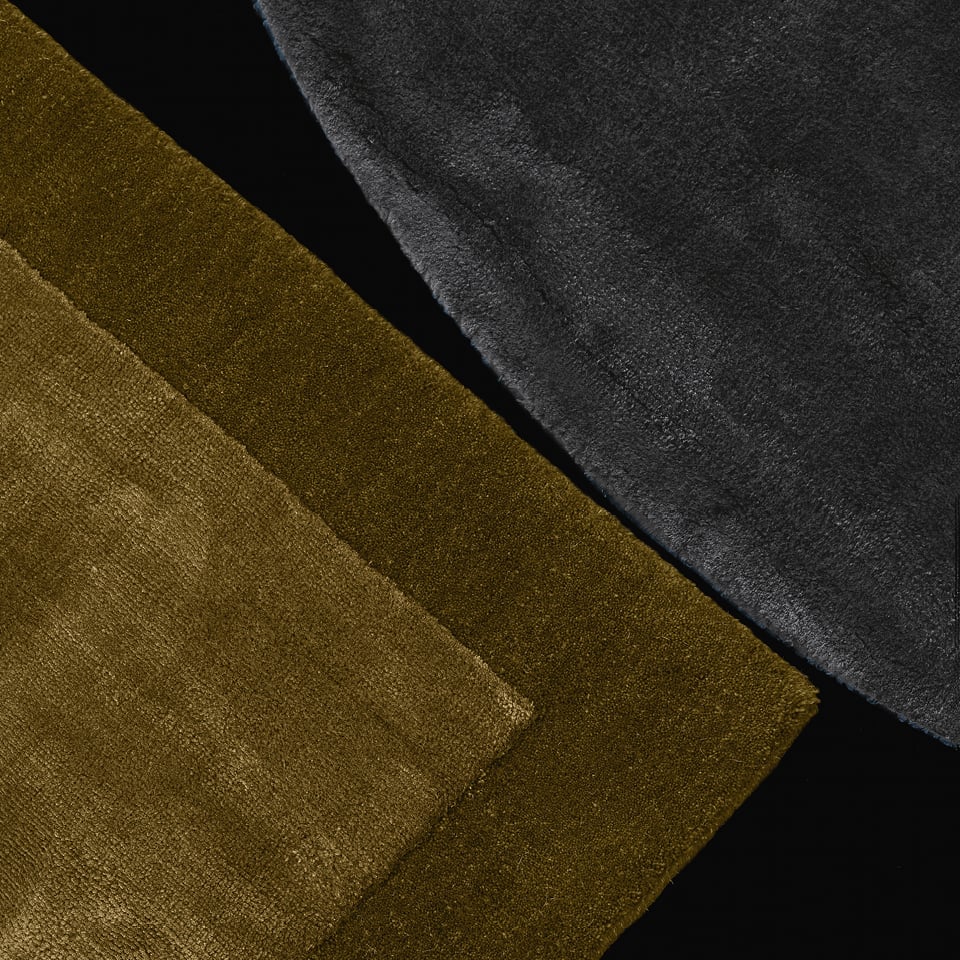
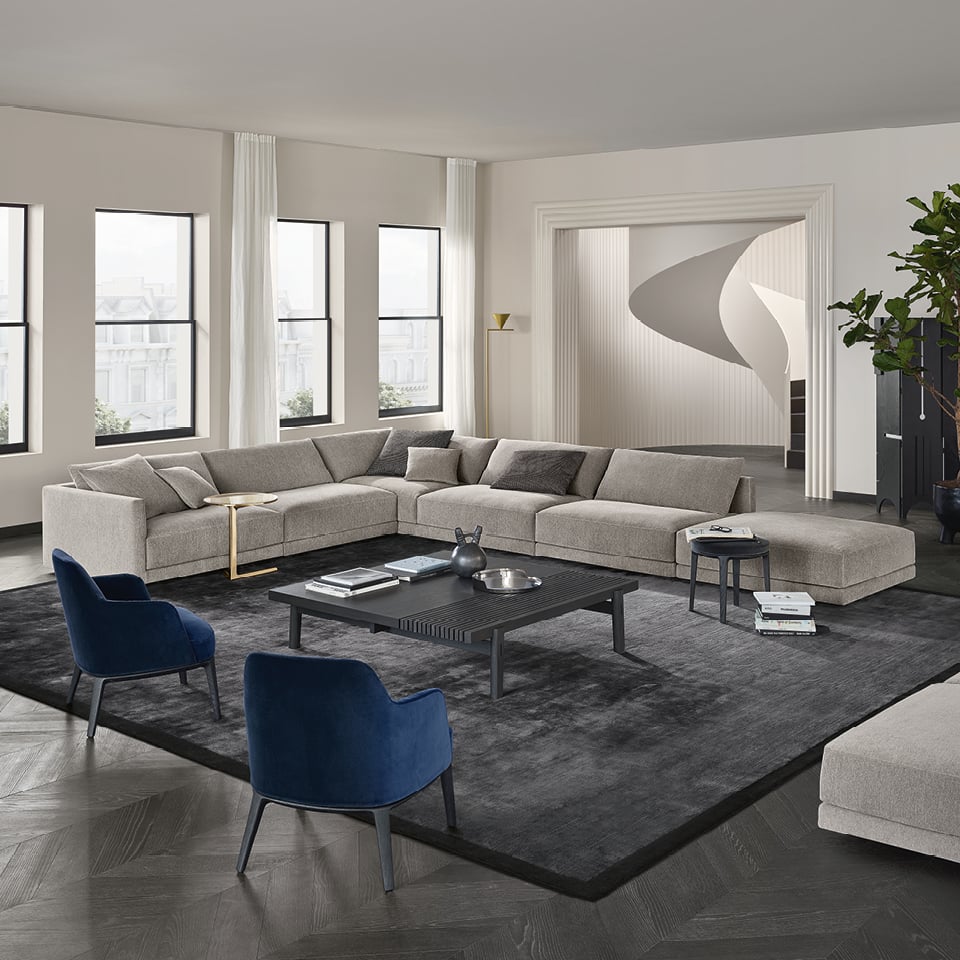
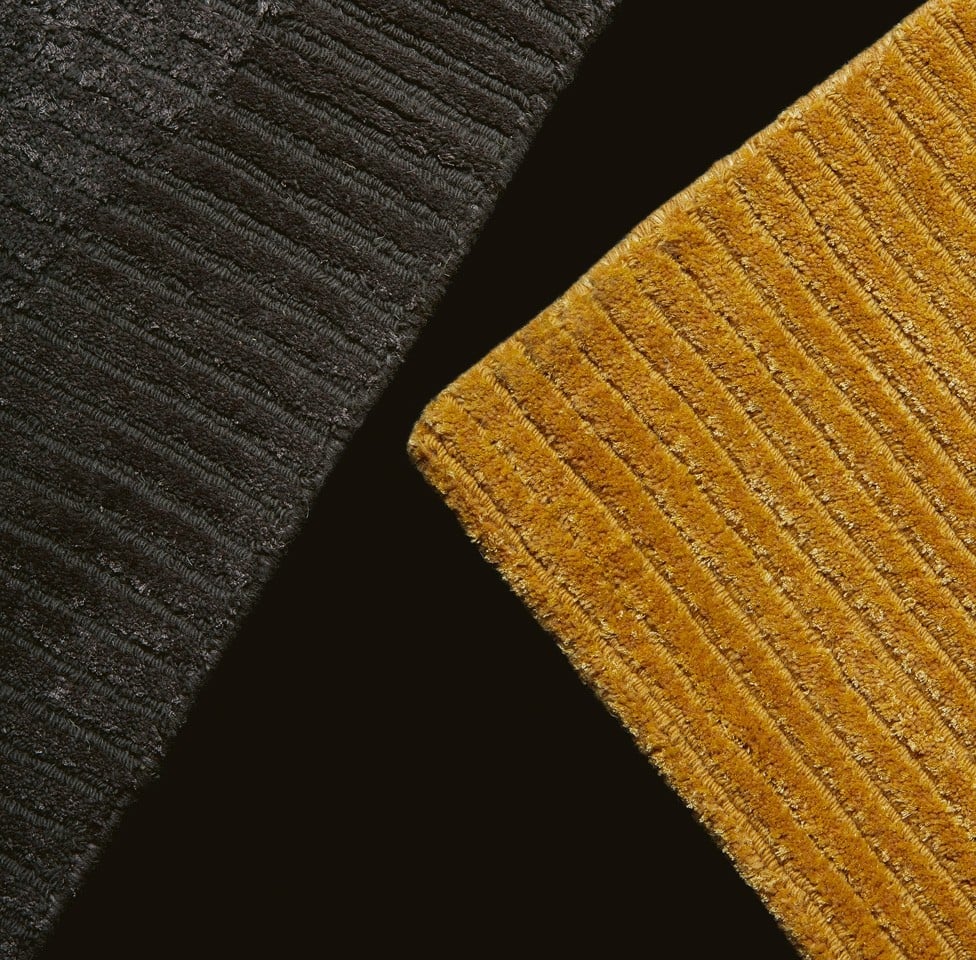
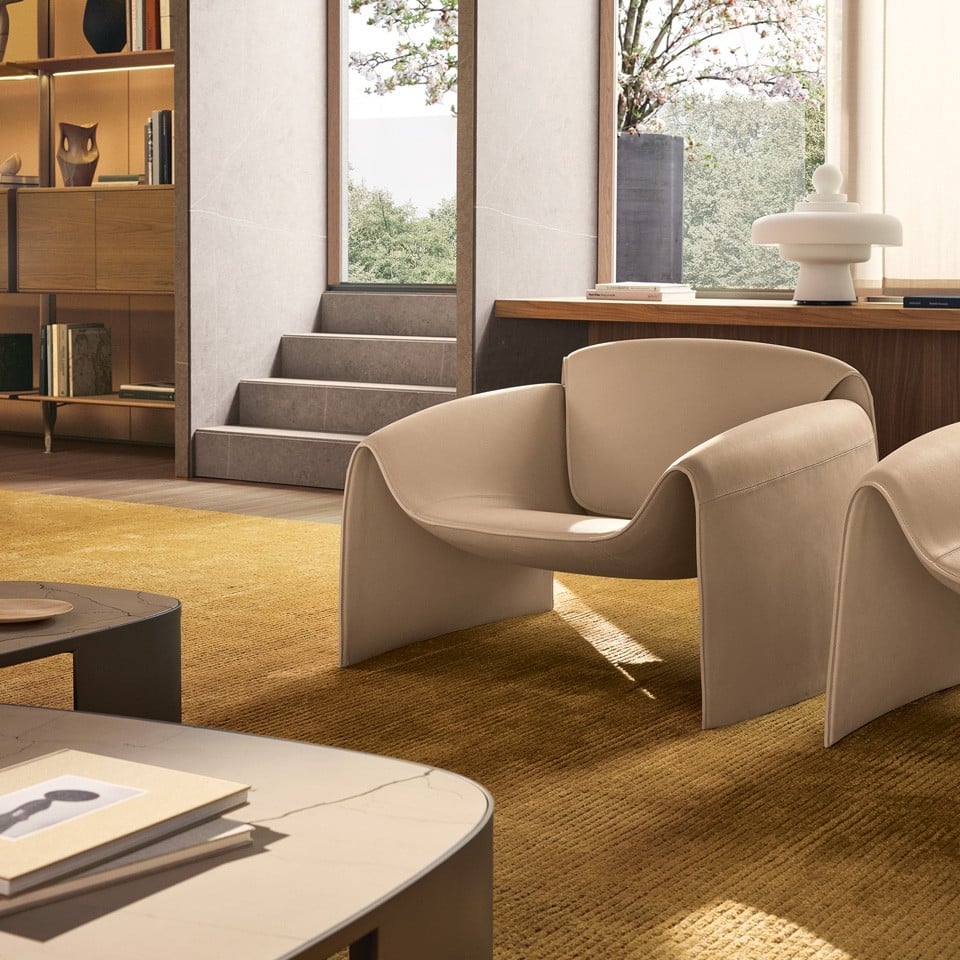
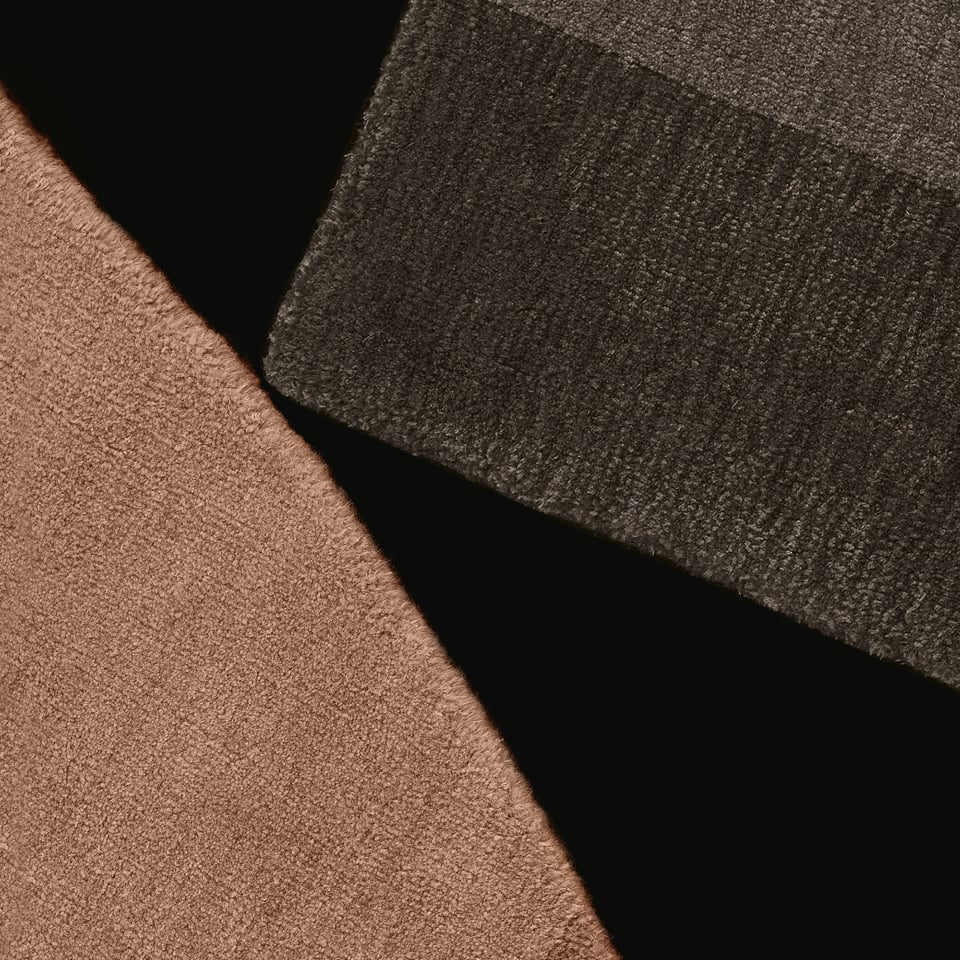
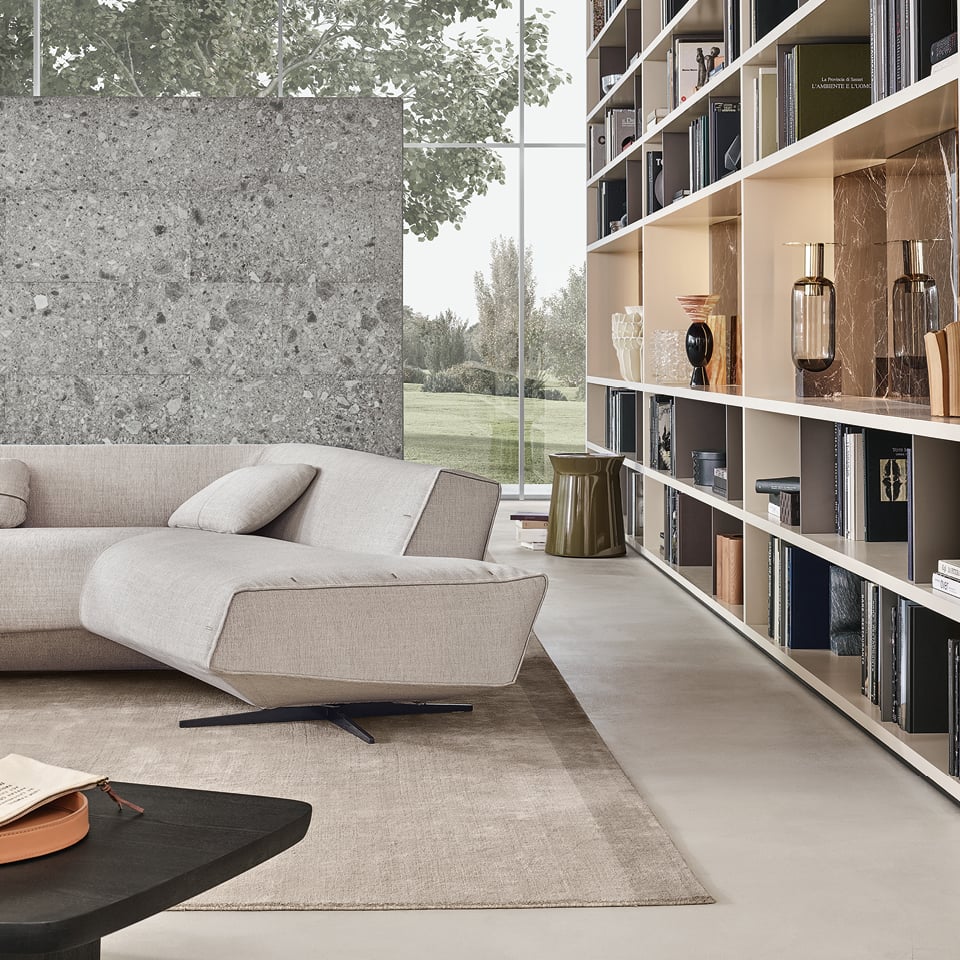
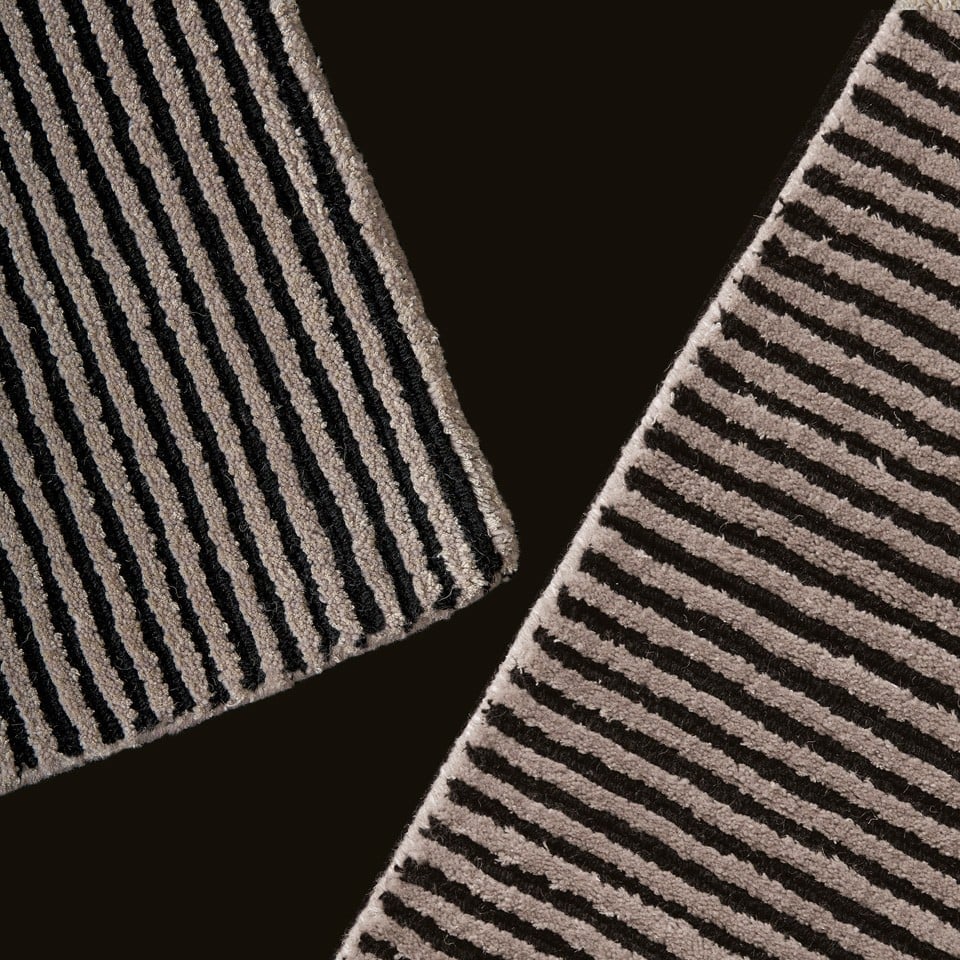
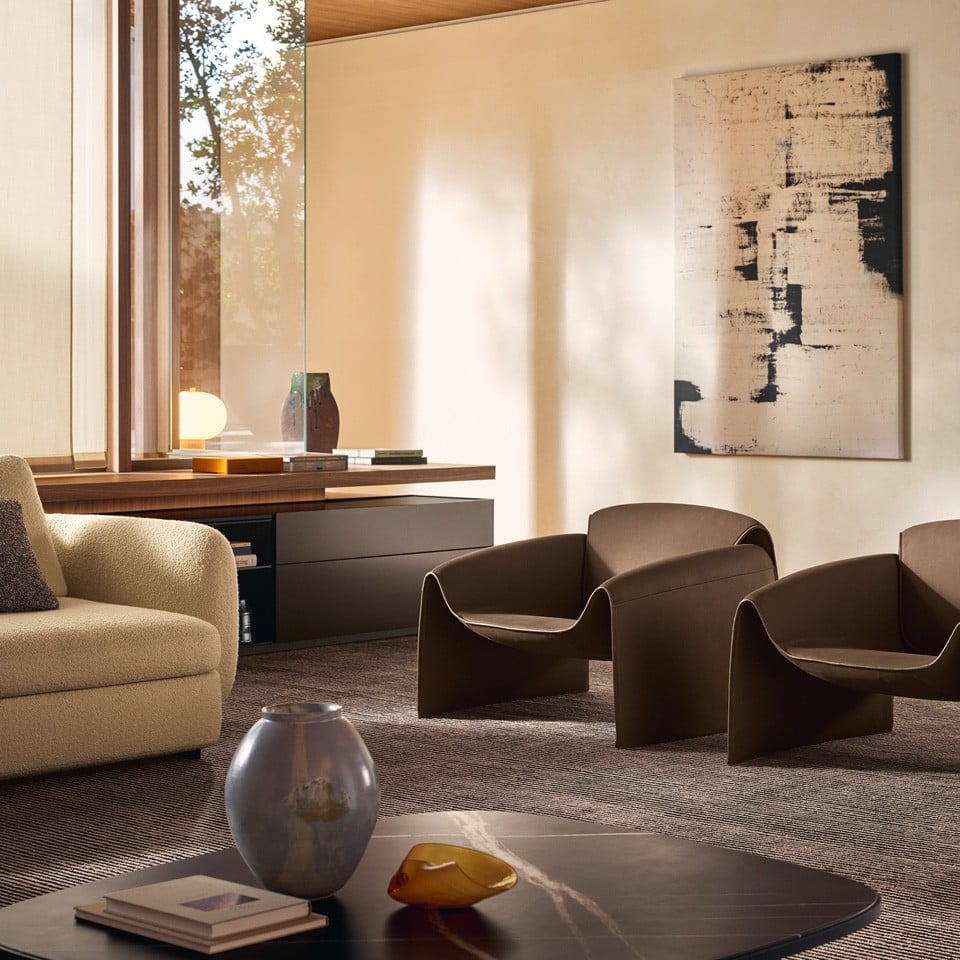
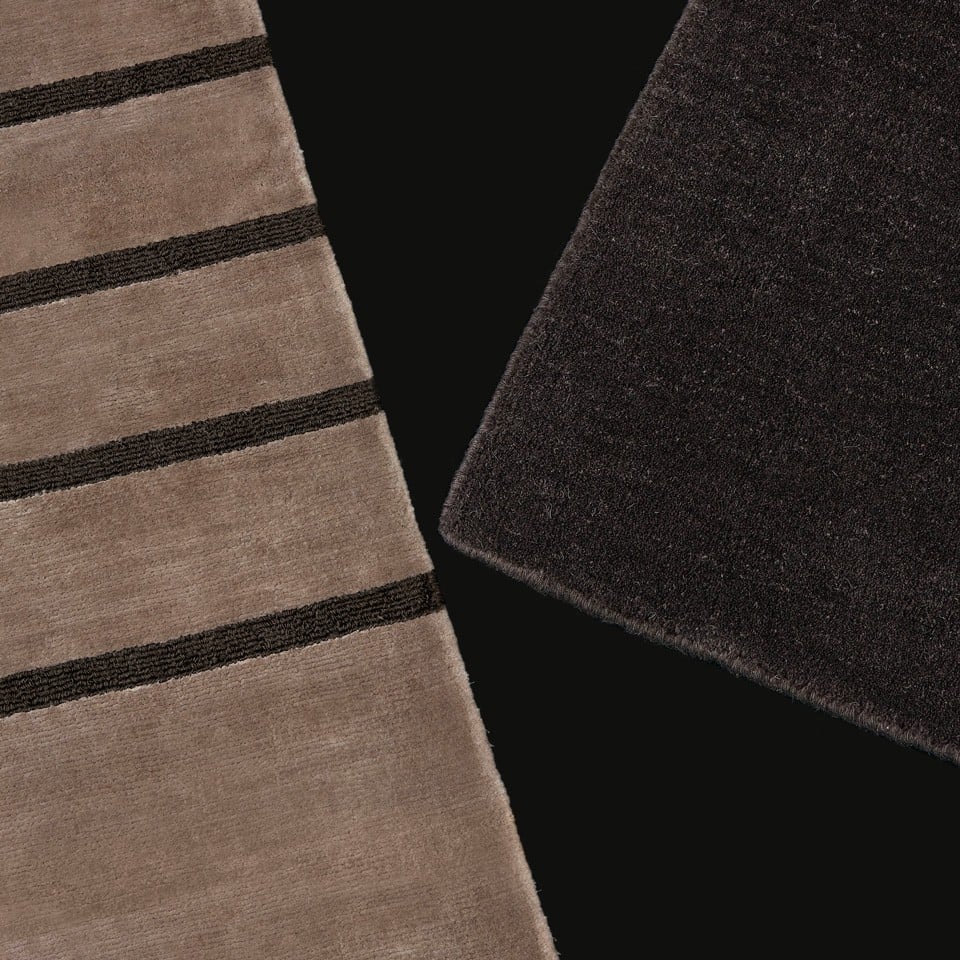
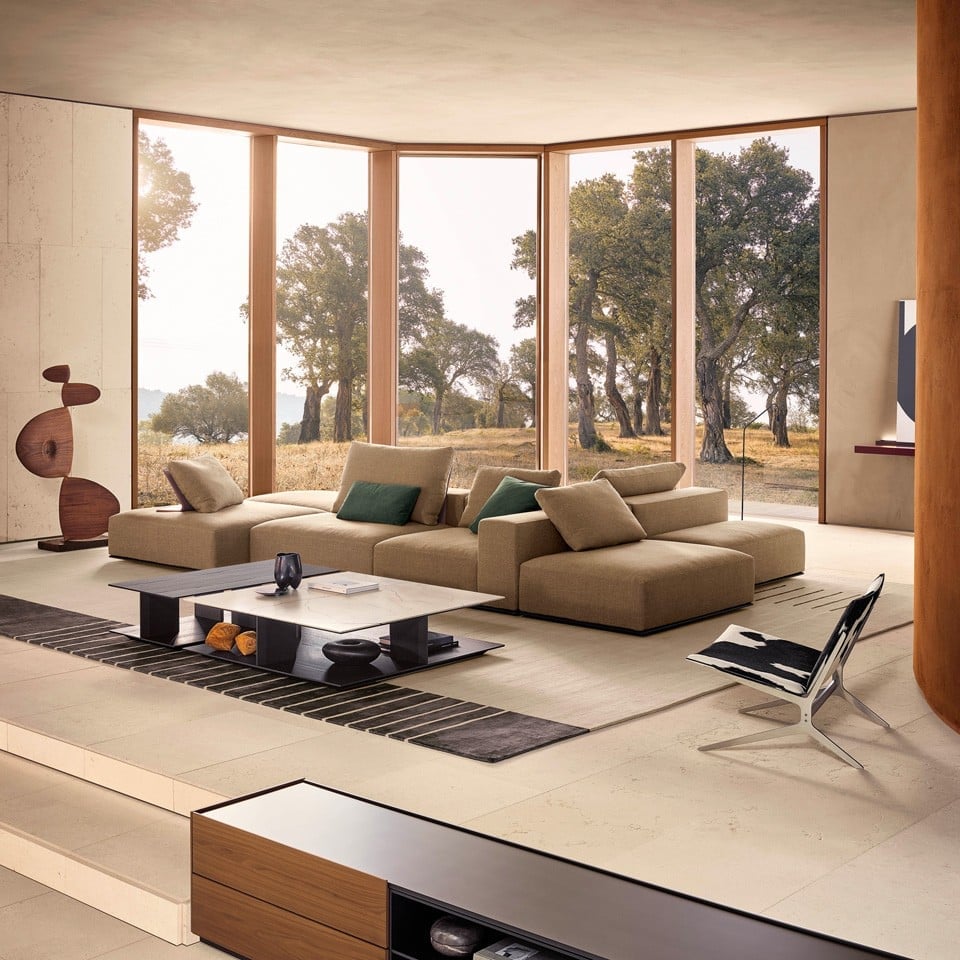
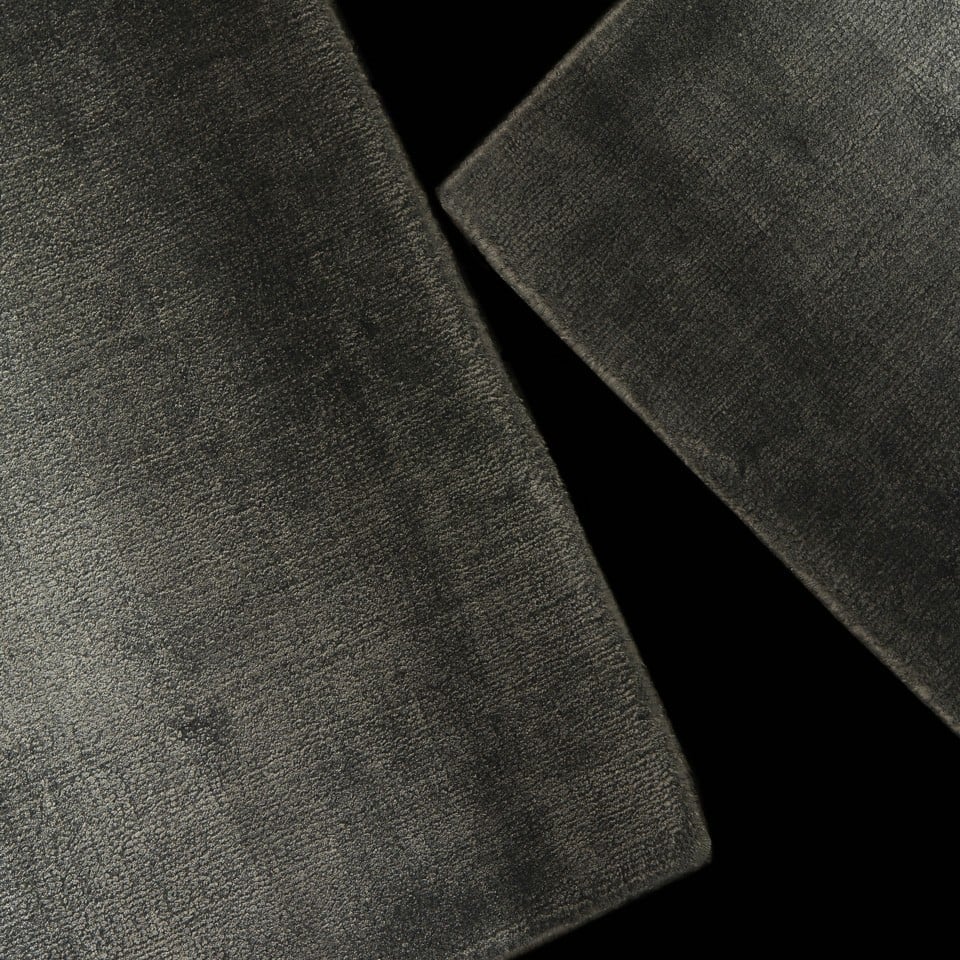
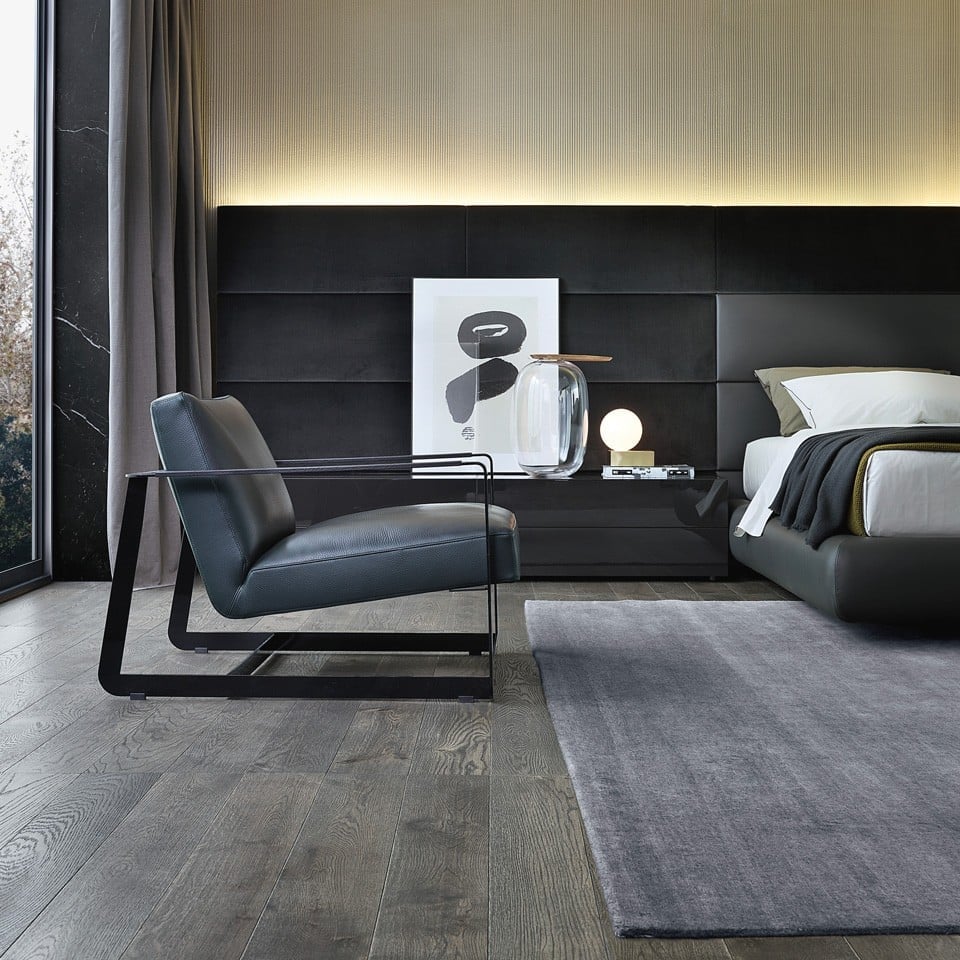
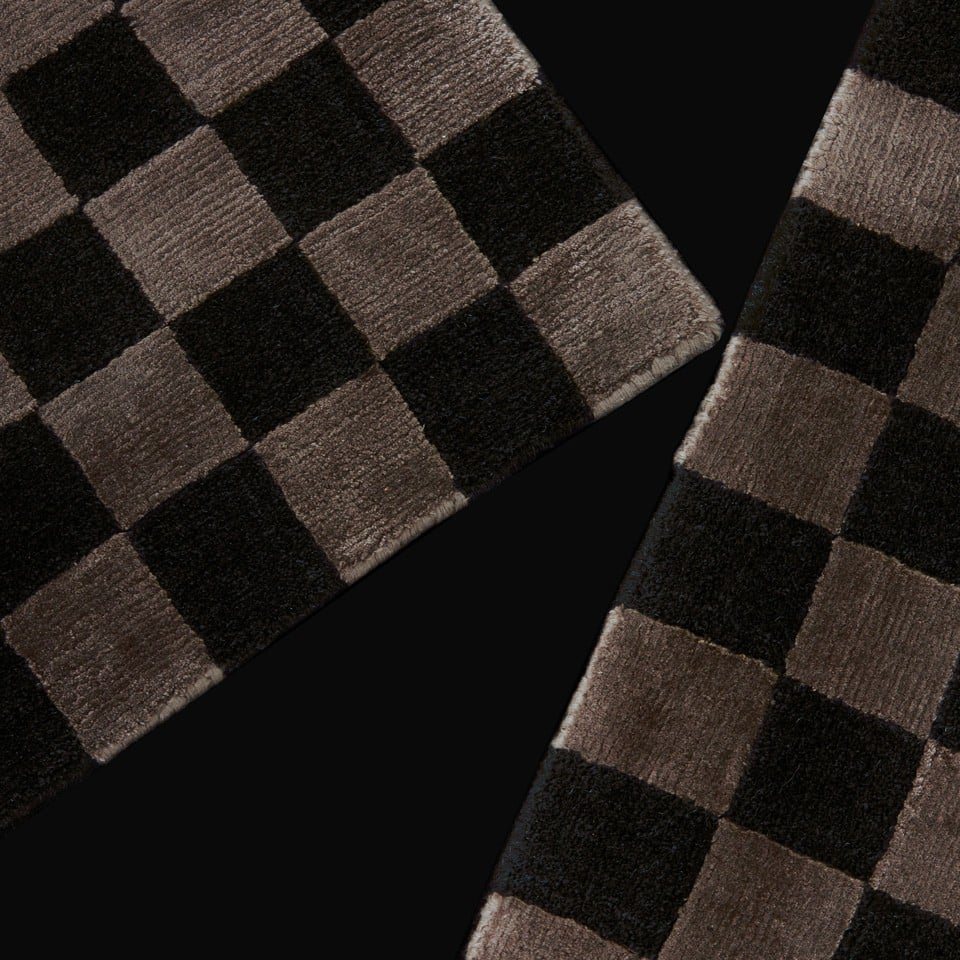
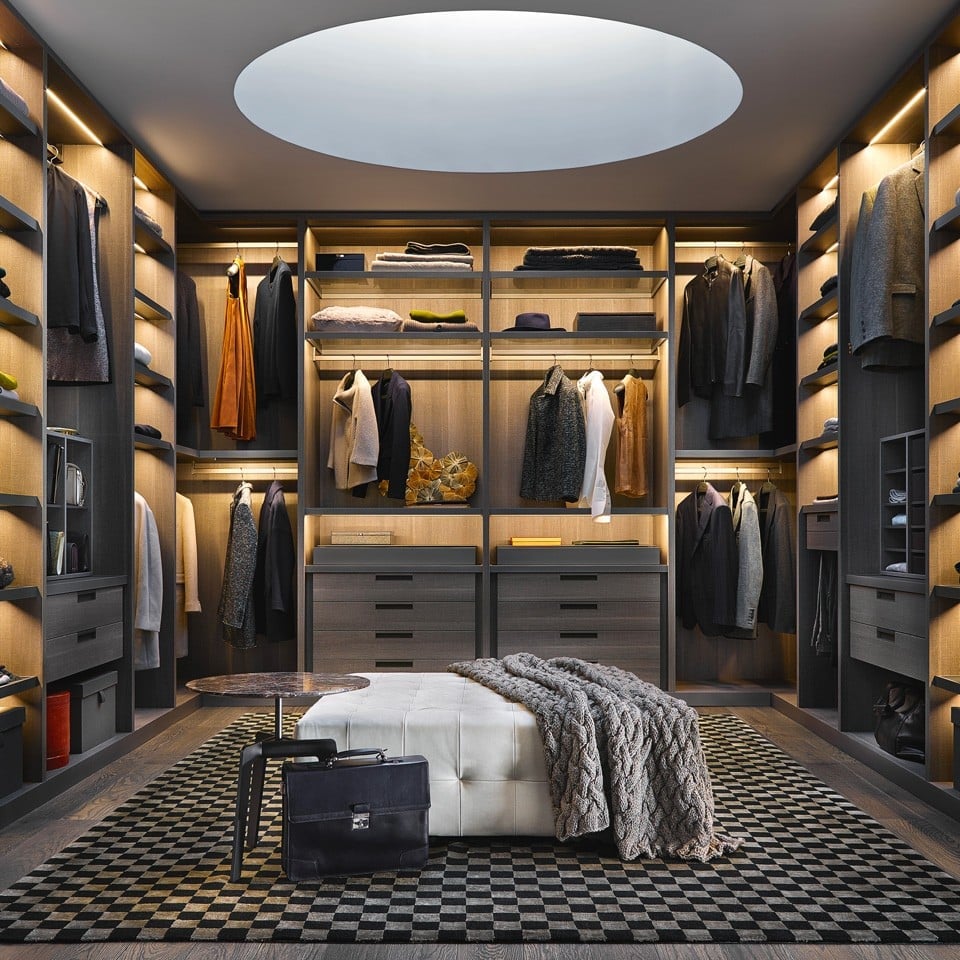
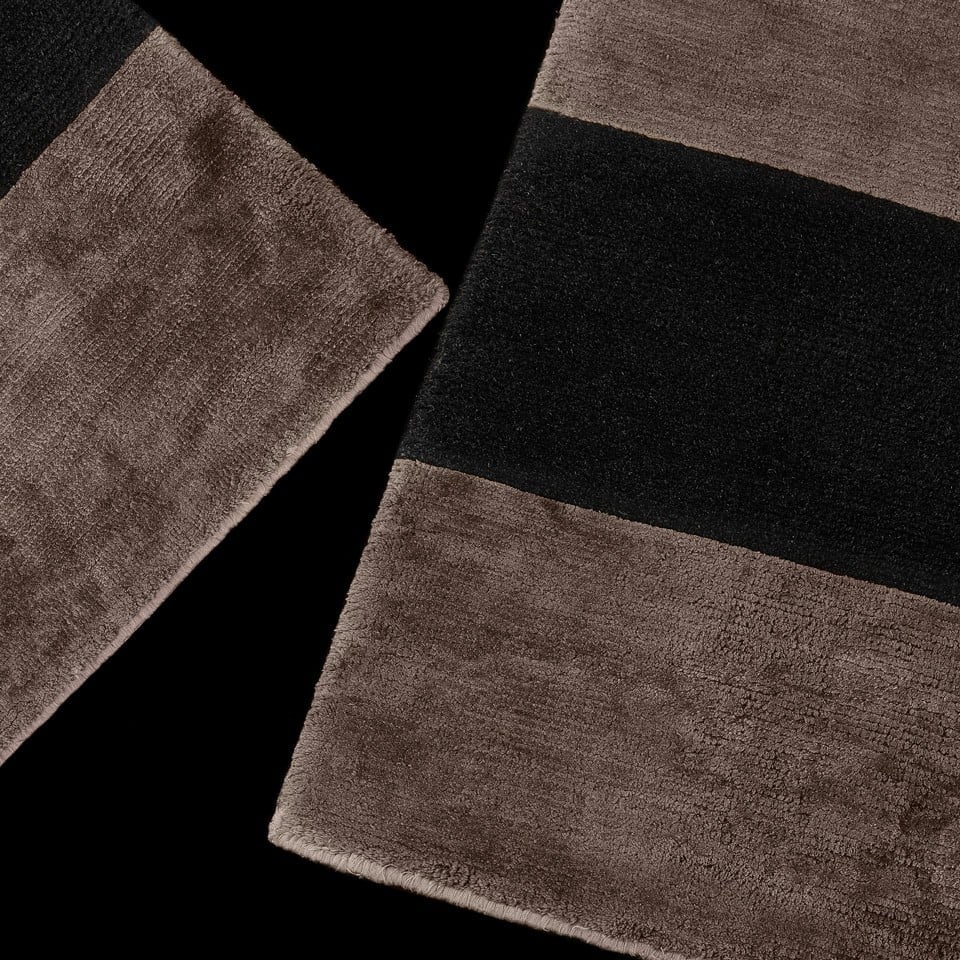
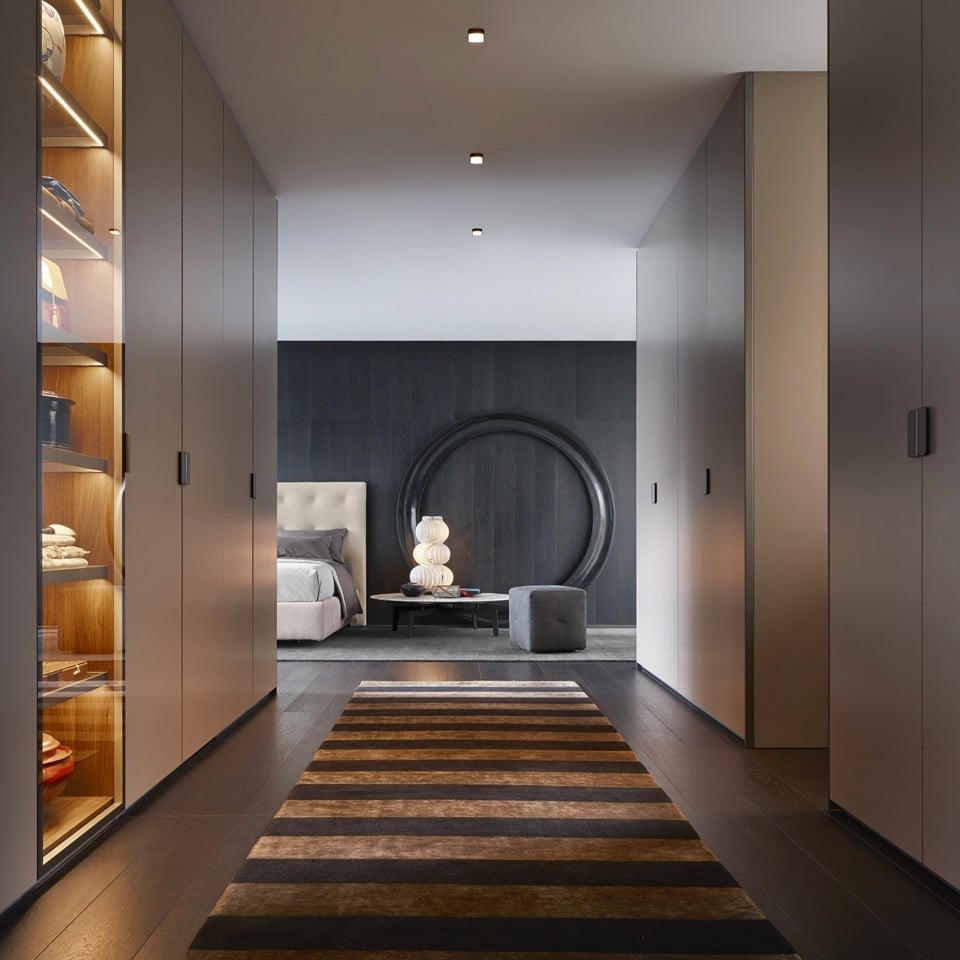
The Trace carpet, made from a blend of wool and bamboo silk, is produced using Jacquard weaving. The distinctive pattern, available in two colors, comes from the alternation of the loop boucle of the base and the combed fleece.

Table
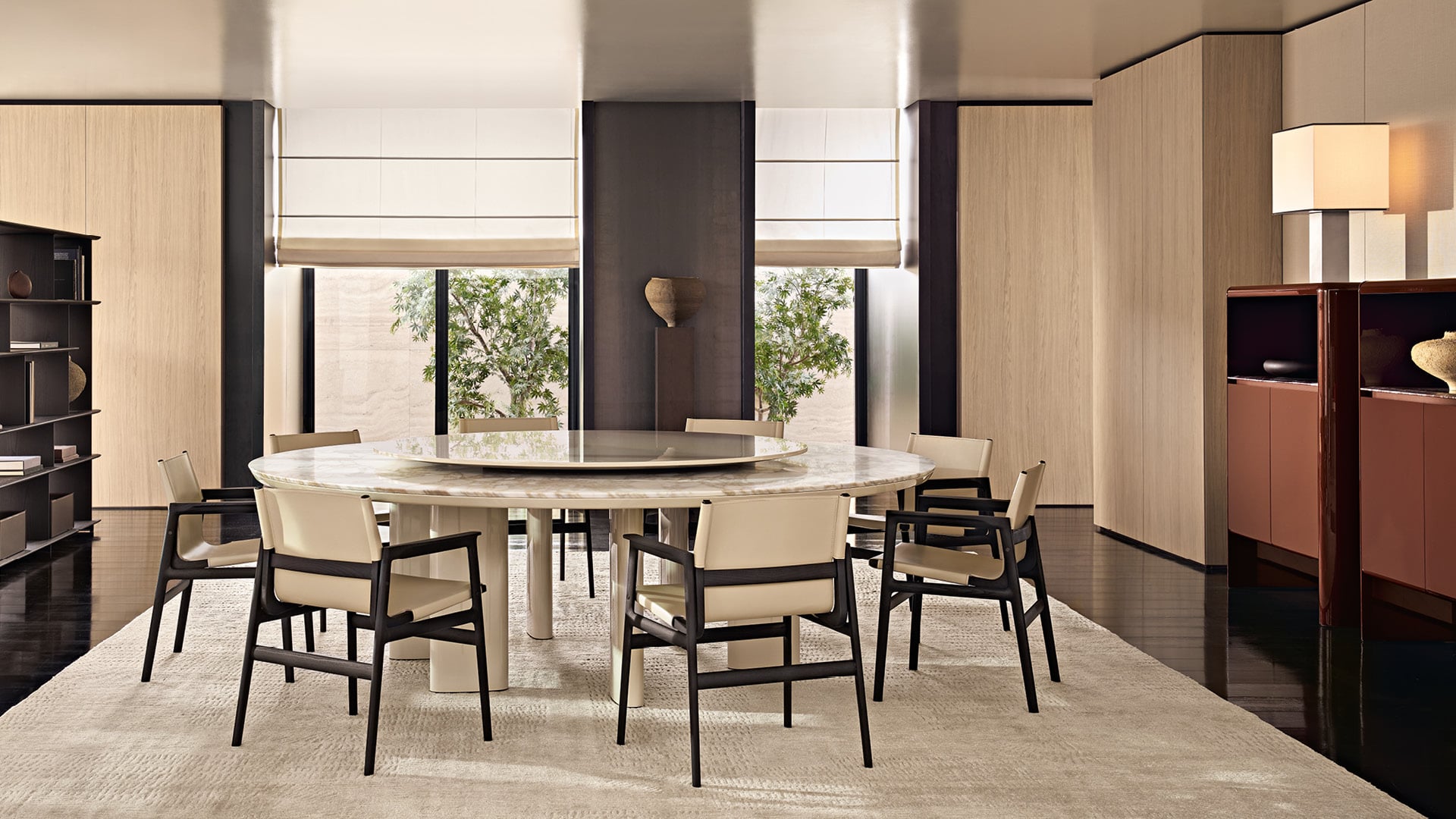
Adrien table with structure in glossy lacquer canapa, top in mat marble calacatta oro and swivel central tray in glossy lacquer canapa.
Chairs
Ipanema chair with armrests, cover in non-removable hide 09 burro, structure in black elm.
Sideboard
Duke sideboard in glossy lacquer sella and inner top of the open compartment in mat rosso lepanto marble.
Architechtural
Surface wall panelling in fabric mesh ecru and lite oak, mat basalto profiles.
Lamp
Helga lamp, satin-finish stainless steel and lampshade in white linen, dimmable led light.
Totem
Ortho totem with black elm.
Carpet
Carpet trace white.
Sofa
Ernest sofa in removable fabric Yukon 27 tabacco.
Coffee tables
Ernest coffee tables in black elm and in mat marble travertino titanium.
Bench
Nara bench in solid wood stained black elm.
Wall panelling
Surface wall panelling in fabric Mesh bronzo, black elm and glossy lacquer tundra, mat ardesia profiles.
Wall mounted composition
Wall mounted Code composition, open storage units in mat lacquer bronzo with backs in fabric Mesh bronzo and integrated led light. Storage units with Tape slatted doors in black elm and transparent glass, mat ardesia frame and handle, inner structure in black elm with backs in fabric Mesh bronzo and integrated led light.
TV portal
TV portal in black elm with sides in metal lacquer bronzo. Backlit top and sides in metal lacquer bronzo.
Carpet
Carpet Trace white.
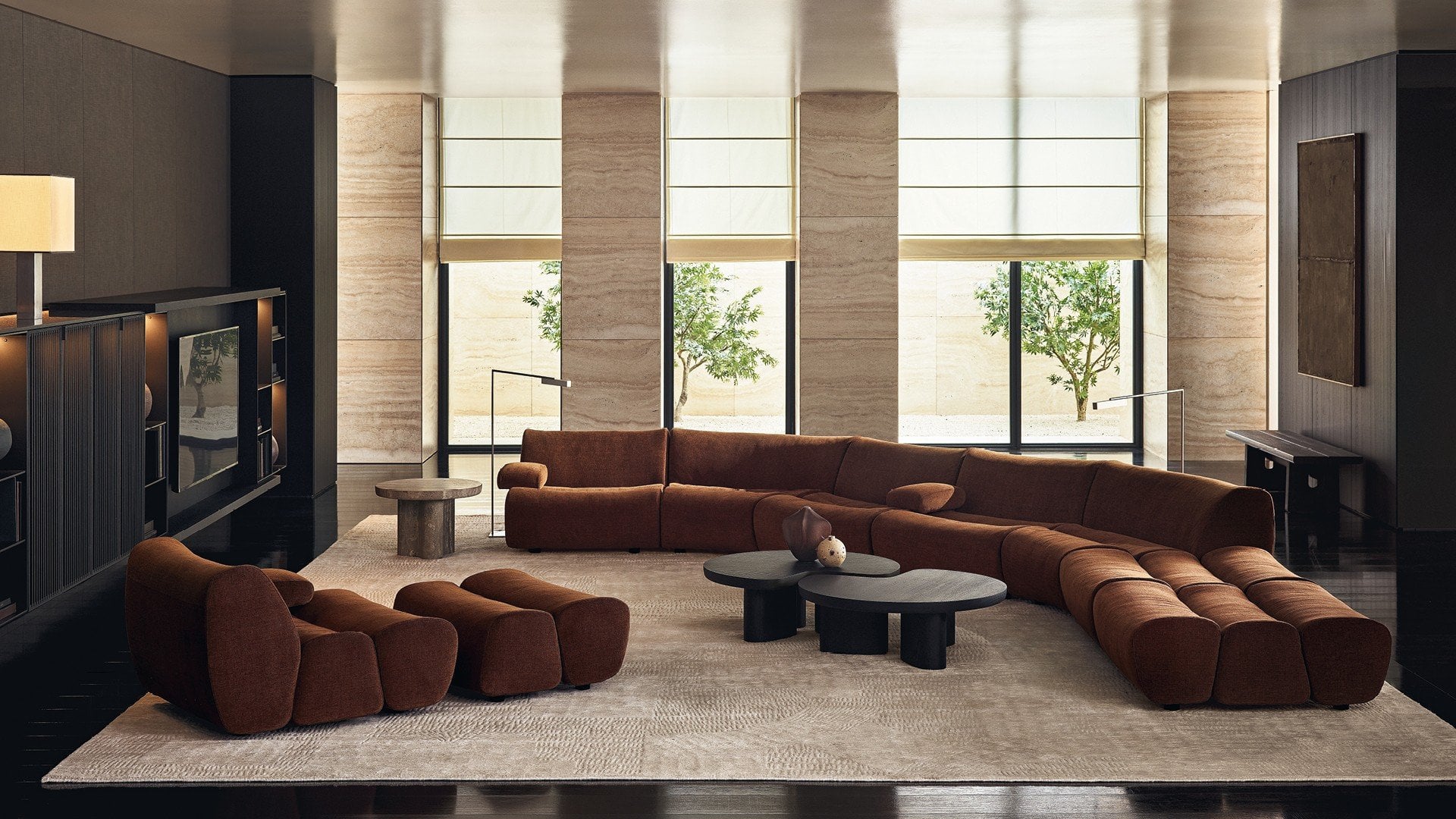
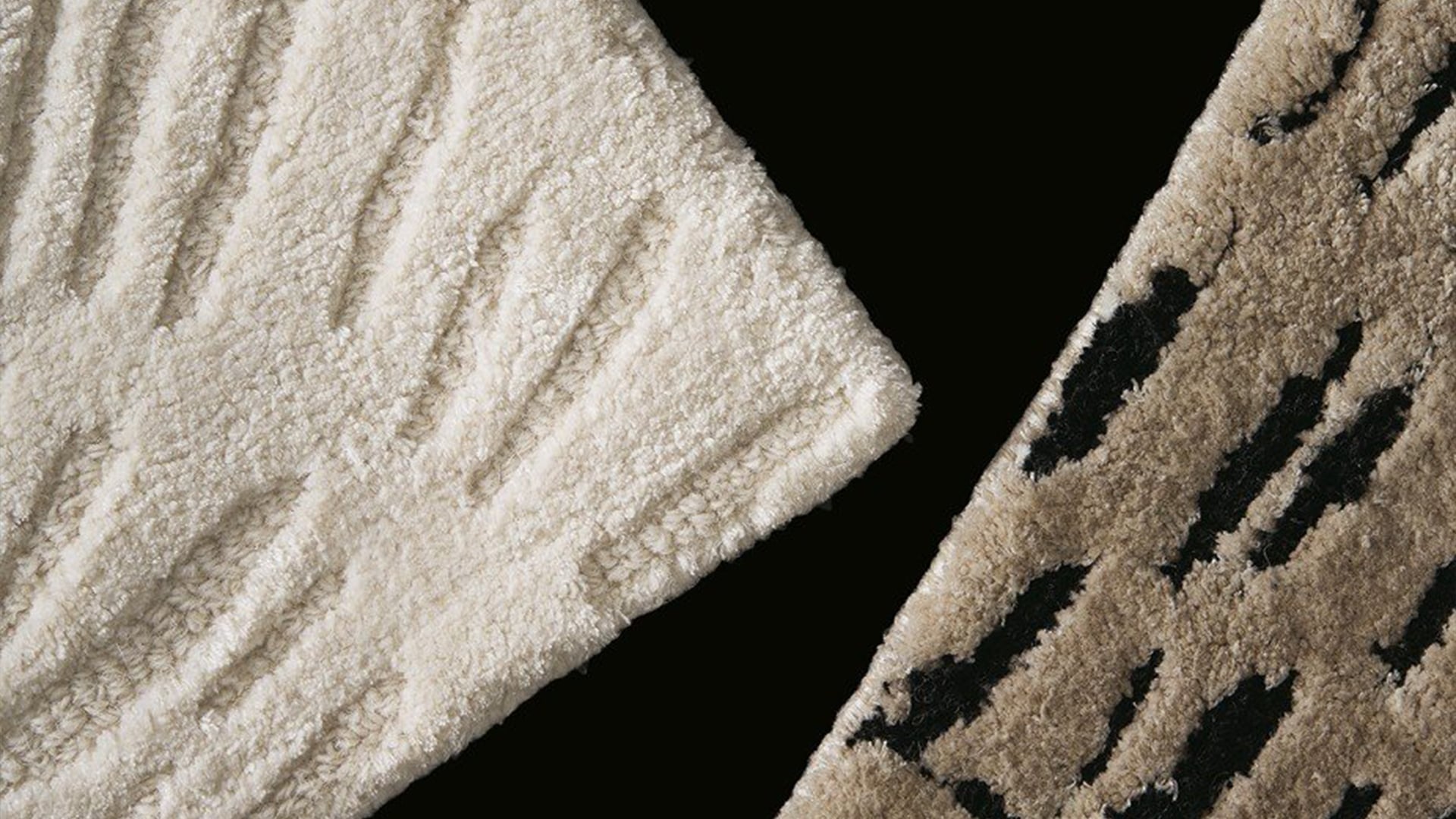
Trace is available in the white and ècru variants.
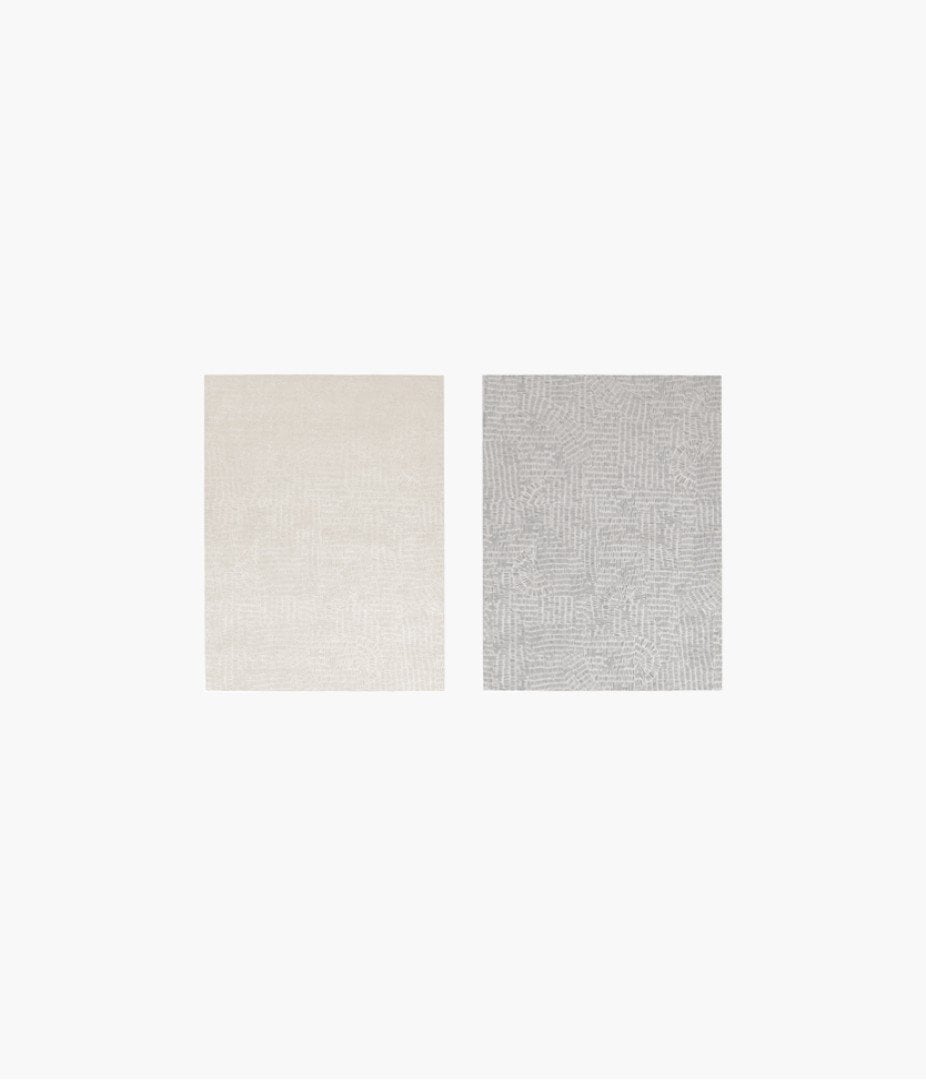
Carpet Trace White.
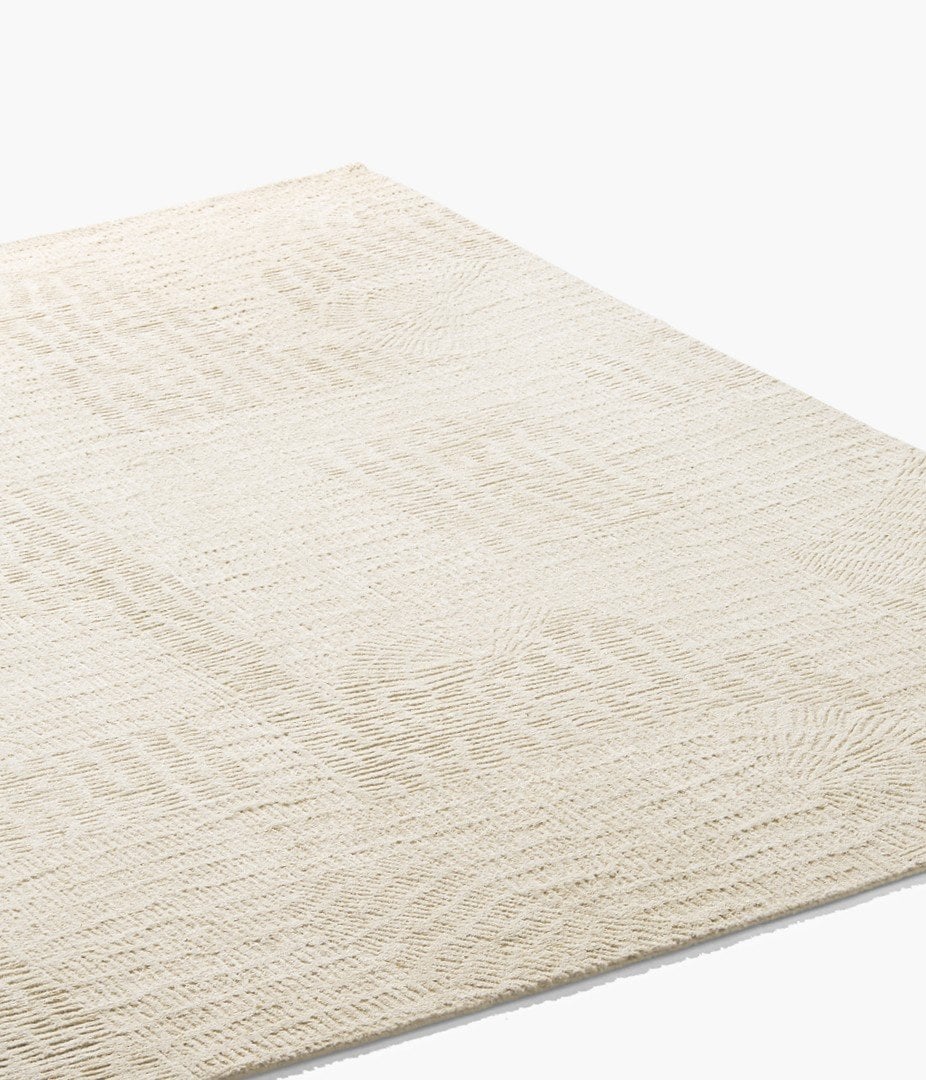
The Trace carpet, made from a blend of wool and bamboo silk, is produced using Jacquard weaving. The distinctive pattern, available in two colors, comes from the alternation of the loop boucle of the base and the combed silk fleece.
Our warranty is valid for two (2) years from the date of purchase and covers all manufacturing defects. The warranty period enters into force from the date printed on your receipt or sales slip. You may be asked to present proof of purchase when requesting service. The warranty is non-transferable and is valid only for the original purchaser. It covers repair or replacement of unusable or defective parts free of charge during the warranty period after inspection and acceptance by Poliform or its agent. Natural variations in the colour of the wood, changes in colour under ambient or artificial light, slight variations in dimensions owing to high humidity or dry conditions and the grain of wood, knots or other natural characteristics of wood products are not covered by the warranty. As to suede and leather, occasional natural marks, wrinkles, changes in brightness and tone, specks and slight imperfections folds due to extension after regular use, are not considered defects but are the distinctive traits of natural and authentic products. In some cases (leather Invecchiata, leather Nabuk and leather Vintage above all with light colours) these features are especially marked, as the kind of tanning for these leathers tends to point out the pureness of the product and not to cover it with painting or pressure print. The staining effect on leather Nabuk is to be considered a characteristic trait of the product.
For Nabuk and Vintage leather, prolonged contact with the grease on our skin and hair may cause dark stains to appear over time. Some types of fabric show features due to the composition and the kind of manufacturing that aren’t to be considered as defects. For example: “staple” or “streaked” and “crumpled effect” for linen ”spotted effect” or “curl” , the ”light/dark effect” and the ”imprint effect” for velvets and chenille. In fabrics, suedes or leather, each production lot can present slight variations in colour as compared to samples or products produced in the past. The warranty excludes damage resulting from careless or incorrect furniture installation, potential damage from accidents such as that resulting from a fall, impact, natural disaster, fire and, in any case, all defects that cannot be attributed to defects in the manufacture of the product. Moreover, the warranty is not valid in the event that our products are disassembled, modified or repaired by anyone other than authorised Poliform personnel. Damage due to poor upkeep or improper use of the product are not considered defects of manufacture. You will find useful recommendations in the instruction booklet regarding the use and care of your product. If you have any doubts or require further information, consult the Poliform reseller where your product was purchased. For any situation not expressly covered by this warranty legal provisions shall apply.
Weaving is the art of creating a fabric, a summary of raw material quality, creativity and experience. Weaving is done on looms using a complex process done entirely by hand with great expertise, using the hand loom technique traditional. Tools are used during the processing like: combs, brushes, knives and scissors. Once the carpet has been woven it is shaved. In order to eliminate all the remaining threads and to fix the colour, the carpet is washed in plenty of cold water, brushed and hung out to dry in the sun. They are manufactured in india in full compliance with the programme supported by the “cc-for education charity”.
The following materials are used to produce poliform carpets: Himalayan wool, aloe and bamboo silk for the structure, cotton for the warp and weft, (the cotton allows the carpet to breath, avoiding the accumulation of excessive dust. It guarantees excellent resistance and, as a result, the carpet lasts longer). The himalayan wool comes from tibetan sheep and is rich in lanolin that makes it naturally resistant to staining. The aloe is the nepalese term for the nettle that grows in abundance in nepal. It is a hard fibre with incredible strength and consistency. The bamboo silk is a vegetable based material with a sheen similar to pure silk. The work involves a number of different soakings: the first soaking in alum allows for the preparation of the fibres to fix the natural colours that will come in the following soakings. No acid or chemical agent is used to finish poliform carpets.
Our warranty is valid for two (2) years from the date of purchase and covers all manufacturing defects. The warranty period enters into force from the date printed on your receipt or sales slip. You may be asked to present proof of purchase when requesting service. The warranty is non-transferable and is valid only for the original purchaser. It covers repair or replacement of unusable or defective parts free of charge during the warranty period after inspection and acceptance by Poliform or its agent. Natural variations in the colour of the wood, changes in colour under ambient or artificial light, slight variations in dimensions owing to high humidity or dry conditions and the grain of wood, knots or other natural characteristics of wood products are not covered by the warranty. As to suede and leather, occasional natural marks, wrinkles, changes in brightness and tone, specks and slight imperfections folds due to extension after regular use, are not considered defects but are the distinctive traits of natural and authentic products. In some cases (leather Invecchiata, leather Nabuk and leather Vintage above all with light colours) these features are especially marked, as the kind of tanning for these leathers tends to point out the pureness of the product and not to cover it with painting or pressure print. The staining effect on leather Nabuk is to be considered a characteristic trait of the product.
For Nabuk and Vintage leather, prolonged contact with the grease on our skin and hair may cause dark stains to appear over time. Some types of fabric show features due to the composition and the kind of manufacturing that aren’t to be considered as defects. For example: “staple” or “streaked” and “crumpled effect” for linen ”spotted effect” or “curl” , the ”light/dark effect” and the ”imprint effect” for velvets and chenille. In fabrics, suedes or leather, each production lot can present slight variations in colour as compared to samples or products produced in the past. The warranty excludes damage resulting from careless or incorrect furniture installation, potential damage from accidents such as that resulting from a fall, impact, natural disaster, fire and, in any case, all defects that cannot be attributed to defects in the manufacture of the product. Moreover, the warranty is not valid in the event that our products are disassembled, modified or repaired by anyone other than authorised Poliform personnel. Damage due to poor upkeep or improper use of the product are not considered defects of manufacture. You will find useful recommendations in the instruction booklet regarding the use and care of your product. If you have any doubts or require further information, consult the Poliform reseller where your product was purchased. For any situation not expressly covered by this warranty legal provisions shall apply.
Weaving is the art of creating a fabric, a summary of raw material quality, creativity and experience. Weaving is done on looms using a complex process done entirely by hand with great expertise, using the hand loom technique traditional. Tools are used during the processing like: combs, brushes, knives and scissors. Once the carpet has been woven it is shaved. In order to eliminate all the remaining threads and to fix the colour, the carpet is washed in plenty of cold water, brushed and hung out to dry in the sun. They are manufactured in india in full compliance with the programme supported by the “cc-for education charity”.
The following materials are used to produce poliform carpets: Himalayan wool, aloe and bamboo silk for the structure, cotton for the warp and weft, (the cotton allows the carpet to breath, avoiding the accumulation of excessive dust. It guarantees excellent resistance and, as a result, the carpet lasts longer). The himalayan wool comes from tibetan sheep and is rich in lanolin that makes it naturally resistant to staining. The aloe is the nepalese term for the nettle that grows in abundance in nepal. It is a hard fibre with incredible strength and consistency. The bamboo silk is a vegetable based material with a sheen similar to pure silk. The work involves a number of different soakings: the first soaking in alum allows for the preparation of the fibres to fix the natural colours that will come in the following soakings. No acid or chemical agent is used to finish poliform carpets.
When the carpet arrives, immediately check if it has been damaged during transport. Carefully check the carpet, the references, colour and sizes. Any defects need to be reported immediately. Do not forget to remove the accompanying label (white). Only use the carpet in dry rooms, avoid putting it in damp surroundings like a basement, bathroom or kitchen, or outside. All our carpets are handmade. A tolerance of up to 2% on the overall measurement is acceptable and is the result of factors outside of our control, linked to the tautness of the loom and atmospheric conditions during production. The dyeing process is also principally done by hand, so there may also be slight variations in colour. After delivery, hang up the carpet and let it breathe for a short while in order to restore the yarn’s natural beauty and so it can lay out properly. A carpet takes a few weeks to lay out perfectly. In addition, in the first few weeks the carpet will tend to “settle” yarn (wool and silk); the more the carpet is used, the faster this tendency will disappear.
The exposure of natural fibre to natural light can lead to a loss of colour. So, we recommend turning it regularly so that the overtone is uniform. Avoid placing heavy furniture on the carpet. If the fibres are crushed for a long period of time, it will be more difficult to restore them to their natural beauty. It is possible that the covered parts show a different colour from the rest of the carpet after a certain amount of time. Avoid furniture with sharp edges like metal or glass. We always recommend using felt pads between the piece of furniture and carpet. The use of an underlay mat may be helpful to stop the carpet sliding on the floor. We do not recommend moving furniture onto the carpet. When moving the carpet, do not pull it with your hands on the edges but roll it up in order to avoid damaging the weft.
Your carpet was manufactured by expert artisans in full compliance with strict quality controls. As it was entirely handmade, it is unique and, therefore, unrepeatable.
Clean the carpet at least once a week with a vacuum cleaner, taking care not to use rotating heads or brushes that could damage the yarn. It is a good idea to turn the carpet and vacuum clean on the other side, twice a year. Keeping the carpet clean will extend its lifespan. If liquid is spilt on it, soak up as much as possible with a cloth and without rubbing. We recommend a diluted mild cleaning product for wool products applied with a damp sponge to clean liquids like coffee, tea, milk, chocolate or wine. Take care not to use too much water. After cleaning, make sure you thoroughly dry the carpet with a clean cloth. It is essential never to completely wet the carpet. If something thick like grease, ink or dirt ends up on the carpet, we recommend taking it to a carpet specialist. The carpets can never be dry cleaned.
Poliform recommends that you do not dispose of your product in the outdoors. Thanks to our manufacturing techology and the routine use of recyclable materials, discarded Poliform products can be re-used in the manufacturing process. For this reason, drop off your Poliform product at the waste disposal centres within your municipality.
To facilitate the collection, reuse, recovery and recycling of packaging, we inform you that the packaging is composed as follows: PAP20 carton, PAP 20 pressed cardboard roll, LDPE 04 cellophane.
When the carpet arrives, immediately check if it has been damaged during transport. Carefully check the carpet, the references, colour and sizes. Any defects need to be reported immediately. Do not forget to remove the accompanying label (white). Only use the carpet in dry rooms, avoid putting it in damp surroundings like a basement, bathroom or kitchen, or outside. All our carpets are handmade. A tolerance of up to 2% on the overall measurement is acceptable and is the result of factors outside of our control, linked to the tautness of the loom and atmospheric conditions during production. The dyeing process is also principally done by hand, so there may also be slight variations in colour. After delivery, hang up the carpet and let it breathe for a short while in order to restore the yarn’s natural beauty and so it can lay out properly. A carpet takes a few weeks to lay out perfectly. In addition, in the first few weeks the carpet will tend to “settle” yarn (wool and silk); the more the carpet is used, the faster this tendency will disappear.
The exposure of natural fibre to natural light can lead to a loss of colour. So, we recommend turning it regularly so that the overtone is uniform. Avoid placing heavy furniture on the carpet. If the fibres are crushed for a long period of time, it will be more difficult to restore them to their natural beauty. It is possible that the covered parts show a different colour from the rest of the carpet after a certain amount of time. Avoid furniture with sharp edges like metal or glass. We always recommend using felt pads between the piece of furniture and carpet. The use of an underlay mat may be helpful to stop the carpet sliding on the floor. We do not recommend moving furniture onto the carpet. When moving the carpet, do not pull it with your hands on the edges but roll it up in order to avoid damaging the weft.
Your carpet was manufactured by expert artisans in full compliance with strict quality controls. As it was entirely handmade, it is unique and, therefore, unrepeatable.
Clean the carpet at least once a week with a vacuum cleaner, taking care not to use rotating heads or brushes that could damage the yarn. It is a good idea to turn the carpet and vacuum clean on the other side, twice a year. Keeping the carpet clean will extend its lifespan. If liquid is spilt on it, soak up as much as possible with a cloth and without rubbing. We recommend a diluted mild cleaning product for wool products applied with a damp sponge to clean liquids like coffee, tea, milk, chocolate or wine. Take care not to use too much water. After cleaning, make sure you thoroughly dry the carpet with a clean cloth. It is essential never to completely wet the carpet. If something thick like grease, ink or dirt ends up on the carpet, we recommend taking it to a carpet specialist. The carpets can never be dry cleaned.
Poliform recommends that you do not dispose of your product in the outdoors. Thanks to our manufacturing techology and the routine use of recyclable materials, discarded Poliform products can be re-used in the manufacturing process. For this reason, drop off your Poliform product at the waste disposal centres within your municipality.
To facilitate the collection, reuse, recovery and recycling of packaging, we inform you that the packaging is composed as follows: PAP20 carton, PAP 20 pressed cardboard roll, LDPE 04 cellophane.
Enter the requested data and download all our files for 30 days
For more information on contract products and projects and for any inquiries about the company, please visit the contact section of the website.
By clicking on the link you will be redirected to poliform.com website. Visit the corporate website to discover the Poliform world, the special projects, the latest news and the events organized all over the world.